
The second season of Marvel Studios’ critically acclaimed X-Men ’97 has wasted no time in re-establishing itself as one of the most daring animated projects in modern television. Picking up in the wake of a reality-shattering season premiere that sent the team hurtling through the corridors of time, the second episode, "A Force to be Reckoned With," brings the narrative back to the mid-90s—and it does so with a musical flourish that has fans buzzing.
In a standout sequence, the X-Men’s resident firecracker, Jubilee (voiced by Holly Chou), cements her status as the show’s definitive "cool kid" by orchestrating a daring prison break against the government-sponsored X-Factor team. The soundtrack for this high-octane liberation? The 1997 alt-rock anthem "Volcano Girls" by Veruca Salt.
The Core Facts: A Musical Statement of Intent
For those uninitiated in the grunge-era zeitgeist, Veruca Salt—the band named after the infamous, spoiled character from Roald Dahl’s Charlie and the Chocolate Factory—was a staple of the late 90s alternative scene. Led by the dynamic duo of Nina Gordon and Louise Post, the band captured a specific kind of angst-ridden, melody-forward rock that defined the aesthetic of a generation.
"Volcano Girls," the lead single from their sophomore album Eight Arms to Hold You, serves as the centerpiece of Jubilee’s mid-episode action set piece. The song, characterized by its driving, distorted guitar riffs and a lyrical refrain—"Go, I don’t wanna go"—that perfectly mirrors the frantic energy of the scene, provides more than just background noise. It acts as an auditory manifesto for Jubilee, a character who has spent the series navigating the transition from a mall-rat teenager to a seasoned, battle-hardened mutant hero.
Chronology: The Evolution of a Hero
To understand the weight of this scene, one must look at the trajectory of Jubilation Lee throughout the series. In the first season’s standout episode, "Motendo," viewers saw Jubilee grapple with the seduction of perpetual, artificial adolescence offered by the interdimensional mogul Mojo. Faced with a virtual reality world that promised endless nostalgia and comfort, Jubilee made the conscious, adult decision to reject the digital fantasy in favor of the messy, painful reality of growing up.

By the time we reach the events of "A Force to be Reckoned With," the status quo of the X-Men has been fractured. With the team scattered across the timeline, the remnants of the X-Men—Jubilee and Sunspot (Gui Agustini)—find themselves caught in the geopolitical crosshairs of X-Factor, a government-backed mutant task force led by the formidable Forge and involving the conflicted Polaris (Carolina Ravassa).
When Jubilee is captured, her subsequent escape is not merely a tactical maneuver; it is a declaration of independence. She isn’t just freeing prisoners; she is rejecting the paternalistic, "protective" custody of the government. The needle drop of "Volcano Girls" occurs at the exact moment she asserts her agency. As the music kicks in, she dons her headphones, lowers her iconic glasses, and turns the sterile, militaristic environment of the X-Factor facility into a personal stage.
Supporting Data: Why "Volcano Girls" Resonates
The use of "Volcano Girls" is a deliberate choice by the production team, and it functions on multiple levels of cultural commentary.
The Aesthetic of Color and Chaos
Visually, the sequence is a masterclass in animation contrast. Jubilee’s primary mutant ability—the generation of colorful, explosive plasma sparks—creates a striking visual dissonance against the cold, blue, and grey palette of the X-Factor security forces. When paired with the raw, rhythmic punch of the song, the scene evokes the cinematic flair of James Gunn’s Guardians of the Galaxy trilogy.
The choreography during the sequence is equally significant. Jubilee doesn’t just fight; she moves with the fluidity of a dancer. Utilizing her roller skates for momentum and acrobatic dexterity, she weaves through the guards like a firework in a dark room. It is a moment of pure, unadulterated "cool" that stands in stark contrast to the grim, high-stakes political drama unfolding elsewhere in the episode.

Lyrical Irony and Characterization
The lyrics of "Volcano Girls" offer a fascinating window into Jubilee’s internal state. The chorus suggests a sense of fatigue—"Leave me lying here, ‘Cause I don’t wanna go"—yet the song itself is an explosion of energy. This duality is central to Jubilee. She is a character who has been forced to grow up faster than most, and while she often feels the weight of that responsibility, she refuses to let it diminish her spirit. She is not the "watered down" version of a hero that the world expects; she is volatile, bright, and impossible to contain.
Official Context: The "X-Men ’97" Needle-Drop Tradition
The use of era-appropriate needle drops has become a signature element of X-Men ’97. The production team has clearly moved away from the standard orchestral score for key character moments, opting instead for a more immersive, diagetic approach to music.
In Season 1, the show utilized Ace of Base’s "Happy Nation" to juxtapose the utopian veneer of the mutant nation Genosha against the brewing political tensions that eventually led to a tragic genocidal event. Similarly, the villainous Bastion’s introduction was punctuated by the jarring, novelty sound of "Flying Purple People Eater." These musical choices do more than just signal the time period; they frame the viewer’s emotional response to the narrative.
By integrating hits like "Volcano Girls," X-Men ’97 avoids the trap of "hollow nostalgia." It doesn’t treat the 1990s as a museum piece. Instead, it treats the era as a living, breathing component of the characters’ world. The show acknowledges that these characters live in a heightened version of our reality, and their connection to the pop culture of the time—whether it’s the music on their headphones or the technology they use—grounds them in a way that traditional comic book adaptations often fail to achieve.
Implications: The Future of the Soundtrack
The inclusion of Veruca Salt raises an intriguing question: what does this mean for the future of the series? The producers have hinted that the musical landscape will continue to evolve alongside the show’s progression through the late 90s.
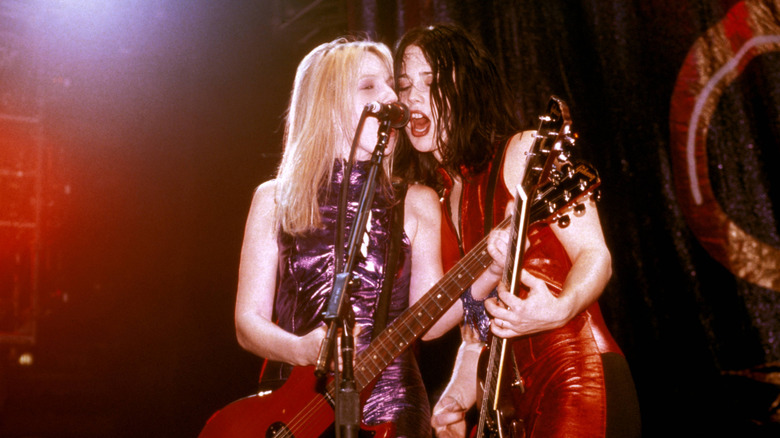
If Season 2 continues this trend, we can expect a curated selection of late-90s alternative rock, shoegaze, and early electronica. Fans are already speculating about potential inclusions from artists like Liz Phair, The Smashing Pumpkins, or Hole. There is even a meta-humor potential in the show’s future; as the series approaches 1998, the release of Hole’s Celebrity Skin would be a thematic goldmine for a character like Jubilee.
Furthermore, the mention of tracks like "Spiderman ’79" on the Eight Arms to Hold You album is a cheeky nod to Marvel’s history, showcasing the writers’ deep-seated appreciation for the brand’s legacy. It signals that the showrunners are not just fans of the X-Men, but students of the era in which they were revitalized.
Conclusion: A Sonic Legacy
The "Volcano Girls" sequence is more than a viral clip or a cool moment for the soundtrack. It is a pivotal point in the evolution of X-Men ’97. It marks the shift of Jubilee from a secondary character to a protagonist with the strength and confidence to command her own narrative.
By grounding this transition in the raw, authentic sound of 1997, the show cements its status as a piece of prestige animation. It tells the audience that while the stakes for the X-Men are global and cosmic, the heartbeat of the show remains personal, localized, and undeniably cool. As the X-Men continue their struggle for survival in a world that fears and hates them, they do so with a soundtrack that proves they aren’t just surviving the 90s—they are defining them.
X-Men ’97 continues to stream on Disney+, with new episodes dropping every Wednesday, promising more musical surprises and character-defining moments as the season hurtles toward its inevitable, explosive conclusion.