In the summer of 2022, the internet was captivated by a bizarre, cross-generational phenomenon: the “GentleMinions” trend. Hordes of teenagers and college students, clad in sharp suits and formal attire, flooded movie theaters to watch Minions: The Rise of Gru. At the time, the punchline was layered. It wasn’t just the absurdity of dressing for a wedding to watch a children’s film; it was the irony of treating a franchise often derided as the "junk food" of animation—a merchandising juggernaut built on Facebook memes and nonsense dialogue—with the reverence usually reserved for auteur cinema.
Back then, the backlash to these yellow, pill-shaped icons was both inevitable and fierce. To many critics, the Minions had become the primary symbol of an animation industry that favored market-tested, "memeable" character designs over genuine, heartfelt artistic expression. They were the poster children for a creative drought where corporate branding took precedence over narrative soul.
However, the tides of 2026 have shifted. In an era where the animation industry faces existential threats—ranging from the encroachment of artificial intelligence to the homogenization of studio output—the Minions, who are at least "man-made" irritants, suddenly seem significantly more palatable. With the release of the franchise’s latest entry, Minions & Monsters, the series has achieved the unthinkable: a legitimate cultural redemption.
The Evolution of a Franchise: From Merchandising to Meta-Commentary
The road to Minions & Monsters has been paved with surprising artistic growth. It is a period of creative expansion for those associated with the franchise. Cinco Paul, the screenwriter who helped craft the original Despicable Me universe, recently secured two Tony Awards for his acclaimed TV-to-stage musical comedy Schmigadoon!. Similarly, Kyle Balda, the director behind the first two Minions spinoffs, has pivoted to critical acclaim with his recent family-friendly feature, The Sheep Detectives.

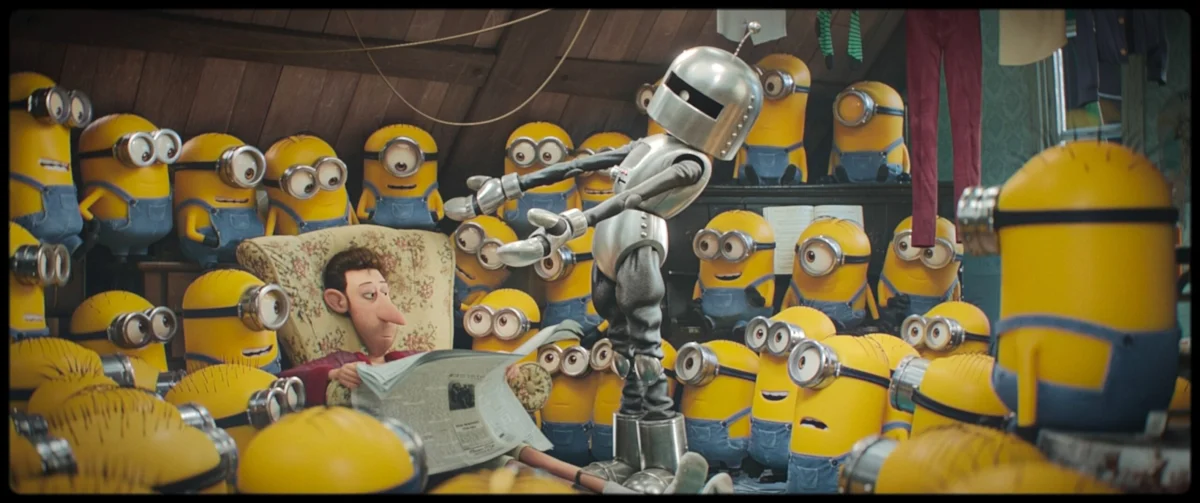
Yet, the crowning achievement of this era is undeniably Minions & Monsters. It is a shockingly delightful, madcap comedy that serves as the strongest entry in the franchise since the original Despicable Me. Director Pierre Coffin, who continues to provide the iconic, high-pitched voices for the central horde, along with co-screenwriter Brian Lynch, has stumbled upon a brilliant conceit: grounding the Minions’ slapstick nature in the literal roots of cinema history. By weaving the narrative through the lens of silent film icons like Charlie Chaplin and Buster Keaton, the film transforms the Minions from mere background noise into active, charming participants in the history of the silver screen.
Chronology: A Cinematic Odyssey Through Time
Minions & Monsters functions as a self-contained, meta-narrative about the evolution of the film industry, mirroring the transition from the silent era to the "talkies," much like Singin’ in the Rain or Damien Chazelle’s Babylon.
The film introduces us to a new trio of Minions: James, an artistic and sensitive dreamer; Henry, his loyal, supportive best friend; and Ed, a mute character who communicates exclusively through a sophisticated form of sign language. The narrative establishes that these three are social outcasts, prone to accidentally—and quite comically—dismantling their "big bosses" through slapstick errors.
The story is framed through an intrusive but rewarding museum presentation given by a tour guide named Olivia (voiced by Allison Janey). The framing device, which features a brilliant cameo from George Lucas, sets the stage for the tribe’s journey across the desert to 1920s Los Angeles. Once in Hollywood, they inadvertently stumble onto a film set, capturing the attention of studio heads, the Bright Brothers (Jeff Bridges).

As the Minions rise to stardom, they become the subjects of various genre experiments, from sci-fi to romance. James, in particular, finds a mentor in director Max (Christoph Waltz) and begins to dream of winning an Oscar—which he imagines as a golden banana. However, the tragedy of the transition to sound hits the Minions hard. Because they cannot speak anything but their own chaotic "Minionise" dialect, they are deemed obsolete in the era of talkies, leading to a brilliant, loving recreation of the opening of Citizen Kane.
Supporting Data: Why This Film Succeeds Where Others Fail
The film’s success lies in its commitment to the medium of film itself. Coffin and Lynch go beyond mere references, opening the movie with a "rewound" Universal globe logo from the 1920s, followed by a montage that mimics the look and feel of early silent films like Workers Leaving the Lumière Factory.
Illumination, a studio previously criticized for a bland, repetitive aesthetic, breaks its own mold here. The production design blends polished 3D animation with textures that replicate vintage film stock and classic silent-era techniques, such as sped-up chase sequences. The physical comedy, which has long been the franchise’s trademark, is elevated by visual nods to cinematic history, such as an early train sequence that directly pays homage to the legendary house-front gag in Steamboat Bill, Jr.
The film also offers a refreshing, self-aware critique of its own existence. By situating the story in the hyper-commercialized world of Hollywood, the directors take lighthearted jabs at the very merchandising empire that spawned the Minions. It is a level of self-reflection rarely seen in big-budget animated tentpoles, proving that the filmmakers are not just resting on their laurels.

Official Perspectives and Creative Shifts
While the first 45 minutes of the film are a masterpiece of meta-comedy, the second half shifts gears. As the "Monsters" portion of the title takes center stage, the story pivots to a more conventional disaster movie format. The trio summons the Goomi (voiced by Trey Parker), a Cthulhu-like entity who intends to destroy the world.
While this transition lacks the inventive spark of the first half, it does provide an interesting look at the constraints of the Minions as characters. When the film moves from silent comedy to sci-fi tropes, it forces the characters to carry more dramatic weight, a task for which they are inherently limited. However, the inclusion of a secondary, "weird" subplot involving an alien robot named Dort (Jesse Eisenberg) and his romance with a suffragette (Zoey Deutch) provides enough idiosyncratic charm to keep the audience engaged.
Implications for the Future of Animation
The true victory of Minions & Monsters is its refusal to mourn the "death" of cinema. Instead, it treats the history of the medium as a living, breathing legacy that can be reincarnated for a new generation. By casting these "banana-loving yellow freaks" as the conduits for this cinematic history, the film argues that the spirit of film is resilient.
For the animation industry, the implication is clear: innovation is not about abandoning established franchises, but about pushing them to interact with new, challenging ideas. Minions & Monsters manages to bridge the gap between cynical market trends and genuine creative passion. It is a testament to the idea that even in the most corporate-driven environments, there is room for a filmmaker to say something meaningful about the magic of the movies.

Whether you are a lifelong fan or a jaded critic who once scoffed at the yellow menace, Minions & Monsters is a film that demands to be seen. It is a rare, joyful, and surprisingly profound piece of work that proves even the most played-out characters can find new life when the creative team behind them stops looking at the bottom line and starts looking at the history of the craft.
Grade: B
“Minions & Monsters” is in theaters now.