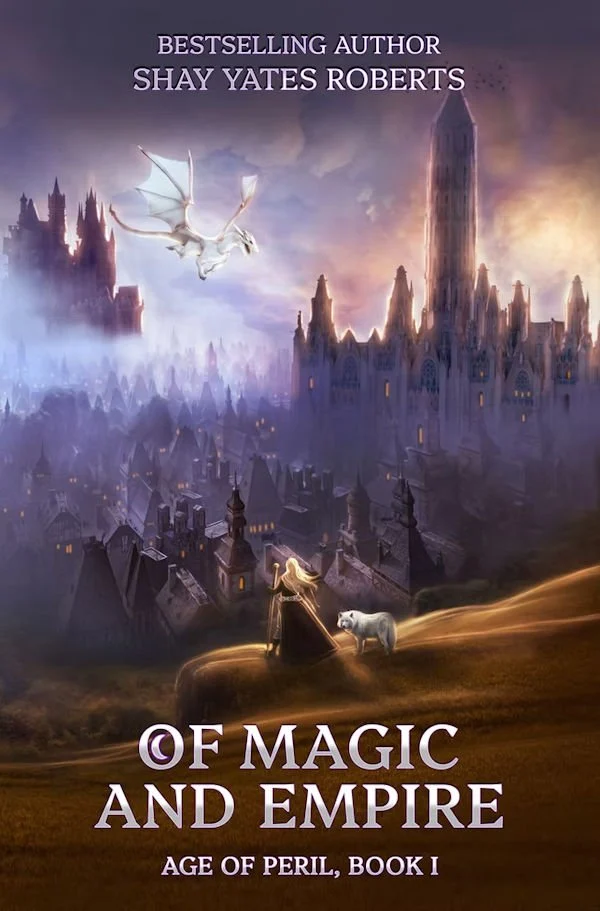
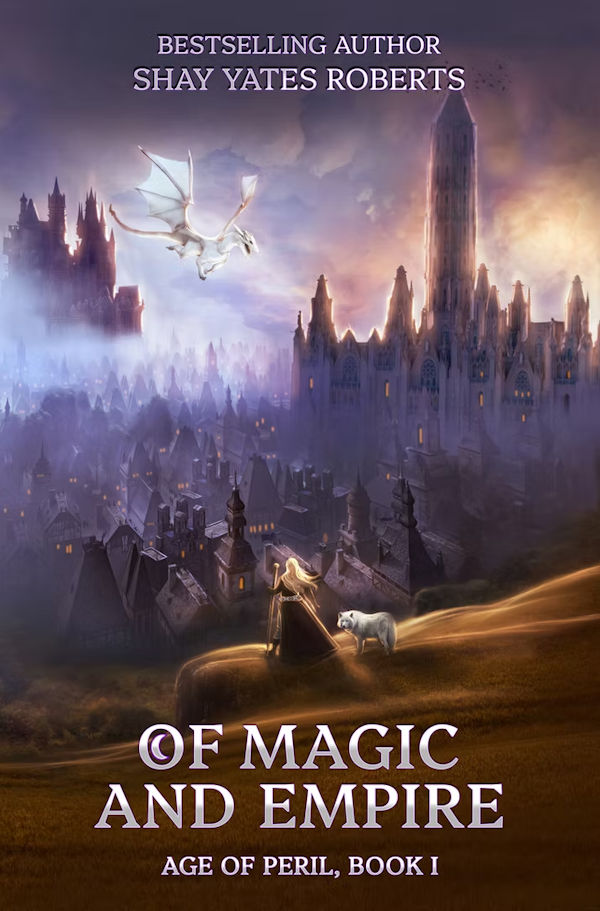
In an era where the fantasy genre has increasingly gravitated toward "low magic" realism and gritty, minimalist world-building, author Shay Yates Roberts has made a bold counter-cultural statement. Her latest release, Of Magic and Empire, serves as a sprawling, ambitious return to the roots of high fantasy. By weaving complex systems of magic into the fabric of military hierarchy and religious orthodoxy, Roberts has crafted a narrative that is unapologetically epic in both scope and ambition.
The novel, which hit shelves this summer, introduces readers to a realm held in a fragile balance—a balance currently being shattered by an inexplicable, soul-stripping affliction known as "The Frenzy."
The Core Narrative: A Realm on the Brink
At the heart of Of Magic and Empire are three protagonists, each a social pariah or outlier within their respective institutions, brought together by the desperate decree of an Empress facing the collapse of her civilization.
- Jesmyn: A mage of immense, raw power who remains a figure of mockery due to a condition of birth that impacts her social perception.
- Sperling: A scholar whose intellectual brilliance is matched only by his desperate, singular mission to salvage his fractured family lineage.
- Aurisma: A cleric of high standing who finds herself disgraced, enduring a rare and public punishment for the crime of questioning the dogma of her superiors.
These three individuals are tasked with separate, parallel quests to uncover the origin of "The Frenzy." This phenomenon acts as the book’s central antagonist—a terrifying, intangible force that systematically strips victims of their capacity for love, kindness, and moral restraint. As the protagonists venture into the untamed wildlands beyond the edges of their mapped civilization, they are forced to confront an evil born of ancient sin, an antagonist that threatens to impose a "terrible toll" on the very foundation of their world.
Chronology of the Conflict
The narrative structure of Of Magic and Empire is intentionally episodic, tracking the simultaneous journeys of the three leads as they navigate a world increasingly hostile to their mission.
- The Inciting Incident: The emergence of The Frenzy creates a state of emergency. The Empress issues a call to action, pulling the three protagonists from their respective lives of isolation and marginalization.
- The Quest Phase: Each lead begins their journey through disparate territories. The reader follows their progress as they gather companions, forming alliances that serve as the bedrock of the book’s emotional core.
- The Political Impasse: As the heroes move toward the source of the affliction, they encounter significant friction not just from the phenomenon itself, but from the entrenched interests of rival political, religious, and military factions.
- The Descent into the Wildlands: The climax of the first volume sees the protagonists crossing the threshold into the unknown, where the scale of the threat is revealed to be far more archaic and dangerous than initially anticipated.
Supporting Data: World-Building and Stylistic Choices
To evaluate the success of Of Magic and Empire, one must look at the specific mechanics Roberts employs to build her world. The text is bolstered by extensive supplementary materials, including detailed maps and a comprehensive glossary, which cater to the "world-building enthusiast" demographic.
The Magic System
Magic in this novel is treated as an atmospheric constant. Unlike hard magic systems that prioritize strict rules and limitations, Roberts presents magic as an environmental feature—woven into the military, the church, and daily life. While this approach may leave readers who prefer granular mechanical explanations wanting, it succeeds in creating an immersive, "lived-in" experience. The reader is encouraged to absorb the world through experience rather than instruction.
Character Dynamics
A notable strength of the prose is the treatment of Jesmyn. Her characterization is handled with significant care; her unique way of perceiving the world and her difficulty in reading subtext are presented as intrinsic traits rather than obstacles to be "fixed." Her relationship with her companion, Zanther, serves as a masterclass in developing warmth and mutual respect without resorting to saccharine tropes.
However, the narrative is not without its critical critiques. A recurring point of friction for readers is the velocity at which character relationships develop. New acquaintances often become "trusted companions" after minimal interaction, suggesting that these bonds are a feature of the world’s social fabric rather than a result of earned, long-term development.
Critical Analysis: The Tension Deficit
Despite its expansive world, Of Magic and Empire faces criticism regarding its internal stakes. Professional reviews, including those from genre experts like Julia Kitvaria Sarene, have noted that the narrative tension often dissipates as quickly as it arises.
"The book’s main weakness is almost nothing in it costs very much," notes Sarene. "Characters adapt quickly, recover quickly, and move on quickly."
The lack of lingering consequences creates a sensation of "episodic comfort" rather than a building, existential threat. Because the protagonists are portrayed as highly capable and generally virtuous, they often lack the "edges"—the internal flaws or moral ambiguities—that make high-stakes failure feel possible. By the conclusion of the first installment, the characters remain largely unscathed, leaving some readers to wonder if the looming threat of The Frenzy is truly as dangerous as the text claims.
Implications for the Fantasy Genre
The release of this novel signifies a pivot point in contemporary fantasy. For years, the market has been saturated with "punishing" fantasy—works characterized by moral grayness, high mortality rates, and grimdark settings. Of Magic and Empire serves as an antithesis to this trend.
By opting for a tone that is adventurous, expansive, and ultimately hopeful, Roberts has carved out a space for a new generation of "epic" literature that does not rely on misery to convey significance. While the book may lack the sharp, serrated edges of a darker epic, it succeeds in providing a high-fantasy experience that feels grand in scale and accessible in delivery.
Market Reception
The book has been received as a "solid choice" for readers seeking a traditional quest-based narrative. Its success lies in its commitment to the genre’s classic tropes:
- Expansion: A large, map-centric world that rewards exploration.
- Accessibility: A lack of punishing darkness that makes the reading experience "enjoyable" rather than "exhausting."
- Characterization: A roster of protagonists who are, at the very least, pleasant company.
Conclusion: A Foundation for Future Volumes
As the first installment in a larger series, Of Magic and Empire functions as a vast, well-laid foundation. While it may suffer from a lack of immediate, visceral danger, it makes up for this with a robust setting and a clear, earnest love for the epic fantasy tradition.
For those who find themselves fatigued by the "grimdark" trend and are longing for a return to expansive landscapes and clear-cut, albeit complex, adventures, Shay Yates Roberts’ work is a welcome addition to the shelf. It is a story that, despite its minor flaws in pacing and tension, succeeds in being exactly what it sets out to be: an epic, adventurous, and thoroughly enjoyable journey through a realm forged by magic.
As the series progresses, the true test for Roberts will be whether she can introduce more tangible consequences for her protagonists. If she can bridge the gap between her impressive, large-scale world-building and a more grounded, high-stakes narrative arc, Of Magic and Empire has the potential to become a defining work in the modern high-fantasy canon. For now, it stands as a testament to the enduring appeal of the epic quest—a genre that remains, quite literally, worth the journey.