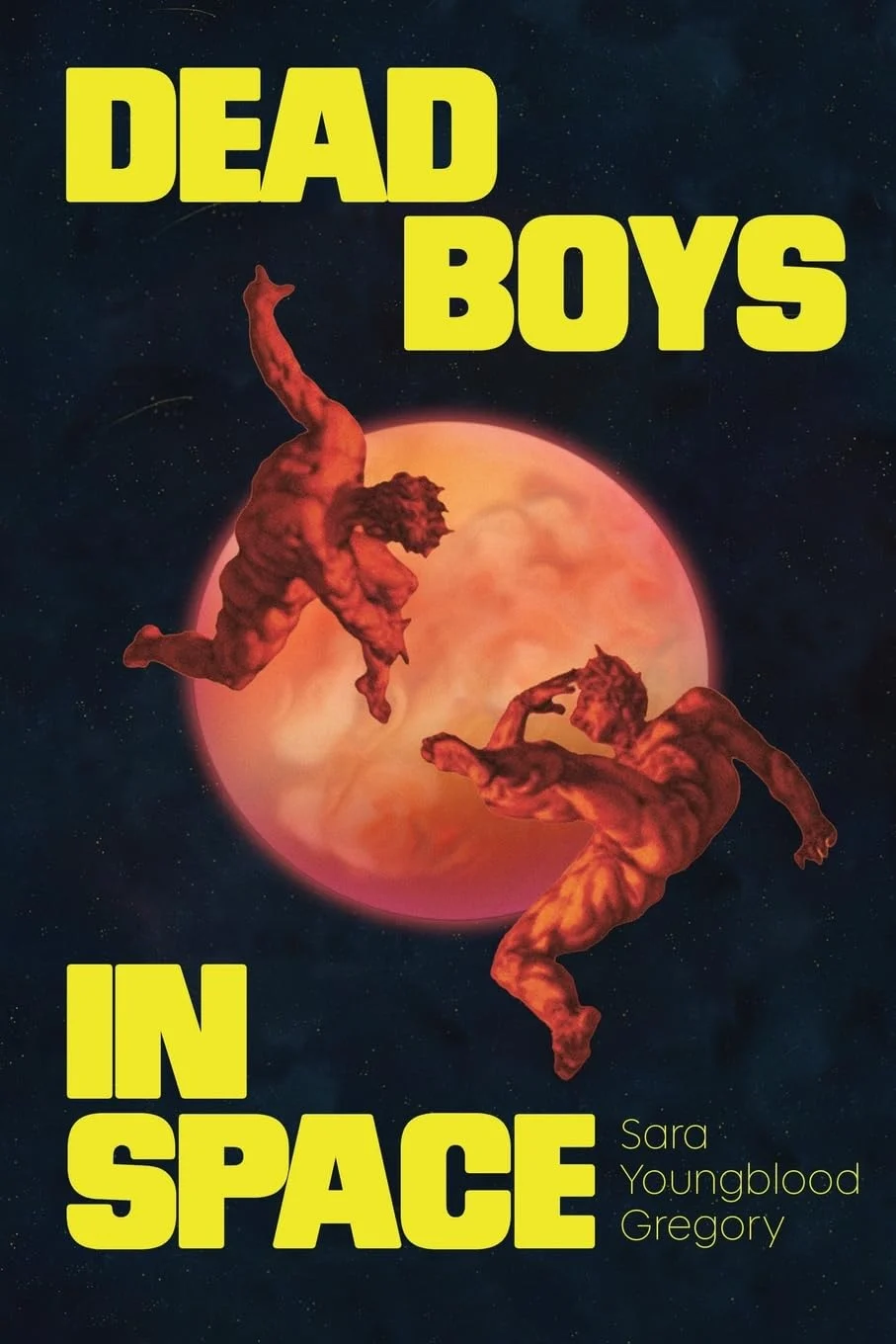
The acknowledgments section of Sara Youngblood Gregory’s latest poetry collection, Dead Boys in Space, concludes with a haunting, visceral apology: “Thank you to the ghosts that live at the heart of this collection. I’m sorry you don’t get to read it. I’m sorry I had reason to write it.”
These lines serve as the emotional anchor for a work that functions simultaneously as a memoir, a historical interrogation, and a piece of speculative science fiction. At its core, the collection is a meditation on the AIDS crisis, viewed through the eyes of a lesbian poet whose older brother was among the generation of gay men decimated by the epidemic. By blending the cold, expansive imagery of outer space with the intimate, often brutal history of queer suffering, Gregory has crafted a work that resists simple categorization.
The Anatomy of a Collection: Main Themes and Narrative Arc
Dead Boys in Space is not merely a chronicle of loss; it is an exploration of the “not-knowing”—the fragmented nature of intergenerational trauma. In a recent interview with The Poetry Bookshop, Gregory noted her interest in the process of parsing through secondhand memories—stories and dreams that the living must reconstruct because the original witnesses are no longer here to tell them.
The collection is meticulously structured into four distinct movements. It begins with an overture of longing, establishes the ritualistic nature of mourning in the middle sections, presents a radical reimagining of history in its centerpiece, and concludes with a hopeful, if melancholic, embrace of contemporary queer joy. Throughout, the poetic voice navigates the tension between the personal desire to keep a loved one alive and the cosmic scale of the history that stole them.
Chronology of a Crisis: From the 1980s to the 26th Century
The temporal landscape of Dead Boys in Space is fluid. Gregory juxtaposes the early 1980s—the dawn of the AIDS crisis—with a hypothetical future in the year 2577.
The Rituals of Remembrance
The first two sections of the book act as a bridge between the past and the present. In the poem “Eulogy,” Gregory explores the weight of names spoken decades later. She writes of her father mentioning her brother’s name, noting how “each syllable / of your name / is a pearl / spirited / up from some / precious / sinking / grief.” The structural choice of short, sparse lines mirrors the sinking sensation of bereavement, illustrating how memory is not a passive state but a “hard-fought accomplishment.”
The Imperialist Satire: “One Million Dead Men”
The collection’s gravity shifts entirely in the third section with the fifteen-page prose poem, “One Million Dead Men: An Empirical Investigation Into New Sodom.” Presented as an academic transcript from a 26th-century professor, the piece serves as an alternate history. In this timeline, the U.S. government responds to the AIDS crisis not with public health initiatives, but by deporting 1.6 million gay men to a lunar colony between 1981 and 1996.
This section is a biting satire of the intersection between homophobia and imperialist bureaucracy. The “PROFESSOR” in the poem frames the mass deportation as a “genius” solution to a population they deemed to have an “expiration date.” Gregory’s prose captures the chilling, detached tone of historical revisionism, as the professor dismisses human rights complaints as “outside the scope of my research.” Yet, the satire takes a turn into the liberatory: the men on the moon do not die as expected. Instead, they vanish, leaving behind a functioning colony—a Mary Celeste in space—suggesting a collective, transcendent escape from the confines of terrestrial hatred.
Supporting Data: Contextualizing the Queer Struggle
Gregory’s work does not exist in a vacuum; it is deeply rooted in the literature and reality of the AIDS crisis. The poem “It used to be illegal for homosexuals to rest like this” acts as a touchstone for the collection’s intellectual lineage, referencing David Wojnarowicz, Jon Greenberg, and Paul Monette.
The Vulnerability of the Present
Gregory uses these historical touchstones to contextualize contemporary threats to the LGBTQ+ community. She draws a straight line from the 1980s to modern-day "bathroom bills" and "bedroom bans," noting the prohibitive costs of PrEP and the fragility of queer existence. The repetition of the word “open” in her verse—as in “my open hands are an open target”—highlights the ongoing vulnerability of queer bodies. This is not just a book about the dead; it is a book about the living who continue to face systemic hostility.
Literary Influences and Scholarly Intertextuality
By weaving in the work of AIDS-era writers, Gregory validates the importance of archival memory. Her collection functions as a living bibliography, encouraging readers to engage with the literature that helped shape queer identity. The inclusion of these voices transforms the book from a singular perspective into a chorus of ancestors and contemporaries, all grappling with the same fundamental question: how do we build a future when our past has been systematically erased?
Official Responses and Critical Reception
Since its release, Dead Boys in Space has been hailed by critics as a necessary addition to the canon of queer literature. While traditional "official" responses to poetry are often found in literary journals and critical essays, the discourse surrounding this collection has been notably centered on its political urgency.
Critics have praised Gregory’s "science fiction weirdness"—her willingness to imagine her brother “breathing diamonds / instead of air”—as a vital tool for processing grief that defies conventional language. The juxtaposition of the cosmic (Mars, the Moon, diamonds) with the quotidian (a small-town gay bar, a kitten in bed, the snap of damp tights) has been identified as the collection’s primary strength. By elevating the mundane details of queer life to a level of mythological importance, Gregory honors the lives that were lost by asserting that they, and their survivors, are worthy of the stars.
Implications: A Blueprint for a New World
The final section of the collection serves as a testament to the resilience of queer joy. In “The center of the universe is a small-town gay bar,” Gregory moves away from the grand, satirical scale of the moon colony and back into the intimate, humid atmosphere of a dance floor.
The Transformation of Silence
In this poem, the silence that was once associated with the oppression of the AIDS crisis is transformed into a communal, rhythmic language. When the speaker notes that she “became music,” it marks a transition from the status of a victim to that of a creator. The "pushy" nature of the dance floor interaction—a mix of antagonism and attraction—is a metaphor for the queer experience: constantly fighting for space, yet finding profound connection within that fight.
The Legacy of the Work
The broader implications of Dead Boys in Space are significant. It challenges the reader to consider how we document history and who gets to decide which stories are preserved. By choosing to center her narrative on the "ghosts" who were lost to AIDS, Gregory ensures that their lives remain part of the public consciousness, not as static figures in an obituary, but as dynamic, living entities in a space-faring, imagined future.
Ultimately, the collection argues that grief is not a static state, but a generative one. It is a work that demands the reader look "hard" at the present—to acknowledge the "long sharp teeth" of current political hostility while simultaneously dancing in the "overgrown jungles" of our own making.
Conclusion
Dead Boys in Space is a landmark achievement in contemporary poetry. Sara Youngblood Gregory has succeeded in doing what few writers can: she has taken the raw, jagged edges of profound personal loss and forged them into a narrative of liberation. By bridging the gap between the AIDS crisis and the infinite possibilities of outer space, she provides a roadmap for future generations to process trauma without losing their sense of wonder.
The book is an invitation to look up, even when the ground beneath us is shifting. It reminds us that while we may be the "bastards of a disease," we are also the architects of a new world—one where, perhaps, the ghosts are finally allowed to read the stories we have written for them. As the collection concludes, it leaves the reader with a lingering sense of defiance and hope: a belief that through art, memory, and community, we can survive the history that was meant to consume us.