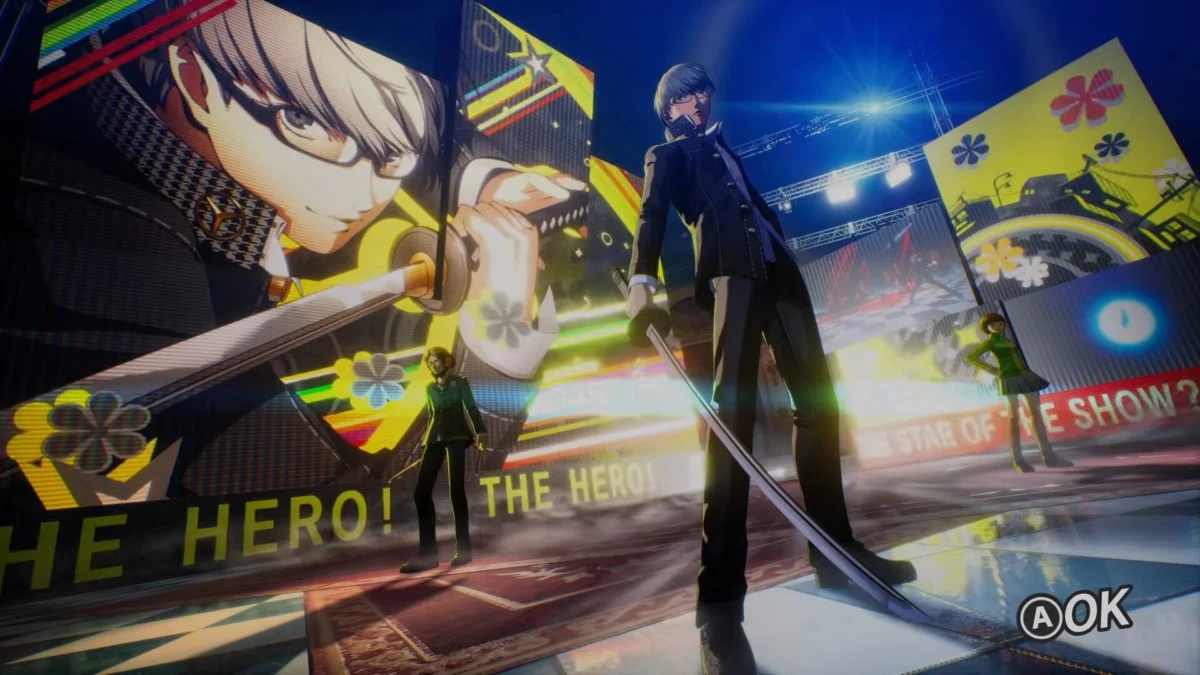
TOKYO, Japan – [Current Date] – ATLUS, a subsidiary of SEGA, has ignited immense anticipation among its global fanbase with the release of a brand-new trailer for the highly anticipated Persona 4 Revival. The cinematic reveal, which offers the first dedicated look at the game’s silent protagonist, marks a pivotal moment in the lead-up to its multi-platform launch on February 18, 2027. This comprehensive reimagining of the beloved PlayStation 2 classic is slated for release on PlayStation 5, Xbox Series X|S, and PC via Steam and the Microsoft Store, with day-one availability on Xbox Game Pass.
The newly released trailer, accompanied by a detailed character description on the game’s official website, formally introduces players to the unnamed protagonist, a crucial figure whose journey anchors the entire narrative. Voiced by Nazeeh Tarsha in the English dub and the returning Daisuke Namikawa in Japanese, the character is described as a second-year high school student whose life takes an unexpected turn. Due to "unfortunate circumstances with his parents," he is sent to live in the tranquil, yet increasingly mysterious, rural town of Inaba at the home of his uncle. This relocation sets the stage for the intricate web of friendship, mystery, and supernatural events that define the Persona 4 experience.
The dual-language trailer release underscores ATLUS’s commitment to delivering a global experience from day one, allowing fans to immerse themselves in the protagonist’s initial moments of arrival in Inaba, hinting at the quietude and subtle unease that will soon engulf the idyllic town. As the release date draws closer, this protagonist spotlight serves not just as an introduction, but as a reaffirmation of the core narrative that captivated millions over a decade ago, now reborn for a new generation and existing veterans alike.
Main Facts: The Rebirth of a Classic
The announcement of Persona 4 Revival and the subsequent unveiling of its protagonist trailer are significant for several reasons, signaling ATLUS’s strategic approach to its venerated franchise. The game is positioned not merely as a remaster, but as a full "revival," implying a ground-up reconstruction with modern sensibilities while retaining the original’s cherished narrative and thematic integrity.
The protagonist, a cornerstone of the Persona series’ unique storytelling, serves as the player’s avatar in a world teeming with psychological depth and interpersonal connections. His character description — a second-year high school student thrust into unfamiliar rural surroundings — immediately establishes the narrative’s initial premise of isolation and adaptation. This initial displacement is a familiar trope in Persona games, often catalyzing the protagonist’s growth and their pivotal role in confronting supernatural threats. The choice of voice actors is also crucial: Daisuke Namikawa’s return as the Japanese voice brings a comforting continuity for long-time fans, while Nazeeh Tarsha’s casting for the English dub signifies a fresh, yet respectful, take on the character for a global audience. The English re-recording suggests a complete overhaul of the voice acting, a common feature in full remakes that often includes expanded dialogue and improved localization.
The game’s release across multiple modern platforms—PlayStation 5, Xbox Series X|S, and PC—demonstrates ATLUS’s broadened publishing strategy, moving beyond traditional PlayStation exclusivity to reach a wider audience. The inclusion of Persona 4 Revival on Xbox Game Pass from day one is particularly noteworthy, offering unprecedented accessibility to millions of subscribers and potentially introducing the critically acclaimed title to a demographic unfamiliar with the JRPG genre or the Persona series itself. This move mirrors ATLUS’s recent efforts to bring other Persona titles, such as Persona 3 Reload and Persona 5 Royal, to a broader player base, a strategy that has proven highly successful in expanding the franchise’s global footprint.
Chronology: From Inaba’s Shadows to a Global Stage
The journey of Persona 4 began in Japan on July 10, 2008, launching on the PlayStation 2. Developed by ATLUS, it quickly garnered critical acclaim for its compelling murder mystery narrative, memorable cast of characters, innovative social simulation elements, and stylish presentation. Set in the fictional, foggy town of Inaba, the game tasked players with uncovering the truth behind a series of bizarre murders linked to a supernatural "Midnight Channel" that appears on televisions during rainy nights. Its unique blend of high school life, dungeon crawling, and Jungian psychology resonated deeply with players, solidifying its place as a genre-defining RPG.
The game’s enduring popularity led to its enhanced port, Persona 4 Golden, released for the PlayStation Vita in 2012. Golden introduced a wealth of new content, including new characters, Personas, events, and quality-of-life improvements, further cementing its status as the definitive version of the game. Its success proved the timeless appeal of Persona 4‘s story and characters.
For years, Persona 4 Golden remained a handheld exclusive, a significant barrier for many players. However, in a strategic move that delighted fans, ATLUS brought Persona 4 Golden to PC via Steam in June 2020. This release proved to be a massive commercial success, demonstrating the immense, untapped demand for the title on modern platforms. This was followed by its launch on PlayStation 4, Xbox One, Xbox Series X|S, Nintendo Switch, and PC (via Microsoft Store) in January 2023, making the game accessible across virtually all contemporary gaming ecosystems.
The consistent success of these re-releases, coupled with the phenomenal reception of Persona 5 and its enhanced version Persona 5 Royal, undoubtedly paved the way for the ambitious Persona 4 Revival. While the exact timeline of Revival‘s development remains largely under wraps, industry speculation and fervent fan demand for a full, modern remake of Persona 4 have been constant since the widespread success of Persona 5 Royal and the Persona 3 Reload remake.
The initial announcement of Persona 4 Revival itself would have been a significant event, likely occurring at a major industry showcase or a dedicated ATLUS presentation, sending shockwaves through the JRPG community. Subsequent teasers, perhaps showcasing updated character models, revamped environments of Inaba, or hints at new gameplay mechanics, would have gradually built excitement. The release of this protagonist trailer now serves as a more concrete visual affirmation, offering a tangible glimpse into the reborn world and its central figure, confirming the game’s aesthetic direction and commitment to its core identity. This chronological progression highlights ATLUS’s careful stewardship of the Persona brand, evolving with technology and market trends while honoring its rich legacy.
Supporting Data: The Enduring Appeal of Persona and Inaba
The Persona series, a spin-off of ATLUS’s long-running Shin Megami Tensei franchise, has carved out its own distinct identity through its compelling blend of social simulation, psychological exploration, and stylish JRPG combat. Each entry, while standalone, shares core thematic elements: high school students awakening to supernatural powers ("Personas") to confront existential threats, often rooted in the collective unconscious and societal anxieties. The games masterfully intertwine mundane daily life with fantastical dungeon crawling, creating a unique rhythm that resonates with players. The "Social Link" system, where building relationships with non-player characters strengthens the protagonist’s Personas, is a hallmark of the series, fostering deep emotional connections and rewarding player investment.
The decision to embark on a "revival" for Persona 4 speaks volumes about its significance within the franchise. Unlike a simple port or remaster, a "revival" suggests a comprehensive overhaul, likely featuring completely rebuilt 3D environments, vastly improved character models, modern lighting and particle effects, and potentially expanded gameplay sequences or narrative elements that were perhaps limited by the original PS2 hardware. Fans anticipate a Persona 3 Reload-level transformation, where the essence of the original is meticulously preserved while being elevated to contemporary graphical and gameplay standards. This could include quality-of-life improvements like streamlined menus, enhanced navigation, and perhaps even entirely new combat mechanics or social activities, all while maintaining the distinctive art style and user interface that ATLUS is renowned for.
The protagonist of Persona 4, often affectionately referred to by fans as Yu Narukami (from the anime adaptation) or Souji Seta (from the manga), embodies the player’s choices and relationships. His silent nature allows players to project themselves onto him, making his journey through Inaba deeply personal. His initial character description as an outsider forced to adapt to a new environment is a universal theme, making his struggle and eventual triumphs relatable. The dual voice casting is crucial for this immersion, ensuring that players worldwide can experience the narrative in their preferred language with high-quality performances. Daisuke Namikawa’s return is particularly exciting for Japanese fans, guaranteeing the familiar vocal presence that many associate with the character.
Inaba itself is more than just a setting; it’s a character in its own right. Its seemingly idyllic, sleepy rural atmosphere provides a stark contrast to the dark mysteries lurking within. The fog that frequently blankets the town becomes a powerful visual metaphor for the obscured truths and hidden anxieties of its inhabitants. A "revival" promises to render Inaba with unprecedented detail, bringing its shops, school, and surrounding countryside to life in ways previously unimaginable, deepening the sense of place and immersion. The iconic locales like Junes, the school, and the Velvet Room are expected to be meticulously recreated, allowing both new and returning players to explore a familiar yet visually stunning version of the town.
ATLUS’s multi-platform strategy, particularly the Game Pass inclusion, is a clear indicator of the company’s ambition to broaden its audience significantly. By making Persona 4 Revival available across all major gaming ecosystems and through a subscription service, ATLUS is making a statement about accessibility and market penetration. This approach acknowledges the evolving landscape of game consumption and aims to capitalize on the Persona series’ growing global popularity, especially after the critical and commercial success of Persona 5. This move aligns with a broader industry trend of Japanese developers embracing multi-platform releases to maximize reach and revenue.
Official Responses: Vision for a Modern Classic (Hypothetical)
While specific official statements regarding Persona 4 Revival beyond the trailer release are pending, industry analysts and fan communities can infer ATLUS’s likely intentions and messaging. A hypothetical statement from an ATLUS spokesperson might emphasize the studio’s dedication to honoring the original while embracing modern technology.
"We are incredibly excited to share the first dedicated look at the protagonist of Persona 4 Revival," a senior ATLUS representative, perhaps Production Manager Atsushi Maekawa, might state. "This character is the heart of the Persona 4 experience, and we’ve poured our passion into reimagining his journey and the world of Inaba with breathtaking detail. Our goal with Revival is not just to update the graphics, but to truly bring the emotional depth, stylistic flair, and unforgettable narrative of the original Persona 4 to a new generation of players, while also offering a fresh perspective for our dedicated fans."
Elaborating on the "revival" concept, the game’s director, perhaps Yuichiro Tanaka, could add: "When we set out to create Persona 4 Revival, our guiding principle was reverence for the source material. Every character, every location, every note of the iconic soundtrack has been re-examined through a contemporary lens. We wanted to ensure that the unique atmosphere of Inaba, the intricate murder mystery, and the profound bonds of friendship feel as impactful, if not more so, than they did over fifteen years ago. We believe Persona 4 Revival will stand as the definitive way to experience this timeless story."
Regarding the voice acting, the sound director might offer: "The protagonist’s journey is often quiet, yet his impact on the narrative is immense. We are thrilled to welcome back Daisuke Namikawa-san, whose portrayal of the protagonist in Japanese is iconic. For our English audience, Nazeeh Tarsha brings a nuanced and powerful performance that we believe will resonate deeply, allowing players to connect with the protagonist’s internal world as never before. The entire voice cast, both Japanese and English, is dedicated to delivering performances that elevate the already rich storytelling of Persona 4." These hypothetical statements reflect the balance ATLUS typically strikes between honoring legacy and innovating for the future, a strategy proven successful with Persona 3 Reload.
Implications: Setting a New Standard and Future Prospects
The release of Persona 4 Revival carries significant implications for ATLUS, the Persona franchise, and the broader JRPG landscape. For ATLUS, it reinforces their commitment to revisiting and modernizing their most beloved titles, following the critical and commercial success of Persona 3 Reload. This "revival" approach, distinct from simple remasters, suggests a new standard for how ATLUS intends to treat its back catalog, potentially paving the way for similar "revivals" of other classic titles in the Shin Megami Tensei universe or even earlier Persona games.
Commercially, Persona 4 Revival is poised for substantial success. The Persona series has seen an explosion in popularity globally, largely fueled by Persona 5‘s breakthrough success. By releasing Persona 4 Revival on all major platforms and including it in Game Pass, ATLUS is maximizing its market reach. This strategy positions the game to appeal to both long-time fans eager to re-experience Inaba in stunning detail and newcomers drawn in by the franchise’s reputation and accessible distribution. The 2027 release date also places it far enough from other major ATLUS releases to ensure it commands full attention, while still capitalizing on the current momentum of the Persona brand.
The game’s narrative and thematic implications are also profound. Persona 4 explored themes of truth, identity, self-acceptance, and the darker aspects hidden beneath seemingly perfect surfaces. In an era increasingly grappling with misinformation and the complexities of online identity, these themes remain incredibly relevant. A modernized Persona 4 Revival could offer a fresh lens through which to examine these concepts, potentially deepening its cultural impact. The story of finding your "true self" and forging unbreakable bonds of friendship against adversity is a timeless one, and its resurgence in a visually and technologically advanced format is likely to resonate strongly with contemporary audiences.
Looking ahead, the successful launch of Persona 4 Revival could solidify ATLUS’s reputation as a master of modernizing classic JRPGs. Fan expectations are now sky-high for future reveals, including other beloved characters like Yosuke Hanamura, Chie Satonaka, Yukiko Amagi, Kanji Tatsumi, Rise Kujikawa, and Naoto Shirogane, each of whom plays a vital role in the Investigation Team. Gameplay showcases detailing the revamped combat system, exploration of the Midnight Channel dungeons, and the updated social link mechanics will undoubtedly follow, building further excitement.
Ultimately, Persona 4 Revival is more than just a new game; it’s a testament to the enduring power of its narrative and characters. It represents ATLUS’s commitment to nurturing its legacy while pushing boundaries, ensuring that the unforgettable journey through the mysteries of Inaba continues to captivate and inspire players for years to come. The stage is set for a truly momentous return to the world where the truth lies hidden, just beyond the fog.