Muslim
By [Your Name/Journalistic Staff]
July 2, 2026
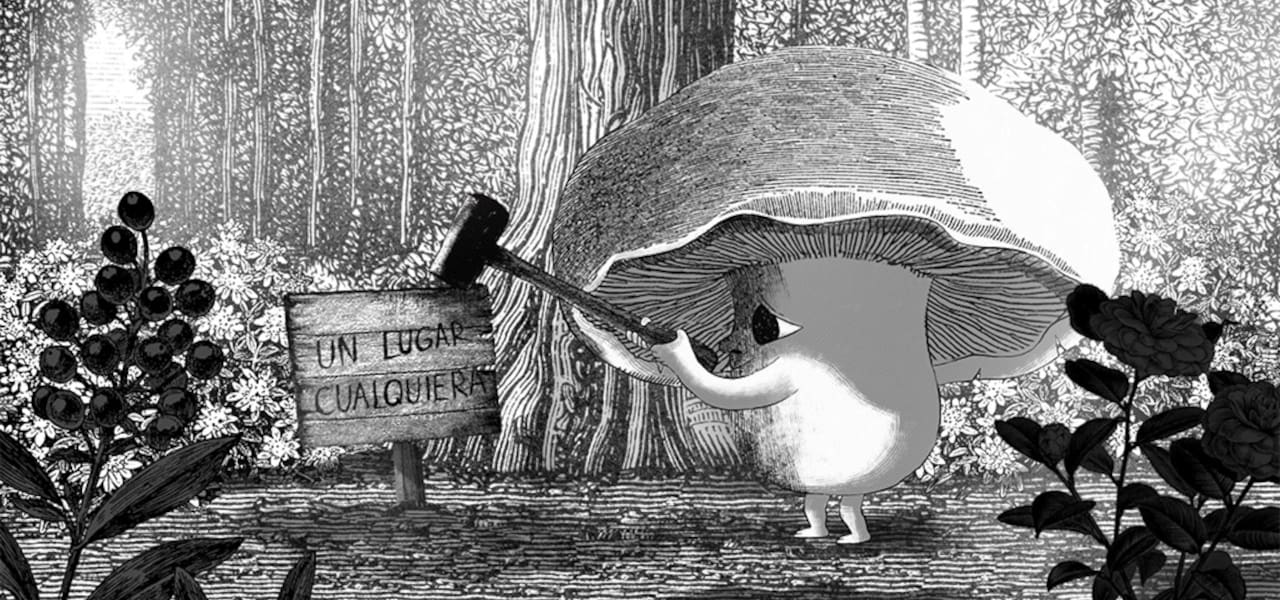
The world of animation is currently reeling from a paradoxical moment of triumph and tragedy. Last week, at the prestigious Annecy International Animation Film Festival—the industry’s global gold standard—Alberto Vázquez’s Decorado earned the Paul Grimault Award. The film, a sophisticated evolution of his 2016 short of the same name, stood as a testament to the enduring power of Spanish animation. Yet, as the industry toasted this success in France, a dark cloud was gathering back in Madrid.
Telefónica’s Movistar Plus+, the Spanish telecommunications giant and a titan of domestic media, confirmed it is shuttering its short film acquisitions department. This decision abruptly terminates "Proyecto Corto," an initiative that for nearly three decades served as the bedrock of independent Spanish filmmaking. The move effectively severs a vital artery of private investment, leaving the future of emerging talent, particularly in the animation sector, in a state of profound uncertainty.
The Foundation of a Movement: What Was Proyecto Corto?
For three generations of Spanish filmmakers, Proyecto Corto was more than just a line item in a budget; it was a rite of passage. In an industry where the gap between a compelling concept and a completed, broadcast-ready film is often insurmountable, Movistar Plus+ acted as the bridge.
The program provided three critical pillars of support: direct financing, television distribution, and, perhaps most importantly, industry validation. By backing a short film, Movistar Plus+ gave fledgling directors and independent producers a "seal of approval" that allowed them to navigate the often-impenetrable world of film festivals and commercial markets. For animation studios, which frequently rely on shorts as a "proving ground" to test narrative techniques and visual styles before committing to feature-length projects, this support was nothing short of existential.
A Chronology of Decline: The Decision That Shocked an Industry
The decision to end the department comes after years of shifting corporate priorities within the telecommunications sector, but the speed of the dissolution has caught the creative community off guard.
- 1997–2025: The "Golden Era" of Movistar+ short film support, characterized by consistent acquisition, festival presence, and the cultivation of a massive library of Spanish short-form content.
- 2021: The launch of the MIANIMA market, a collaboration between Movistar+ and MIA (Mujeres en la industria de la animación), which signaled a commitment to diversity and the inclusion of female-led projects.
- Mid-2026: Internal restructuring at Movistar Plus+ leads to a strategic pivot away from short-form acquisition.
- June/July 2026: The official announcement of the closure of the short film department, coinciding with the Annecy International Animation Film Festival.
- Present Day: Industry organizations and veteran producers begin a concerted lobbying effort, urging the company to reconsider the decision.
The Architect of an Era: Guadalupe Arensburg
Central to the success of Proyecto Corto was Guadalupe Arensburg, a veteran executive whose name has become synonymous with the promotion of Spanish short films. Over her two-decade tenure, Arensburg evolved into more than a buyer; she was a mentor, a curator, and a fierce advocate for the artistic integrity of the short film format.
Industry peers credit Arensburg with the launch of hundreds of careers. Her strategy was simple but rigorous: she scouted talent at every major festival, from Clermont-Ferrand to Annecy, and treated short films not as "content filler," but as legitimate works of art. Her departure, and the subsequent dissolution of her department, is being viewed by many as a cultural loss for Spain.
Implications for the Animation Sector
The animation industry is expected to bear the brunt of this closure. Unlike live-action, where independent shorts can sometimes be produced on shoestring budgets, animation requires specialized software, rendering power, and long-term artist commitments.
Damián Perea, founder and director of Animayo—Spain’s only two-category Oscar-qualifying animation festival—has been a vocal critic of the move. "For me, the most valuable aspect was the visibility," Perea noted. "Having a short film broadcast on a channel like Movistar gave it a reach that is very difficult to achieve through other means. It brought the format closer to a wider audience and helped people appreciate it more."
.png)
Perea warns that the ramifications are long-term. "Losing initiatives like this doesn’t just affect current projects; it affects the future of animation and audiovisual storytelling in general. We are talking about the loss of a talent pipeline."
Official Responses and Industry Outcry
The reaction from the professional community has been swift and organized. MIA (Mujeres en la industria de la animación), which partnered with Movistar+ for the MIANIMA market, issued a formal statement urging the broadcaster to rethink its trajectory.
"Supporting short films means investing in the future of Spanish cinema, in the diversity of voices, and in the innovation that drives our industry," the statement read. The organization highlighted that the burden of this cut will fall disproportionately on emerging filmmakers and women directors, who have historically used these smaller platforms to establish their voices before moving into the high-budget feature film space.
Voices from the Field
Chelo Loureiro, founder of the acclaimed Abano Producións, has been among the most vocal defenders of the program. Her studio has produced award-winning works like Decorado, To Bird or Not to Bird, and The Body of Christ. "I don’t think Proyecto Corto should disappear," she told Cartoon Brew. "Quite the opposite; it should be strengthened. I sincerely believe there has never been another initiative in Spain dedicated to promoting short films like the one Movistar+ built."
Iván Miambres, of the studio Uniko, echoed these sentiments. Having collaborated on projects like Birdboy: The Forgotten Children and Unicorn Wars, Miambres described the closure as the end of "an era that shaped the history of Spanish short filmmaking." He emphasized the personal nature of Arensburg’s involvement: "She believed in them, championed them, and helped hundreds of filmmakers find an audience. Her sensitivity, generosity, and trust have left an indelible mark on all of us."
For smaller outfits, the impact is even more granular. Leticia Montalva of Pangur Animation noted that Movistar+ had backed every one of their shorts, from Interns to Only Rats. "Guadalupe was present at every stage of that journey," Montalva said. "Her trust and commitment were fundamental to the growth and consolidation of our studio."
Looking Ahead: Can the Gap Be Filled?
As the industry grapples with this void, the conversation has turned toward the possibility of institutional intervention. Can government bodies or other private platforms step in to fill the vacuum left by Movistar+?
While some remain optimistic that a new entity will emerge to "carry the torch," as Perea suggests, there is a pervasive skepticism. The institutional knowledge built by Arensburg and her team over 27 years is not easily replicated. Without a centralized, high-profile platform to showcase these works, the risk is that Spanish short films will become increasingly siloed, playing only to niche festival crowds rather than reaching the broader, mainstream audiences that Movistar+ provided.
The situation remains fluid. While Movistar Plus+ has not yet issued a formal retraction or a plan to re-evaluate its decision, the mounting pressure from the creative sector suggests that this is not a closed chapter. For now, the Spanish animation industry stands at a crossroads: the loss of its most reliable patron marks a somber turning point, one that forces a reckoning about the value of art in an increasingly corporatized media landscape.
The success of Decorado at Annecy serves as a bittersweet reminder of what is at stake. It is a product of a system that supported, nurtured, and celebrated the avant-garde. Whether such works will have a home in the future of Spanish media is a question that now haunts the entire creative community.


 Asro
Asro
 Nana Wu