The gaming industry is currently standing at a precipice. This week, Sony Interactive Entertainment ignited a firestorm of controversy by confirming that PlayStation gaming will move to a strictly digital-only distribution model by January 2028. This transition, which effectively sounds the death knell for physical discs, has been met with widespread backlash from a community that prizes tangible ownership. To make matters worse, the announcement arrived on the heels of another PR disaster: the revelation that hundreds of digital films would be purged from user accounts, further fueling anxiety regarding the fragility of digital licenses.
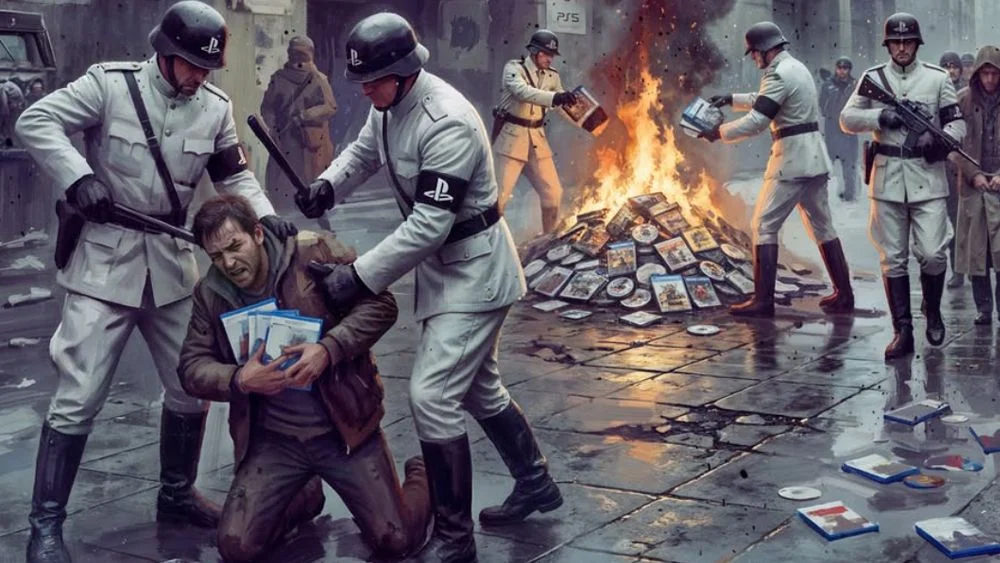
Amidst this tension, digital artist Beeple—known for his record-breaking NFT sales and provocative commentary—weighed in with a searing piece of art on Instagram. His depiction of a dystopian reality where riot police incinerate physical game boxes has sparked a secondary, equally heated debate about the nature of digital preservation, the irony of NFT proponents critiquing digital-only futures, and the creeping influence of generative AI in modern discourse.
The Chronology of a Controversy: A Week of Bad Optics
The current outcry did not emerge in a vacuum; it is the culmination of a decade-long drift toward "games as a service" (GaaS). However, the timeline of the last seven days suggests a corporate strategy that has been significantly tone-deaf.
- Mid-Week: Sony confirms that, effective January 2028, all PlayStation software will be exclusively digital. No further physical discs will be manufactured or supported for future hardware iterations.
- The Catalyst: Two days prior to this announcement, news broke that a large library of digital content (specifically licensed films) was to be removed from the PlayStation storefront, leaving users who had "purchased" these items with nothing.
- The Public Reaction: Social media platforms, including X (formerly Twitter) and Reddit, saw an immediate surge in "pro-physical" sentiment. The prevailing argument is that digital ownership is merely a "long-term rental" subject to the whims of licensing agreements.
- The Artistic Intervention: Beeple, a household name in the digital art world since his $69.3 million Christie’s auction, posted his latest "Everyday" image on Instagram. The work depicts a totalitarian regime burning video games, evoking the literary sensibilities of George Orwell’s 1984 and Ray Bradbury’s Fahrenheit 451.
The Beeple Effect: Art, Ambiguity, and Irony
Beeple’s entry into the conversation has added a layer of complexity to the discourse. By framing the end of physical media as a state-sanctioned purge, the artist has forced the gaming community to confront the existential weight of the transition. Yet, the image is not without its detractors.
Critics have pointed to the inherent irony in Beeple—a man who became synonymous with the NFT boom—lamenting the loss of physical media. NFTs, by their nature, are digital assets that rely on the very cloud-based infrastructure that physical-media collectors despise. Some argue that Beeple is merely "trolling" the community, while others suggest the image is a genuine critique of corporate overreach.
The Generative AI Complication
A significant portion of the online debate has shifted from Sony’s policy to the creation of the art itself. Many observers have speculated that the image was generated using AI tools. This has led to a backlash within the backlash: "Being mad about less physical media is a preservationist mindset, but all AI does is ruin our planet," one prominent commenter noted.
While Beeple has utilized tools like Photoshop and Cinema 4D—industry standards for 3D modeling—to build his career, his history with AI remains a point of contention. If the artist is using generative tools to critique the loss of "human" touch in media consumption, the irony is not lost on his audience.
The Case for Physical Media: Why Ownership Matters
At the heart of the outcry is a fundamental disagreement over what "owning" a game actually means. Under the current digital-only paradigm, consumers are essentially buying a revocable license.
The Licensing Trap
Unlike a physical disc, which can be played indefinitely regardless of a company’s server status or licensing agreements, digital titles exist at the mercy of the publisher. If a license expires, or if a platform decides to delist a title, the content vanishes. The recent film-deletion debacle underscored this fear: if a company can pull a movie from a library, it can certainly pull a game.
Preservation and Landfill
Conversely, proponents of the digital shift—or at least, those who are more indifferent—argue that physical media has its own environmental and practical costs. Modern AAA games often exceed 100GB, far outstripping the capacity of standard Blu-ray discs. Consequently, the disc is often little more than a "key" that requires a massive day-one patch to be playable. Furthermore, millions of plastic cases and scratched discs end up in landfills every year, contributing to an environmental impact that physical-media advocates rarely address.
Corporate Strategy vs. Consumer Trust
Sony’s decision to move toward a digital-only future is undoubtedly driven by the bottom line. Digital sales eliminate the costs of manufacturing, shipping, and retail markups. They also allow companies to exert total control over the secondary market, effectively killing the used-game industry.
However, the "brand comms" failure here is undeniable. By announcing the end of physical media while simultaneously deleting content from existing user libraries, Sony has signaled a lack of respect for the digital consumer’s investment. Trust is the currency of the gaming industry; by stripping away the illusion of permanence, Sony has left its most loyal customers feeling vulnerable.
Implications for the Future of Media
As we look toward 2028, the implications of this shift are profound:
- The Rise of Subscription Models: With the physical safety net removed, the industry is likely to accelerate its transition to subscription services (e.g., PlayStation Plus). This moves gaming closer to the "Spotify model," where access is everything and ownership is obsolete.
- The Preservation Crisis: Historians and archivists are concerned that the move to digital-only will result in "digital dark ages." Without physical backups, if a server goes down or a company goes bankrupt, the cultural history of the medium could be erased instantly.
- The Shift in Artistic Expression: Artists like Beeple will continue to use digital mediums to critique these trends, but the irony of using digital tools to mourn the loss of physical artifacts will remain a central theme of the 21st-century aesthetic.
Conclusion: The Finality of the Digital Byte
Sony’s announcement is not merely a logistical shift; it is a cultural pivot. Whether it represents progress or a dangerous overreach of corporate power remains a subject of intense debate. What is clear is that the relationship between the consumer and the content is changing permanently.
As we move toward a world where games are streamed or downloaded rather than shelved, the voices of dissent—whether expressed through social media threads, Reddit forums, or the provocative digital art of creators like Beeple—highlight a growing anxiety about what we stand to lose. In the quest for convenience, we may be sacrificing the very thing that made gaming a medium worth preserving: the ability to hold a piece of history in our hands.
The debate, as Beeple’s work suggests, is far from over. It is merely beginning, and the outcome will define the next generation of entertainment.