Published: July 3, 2026
In the annals of video game history, few titles have garnered the sheer anticipation and immediate critical acclaim as Rockstar Games’ Red Dead Redemption 2. Released in 2018, the sprawling Western epic was hailed almost universally as a masterpiece, a benchmark in open-world design, narrative depth, and technical prowess. Yet, as the industry marks its eighth anniversary, a dissenting voice emerges, challenging the established narrative and prompting a re-evaluation of its fundamental gameplay experience. For some, Red Dead Redemption 2 isn’t just an immersive world; it’s the gaming equivalent of watching paint dry, a title whose relentless pursuit of realism ultimately compromises its capacity for genuine enjoyment.
This provocative claim, articulated by a seasoned former video game journalist, suggests that beneath the veneer of its breathtaking landscapes and compelling story, Red Dead Redemption 2 harbors core mechanics that are cumbersome, tedious, and fundamentally antithetical to engaging gameplay. While acknowledging its undisputed technical achievements and narrative brilliance, the author contends that the game’s hyper-realistic approach to mundane tasks transforms what should be a thrilling adventure into a frustrating slog. This perspective, though contrarian, opens a vital discourse on the delicate balance between immersion and entertainment, particularly as the gaming world eagerly awaits Rockstar’s next monumental release, Grand Theft Auto 6.
The Genesis of Disillusionment: A Journey from Hype to Boredom
The initial fervor surrounding Red Dead Redemption 2‘s launch was palpable. For many, including the author, the game represented the zenith of modern gaming ambition. Having been "gassed" – a colloquialism for immense excitement – upon securing a copy, the anticipation was rooted in a deep appreciation for Rockstar’s previous works. The original Red Dead Redemption had left an indelible mark, its poignant conclusion evoking genuine emotional responses. Similarly, Grand Theft Auto V stood as an all-time favorite, a testament to Rockstar’s ability to craft engaging narratives within vibrant, dynamic worlds. With such a stellar pedigree, the expectation was not merely for a good game, but for an experience that would transcend conventional boundaries and redefine interactive entertainment.
The publisher’s reputation for meticulous world-building and character development only amplified this pre-release hype. Industry insiders and fans alike foresaw Red Dead Redemption 2 as a guaranteed success, a title poised to sweep awards and set new standards. Indeed, the author’s previous employer, a now-defunct video game website, even granted a day off to celebrate its launch – a testament to the game’s perceived cultural significance within the industry. This environment of overwhelming positive anticipation set a high bar, one that, for the author, Red Dead Redemption 2 conspicuously failed to clear within mere hours of play.
The early stages of the game, characterized by a slow, deliberate trudge through snow-laden landscapes, the establishment of camp at Horseshoe Overlook, and the eventual discovery of Valentine, quickly eroded this initial excitement. What many critics praised as a masterful slow burn, the author experienced as profound boredom. The meticulously crafted details, intended to foster immersion, instead became obstacles to engagement. This immediate disconnect, surfacing within the first few hours of what was supposed to be a groundbreaking experience, planted the seeds of a skepticism that would only deepen with time, culminating in the bold assertion eight years later that, for all its accolades, Red Dead Redemption 2 is a "terrible game" from a playability standpoint.
The Allure and Burden of Realism: Supporting Data for a Divisive Claim
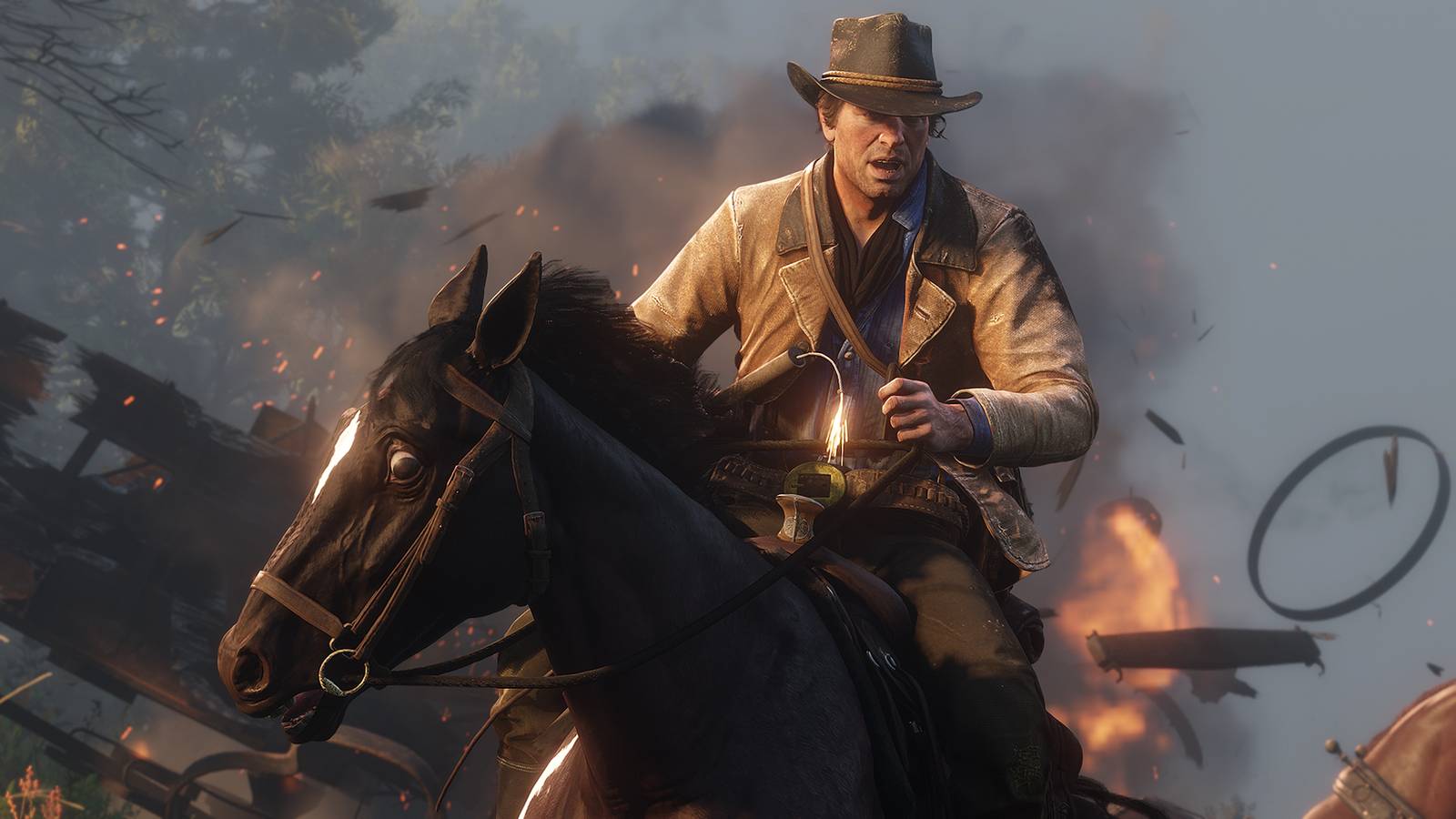
The core of the author’s critique lies in the game’s unwavering commitment to realism, a design philosophy that, while technically astounding, is argued to actively undermine player enjoyment. Red Dead Redemption 2‘s world is undeniably a marvel of digital craftsmanship. The sheer scope of its ecosystems, boasting 178 different species of animals, each with unique habitats, behaviors, and intricate hunting mechanics, is a testament to Rockstar’s unparalleled attention to detail. Interiors are meticulously rendered, every drawer and cabinet seemingly designed for interaction. This level of granular detail, while impressive on a technical résumé, becomes a source of frustration rather than fascination for the discerning player seeking dynamic gameplay.
Cumbersome Mechanics as a Barrier to Enjoyment
The pursuit of hyper-realism manifests in several key gameplay mechanics, transforming what should be engaging activities into laborious chores:
-
The Tedium of the Hunt: Hunting in Red Dead Redemption 2 is a prime example of realism eclipsing fun. While the intricate details – tracking scents, understanding animal behaviors, choosing appropriate bait and weaponry – are commendable from a simulation standpoint, the actual execution often devolves into prolonged periods of inactivity. Slowly following a faint scent trail, setting up a trap, and then waiting for minutes on end hidden in a bush for an animal to appear is a painstakingly slow process. This deliberate pacing, while mimicking real-world hunting, clashes with the fundamental expectation of a video game to provide consistent stimulation and immediate gratification. Unlike other games where hunting might be a brisk, action-oriented mini-game, RDR2‘s approach demands a level of patience that many players find unsustainable, breaking the flow of the narrative and overall adventure.
-
The Snail’s Pace of Looting: Another significant point of contention is the game’s looting system. Eschewing the instant inventory pop-ups common in most open-world titles, RDR2 forces players to physically interact with every container. Arthur Morgan must open individual drawers, rifle through cabinets, and pick up items one by one, often accompanied by slow, deliberate animations. While this undoubtedly enhances immersion by grounding the player within the world, it grinds the game’s pace to a halt. Imagine clearing an enemy camp or exploring a new building; the act of systematically searching every nook and cranny for valuable items becomes a repetitive, time-consuming exercise that detracts from the thrill of discovery or combat. The commendability of this detailed approach quickly gives way to exasperation when the player simply wants to progress.
-
Frustrating Equine Navigation: As the primary mode of transport in the vast Western landscape, horseback riding is a crucial mechanic that, according to the author, often falls short. While the game strives for realistic horse physics and behavior, the implementation can feel clunky and unresponsive, particularly in challenging scenarios. Navigating sharp turns, traversing narrow, uneven paths, or engaging in mounted combat frequently proves frustrating. Unlike the fluid, precise vehicle controls of Grand Theft Auto V, the nuances of managing a "live animal with legs instead of wheels" often translate into accidental collisions, missed targets, and a general sense of lacking full control. This friction with a core traversal method significantly impacts the overall enjoyment of exploring the game’s otherwise stunning world.
Pacing and Narrative Dissonance
These cumbersome mechanics contribute to an overarching issue of pacing. Red Dead Redemption 2‘s narrative, though often gripping and emotionally resonant, is frequently interrupted by these slow, deliberate gameplay loops. The dramatic tension built by a cinematic cutscene or a critical mission objective can be immediately deflated by several minutes spent tediously looting a room or patiently waiting for an animal during a mandatory hunting quest. This dissonance between the high-stakes narrative and the low-engagement gameplay moments creates a stop-start rhythm that can be profoundly disengaging.
Player Engagement in the Modern Era: The Attention Span Argument
The author acknowledges a personal dimension to this struggle, citing ADHD as a potential factor in their inability to maintain attention during RDR2‘s slower moments. However, this personal insight is then broadened into a more universal critique relevant to contemporary gaming. In an era dominated by "short-form content consumption" – TikTok, YouTube Shorts, and an endless stream of easily digestible media – attention spans are demonstrably shorter across a wide demographic. The sheer breadth of entertainment media available means players have an unprecedented number of options, many of which prioritize immediate engagement and fast-paced action. In this competitive landscape, Red Dead Redemption 2‘s deliberate, often ponderous pace, while intended as a feature, can inadvertently alienate a significant portion of the modern player base who are accustomed to, and perhaps conditioned for, more immediate and constant stimulation. The question arises: does a game, no matter how technically brilliant, risk becoming obsolete in its design philosophy if it fails to adapt to evolving player habits?
Rockstar’s Vision and Critical Consensus: An Industry Perspective
At its release, Red Dead Redemption 2 was not merely well-received; it was lauded as a triumph. Critics worldwide showered it with perfect scores, praising its unparalleled realism, expansive world, intricate narrative, and groundbreaking attention to detail. Awards ceremonies saw it dominate categories, cementing its status as a cultural touchstone and a commercial juggernaut, selling millions of copies and generating billions in revenue. This overwhelming positive reception stands in stark contrast to the author’s personal experience, highlighting a potential disconnect between critical appreciation for technical ambition and the subjective experience of gameplay enjoyment.

Rockstar Games has always been known for its uncompromising vision and its pursuit of pushing technological boundaries. From the sprawling urban landscapes of Grand Theft Auto to the gritty frontiers of Red Dead Redemption, their titles are characterized by an obsessive commitment to creating immersive, believable worlds. Red Dead Redemption 2 arguably represents the apex of this design philosophy, where every leaf, every ripple in the water, every character animation was meticulously crafted to enhance the feeling of being truly present in the late 19th-century American West. For many, this very realism was the game’s greatest strength, fostering an unparalleled sense of immersion that allowed players to truly inhabit Arthur Morgan’s shoes.
Developer interviews and post-launch commentary often emphasized this commitment to authenticity. The design choices, from the slow looting animations to the complex horse mechanics, were intentional, aimed at slowing down the player and encouraging a more thoughtful, deliberate engagement with the world. This approach was celebrated by a segment of the gaming community who craved a deeper, less "gamey" experience, one that prioritized simulation over arcade-style action. However, the author’s critique, voiced eight years after the initial euphoria, suggests that for another segment of players, this very commitment to realism crossed a line, transforming immersive features into tedious hindrances. The initial critical consensus, while reflecting a valid perspective on the game’s achievements, may have overlooked how these design choices impacted long-term player engagement for those less enamored with simulation.
Implications for the Future: The GTA 6 Conundrum and Beyond
The discussion surrounding Red Dead Redemption 2‘s divisive gameplay takes on added significance with the imminent arrival of Grand Theft Auto 6, slated for release before the end of the year (2026). As Rockstar’s next flagship title, GTA 6 will inevitably face intense scrutiny, particularly regarding its approach to realism versus entertainment. The author expresses a cautious optimism that Rockstar will "dial back the realism a touch" for its modern-era, more overtly comical sibling series.
Grand Theft Auto has historically embraced an over-the-top, satirical tone, characterized by fast-paced action, absurd scenarios, and a deliberate disregard for strict realism in favor of pure fun. Its settings, often bustling metropolitan areas, naturally lend themselves to a quicker pace of life and gameplay. The challenge for Rockstar, therefore, will be to find that crucial "balance between entertainment and realism." Can they leverage the technical advancements honed in Red Dead Redemption 2 to create an immersive world for GTA 6 without burdening players with the cumbersome mechanics that plagued its Western counterpart? The success of GTA 6 may well depend on how deftly Rockstar navigates this tightrope, ensuring that innovation serves enjoyment rather than overshadowing it.
Re-evaluating the "Masterpiece" Label
The author’s concluding remarks offer a nuanced perspective on Red Dead Redemption 2‘s legacy. While acknowledging it as a "wonderfully crafted game" and "one of the best technical achievements of all time," they reiterate that these accolades do not automatically translate into a "very good video game" in terms of pure playability. This distinction is crucial: a game can be an artistic and technical marvel while still failing to consistently deliver an enjoyable interactive experience for all players.
The possibility of revisiting Red Dead Redemption 2 on PC, with the aid of a mouse and keyboard and potentially "a few mods installed to improve the experience," offers a glimmer of hope. The modding community often steps in where developers’ design choices diverge from player preferences, streamlining tedious mechanics or enhancing quality-of-life features. This suggests that the core appeal of RDR2‘s world and narrative remains, but its default gameplay wrapper is the primary impediment.
Ultimately, the eight-year reflection on Red Dead Redemption 2 prompts a broader conversation within game design: How much realism is too much? When does the pursuit of authentic simulation begin to detract from the core tenets of interactive entertainment – engagement, agency, and fun? While Red Dead Redemption 2 will forever be celebrated for its groundbreaking achievements, this contrarian viewpoint serves as a valuable reminder that even the most lauded titles can harbor fundamental design choices that polarize players, forcing a re-evaluation of what truly constitutes a "masterpiece" in the ever-evolving landscape of video games.