Pevita Pearce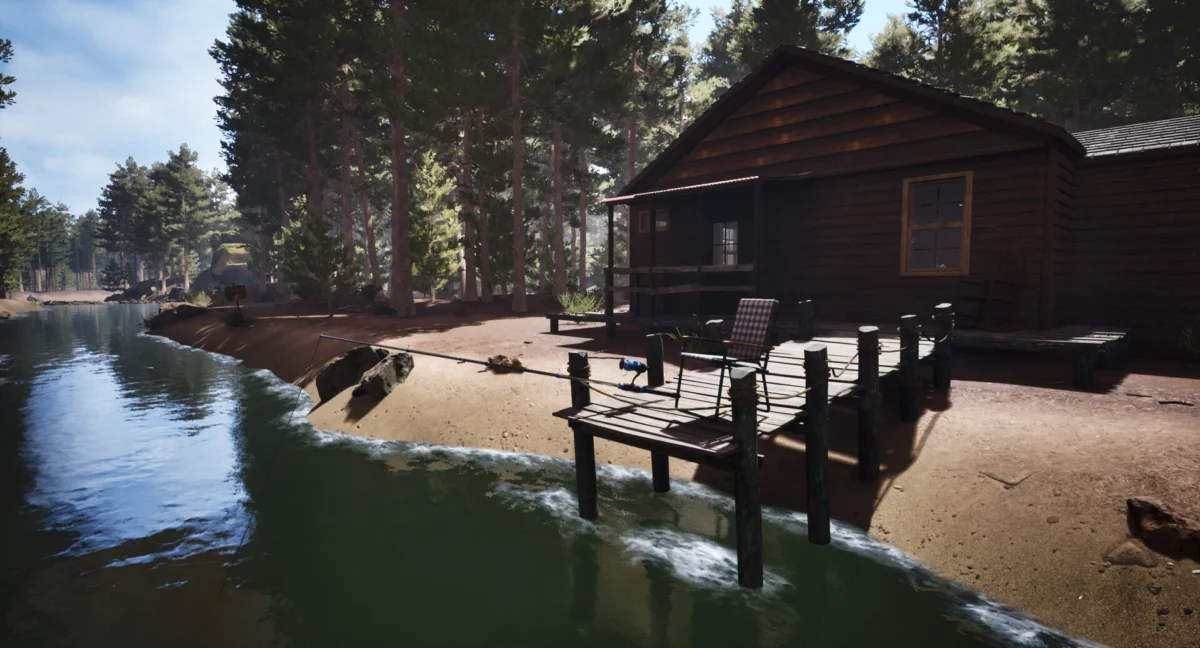
In the vast, often saturated landscape of the survival horror genre, titles usually strive for visceral dread, psychological trauma, or supernatural terror. We are accustomed to hulking figures in hockey masks, cosmic entities from beyond the stars, and the inevitable shambling hordes of the undead. However, every so often, a title emerges that defies these conventions by leaning into the absurd. Don’t Mess With Bober is exactly that—a project that understands the line between genuine tension and comedic relief is thinner than a piece of driftwood.
The premise is deceptively simple: a lone protagonist seeks solitude in a remote lakeside cabin, only to find themselves hunted by a vengeful, oversized beaver named Bober. While the title sounds like a slapstick parody, the game delivers an experience that is surprisingly competent at building atmosphere, even if it intentionally leans into "so bad it’s good" territory.
The Core Premise: Survival Against the Odds (and the Rodents)
At its heart, Don’t Mess With Bober is a short-form survival horror experience designed for quick, intense sessions. The player assumes the role of an unnamed urban dweller fleeing the bustle of modern life for a quiet weekend in the woods. This is a classic horror trope, utilized to isolate the player and strip away the safety nets of civilization.
The conflict begins when the protagonist crosses paths with the titular antagonist, Bober. Unlike a traditional monster that might require ammunition or tactical maneuvering to defeat, Bober is a force of nature—a territorial, bloodthirsty rodent with a grudge. The gameplay loop cycles through exploration, environmental puzzles, and high-stakes chase sequences. The developer leans heavily into the absurdity of the premise, acknowledging that an angry beaver is an unconventional villain. Yet, by treating the threat with a veneer of seriousness, the game creates a unique psychological friction that keeps the player engaged.
Chronology of the Experience
The game follows a linear progression that mirrors the structure of a B-movie horror flick.
Phase 1: The Illusion of Peace
The opening segment serves as a deliberate "lull before the storm." The player is invited to explore the cabin and its immediate surroundings. The mechanics are sparse here, functioning mostly as a walking simulator that establishes the setting’s isolation. The sound design is a critical component during this phase; the rustle of leaves and the distant lap of lake water are designed to make the player hyper-aware of their surroundings.
Phase 2: The First Encounter
The inciting incident occurs when the protagonist unwittingly disrupts Bober’s habitat. The transition from exploration to active pursuit is jarring. This is where the game introduces its core mechanic: the cat-and-mouse chase. The player must navigate the woods with nothing but a flickering flashlight, a tool that is as much a hindrance as it is a help, as it draws attention to the player’s location.

Phase 3: The Climax and Resolution
As the game progresses, the puzzles become slightly more involved, requiring the player to manipulate the environment to barricade doors or find hidden pathways. The climax brings the conflict to a fever pitch, testing the player’s reflexes. The entire experience is condensed into roughly an hour of gameplay, ensuring that the joke doesn’t overstay its welcome.
Supporting Data and Technical Analysis
While the game succeeds in its commitment to the "bit," a critical analysis reveals significant technical hurdles. Don’t Mess With Bober is admittedly "rough around the edges."
Gameplay Mechanics
The core gameplay leans heavily toward the walking simulator genre. For players seeking deep combat systems or complex skill trees, Bober will likely fall short. The interactions are limited to basic environmental prompts. However, this simplicity serves a purpose: it prevents the player from becoming too powerful. When you cannot fight back, the sense of vulnerability—even when being pursued by a beaver—is magnified.
Performance and Visuals
On platforms like the Nintendo Switch, the game performs adequately but does not push hardware limits. The visual aesthetic is functional, utilizing low-light environments to hide technical imperfections. While not a graphical powerhouse, the game effectively uses lighting to build suspense.
The "B-Movie" Factor
The voice acting is perhaps the most divisive element of the game. It is, by all traditional metrics, "bad." However, in the context of the game’s intentional absurdity, this subpar voice work acts as a bridge to the "so bad it’s good" aesthetic. It creates a tonal consistency that keeps the game from taking itself too seriously, which is vital given the premise.
Official Stances and Developer Intent
The development philosophy behind Don’t Mess With Bober appears to be one of "enthusiastic absurdity." There has been no attempt to market the title as a groundbreaking narrative experience. Instead, the developers have positioned the game as a digestible, humorous, and occasionally jump-scare-heavy romp.
In discussions surrounding the title, the consensus remains that the game is "aware." It knows that a beaver is not a terrifying monster in the traditional sense, and it relies on the player’s knowledge of that irony to generate humor. The developers seem to have prioritized "memorable moments" over "masterpiece status," focusing on creating a short experience that is perfect for streaming and social media interaction.

Implications for the Indie Horror Genre
The success and reception of Don’t Mess With Bober highlight a growing trend in the indie horror scene: the move toward "micro-horror."
The Rise of Short-Form Horror
In an era of massive, hundred-hour RPGs, there is a clear market for games that can be completed in a single sitting. Don’t Mess With Bober proves that if a concept is strong enough—or weird enough—it doesn’t need a sprawling map or a complex lore database to be effective.
The "Streaming" Effect
The game is tailor-made for streamers. Its short runtime, high-octane jump scares, and absurd premise provide excellent fodder for content creators. By focusing on reactions rather than deep mechanical engagement, Bober secures its place in the modern gaming ecosystem.
Is "Bad" Actually Good?
The game forces us to question the standards by which we judge horror games. If a game is meant to be funny and scary, and it achieves both, does it matter if the voice acting is clunky or the mechanics are simple? Don’t Mess With Bober suggests that "fun" is a metric that often supersedes "technical perfection." It validates the "so bad it’s good" trope as a legitimate stylistic choice rather than a failure of execution.
Conclusion: Should You Mess With Bober?
If you are a connoisseur of high-fidelity survival horror seeking the next Resident Evil or Silent Hill, Don’t Mess With Bober is not for you. You will find the gameplay too simple, the story too thin, and the technical polish lacking.
However, if you appreciate the charm of a low-budget slasher flick, or if you are looking for an hour of lighthearted, slightly tense entertainment, Bober is a surprisingly effective palate cleanser. It is a testament to the idea that with enough commitment to a bizarre concept, even the most mundane woodland creature can become the star of a memorable adventure.
The game is a reminder that not everything in the gaming world needs to be a profound statement on the human condition. Sometimes, you just need to be chased through the woods by an angry beaver while laughing at the absurdity of it all. In that specific niche, Don’t Mess With Bober succeeds entirely. It may be rough, it may be short, and it may be "stupid," but it is an experience that stays with you—much like a beaver bite, one assumes.

 Sagoh
Sagoh
 Ammar Sabilarrohman