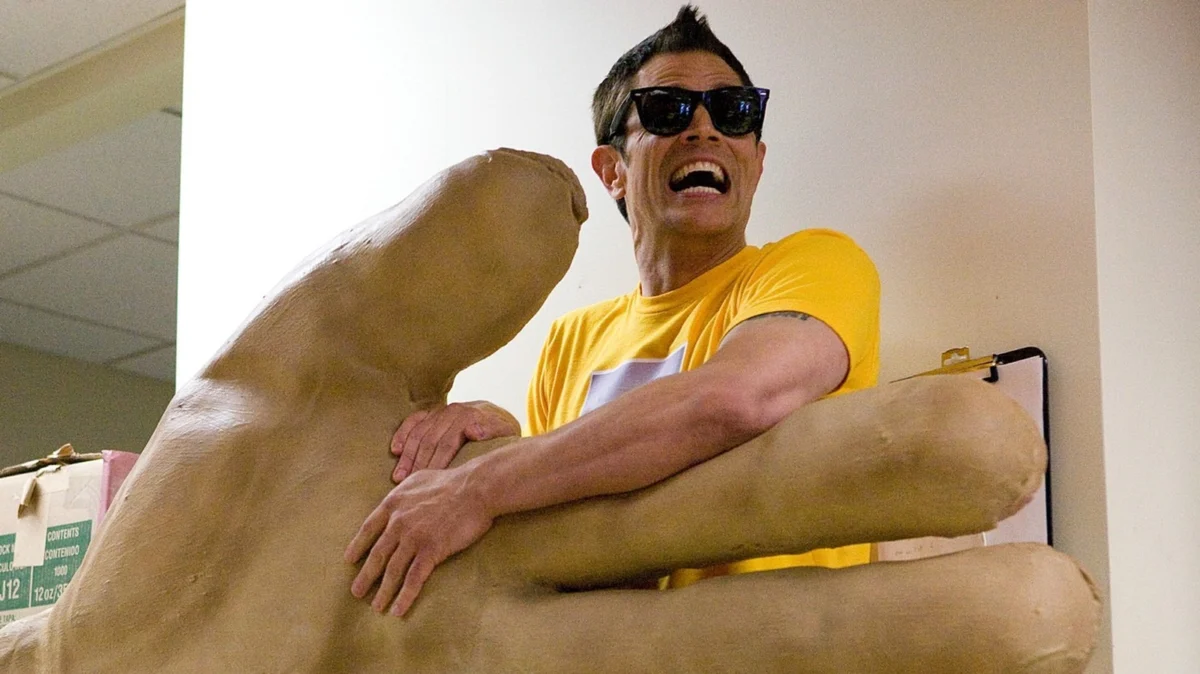
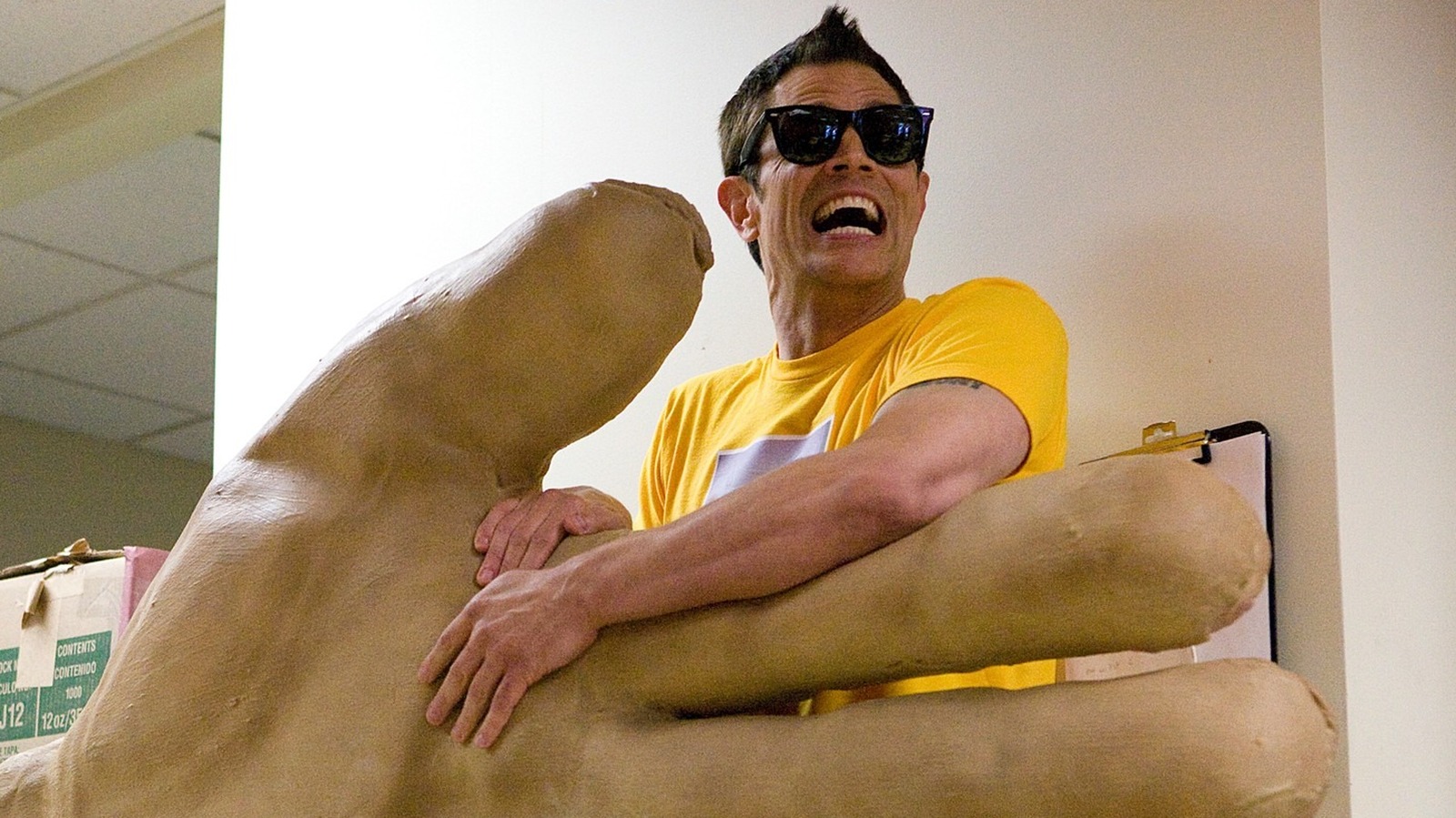
Johnny Knoxville is a name synonymous with the reckless, high-octane, and often painful culture of "Jackass." For over two decades, he has served as the architect of a stunt-based empire that defined a generation of pop culture. However, a deep dive into the actor’s financial filmography reveals a bizarre statistical anomaly: the highest-grossing film of Knoxville’s entire career is not a stunt-filled romp or a comedy vehicle, but a blockbuster superhero feature in which he never physically appears on screen.
The film is the 2014 iteration of Teenage Mutant Ninja Turtles, produced by Michael Bay. While Knoxville’s voice provided the soul for the leader of the pack, Leonardo, the actor’s presence in the film serves as a fascinating case study in Hollywood’s shifting strategies toward celebrity voice-over casting and the volatile nature of blockbuster franchise filmmaking.
The Context: A Career Defined by Stunts
To understand the irony, one must look at the trajectory of Knoxville’s career. From the early 2000s, Knoxville was arguably the most famous stunt performer on the planet. His work in the Jackass franchise—a series that combined extreme sports, slapstick, and genuine physical danger—cemented his status as a cultural icon. Even as he moved into more traditional acting roles in films like The Dukes of Hazzard and The Ringer, his identity remained inextricably linked to the "Jackass" brand.
By 2014, Knoxville was looking to diversify his professional portfolio. Having recently starred in the Oscar-nominated comedy Bad Grandpa, he was exploring avenues that allowed him to reach broader, younger audiences without necessarily needing to break a bone in the process. It was during this transitional period that Paramount Pictures approached him to provide the voice for Leonardo in the reboot of Teenage Mutant Ninja Turtles.
Chronology: A Last-Minute Addition to the Half-Shell
The casting of Knoxville was a tactical decision made in the final stretch of the film’s production. In April 2014, just four months before the movie’s wide release, news broke that Paramount had brought on Knoxville to voice Leonardo.
The physical performance of the character had already been captured on set by actor Pete Ploszek, who utilized motion-capture technology to bring the leader of the turtles to life. The decision to layer a recognizable "star" voice over an established motion-capture performance is a practice that has become increasingly common in Hollywood, though it remains a point of contention among industry professionals who argue it undermines the work of the primary physical performers.
For Knoxville, the decision was driven by personal motivation rather than calculated career moves. In a 2014 interview with ScreenSlam, the actor admitted, "My son is a huge fan of the Ninja Turtles, so I thought, you know, if I want to score some points with my kids, that’s why I was very happy to take the job." It was a sentimental choice for a father, yet it inadvertently resulted in the most financially lucrative venture of his professional life.
Supporting Data: The Box Office Breakdown
The performance of the 2014 Teenage Mutant Ninja Turtles at the box office was nothing short of a juggernaut, particularly during its opening weekend. Released on August 8, 2014, the film debuted to a massive $65.5 million domestically.
This opening was enough to topple the reigning champion of that summer, Marvel’s Guardians of the Galaxy. At the time, Guardians was considered an unlikely hit for Marvel Studios, but the cultural weight of the Ninja Turtles franchise proved to be an irresistible draw for audiences.
The financial data regarding the film is stark:
- Production Budget: Approximately $125 million.
- Domestic Opening Weekend: $65.5 million.
- Global Box Office Total: $485 million.
When compared to his other major projects, the numbers are telling. His second-highest-grossing film, Men in Black II (2002), brought in $441 million worldwide. However, unlike TMNT, where he voiced a main character, his role in Men in Black II was significantly smaller. The success of the 2014 TMNT film placed it firmly in the top 20 highest-grossing films of that year, outperforming hits like The LEGO Movie ($468 million).
Critical Reception and The "Michael Bay" Factor
While the box office receipts painted a picture of success, the critical reception was far less enthusiastic. The film, directed by Jonathan Liebesman and produced by Michael Bay—the architect of the Transformers cinematic universe—was heavily criticized for its tonal inconsistencies and design choices.
The film currently holds a dismal 20% approval rating on Rotten Tomatoes. Critics largely panned the writing, though the technical aspects of the motion capture were acknowledged as a technical achievement of the era. The audience reaction was similarly lukewarm, with a 50% approval rating suggesting that while families flocked to theaters, the film failed to capture the nostalgic magic of the original 1990 live-action iteration.
Furthermore, the production environment was reportedly difficult. Alan Ritchson, who provided the voice and motion capture for Raphael, has spoken candidly in later years about his dissatisfaction with the experience. His public comments reflect a broader sentiment that the film was a product of corporate machinery rather than creative passion, a far cry from the organic, guerrilla-filmmaking spirit of Knoxville’s own Jackass projects.
The Disconnect: Why Knoxville Didn’t Return
The most puzzling aspect of this chapter in Knoxville’s career is the swift conclusion to his involvement. Despite the film’s status as a financial hit, Knoxville was not invited back for the 2016 sequel, Teenage Mutant Ninja Turtles: Out of the Shadows.
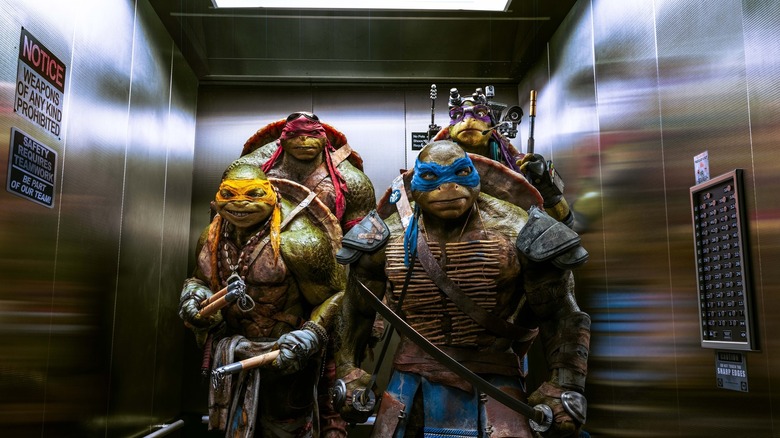
In the follow-up, the role of Leonardo was returned to Pete Ploszek, the actor who had provided the motion capture for the first film. When asked about his exclusion in a 2016 interview with Rama’s Screen, Knoxville expressed genuine confusion. "I have no idea! I’m like why am I not doing the voiceover for this?" he admitted. "I don’t know what happened. But I wish them all the luck in the world."
The exclusion of a "star" voice in favor of the original motion-capture performer suggests that the studio may have felt the need to streamline production costs or, perhaps, realized that the star-power casting of the first film did not necessarily correlate to long-term franchise loyalty.
Implications for the Franchise and Beyond
The 2016 sequel, Out of the Shadows, served as a sobering lesson for Paramount. It earned only $245 million worldwide against a $135 million budget—a significant financial decline from the first installment. The "dead end" of this specific iteration of the franchise led to a long hiatus for the live-action Turtles, with the studio eventually pivoting toward the 2023 animated hit Mutant Mayhem.
For Johnny Knoxville, the experience remains a fascinating footnote. He achieved the highest box office success of his career in a film that most critics disliked and from which he was eventually excluded. It highlights a recurring theme in the modern film industry: the disconnect between "star power" and "creative synergy."
Ultimately, the 2014 Teenage Mutant Ninja Turtles film serves as a reminder that box office dominance is often driven by brand recognition and spectacle rather than the specific contributions of the talent involved. Knoxville’s role as Leonardo was a lucrative, albeit brief, detour in a career built on physical risk and personal creative control. While he never appeared on screen, the "Knoxville factor" remains a curious, high-earning ghost in the history of the Ninja Turtles franchise, underscoring the unpredictable nature of Hollywood’s blockbuster era.