Neng Nana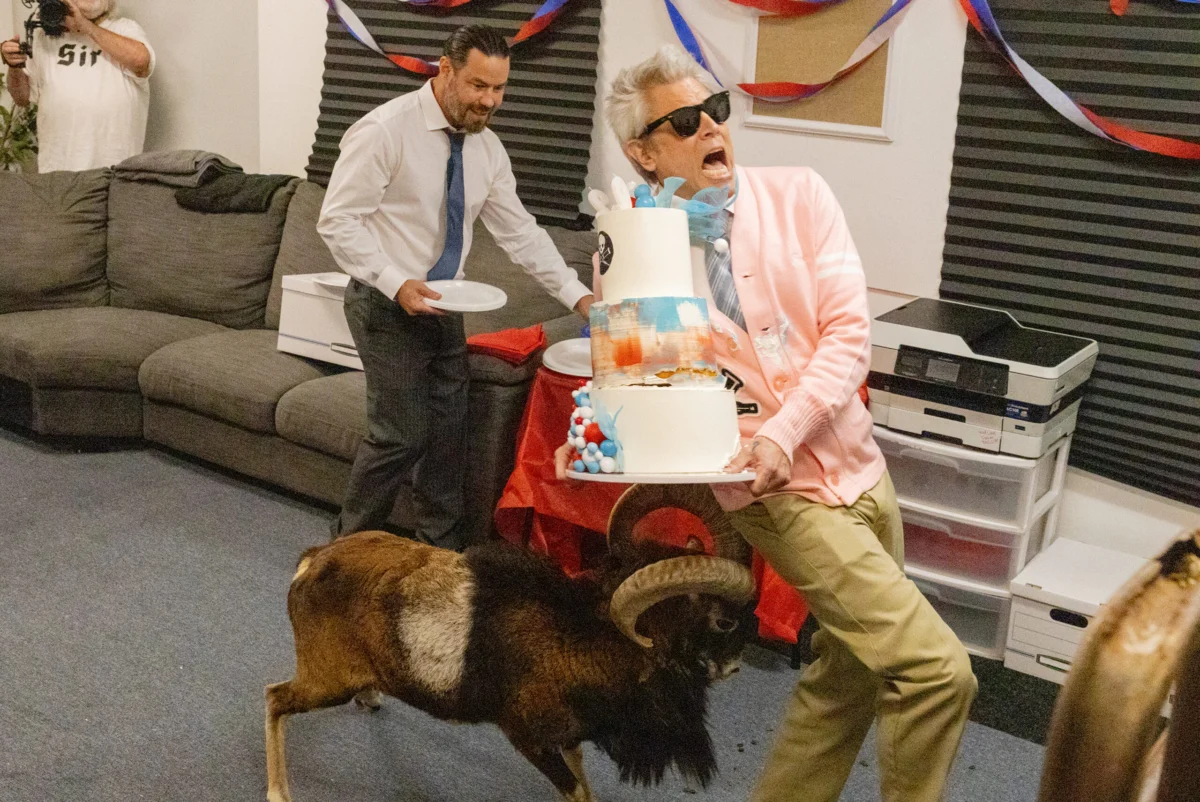
As director Jeff Tremaine prepares to close the book on the Jackass franchise with the final installment, Jackass: Best and Last, he finds himself reflecting on a cultural phenomenon that began with nothing more than a van, a handheld camera, and a complete disregard for self-preservation. From the raw, unpolished energy of the original MTV series to the high-definition, meticulously engineered chaos of the feature films, Jackass has remained a singular outlier in the landscape of American entertainment.
In a recent appearance on IndieWire’s Filmmaker Toolkit podcast, Tremaine offered a retrospective on how a group of reckless friends accidentally revolutionized the stunt genre, navigated the tightening grip of corporate oversight, and ultimately learned that the secret to their longevity was never about "topping" the last stunt—it was about keeping things simple.
The Wild West: The Origins of Reckless Creativity
To understand the Jackass legacy, one must understand its genesis. According to Tremaine, the early days of the MTV show were defined by a complete lack of professional architecture. "We 100 percent didn’t know what we were doing," Tremaine admits. "And there was no one telling us how to do it, and thankfully so."
This lack of experience acted as a catalyst. Johnny Knoxville, Tremaine, and the rest of the crew operated on pure instinct. A spark of an idea would materialize during a casual conversation, and within minutes, the entire production—cast, crew, and cameras—would be crammed into a single van, heading toward an unsuspecting public location to execute a prank.
The spontaneity was the show’s lifeblood. Tremaine recalls those days with a palpable sense of nostalgia: "I just miss how fast we moved and how recklessly we moved; it was so energetic. Nowadays, it’s 100 people, and we’re slowed down by the size of the production. Whereas the old days were just: come up with the idea, let’s not talk to lawyers or anybody, let’s just go, we’ll figure it out."

A prime example of this "ask for forgiveness, not permission" philosophy is the infamous Season 1 appearance of Brad Pitt. When Tremaine approached Pitt with the idea of kidnapping him in front of a crowded Pink’s Hot Dog Stand in Los Angeles, the Hollywood superstar didn’t consult his team. "He didn’t call his agent, a lawyer; there was nobody involved other than the reckless people that he was around, and him being reckless himself," Tremaine noted. The result was pure, unadulterated chaos, captured in real-time without the interference of corporate handlers.
The Corporate Pivot: MTV and the Rise of OSHA
The transition from a scrappy, guerrilla-style cable show to a household name brought significant friction. As Jackass surged in popularity, its influence on younger demographics drew the ire of government officials, most notably Senator Joe Lieberman. Following an incident where a viewer was injured while attempting a copycat stunt, the regulatory pressure on MTV became insurmountable.
"MTV got scared of us," Tremaine explained. "Senator Joe Lieberman made an example out of us… and so MTV put safety restrictions on us that never were there from the beginning." The network eventually mandated that an OSHA representative be present on set to vet every stunt. For a crew whose primary currency was unpredictability, this was an existential threat.
Tremaine finds the absurdity of that era humorous in hindsight. He recalls Steve-O jumping off a 12-step ladder into a pool of elephant excrement in Season 1, only for OSHA to later restrict the crew from jumping off a three-step ladder without chemical testing of the "shit." The move toward institutionalized safety, while necessary for a major network, threatened to sanitize the very thing that made Jackass compelling.
Scaling Up: From "Soft" Movies to High-Definition Spectacles
When the franchise migrated to the big screen, the shift was jarring. "It’s called ‘Mo’ Money, Mo’ Problems,’" Tremaine joked. The increased budget and higher stakes meant the production could no longer hide in a van. They had to learn how to be "professional," a process that, according to Tremaine, made the first Jackass movie feel "soft" in retrospect.

It wasn’t until Jackass 3 that the team learned how to marry their brand of idiocy with high-end film technology. Rather than fighting the production apparatus, Tremaine learned to use it to elevate the stunts. They began hiring dedicated stunt coordinators, not necessarily to stop them from doing dangerous things, but to help them figure out how to do those dangerous things more effectively.
"For Paramount, it was to make it safe; for me, it was like, ‘Oh, he can help figure out how to make things work,’" Tremaine explained. The evolution of the "Poo Cocktail" stunt serves as the perfect case study. In the original show, it was a low-fi, gritty affair involving a garbage truck. By the time they reached the third film, the stunt evolved into "Poo Cocktail Extreme." By using cranes and bungee cords, the team achieved a level of spectacle that was impossible in the early days.
Engineering the "Best and Last"
As the Jackass crew moved into their final film, Best and Last, their methodology had become a blend of high-concept engineering and raw, unvarnished human reaction. Tremaine describes the "Escape Room from Hell" as a masterclass in this approach. By collaborating with special effects supervisor Elia Popov, they were able to create an environment where the danger felt real to the cast.
"The electric chair did shock the shit out of him," Tremaine said of the bit with Ehren McGhehy. "But he didn’t know the sparks and all that were special effects. I think we scrambled his brain; he was being shocked by all the sparks; he blacked out in fear."
However, Tremaine is quick to note that professional tools don’t guarantee success. A stunt must have an arc. He points to the "human puppet show" in Best and Last as a bit that initially fell flat because it lacked a narrative shift. It wasn’t until they cut to a shot of Sean "Poopsies" McInerney smiling—a visual callback to his earlier surgical lip injections—that the bit found its comedic rhythm.

The North Star: Keeping it Simple
Throughout the decades, the Jackass franchise has survived where many others have faltered, primarily because the creative team never lost sight of their core objective. "The motivation is to make just us laugh," Tremaine stated. "That’s the most important thing. If we gauge it funny, then it’s a success to us, and hopefully that translates to the audience."
This philosophy was crucial in managing the expectations of Johnny Knoxville, who often wrestled with the pressure to "top" previous stunts. Tremaine’s advice to his star was always a call for simplicity: "I would always try to calm his ass down and say, ‘Listen, man, all we have to do is be funny. If we make something funny, people will like it. That’s it.’"
Implications and Legacy
The end of Jackass marks the conclusion of a specific era in American pop culture—one where the line between reality television, performance art, and physical comedy was blurred beyond recognition. While the industry has moved toward more sanitized, algorithmically-driven content, the legacy of Jackass remains a testament to the power of authentic, if occasionally misguided, creative collaboration.
Tremaine’s reflections highlight a fundamental truth in filmmaking: while budgets, special effects, and professional oversight can polish a production, they cannot manufacture the raw, infectious energy of a group of friends who genuinely find each other’s misfortune to be the height of comedy. As the franchise bows out, it leaves behind a blueprint for how to create something that is, at its core, unapologetically and joyfully stupid.

 Dwi Wanna
 Reynand Wu