Raul Delapena Setiawan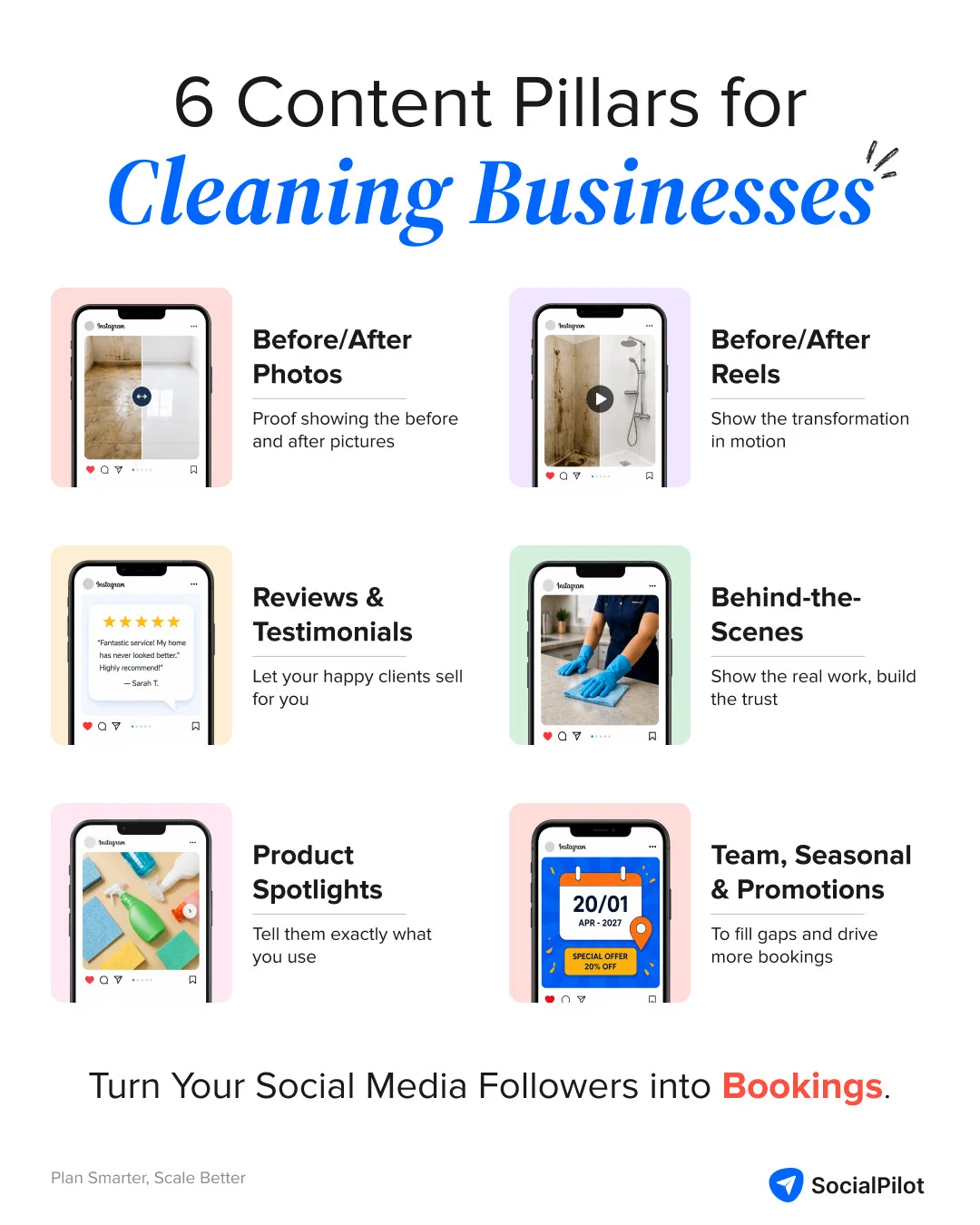
For the modern cleaning business owner, the digital landscape often feels like a paradox. You are delivering high-quality, tangible results—sparkling kitchens, pristine floors, and organized living spaces—yet your social media feeds remain digital ghost towns. You post before-and-after photos, share the occasional client testimonial, and wait for the phone to ring. Instead, you are met with silence.
The problem, as many small business owners are discovering, is not the quality of the work; it is the absence of a conversion system. In an industry where trust is the primary currency, social media must function as a bridge between a homeowner’s need and your calendar. If you are struggling to turn "likes" into bookings, you aren’t suffering from a lack of content—you are suffering from a lack of strategy.
The Disconnect: Activity vs. Acquisition
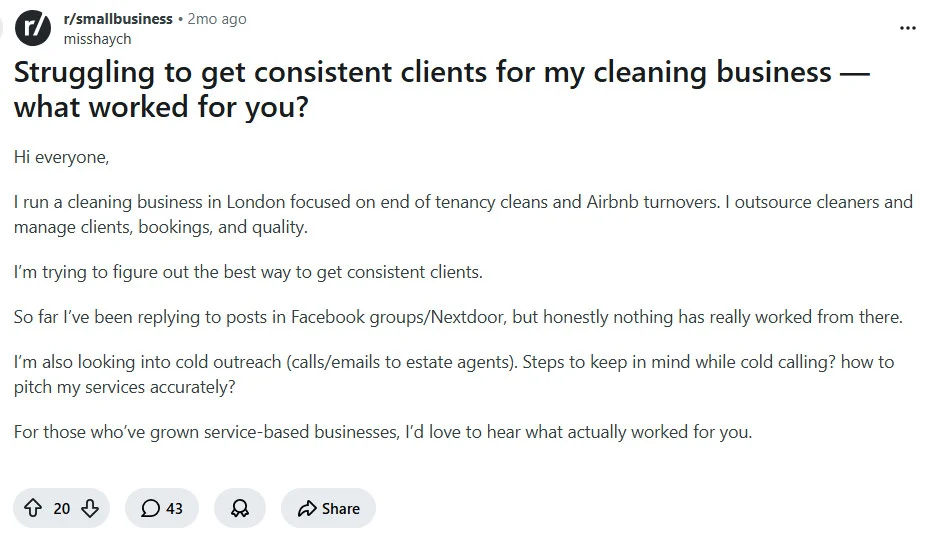
In small business circles, the frustration is palpable. A recent inquiry on the r/smallbusiness subreddit—which garnered dozens of responses from struggling service providers—highlighted a common trap: equating "posting" with "marketing."
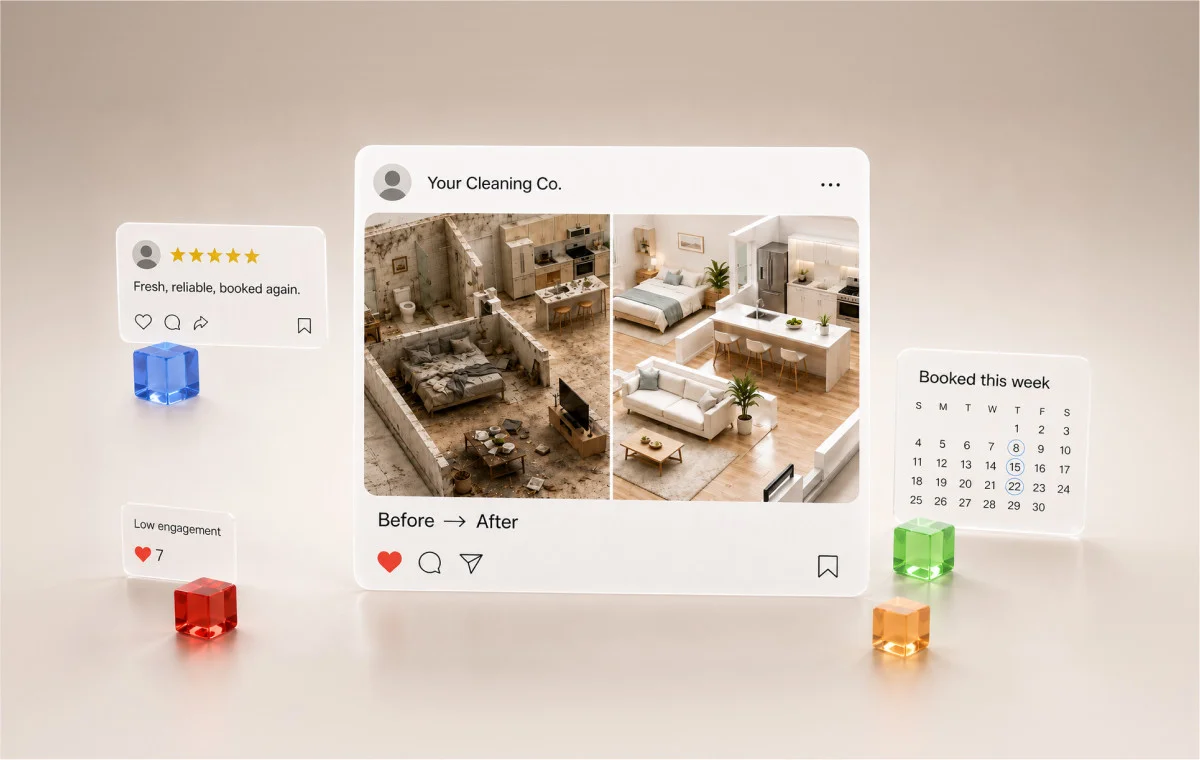
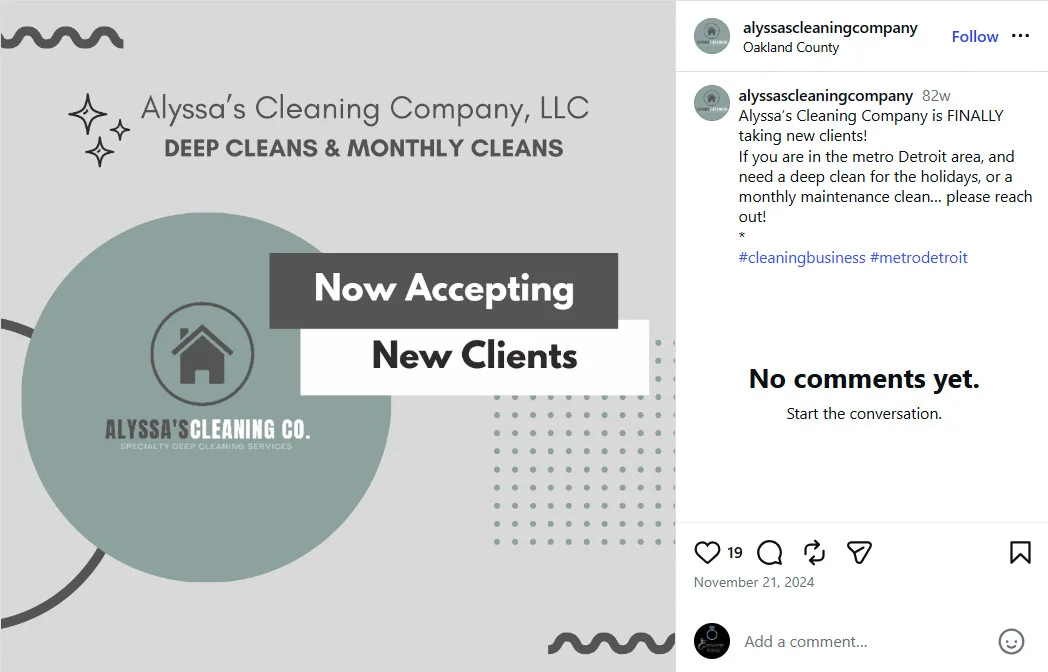
There is a fundamental difference between social media activity and a social media booking system. Posting a photo of a clean bathroom with a few hashtags is merely content creation. A booking system, however, is a deliberate, customer-focused machine. It includes your service location in the caption, a direct call-to-action (CTA) that tells the viewer exactly what to do, and a frictionless path to your booking page.
If your current approach lacks these elements, you are essentially asking your audience to do the work for you. In today’s competitive market, a customer will rarely jump through hoops to hire a cleaner. If they cannot identify your location, your services, and your booking process within ten seconds, they will scroll past you to a competitor who makes it easier.
The Chronology of a Successful Digital Presence
Building a client acquisition engine doesn’t happen overnight, but it follows a predictable, logical progression. For those feeling overwhelmed by the pressure to be everywhere at once, the path forward is actually one of simplification.
Phase 1: Foundation and Credibility (Weeks 1-4)
Before you post a single image, you must ensure your "digital storefront" is ready. This means choosing one primary platform—typically Facebook or Instagram for residential cleaners—and perfecting your profile. Your name field should include your city (e.g., "Jane’s Cleaning – Chicago"), and your bio must clearly state what you do, where you operate, and how to book. Pin your three most impactful posts to the top: a high-contrast before/after photo, a glowing client review, and a personal introduction video.
Phase 2: Building the Habit (Weeks 5-8)
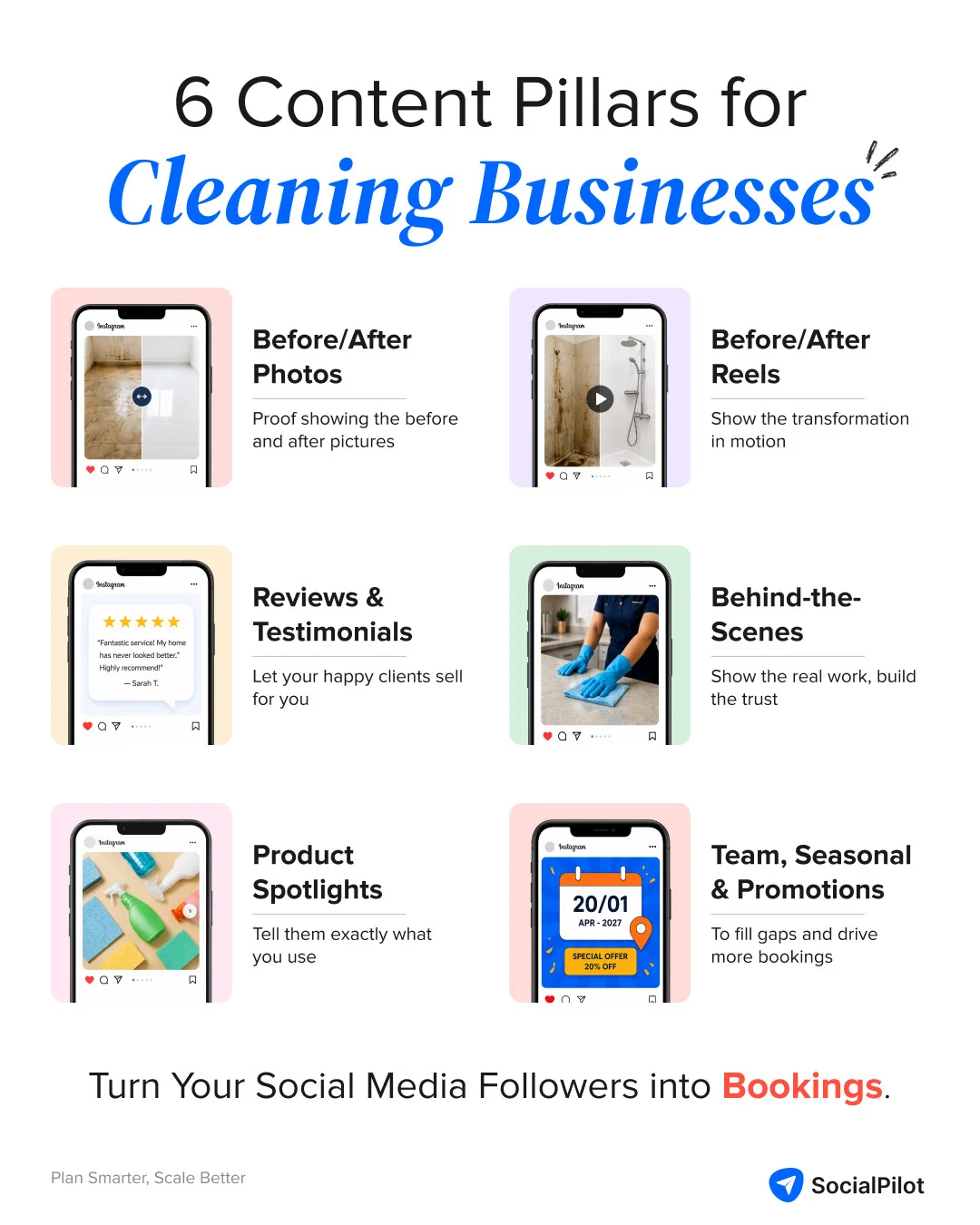
Transition from sporadic posting to a consistent rhythm. Commit to two to three posts per week. During this phase, focus on your content pillars: before/after photos, testimonials, and behind-the-scenes process videos. The goal here is to establish consistency so that a potential client who checks your profile sees a business that is currently active and reputable.
Phase 3: Optimizing for Conversion (Weeks 9-12)
Once the routine is set, begin refining your CTAs. Experiment with language that creates urgency, such as "Only two slots remaining for deep cleans this month—DM to claim." Monitor your "Link in Bio" clicks. If your engagement is high but clicks are low, revisit your booking page. Is it easy to use? Is it mobile-friendly? This is the phase where you turn a follower into a lead.
Supporting Data: Why Specific Content Drives Results
The efficacy of cleaning-industry social media is rooted in visual psychology. A study of "CleanTok" and Instagram transformation content reveals that users engage most deeply with visceral, unglamorous "before" states.
- The Contrast Principle: A "before" photo of a heavily soiled stovetop creates an immediate emotional response—relief at the sight of the "after." A mildly dusty shelf creates no such reaction. The dirtier the starting point, the more powerful the transformation, and the more trust you build with the viewer.
- The Trust Factor: When a client sees you cleaning, they aren’t just seeing a service; they are seeing a person they are comfortable inviting into their home. Behind-the-scenes content—like a video of you prepping your cleaning kit—humanizes the brand and reduces the anxiety of hiring a stranger.
- The Power of Social Proof: A Google review is a static asset. By repurposing that review into a branded graphic, you move the social proof directly into the feed of potential clients who may never have thought to search for you on Google.
Platform Performance Metrics
| Platform | Best For | Audience | Booking Potential |
|---|---|---|---|
| Local reach, community | 35-55 Homeowners | High | |
| Visual transformations | 25-45 Renters/Owners | High | |
| TikTok | Brand awareness | 18-35 Broad | Low (Non-local) |
Official Strategies for Growth
To professionalize your approach, you must stop treating social media as a hobby and start treating it as a business development tool. Industry experts suggest the following technical optimizations:
- Google Business Profile (GBP) First: Before you post on Instagram, ensure your GBP is verified. It is the most critical asset for local SEO. Everything you post on social media should ultimately point back to your booking URL, and your GBP is the most direct path for local searchers.
- The "One-Platform" Rule: Spreading yourself thin across Facebook, Instagram, and TikTok creates three weak profiles. Dominate one platform first. Only when you have a consistent flow of leads should you consider adding a second channel.
- Batching and Scheduling: The "20-Minute Rule" is the industry standard for efficiency. Spend 20 minutes at the start of each week to capture photos on-site, write three captions using an AI tool to overcome writer’s block, and schedule them to go live automatically. This eliminates the "what do I post today" anxiety and ensures your profile never goes dormant.
Implications for Your Business
The shift from "liking" to "booking" has significant implications for your bottom line. When your social media acts as a 24/7 sales representative, your business becomes less dependent on word-of-mouth alone.
Metrics That Actually Matter
Do not be distracted by "vanity metrics" like follower count. Focus on:
- Profile Visits: Are people curious enough to click your handle?
- Link Clicks: Are they actually reading your offer/booking page?
- Inbound DMs: This is your primary lead generation source. If your DM volume is zero, your content is likely too passive.
The Human Element in Automation
While tools like social media schedulers and AI caption writers are essential for maintaining a professional cadence, the human element remains vital. When someone DMs you, speed is the deciding factor. A potential client who is ignored for 24 hours will almost certainly reach out to the next cleaner on their list. A pre-written, friendly response that includes your availability and a booking link can prevent this loss of business.
Conclusion
Success in the cleaning industry, whether residential or commercial, is ultimately about reliability. Your social media presence should mirror the reliability of your service. By building a systematic, repeatable process—one that relies on high-contrast visuals, consistent scheduling, and clear, actionable CTAs—you stop competing for "likes" and start competing for clients.
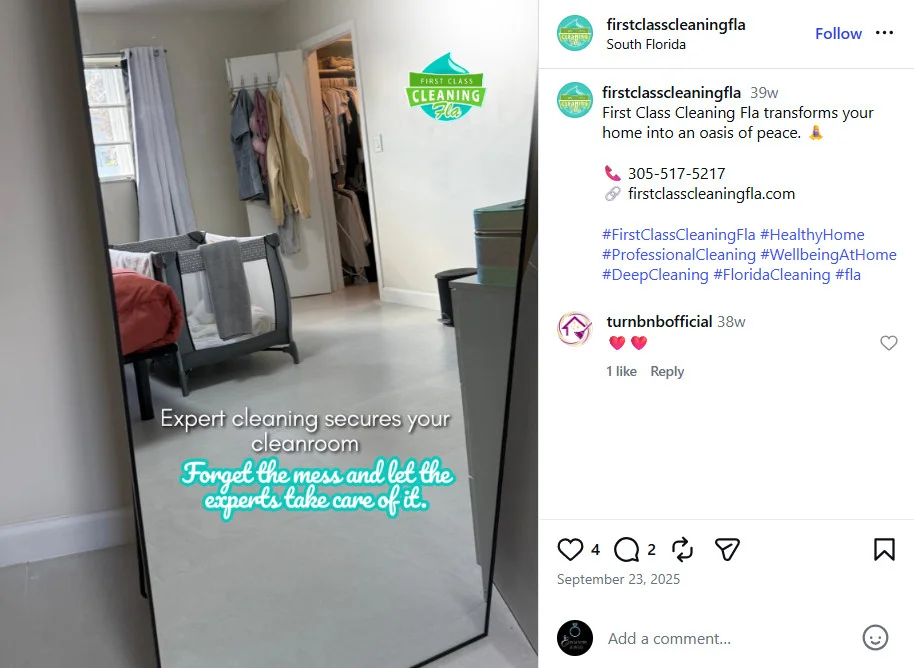
Remember, you aren’t just posting photos of clean homes; you are building a digital reputation that proves you are a trustworthy, professional, and accessible service provider. If you can maintain this system for 90 days, the results will not just show up in your analytics—they will show up on your calendar.

 Nana Wu
 Neng Nana