
As the gaming industry approaches the highly anticipated launch of Pearl Abyss’s Crimson Desert, the conversation surrounding the title has shifted from its stunning open-world visuals to a surprising, refreshing development: the developer’s commitment to radical technical transparency. With the game’s release just over one week away, Pearl Abyss has published a comprehensive breakdown of hardware requirements that serves as a masterclass in consumer communication, setting a standard that many AAA developers would do well to emulate.
The Paradigm Shift: Why These Specs Matter
For years, the ritual of "system requirements" has been a source of frustration for PC enthusiasts. Often, developers provide vague "Minimum" and "Recommended" tiers that fail to specify the resolution or framerate targets, forcing players to guess whether their hardware will achieve a playable experience. Worse yet, the modern trend of relying heavily on AI-driven upscaling—such as DLSS, FSR, or XeSS—at the lowest hardware tiers has led to a landscape where base performance is often obscured behind "smoke and mirrors."
Pearl Abyss has shattered this mold. By providing detailed, granular performance targets for every tier of PC hardware, as well as specific console performance modes, the studio has signaled a level of respect for the player base that is increasingly rare in the modern AAA space. This isn’t just a list of components; it is a roadmap for the end-user, ensuring that when Crimson Desert launches on March 20, players know exactly what to expect from their specific setup.
A Chronology of Anticipation
The journey of Crimson Desert has been one of high ambition. First teased as a spiritual successor to the lore and scale of Black Desert Online, the game has evolved into a standalone, single-player-focused open-world action RPG that has turned heads with its fidelity and combat mechanics.
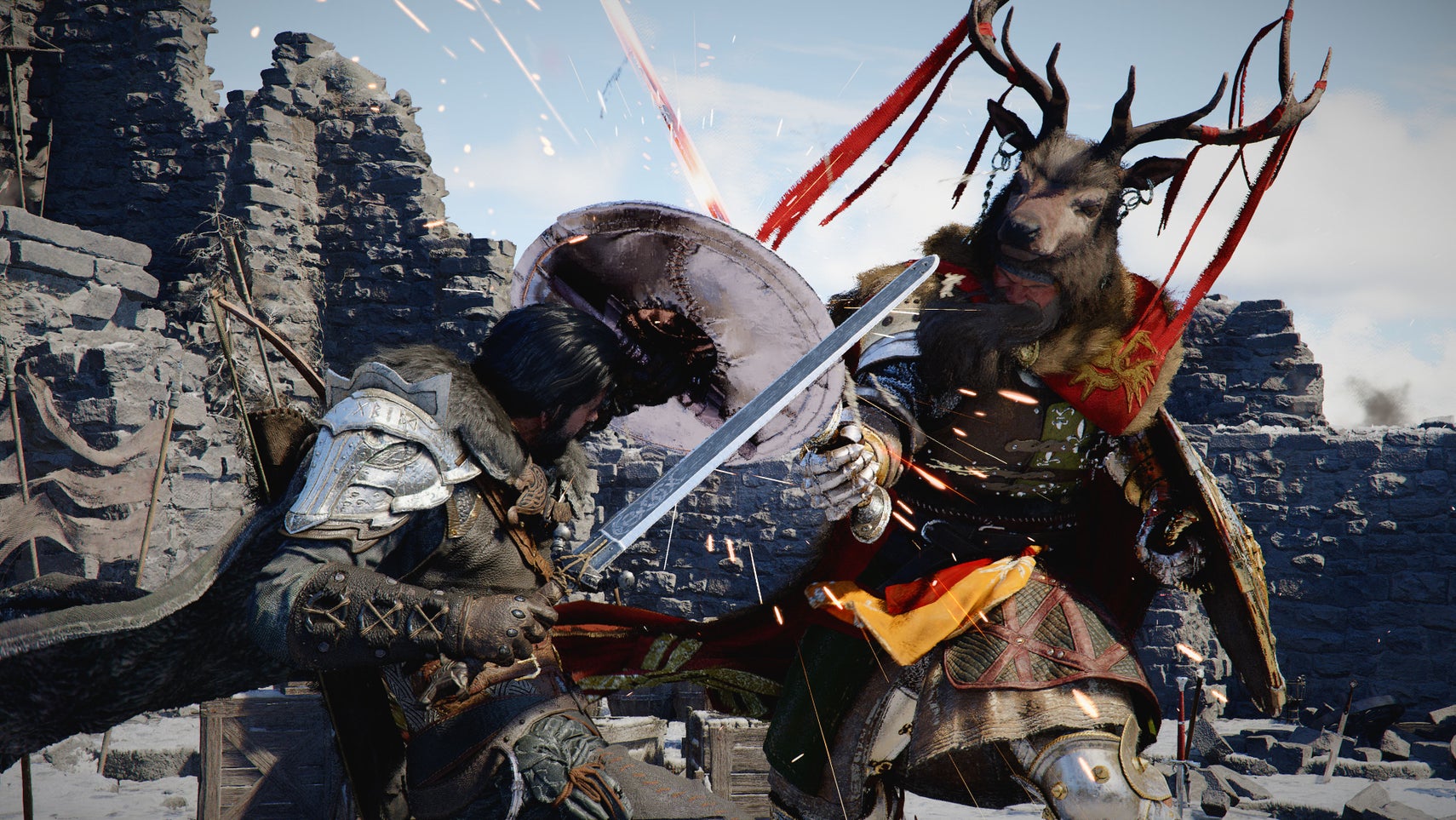
- Early Development: Initially announced to expand upon the Black Desert universe, Pearl Abyss shifted focus to create a sprawling, narrative-driven experience.
- The Technical Showcase: Throughout 2023 and 2024, various trailers showcased the proprietary BlackSpace engine’s ability to handle high-density environments, particle effects, and seamless transitions.
- The Pre-Launch Reveal: As the release window tightened, community anxiety regarding optimization grew, as is common with titles of this graphical magnitude.
- The Specification Drop: On the eve of launch, Pearl Abyss released the definitive hardware guide, addressing the "will it run?" question with unprecedented detail.
Supporting Data: The Granularity of Performance
The specifications provided by Pearl Abyss cover an expansive spectrum, catering to everything from modest mid-range rigs to enthusiast-grade powerhouses.
PC Hardware Breakdown
The PC requirements are divided into five distinct tiers: Minimum, Low, Recommended, High, and Ultra. Crucially, the studio has explicitly stated the resolution and frame rate targets for these presets. Perhaps most impressive is that, with the exception of the entry-level "Minimum" tier, these benchmarks appear to be achieved through native rendering, eschewing the crutch of upscaling technologies that has become an industry standard for masking poor optimization.
- Minimum Specs: Aimed at 1080p at 30 FPS, these settings represent the baseline entry point. This is the only tier where upscaling is explicitly expected to be utilized to maintain a stable experience.
- Recommended/High/Ultra: These tiers scale progressively, targeting 1440p to 4K resolutions at 60 FPS. By avoiding reliance on upscaling at the high end, Pearl Abyss is clearly confident in the raw performance optimization of the BlackSpace engine.
Console Transparency
Perhaps the most groundbreaking aspect of the announcement is the inclusion of console-specific technical data. Historically, console gamers are told little more than "it runs at 4K" or "there is a performance mode." Pearl Abyss has provided a breakdown of:
- Base Resolution: The internal rendering resolution before any post-processing.
- Upscaling Integration: How technologies like AMD FSR and, specifically for the PS5 Pro, Sony’s PSSR (PlayStation Spectral Super Resolution), are being deployed.
- Target Framerates: Specific expectations for the different modes available on the PS5, PS5 Pro, and the Xbox Series X/S hardware.
Official Stance and Technical Philosophy
In discussions surrounding the release, representatives from Pearl Abyss have emphasized that the BlackSpace engine was built specifically to solve the challenges of seamless open-world streaming and high-fidelity asset management.

"We believe the player’s experience begins before they even launch the game," a studio spokesperson noted in the documentation accompanying the specs. "By being clear about what hardware can achieve, we minimize the friction between the user and the world we have built."
This philosophy extends to handheld devices as well. The inclusion of specifications for the ROG Ally (covering both the X and Z1 Extreme models) demonstrates a forward-thinking approach to the booming handheld PC market. While the specific quality presets for handhelds remain a point of interest, the fact that the developer took the time to validate the game on these specific form factors is a testament to their dedication.
The Implications: A New Industry Benchmark?
The impact of this transparency cannot be overstated. By providing a "source of truth" regarding performance, Pearl Abyss is effectively reducing the post-launch backlash that occurs when a game fails to meet the perceived expectations of the hardware it is running on.
The "Upscaling" Debate
For years, the industry has leaned into FSR and DLSS to allow developers to be "lazier" with native performance optimization. By largely omitting upscaling from the higher-tier PC requirements, Pearl Abyss is setting a bar for native engine efficiency. This forces a conversation: if a game as visually complex as Crimson Desert can hit high framerates without relying on AI-reconstruction for every tier, why can’t others?

Console Consumer Trust
The inclusion of PS5 Pro-specific data is particularly timely. With the release of mid-generation console upgrades, players are often confused about the tangible benefits of their hardware. Pearl Abyss’s decision to clearly delineate between PSSR-enabled upscaling and native resolution targets allows consumers to understand the value proposition of their chosen platform.
The Mac Factor
While the PC and Console markets remain the primary focus, the acknowledgement of Mac hardware—specifically the differences between Apple Silicon chip tiers—is a nod to a niche but vocal community of gamers. While the presets for these devices remain somewhat ambiguous, the intent is clear: Crimson Desert is intended to be a cross-platform juggernaut that respects the hardware limitations of the systems it inhabits.
Conclusion: The Road to March 20
As we look toward the March 20 release date, Crimson Desert is positioning itself not just as a competitor in the open-world RPG genre, but as a leader in technical consumer relations. The gaming community has long clamored for this level of honesty, and by delivering it, Pearl Abyss has turned the pre-release hype into a tangible promise of quality.
Whether you are running a high-end RTX 40-series card, a base model PS5, or a handheld device, you now possess the data required to calibrate your expectations. This level of clarity is the hallmark of a developer that is confident in its product. As the digital gates of the Crimson Desert open, it will be the performance and stability of the game—backed by these honest specifications—that will ultimately define its legacy.

Players are ready, the hardware is prepared, and thanks to Pearl Abyss, the path to the desert is as clear as it is vast.