At 86 years old, Sir Patrick Stewart stands as a monolith of modern entertainment. While most of his peers have long since retreated to the quietude of retirement, the man who defined a generation as Captain Jean-Luc Picard and Professor Charles Xavier continues to defy the industry’s rigid expectations. In an era where Hollywood often discards its aging stars, Stewart remains a vibrant, sought-after force. Recent speculation regarding his future—fueled by his upcoming appearance in Avengers: Doomsday—has prompted the legendary actor to issue a definitive clarification: he has absolutely no intention of retiring.
The Man Behind the Legend: Main Facts and Current Status
The rumor mill recently went into overdrive, suggesting that Stewart’s reprisal of his iconic mutant leader, Professor X, in the Marvel Cinematic Universe’s Avengers: Doomsday might serve as a cinematic "swan song." However, in a candid and exclusive interview with TV Insider, Stewart put these whispers to rest with characteristic gravitas.
"I can’t imagine ever officially retiring," Stewart stated. "I’ll always and forever be an actor."
This declaration is not merely a sentimental gesture; it is a statement of intent from a man whose career has spanned over six decades. From his tenure as the stoic, diplomatic leader of the U.S.S. Enterprise in Star Trek: The Next Generation and the subsequent Picard series (which concluded in 2023), to his whimsical voice work in this year’s Sheep Detectives, Stewart’s professional output remains as diverse as it is prolific. He continues to prove that his command of the craft has not dulled with age, but rather sharpened into a nuanced, authoritative instrument.
A Chronology of Greatness: From the RSC to the MCU
To understand the magnitude of Stewart’s refusal to retire, one must look at the trajectory of his career, which serves as a masterclass in versatility. Born in Mirfield, West Yorkshire, in 1940, Stewart’s foundation was not in science fiction or blockbuster comic book adaptations, but on the hallowed boards of the Royal Shakespeare Company.

His early years were defined by a rigorous commitment to the classics. His performances as Macbeth, Hamlet, and Prospero are considered pinnacles of 20th-century British theater. It was this deep, classical training that allowed him to bring an unprecedented level of gravitas to genre television and film. When he was cast as Captain Jean-Luc Picard in 1987, he brought a Shakespearian weight to the role, forever changing how audiences perceived science fiction heroes.
In 2010, the late Queen Elizabeth II recognized his monumental contributions to the dramatic arts, knighting him at Buckingham Palace. This honor solidified his status as a national treasure—a title he has upheld by balancing high-brow stage work with the global superstardom afforded by the X-Men franchise. Since his debut as Charles Xavier in 2000, Stewart has anchored the X-Men cinematic universe, serving as the moral compass for a series that redefined the superhero genre.
The Industry Landscape: Supporting Data and Ageism
Stewart’s defiance of retirement is particularly poignant when viewed against the backdrop of systemic ageism in Hollywood. In his recent interview, he acknowledged the harsh reality that many actors of his generation face: the scarcity of meaningful roles as the years advance.
"As any actor my age will tell you, there are fewer and fewer available roles as we get older," Stewart noted. This observation is supported by industry statistics, which consistently show a sharp decline in speaking roles for actors over the age of 70, particularly in mainstream blockbusters. The industry often favors youth, viewing aging stars as "legacy acts" rather than vital contributors to new narratives.
Yet, Stewart manages to circumvent this trend through his immense cultural capital and a refusal to be pigeonholed. By pivoting between independent projects, high-budget franchise work, and voice acting, he maintains a level of visibility that most actors his age can only dream of. His ability to secure "interesting offers" is a testament to the fact that audiences—and producers—are still hungry for the depth, experience, and authority that only an actor of his caliber can provide.

Avengers: Doomsday and the Future of the Multiverse
The upcoming Avengers: Doomsday marks a pivotal moment for both the Marvel Cinematic Universe and Stewart’s career. The MCU is currently at a crossroads, attempting to recapture the cultural dominance it held during the Avengers: Endgame era—the second-highest-grossing film in history.
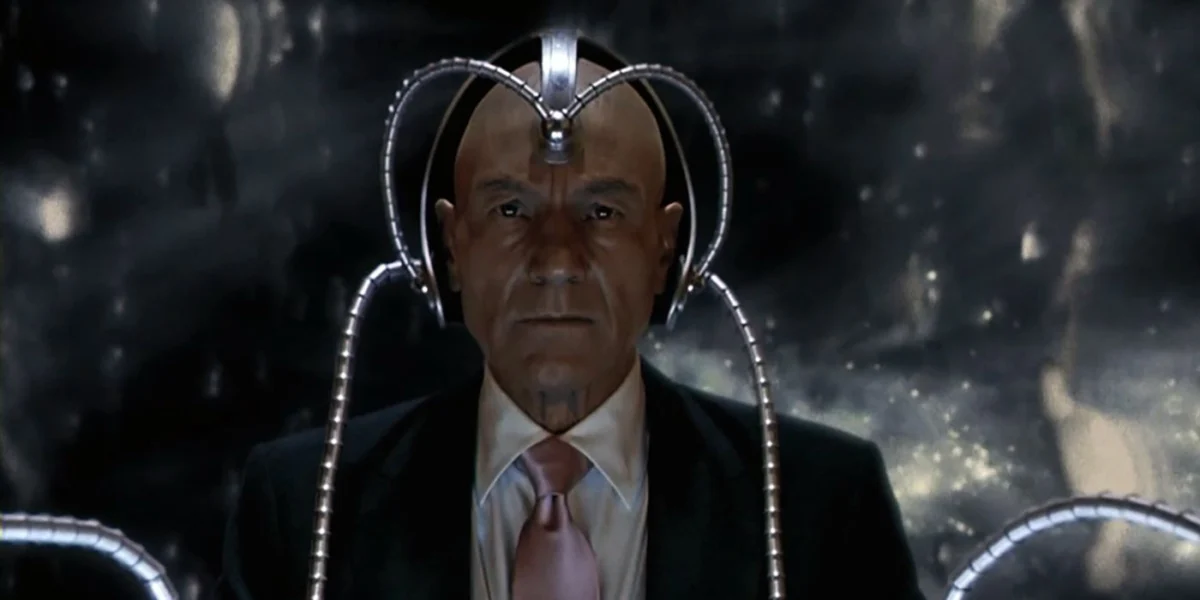
The trailers for Doomsday have sent shockwaves through the fandom, specifically due to the inclusion of Stewart’s Professor X alongside Sir Ian McKellen’s Magneto. The sight of these two titans, whose on-screen "frenemy" dynamic defined the emotional core of the original X-Men films, has heightened anticipation to a fever pitch. With James Marsden also returning as Cyclops, the film is clearly leaning into the nostalgia and gravitas of the original X-Men cast to anchor the chaotic, multiverse-spanning narrative of Doomsday.
While some fans feared this reunion would serve as a final farewell, the reality is more likely an expansion. Marvel’s embrace of the multiverse suggests that characters like Xavier are no longer tied to a singular timeline or a definitive ending. Stewart’s participation in Doomsday should be viewed not as a closing chapter, but as a testament to the character’s—and the actor’s—enduring relevance.
Implications: The Legacy of a Working Legend
What does it mean for a cultural icon to insist on working well into his ninth decade? For the industry, it challenges the implicit "expiration date" placed on performers. Sir Patrick Stewart is not merely "hanging on"; he is actively choosing to engage with new challenges. He is demonstrating that acting is not a job that one outgrows, but a lifelong vocation.
The implications for younger actors are profound. Stewart provides a blueprint for longevity that prioritizes artistic integrity over mere celebrity. By continuing to pursue roles that challenge him, he maintains his relevance in an industry that is notoriously fickle. His career trajectory suggests that the "senior actor" archetype is ripe for reinvention, provided the performer possesses the talent and the tenacity to demand a seat at the table.

Furthermore, his presence in major tentpole films proves that there is a demographic of viewers who value the wisdom and gravitas that only a veteran actor can provide. As the film industry continues to grapple with the demands of the streaming age and the necessity of blockbuster hits, having a performer of Stewart’s stature in the mix provides a sense of continuity and prestige that money alone cannot buy.
Conclusion: The Curtain Stays Up
Sir Patrick Stewart’s refusal to retire is a victory for his fans and for the art of acting itself. In a world that often measures worth by productivity and novelty, Stewart reminds us that true mastery is something that accumulates over time.
Whether he is navigating the star-strewn corridors of the Enterprise, guiding the students of the Xavier School for Gifted Youngsters, or stepping into the shoes of a new character entirely, Stewart remains one of the most watchable figures in modern entertainment. As he moves forward with Avengers: Doomsday and beyond, we can be certain of one thing: the stage is still set, the lights are still bright, and Sir Patrick Stewart is nowhere near ready to leave the screen.
He has spent his life portraying heroes, but in his commitment to his craft, he has become something even more enduring: a symbol of the infinite potential of the human spirit. The story of Sir Patrick Stewart is far from finished, and for those who have followed his journey from the stage of the RSC to the far reaches of the MCU, that is the best news of all.