Suro Senen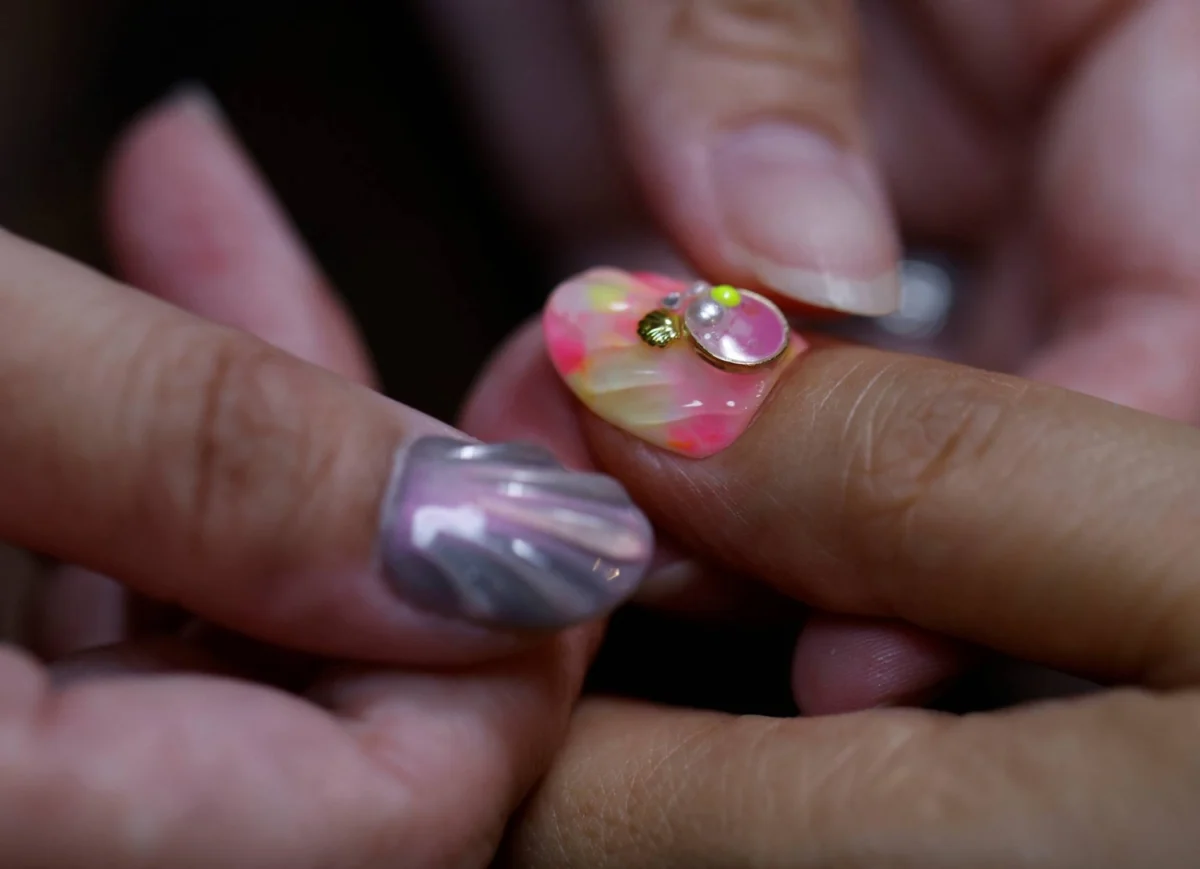
If you are an A-list celebrity searching for a transformative, eye-popping aesthetic for your nails, the odds are increasingly high that your chosen artist will be Japanese. From the meticulous precision of the cuticle work to the avant-garde, sculptural designs that push the boundaries of wearable art, Japanese nail culture has transcended its origins to become the gold standard of the global beauty industry.
Today, this phenomenon has moved beyond the red carpets of Hollywood and the editorial shoots of New York, fueling a new wave of “beauty tourism” that sees visitors flocking to Tokyo, Osaka, and Kyoto not just for the temples and sushi, but for the unparalleled craftsmanship of the Japanese nail salon.
The Rise of the Japanese Nail Artistry Diaspora
The global recognition of Japanese nail art is anchored by a cadre of high-profile expatriate artists who have turned the craft into a luxury service. Mei Kawajiri, a powerhouse based in New York City, has become the go-to for stars like Dua Lipa, Addison Rae, Blackpink’s Jennie, and Spanish sensation Rosalia. Her work is characterized by a surrealist, maximalist approach that often incorporates 3D elements, pop-culture iconography, and intricate hand-painting that feels more like a miniature gallery exhibition than a simple manicure.
Similarly, in Los Angeles, “Britney Tokyo” has cemented herself as a household name among the elite, counting Gwen Stefani, Hailey Bieber, and the rapper Doechii among her clientele. Meanwhile, Miho Okawara, another prominent LA-based artist, has become the trusted technician for icons like Miley Cyrus, Lady Gaga, and Beyoncé.
These artists do not merely apply polish; they curate identities. However, the prestige of these artists comes with significant barriers. For the average consumer, these U.S.-based professionals often maintain waitlists that span months, with starting prices for basic designs often hovering around the $300 (approximately ¥47,000) mark—a prohibitive cost for many.
The Economic Paradox: Why Flying to Japan Makes Sense
For the growing legion of international fans enamored with Japan’s “loud and proud” approach to design, a paradox has emerged. Rather than waiting for a six-month window with a celebrity artist in the U.S., many enthusiasts are choosing to fly directly to Japan.
When you factor in the current strength of the yen and the sheer volume of high-level salons across Japan, a trip to Tokyo can be more cost-effective than a recurring appointment with a celebrity nail artist in the West. This “beauty tourism” is a burgeoning sector of the travel industry. Tourists are discovering that even mid-range salons in Japan offer a level of technique and service that rivals the high-end boutique experiences found in London, Paris, or New York.
A Chronology of Craft: The Evolution of Japanese Nail Culture
To understand why the world is obsessed with Japanese nails, one must look at the evolution of the craft in the country.
- The Early 2000s: Japan moved away from the acrylic-heavy, long-tip trends dominating the West, focusing instead on gel technology. This shift allowed for greater durability and a wider range of artistic expression on the natural nail.
- The 2010s: The "Kawaii" culture reached its zenith. Japanese salons began incorporating pearls, lace, charms, and character art, turning nails into a central pillar of fashion, much like apparel or footwear.
- 2020-2023: During the global pandemic, the DIY nail kit market exploded, but it also fostered an appreciation for the professional mastery that can only be achieved through rigorous technical training.
- 2024-2026: The current era. Japanese nail art is now viewed as an essential component of high fashion, with major luxury houses partnering with Japanese artists for fashion weeks and global marketing campaigns.
Technical Superiority: What Sets Japan Apart?
The difference between a standard manicure and a Japanese manicure is often described by industry experts as the difference between "maintenance" and "mastery."
Japanese nail training is notoriously rigorous. Apprentices often spend years mastering the “Russian manicure” technique—a dry, mechanical cleaning of the cuticle that ensures the polish sits flush against the nail bed, resulting in a cleaner look that grows out more gracefully than traditional methods.

Furthermore, Japanese gel products—brands like Presto, Ageha, and Vetro—are world-renowned for their high pigmentation and self-leveling properties. These products are formulated to be safer for the nail plate, often requiring less harsh filing, which appeals to a generation of health-conscious beauty consumers.
Supporting Data: The Surge in Beauty Tourism
While official government tourism data tracks arrivals by country, anecdotal evidence from the Japan National Tourism Organization (JNTO) and travel bloggers indicates that "salon tourism" is a primary motivation for female travelers aged 18-35.
Market surveys from the beauty sector suggest that:
- Consumer Spending: Foreign tourists in Tokyo are increasingly allocating between $150 and $400 for a single salon visit during their trip.
- Salon Diversity: There are over 25,000 registered nail salons in Japan, with an exceptionally high density in districts like Shibuya, Omotesando, and Shinsaibashi.
- Digital Influence: The hashtag #TokyoNails on Instagram and TikTok has seen a 40% increase in engagement year-over-year, with the majority of high-performing content originating from non-Japanese accounts showcasing their "salon day" in Japan.
Official Perspectives and Industry Implications
Industry analysts suggest that this trend is not a fleeting fad but a fundamental shift in how global beauty standards are exported.
“Japanese nail art is an extension of the country’s broader dedication to monozukuri—the art of making things with care and precision,” says Akiko Tanaka, a consultant for the Japan Beauty Association. “When a tourist gets their nails done here, they aren’t just buying a service; they are buying into a culture of perfectionism. It is an immersive experience.”
However, the industry faces challenges. The language barrier remains a hurdle for many tourists, prompting the rise of concierge services that specialize in booking appointments for non-Japanese speakers. Furthermore, as the demand rises, salon owners are struggling to balance the influx of international tourists with the loyalty of their local, long-term clients.
Implications for the Future
The success of Japanese nail art on the world stage poses a question for the global beauty industry: Can other markets adapt to this level of service, or will the "pilgrimage" to Japan remain the only way to get the true experience?
As we look toward the remainder of the decade, it is clear that the integration of digital booking platforms, language-inclusive salon websites, and a greater emphasis on professional certification will be key. For Japan, the challenge will be scaling this artisanal industry to meet global demand without diluting the quality that made it famous in the first place.
For now, the airport terminals of Tokyo serve as a testament to the power of the craft. As travelers return home with intricately designed, perfectly shaped, and long-lasting nails, they serve as walking advertisements for a cultural phenomenon that has redefined the boundaries of modern beauty. Whether you are looking for the minimalist elegance of a "nuance" design or the maximalist thrill of 3D jewelry, the message is clear: if you want the best, you have to go to the source.


 Neng Nana
 Asro
Asro