Ali Ikhwan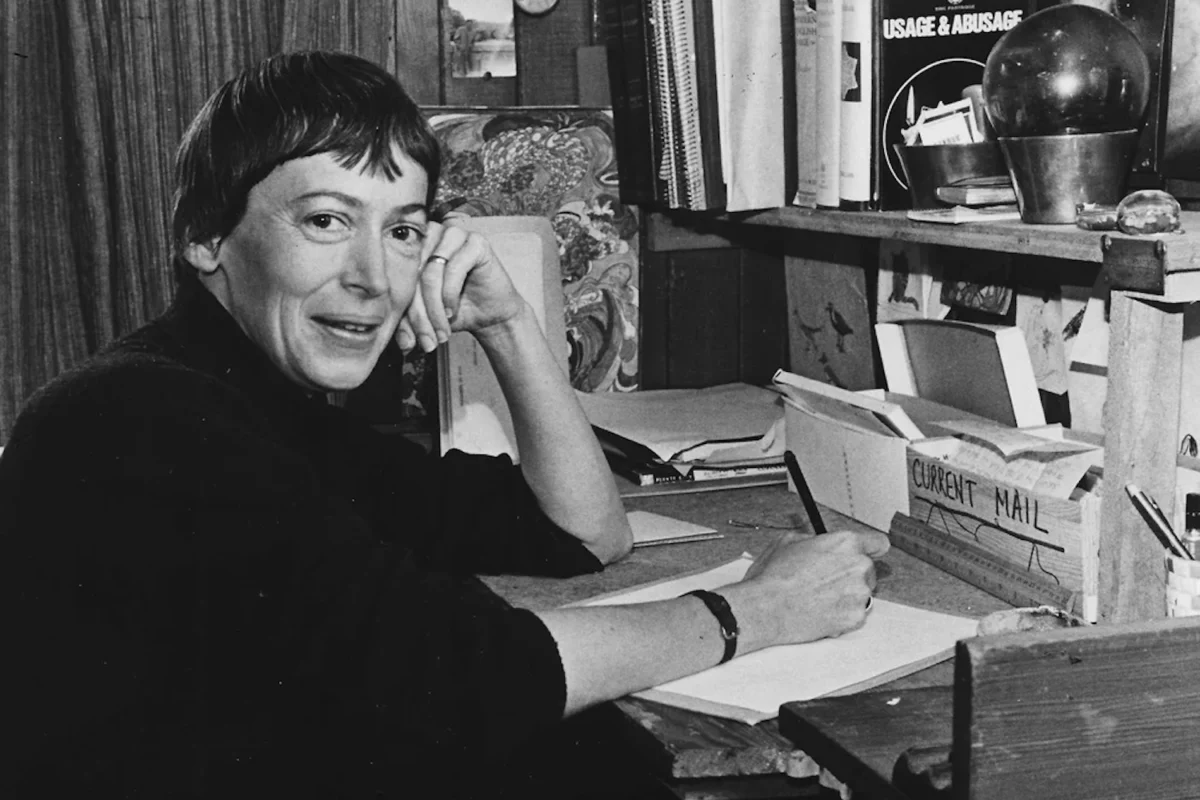
In a literary landscape increasingly fractured by the rapid pace of technological disruption and global uncertainty, the search for visionary storytelling has never been more critical. Today, the Ursula K. Le Guin Foundation officially unveiled the highly anticipated shortlist for the 2026 Ursula K. Le Guin Prize for Fiction. This prestigious annual honor, which carries a $25,000 cash award, is dedicated to recognizing an author whose work embodies the profound, humanistic, and imaginative spirit that defined the life and career of the legendary author of The Left Hand of Darkness and A Wizard of Earthsea.
The foundation has selected nine exceptional works to compete for this year’s top prize. These finalists were chosen not merely for their narrative craftsmanship, but for their ability to challenge the status quo, offer "real grounds for hope," and provide a "larger reality" that forces readers to reconsider the trajectory of our own world.
A Legacy of Visionary Fiction: The Prize’s Mission
Since its inception in 2022, the Ursula K. Le Guin Prize for Fiction has distinguished itself as a rare beacon in the literary awards circuit. While many prizes focus on commercial viability or stylistic experimentation, the Le Guin Prize is tethered to a specific philosophy. Le Guin, who passed away in 2018, was a titan of science fiction and fantasy, but her work consistently transcended genre boundaries. She was a master of political inquiry, environmental consciousness, and sociological exploration.
The Foundation defines the ideal recipient as a "realist of a larger reality"—a phrase Le Guin herself utilized to describe the duty of the writer. To be a "realist of a larger reality" is to look past the superficial constraints of modern life and imagine alternative modes of existence, governance, and community. The prize seeks to honor books that act as blueprints for hope, encouraging readers to see the current world not as a fixed finality, but as a malleable construct capable of transformation.
Last year, the prize was awarded to Vajra Chandrasekera for his acclaimed novel Rakesfall, a work that masterfully navigated the complexities of history, memory, and the cyclical nature of human struggle. The 2026 winner will join this esteemed lineage, further solidifying the prize’s status as the definitive accolade for literature that dares to dream of a better future.
The Selection Process: A Jury of Peers
The task of narrowing the vast field of contemporary fiction down to a select shortlist is an arduous one, entrusted to a panel of distinguished authors who have themselves shaped the literary conversation. The 2026 jury features a diverse and highly respected cohort:
- Nicola Griffith: A novelist and essayist celebrated for her deep research and incisive social commentary.
- Mat Johnson: A writer and professor known for his sharp satire and exploration of race and identity.
- Fonda Lee: An award-winning author renowned for her intricate world-building and character development.
- Darcie Little Badger: A writer who integrates Indigenous storytelling and cosmology into modern speculative fiction.
- Peter Rock: An acclaimed author whose work often interrogates the boundaries between the real and the imagined.
This panel will deliberate throughout the coming months, evaluating the nine shortlisted books against the criteria of thematic depth, stylistic innovation, and resonance with Le Guin’s own intellectual contributions. The final winner will be announced on October 21, 2026—a date of profound symbolic importance, as it marks what would have been Ursula K. Le Guin’s 97th birthday.
Chronology: From Foundation to the 2026 Shortlist
The path to the 2026 announcement is the result of years of careful curation and institutional growth.
- 2018: Following the death of Ursula K. Le Guin, the literary world entered a period of reflection on her immense influence. Discussions began regarding how best to memorialize her work beyond the existing academic and library archives.
- 2022: The Ursula K. Le Guin Foundation officially launched the annual prize. The inaugural year established a high bar for excellence, setting the tone for a prize that prioritizes intellectual rigor and ethical imagination.
- 2025: Vajra Chandrasekera’s Rakesfall was awarded the prize, signaling the foundation’s commitment to bold, non-traditional narratives that challenge conventional Western storytelling structures.
- 2026 (Present): The announcement of the 2026 shortlist marks the fifth iteration of the prize, highlighting a diverse array of global voices who are continuing the tradition of questioning the world as it currently exists.
The Implications of the Prize
The Ursula K. Le Guin Prize for Fiction does more than provide a monetary reward; it exerts a gravitational pull on the publishing industry. By elevating works that engage with the "larger reality," the prize incentivizes publishers to invest in challenging, speculative, and socially conscious literature.
In an era where "dystopian" fiction has become a dominant trend, the Le Guin Prize serves as a necessary corrective. By explicitly seeking works that provide "real grounds for hope," the Foundation is pushing the literary world to move beyond cynicism. It is a radical act of optimism. When authors are recognized for their ability to imagine functional alternatives to the climate crisis, social inequality, and political polarization, it provides readers with a mental framework to begin enacting those changes in their own lives.
Furthermore, the prize serves as a bridge between the giants of the 20th-century literary canon and the rising voices of the 21st century. It ensures that the questions Le Guin asked—about gender, hierarchy, and the relationship between humanity and the natural world—remain central to the discourse of new literature.
Supporting Data and Thematic Trends
An analysis of the shortlisted works reveals several emerging trends in contemporary fiction that mirror Le Guin’s interests:
- Ecological Stewardship: A significant portion of the shortlisted works deal directly with the Anthropocene, exploring how human cultures must adapt to survive in a rapidly changing biosphere.
- Deconstruction of Hierarchy: The finalists demonstrate a marked move away from the "Hero’s Journey" toward more communal, collective narratives that focus on how power can be distributed rather than concentrated.
- Linguistic Innovation: Like Le Guin, many of this year’s shortlisted authors are experimenting with language itself to depict alien or alternate cultural psychologies, showing how the words we use determine the reality we can conceive.
These thematic clusters suggest that the "realists of a larger reality" are not just individuals; they are a growing movement of thinkers using fiction as a laboratory for social evolution.
Official Responses and Industry Reception
"The announcement of this year’s shortlist is a testament to the enduring power of literature to act as a mirror and a compass," stated a spokesperson for the Foundation earlier today. "We see in these nine books a refusal to accept that the current state of our world is inevitable. Each of these authors has dared to ask, ‘What if things were different?’ and they have provided the answers in ways that are both intellectually challenging and deeply moving."
Literary critics have noted that the 2026 shortlist is perhaps the most diverse in the prize’s history, featuring voices from across the globe and a wide range of cultural backgrounds. This diversity is essential to the prize’s mission; to imagine a "larger reality," one must be able to synthesize perspectives from a vast array of human experiences.
Looking Ahead: The Path to October 21
As the literary world turns its attention toward the final decision, the conversation surrounding the prize will undoubtedly intensify. The $25,000 award is significant, but the prestige associated with the Le Guin name is the true draw for the literary community.
For the nine shortlisted authors, this period of anticipation is an opportunity to engage with a wider audience. Their books will now be scrutinized, debated, and celebrated in classrooms, book clubs, and literary journals around the world. As we look toward October 21, the focus will remain on the central question that Le Guin herself spent her life exploring: How do we tell stories that help us survive?
The 2026 shortlist is more than a list of books; it is a map of the future. By recognizing these authors, the Ursula K. Le Guin Foundation is ensuring that the light of inquiry and the courage of imagination continue to burn brightly, lighting the way toward the "larger reality" that we have yet to build, but which we are now better equipped to imagine.
As the Foundation noted in their closing remarks, "Congratulations to all those recognized for their immense contributions to the field. Their work serves as a reminder that fiction is not an escape from reality, but the most powerful tool we have for shaping it."


 Evan Lee Salim
 Siti Muinah