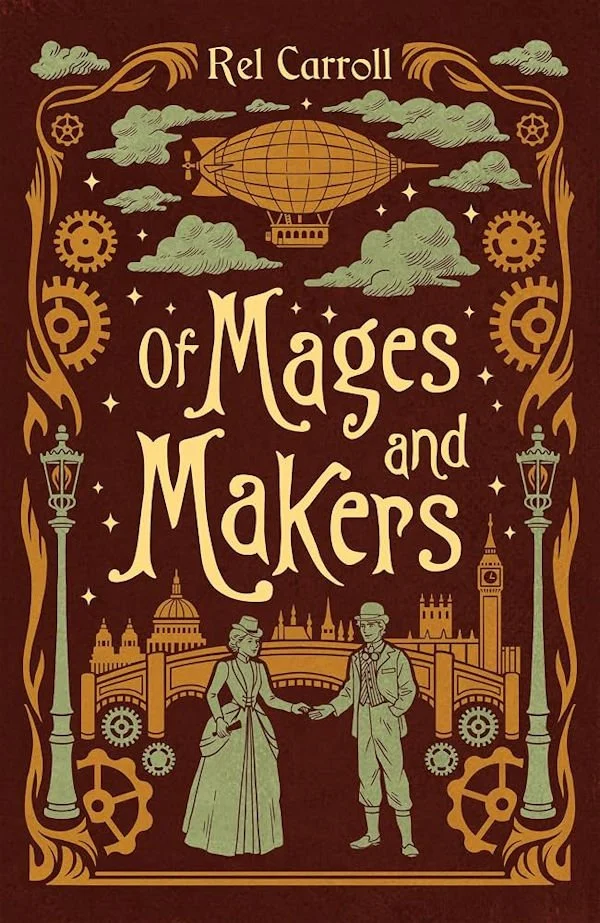
In the competitive landscape of self-published fantasy, few titles have managed to capture the collective imagination of critics quite like Of Mages and Makers. As the 11th annual Self-Published Fantasy Blog-Off (SPFBO) nears the conclusion of its first round, this gaslamp-steampunk hybrid has emerged as a standout contender. Balancing the rigid etiquette of Regency-era social structures with the volatile innovation of an industrial-magic revolution, the novel has been hailed as a masterclass in "cozy" fantasy—a rare feat that balances high-stakes political tension with character-driven warmth.
The Core Narrative: A Dance of Deception
At the heart of Of Mages and Makers are two protagonists who share a common burden: the necessity of performance. Art Keays, the male lead, spends his days curating a reputation for utter uselessness. Beneath the facade of a vapid socialite lies a man who functions as an unsung protector of mages in a world where magical ability is increasingly criminalized. His carefully constructed life of leisure is shattered when his sister, a brilliant inventor, has her groundbreaking blueprints stolen during the Maker Exhibitions—an elite competition that serves as the crucible for the nation’s technological and magical advancement.
Parallel to Art’s plight is Miss Audrey Clune. A woman yearning for the agency of the adventure-story heroines she idolizes, Audrey finds her life dictated by familial obligation. Faced with an impending marriage to a suitor chosen by her grandmother, she embarks on a final, solitary journey to visit her aunt. This voyage is abruptly interrupted when her carriage is ambushed by highwaymen, thrusting her into the very world of industrial espionage and magical intrigue she had previously only encountered in fiction.
The collision of these two lives forms the backbone of the novel. As Art and Audrey navigate a landscape where "truth" is a liability and secrets can lead to ruin, their blossoming relationship becomes a refuge from the machinations of the state and the escalating friction between the "Cogs" (the non-magical populace) and the "Mages."
Chronological Progression of the Conflict
The narrative arc of Of Mages and Makers operates on a tight, urgent timeline, structured around the fallout of the Maker Exhibitions:
- The Inciting Incident: Art’s sister, Cecily, unveils a invention that democratizes magic, effectively destabilizing the existing power structure between the nobility and the commoners. The subsequent theft of her blueprints forces Art out of his "useless" persona and into the field.
- The Convergent Path: Simultaneously, Audrey Clune decides to escape her domestic future. Her journey is interrupted by a carriage ambush, which serves as the catalyst that bridges her world with Art’s mission.
- The Investigation: Art and Audrey, both hiding their true motives and capabilities, must collaborate to recover the stolen blueprints. This phase of the story is defined by a series of escapades, narrow escapes, and the slow erosion of their respective facades.
- The Climax and Resolution: As the tension between the magical factions and the government reaches a boiling point, the protagonists must decide between protecting their own secrets or intervening to prevent a societal fracture. The resolution—noted by critics for its "cleanliness"—focuses on the characters reclaiming their agency rather than merely bowing to societal expectations.
Supporting Perspectives: The Judges’ Verdict
The SPFBO judging panel, comprised of fourteen industry voices, has provided a granular look at why this novel has resonated so deeply within the fantasy community.
Characterization and Tropes
The consensus among judges is that Of Mages and Makers succeeds primarily because of its leads. Eva, one of the primary reviewers, noted the refreshing lack of the "miscommunication trope," praising the protagonists for their transparency with one another. This sentiment is echoed by Kerry, who highlighted the "Scarlet Pimpernel" archetype embodied by Art, paired with an Audrey who actively seeks her own empowerment. While some judges, such as Julia, noted that the characters are "not especially deep," they conceded that their competence and chemistry more than compensate for a lack of existential angst.
Worldbuilding and Atmosphere
The setting—a city called Diadem governed by the monarchy of Parure—is frequently cited as a high point. Maureen Neuman, a member of the judging panel, observed that the worldbuilding is "remarkable" for such a condensed work. The marriage of the Gilded Age aesthetic with steam-powered technology and magical class struggle creates a backdrop that is both nostalgic and urgent. However, this brevity comes with a cost; several judges, including Sara and Eva, expressed a desire for more extensive background on the persecution of mages, suggesting that the world’s history was occasionally overshadowed by the brisk pace of the plot.
Pacing and Narrative Structure
The novel’s pacing is a subject of constructive debate. While the "breezy" and "fun" nature of the prose is widely lauded, some judges felt the resolution was "a little too clean." Julia noted that whenever the protagonists faced a genuinely insurmountable obstacle, a convenient exit often presented itself. Despite these critiques, the overall impression remains overwhelmingly positive, with the book being categorized as a "cozy Fantasy of Manners" that prioritizes emotional resonance over gritty, long-form realism.
Official Context: The SPFBO Framework
Of Mages and Makers is currently competing in the 11th annual Self-Published Fantasy Blog-Off (SPFBO). This competition, established to highlight the wealth of talent in the self-publishing sphere, requires authors to navigate a rigorous vetting process.
The current stage of the competition involves the finalization of semi-finalist reviews. As noted by the editorial team at Fantasy Faction, the process is intentionally subjective. The goal is not to declare a single "best" book, but to provide a platform for authors who have demonstrated the courage to put their work before a discerning panel of critics.
Implications for the Genre
The success of this novel highlights a shifting trend in the fantasy market. Readers are increasingly gravitating toward "gaslamp" narratives that emphasize romance and personal discovery over the traditional "save the world" epic fantasy tropes. The positive reception of Of Mages and Makers signals that there is a significant, underserved audience for stories that are:
- Low-Stakes (relatively): Focused on personal growth and relationships.
- Aesthetically Focused: Utilizing the specific, evocative trappings of steampunk and Regency settings.
- Character-Centric: Prioritizing sharp banter and interpersonal dynamics over complex, multi-volume lore.
Conclusion: A Gem in the Making
Of Mages and Makers is more than just an entry in a blog-off competition; it is a testament to the power of well-executed, character-driven storytelling. While critics identified minor areas for improvement—specifically regarding the pacing of plot revelations and the depth of the world’s history—the prevailing sentiment is one of delight.
As the SPFBO continues its search for a grand finalist, Of Mages and Makers stands as a benchmark for how to blend genre tropes with original, heartfelt character work. For readers looking for a reprieve from the often-bleak landscape of modern fantasy, this "gaslamp romp" offers a welcome, hopeful, and thoroughly charming destination. Whether or not the novel advances to the final round, it has already achieved the ultimate goal of any piece of fiction: it has left its audience wanting more.
For those interested in following the remainder of the competition, official updates and score releases can be monitored via the official SPFBO website.