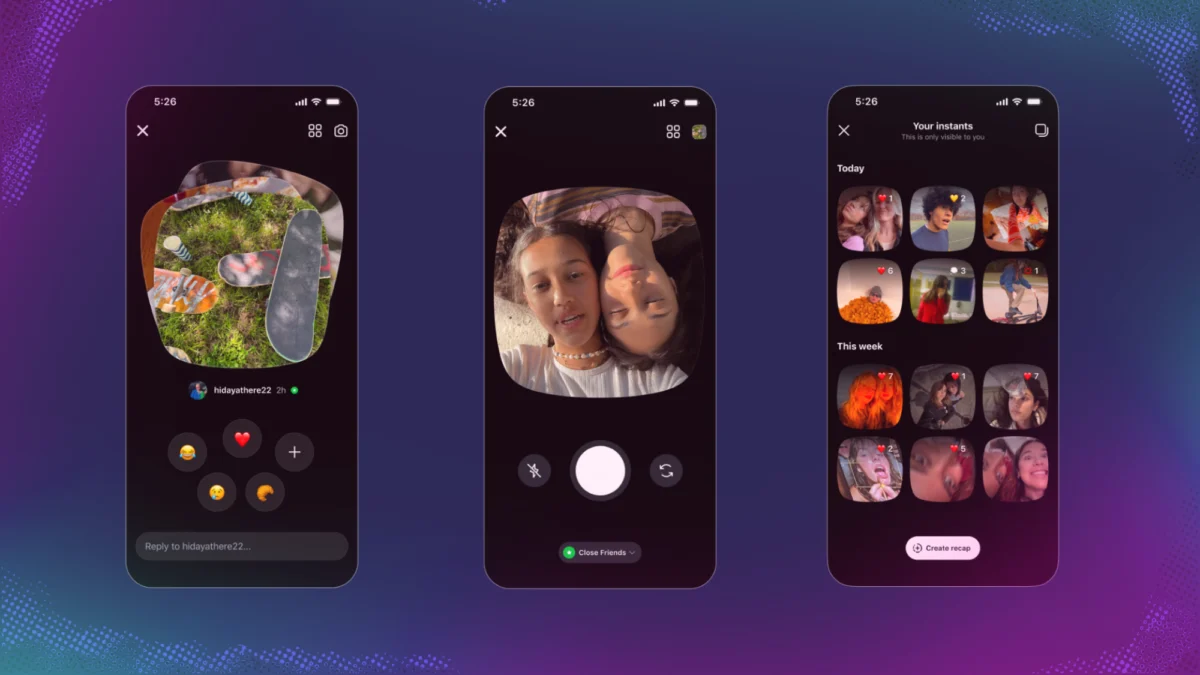
In an era defined by the curated aesthetic of the "Instagram Grid," Meta is taking a sharp turn toward the raw, the unfiltered, and the fleeting. On Wednesday, the social media giant announced the launch of "Instants," a new messaging tool designed to facilitate the rapid-fire exchange of unedited photo dumps. This feature, which integrates directly into the Direct Message (DM) inbox, represents a significant shift in how users interact with their "Close Friends" and mutual followers, prioritizing spontaneity over polish.
However, as with any new feature introduced to an ecosystem as vast as Instagram’s, the launch has been met with both excitement and a chorus of critical questions regarding privacy, data security, and the evolving nature of digital intimacy.
The Mechanics of Instants: How It Works
At its core, Instants is designed to feel like a high-speed conversation. When a user selects a batch of photos to send as an "Instant," the images arrive in the recipient’s inbox as a stacked collection, reminiscent of a physical pile of snapshots.
Crucially, these photos cannot be edited through Instagram’s standard suite of filters or cropping tools. While users are permitted to add text captions, the platform is clearly steering users away from the "perfect post" culture that has historically defined the app. Once opened, the photos disappear, following the ephemeral logic that has become a staple of modern messaging apps like Snapchat, Signal, and Telegram. If left unviewed, the content automatically expires after 24 hours.
The feature also includes an "undo" function, allowing users to retract a sent photo—a welcome addition for those prone to the "send-and-regret" phenomenon. For the sender, Instagram creates a private, inaccessible-to-others folder where these Instants are stored, allowing users to curate their favorites and eventually repost them to their Stories if they choose to preserve the memory beyond the initial interaction.
Chronology: The Evolution of Ephemerality
To understand why Instagram is leaning into Instants, one must look at the historical trajectory of the platform’s messaging architecture:
- The Early Years: Instagram began as a static feed. Messaging was a secondary, often ignored afterthought.
- The Snapchat Influence: Following the explosion of Snapchat’s "Stories" and disappearing messages, Instagram pivoted in 2016 by launching its own Stories feature. This proved to be the most significant turning point in the app’s history, shifting focus from the permanent grid to the temporary update.
- The Shift to DMs: Over the last three years, Meta has aggressively consolidated its messaging infrastructure. With the integration of Messenger and Instagram DMs, the company turned the inbox into a "hub" for social activity rather than just a private communication channel.
- The Launch of Instants (2024): The introduction of Instants is the logical conclusion of this trajectory. By removing editing tools, Meta is attempting to reclaim the "authenticity" market share, directly challenging apps that thrive on low-stakes, high-frequency sharing.
Supporting Data: Why "Unfiltered" Matters
Market research consistently suggests that Gen Z and younger Millennials are suffering from "curation fatigue." The pressure to maintain a highly stylized, aesthetically pleasing Instagram profile has led to the rise of the "Finsta" (fake Instagram) and a preference for platforms that feel less performative.
Data from various social media tracking firms indicates that engagement on Stories and DMs currently outpaces engagement on the main feed by a significant margin. By formalizing the "photo dump" into a native, ephemeral feature, Instagram is betting that users will spend more time in their DMs—a space that is notoriously difficult for advertisers to penetrate compared to the main feed. This shift is a strategic move to keep users tethered to the app during their most intimate social moments.
The Privacy Paradox: A Critical Assessment
While the feature is marketed as a fun, spontaneous way to connect, cybersecurity experts and privacy advocates have raised several red flags that users must consider before embracing the "Instant" lifestyle.

The "Screenshot" Fallacy
Instagram has implemented a block on native screenshotting within the Instants interface. However, it is vital to remember that in the world of mobile technology, a software restriction is not a physical one. As noted by security researchers, the recipient can always use a secondary device—such as another smartphone or a digital camera—to capture the image. In an age of high-resolution cameras, the "disappearing" nature of the content provides only a psychological sense of security, not a technical one.
The Myth of Incognito Mode
Many users operate under the false assumption that sending content to "Close Friends" creates a private, lawless digital sanctuary. This is fundamentally incorrect. Instagram maintains rigorous content moderation standards. Even within the "Close Friends" circle, content is subject to Meta’s community guidelines, including strict rules regarding nudity and hate speech. These photos are monitored by automated systems, and if an image triggers a flag, it is subject to human review.
The End-to-End Encryption Question
Perhaps the most significant concern is the status of encryption. While platforms like Signal and WhatsApp have marketed themselves on the strength of their end-to-end encryption (E2EE), Instagram has moved away from this standard for its DMs. This means that while your photos disappear from the interface, the metadata and the content itself are processed through standard encryption protocols, leaving them accessible to the platform’s own systems. For users who prioritize true privacy, the distinction between "disappearing" and "encrypted" is the difference between a clean inbox and a secure one.
Official Responses and Industry Implications
Mashable and other industry outlets have reached out to Meta for clarification on the long-term data retention policies for these "private" folders. As of the time of writing, Instagram has not provided a specific timeline for how long the server-side backups of these "deleted" Instants persist after they disappear from the user’s view.
Industry analysts suggest that the launch of Instants is a "defense play." With the rise of smaller, niche platforms that prioritize private, high-fidelity sharing, Meta is looking to modernize its own architecture to prevent further user churn. By bringing the "photo dump" trend—which previously lived in the main feed or public Stories—into the private DM space, they are successfully keeping the conversation contained within their own walled garden.
Implications for Digital Culture
What does the arrival of Instants mean for the future of online socialization?
- The Death of Perfection: By stripping away editing tools, Instagram is explicitly validating the "messy" side of life. This could potentially reduce the anxiety associated with posting, as users no longer need to fret over color grading or composition.
- Increased Friction in DMs: As the DM inbox becomes cluttered with "piles" of photos, users may find their messaging experience becoming more chaotic. This could lead to a digital form of "inbox clutter," where the sheer volume of ephemeral content becomes overwhelming.
- The Normalization of Surveillance: The fact that these images are subject to moderation even in the "Close Friends" tier highlights the extent to which private digital spaces are being integrated into the corporate surveillance apparatus. Users are essentially being invited to share more, while simultaneously consenting to increased monitoring.
A Final Word of Caution
For the average user, Instants offers a refreshing, low-pressure way to share daily life with their inner circle. It is an acknowledgment that digital interaction is evolving toward the temporary. However, the cardinal rule of the internet remains: Never send anything digitally that you would not want to see eventually compromised.
Whether Instants will become a staple of our daily routine or be relegated to the graveyard of forgotten Meta features remains to be seen. What is certain, however, is that Instagram is no longer just a place to display a curated life—it is now a place to experience the fleeting, unfiltered, and highly monitored moments of a modern, interconnected existence.
As we continue to navigate the landscape of digital communication, tools like Instants serve as a reminder that even when something is designed to disappear, the digital footprint—and the corporate oversight that governs it—is here to stay.