The landscape of modern live-service gaming is one of constant evolution, where technical requirements frequently outpace the hardware of yesterday. For millions of players, Genshin Impact has been a staple of their gaming diet since its explosive debut in September 2020. However, as the world of Teyvat continues to expand with increasingly complex environments, sophisticated lighting engines, and massive file sizes, the limitations of aging hardware have become impossible to ignore.
As of the launch of Version "Luna 5," HoYoverse has officially entered the final phase of its decommissioning process for the PlayStation 4 version of Genshin Impact. This transition marks a significant milestone in the game’s lifecycle, signaling the end of support for one of its original launch platforms and forcing a migration for the remaining dedicated player base still tethered to the 2013-era console.
The Facts: A Gradual Departure
The transition away from PlayStation 4 is not a sudden severance, but rather a carefully managed exit strategy that has been in motion for months.
Following the official announcement made by HoYoverse last year, the developer began winding down operations on the platform. The first major step was the complete delisting of the title from the PlayStation Store last September. This move ensured that new players would not inadvertently download a version of the game destined for retirement, while existing players retained access through their previously installed libraries.
The release of Version "Luna 5" brings the next phase: the total suspension of in-game purchases. Players on PlayStation 4 can no longer access the shop to purchase Genesis Crystals or other microtransactions. This is the penultimate step before the final curtain call: in approximately six weeks, with the arrival of Version "Luna 6" around April 8, all server access for the PlayStation 4 client will be terminated. Once this update goes live, the game will no longer function on the console, effectively ending its nearly five-year tenure as a premier destination for Teyvat’s travelers.
Chronology: From Launch to Legacy
To understand the significance of this sunset, one must look at the trajectory of Genshin Impact’s technical demands:
- September 2020: Genshin Impact launches globally across PC, Android, iOS, and PlayStation 4. The game is lauded for its cross-platform play, a rare feat for a gacha-based open-world title at the time.
- Late 2021 – 2023: As Genshin Impact introduces regions like Inazuma, Sumeru, and Fontaine, the game’s file size balloons. PlayStation 4 players report significant load times, texture pop-in, and frame rate instability during combat-heavy encounters.
- September 2024: HoYoverse officially confirms the intent to phase out PlayStation 4 support, citing technical limitations. The game is removed from the PlayStation Store.
- Early 2025 (Luna 5 Launch): In-game purchasing is disabled on the PlayStation 4 client.
- April 8, 2025 (Projected): Version "Luna 6" release marks the absolute end of PlayStation 4 server connectivity.
Supporting Data: Why Now?
The decision to sunset the PlayStation 4 version is rooted in the "technical ceiling" of the hardware. The PlayStation 4, equipped with a mechanical hard drive (HDD) and a Jaguar CPU architecture, struggles significantly with the game’s modern "streaming" engine.
The Hardware Bottleneck
The primary issue is data throughput. Modern Genshin Impact updates require rapid asset loading for vast, seamless open-world environments. The PS4’s HDD is incapable of keeping pace with the engine’s streaming demands, leading to the "hitchiness" and delayed object rendering that has plagued console players for the last two years. Furthermore, the sheer disk space required for the game—now exceeding 100GB—often consumes a significant portion of the base 500GB PS4 model’s storage, creating a friction point for user experience that HoYoverse is clearly eager to avoid.
The Shift to Next-Gen
The existence of the PlayStation 5, which offers near-instantaneous load times and superior visual fidelity, renders the PlayStation 4 experience obsolete. Additionally, the recent expansion of Genshin Impact to the Xbox Series X|S ecosystem provides a broader range of hardware options for console players, making the maintenance of a legacy PS4 build an increasingly inefficient use of developer resources.
The Symbolic Return: Luna 5 and Mondstadt
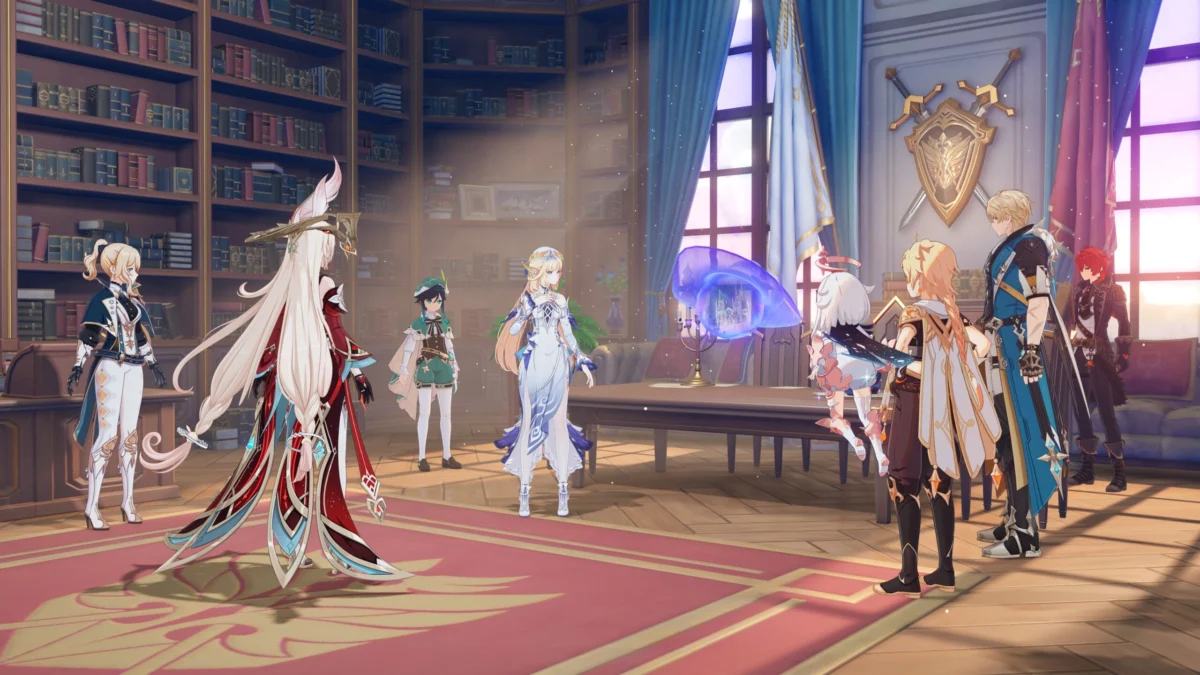
In a poetic turn of events, the "Luna 5" update returns the narrative focus to Mondstadt, the very first region players explored at launch. This narrative homecoming serves as a poignant backdrop for the final weeks of the platform.
The update introduces a "Chronicled Wish" banner, featuring legendary characters who defined the early meta of the game, including Eula, Mona, Albedo, Klee, Diluc, and Jean. For many veterans, these characters represent the "good old days" of Genshin Impact.
Furthermore, the long-awaited arrival of Varka, the Grand Master of the Knights of Favonius, serves as a major content highlight. After years of being relegated to lore-only status, his debut feels like a final "gift" to the original community, ensuring that the last days of the PS4 experience are marked by a significant, long-requested milestone rather than just a technical shutdown.
Official Responses and Developer Strategy
HoYoverse has maintained a policy of transparency regarding the transition. In their initial communications, they emphasized that the decision was necessary to "ensure the highest quality of gameplay for the future of Teyvat."
The developer has been proactive in guiding players toward the migration process. By maintaining cross-save functionality, HoYoverse ensures that progress is tied to the user’s HoYoverse account rather than the hardware. As long as a player logs into a PS5, PC, or mobile device using their existing credentials, their characters, weapons, and progression will remain perfectly intact. This has mitigated much of the potential backlash, as the "cost" of the transition is strictly hardware-based rather than progress-based.

Implications: The Future of Live-Service Longevity
The retirement of the PlayStation 4 version of Genshin Impact sets a precedent for the industry. It signals that even the most successful live-service games are not immune to the march of time.
The "Hardware Lifecycle" Reality
Game developers are increasingly moving toward a model where "support" is conditional. As mobile devices and consoles improve, the cost of optimizing for older, underpowered hardware eventually exceeds the revenue generated by that segment of the player base. We are likely to see similar "sunsetting" events for early-generation smartphones over the next few years as the game’s graphical engine continues to iterate.
The Impact on Community
While the loss of the PS4 client is a logistical hurdle, it also acts as a catalyst for community consolidation. By migrating players to platforms with faster load times and better performance, the community experience becomes more unified. Players will no longer be held back by the limitations of their teammates’ hardware during co-op sessions, leading to a smoother, more standardized experience across the board.
What Players Need to Do
For those still utilizing a PlayStation 4 to navigate the winds of Mondstadt or the peaks of Dragonspine, the instructions from HoYoverse are clear:
- Link Your Account: Ensure your PlayStation account is properly linked to a HoYoverse account to enable cross-platform progression.
- Choose a New Home: Evaluate the switch to a PlayStation 5, a high-performance PC, or a mobile device.
- Prepare for the Deadline: Do not attempt any major in-game purchases on the PS4. Ensure all desired items are acquired before the final shutdown in April.
As the sun sets on the PlayStation 4 version of Genshin Impact, it serves as a reminder that the world of Teyvat is as ephemeral as it is expansive. While one "home" for the Traveler is closing its doors, the adventure is far from over. The transition marks the next chapter in a game that has fundamentally changed the console landscape, proving that even as hardware fades, the digital worlds we inhabit continue to march forward, bigger and bolder than before.