

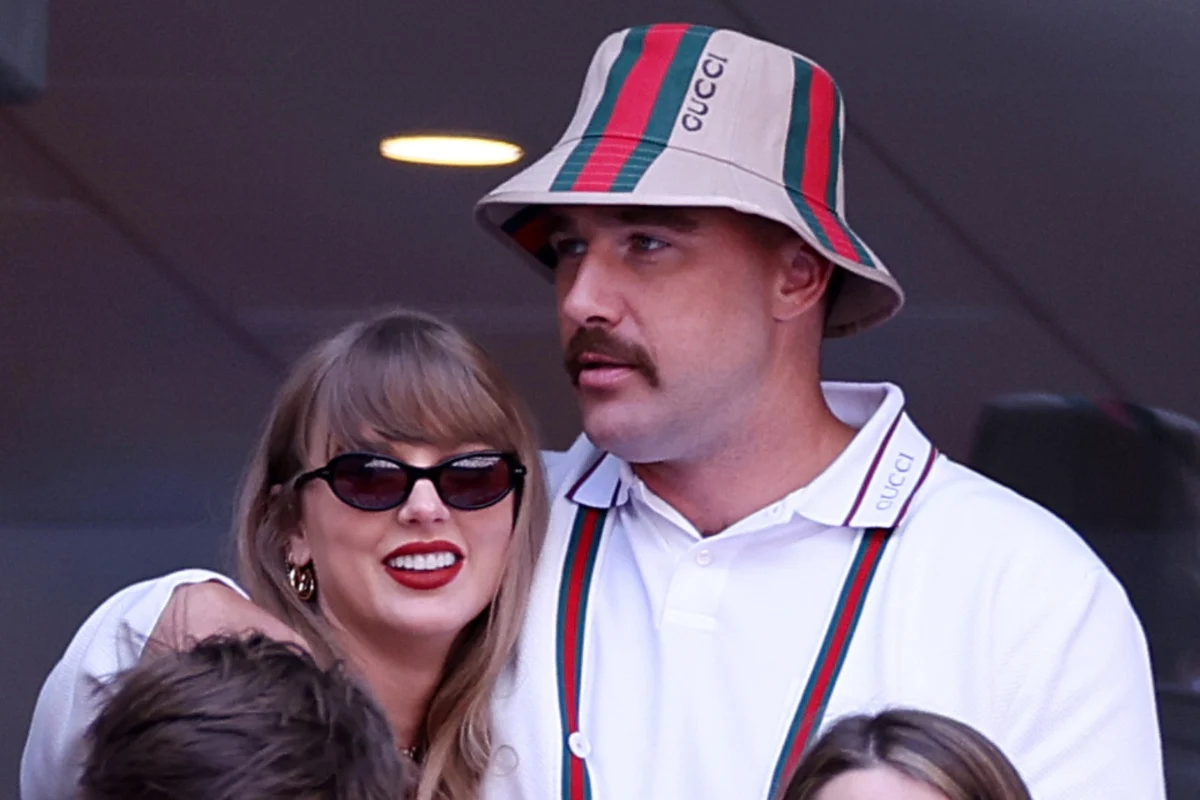
In an event that effectively brought Manhattan to a standstill, global music icon Taylor Swift and NFL superstar Travis Kelce exchanged vows on Friday, July 3, 2026, at Madison Square Garden. The ceremony, which has been described by attendees as a masterclass in immersive event production, served as the culmination of a high-profile courtship that has captivated the public imagination for years. With over 1,000 guests, top-tier security protocols, and an aesthetic transformation of one of the world’s most famous arenas, the wedding has set a new benchmark for celebrity nuptials.
Main Facts: A Union of Global Icons
The wedding, held in the heart of New York City, was characterized by its blend of massive scale and surprising intimacy. Despite the sprawling nature of Madison Square Garden, reports from attendees indicate that the space was expertly reconfigured to feel like a private, lush countryside retreat.
The logistics of the event were handled with military-grade precision. Guests received watermarked, digital invitations that included non-disclosure agreements (NDAs) to ensure the privacy of the couple. According to multiple sources, the guest list was designed to be inclusive rather than restrictive, following Swift’s previously stated philosophy regarding large weddings. As she explained to Graham Norton in October 2025, she preferred to avoid the stress of "bubble" lists by inviting a broad spectrum of friends, family, and colleagues.
The aesthetic direction of the wedding was overseen by event planner Mark Seed, who orchestrated a total transformation of the venue. The bride and groom’s attire was provided by Christian Dior Haute Couture, with designs led by Jonathan Anderson in close collaboration with the couple.
Chronology: From Mystery to "I Do"
The lead-up to the event was marked by a veil of secrecy. For weeks, the industry buzzed with speculation, but guests were intentionally left "flying blind." Many were simply instructed to be in New York City by the morning of July 3, with further details withheld until the final hours.
The transformation of the Garden began days before the ceremony. According to a now-deleted social media post by AMC Theatres CEO Adam Aron, the interior was unrecognizable. Upon entering the arena, guests were met with walls, floors, and ceilings draped in peach and white, adorned with a chronological gallery of the couple’s lives, featuring photographs from infancy through their teenage years.
A specific section of the arena was cordoned off and redesigned to resemble a "lush countryside retreat," utilizing green and white draping, real floral arrangements, and artificial trees to create a pastoral atmosphere. Fifteen rows of seating were arranged to ensure that even with 1,000 guests, the space felt contained and personal.
The ceremony itself was punctuated by several iconic moments. Comedian and actor Adam Sandler served as the officiant, delivering a ceremony that was both heartfelt and humorous. Following the vows, in a move that signaled the magnitude of the event to the public, digital billboards outside Madison Square Garden displayed the message, "JUST & T MARRIED!"
Supporting Data: The Guest List and the "Garden"
The sheer density of star power at the event was unprecedented. Attendees included a "who’s who" of the entertainment, sports, and business worlds. Among those spotted at the venue were Ed Sheeran, Bradley Cooper, Zoë Kravitz, Jack Antonoff, Gigi Hadid, Dakota Johnson, Ethan Hawke, Machine Gun Kelly, Jason Sudeikis, Hugh Grant, and Camila Cabello.
Other notable guests included:
- Industry Titans: Bob Iger (former Disney CEO) and Adam Aron (AMC Theatres CEO).
- Legendary Figures: Paul McCartney, Tom Hanks, and Steven Spielberg.
- Additional Stars: Emma Stone, Stephen Colbert, Conan O’Brien, Millie Bobby Brown, Ice Spice, Brad Pitt, Jennifer Lopez, Paul Rudd, and Seth Meyers.
While Harry Styles was invited, he was unable to attend due to tour commitments, and Jennifer Aniston was also reported as an invitee who could not make the date.
A unique wedding favor was provided to guests: an ivory handkerchief embroidered with lace, featuring the monogram "T&T," the date "July 3, 2026," the location "New York City," and the lyric, "So it’s gonna be forever…" from Swift’s 2014 hit, "Blank Space."
Official Responses and Behind-the-Scenes Insights
The wedding was not merely a private celebration; it served as a platform for philanthropy. In the days preceding the event, the couple announced a combined $26 million donation to at least 20 charities, including the Food Bank for NYC, Feeding America, Grammy In The Schools, and Children’s Mercy Hospital. This move underscored the couple’s commitment to social responsibility and was widely praised as a "gift to the public" in honor of their marriage.
The role of the bridal party was kept traditional but intimate. Austin Swift, the bride’s brother, served as the Man of Honor, while Jason Kelce, the groom’s brother, stood as the Best Man.
In a segment on "Good Morning America," hosts Robin Roberts and George Stephanopoulos provided further color on the reception. Roberts described a private performance by Stevie Nicks, calling it "really intimate," while Stephanopoulos marveled at the design work: "It was a garden inside the Garden, which was so beautiful. It’s hard to imagine a place that big… could feel so personal."
Implications: A Cultural Landmark
The Swift-Kelce wedding represents more than just the marriage of two high-profile individuals; it represents a shifting paradigm in how celebrity events are curated in the digital age. By utilizing a massive public venue like Madison Square Garden and transforming it into an intimate, private sanctuary, the couple successfully balanced their immense public profile with a desire for genuine, personal connection.
The use of NDAs, the deliberate lack of leaked details prior to the event, and the subsequent "controlled" release of information through official channels and select attendees suggests a new strategy for managing public interest. In an era where social media often strips celebrities of their privacy, the couple managed to maintain an air of mystery, only allowing the public to see what they chose to share—such as the billboard message and the charitable donations.
Furthermore, the involvement of figures like Adam Sandler as the officiant and Stevie Nicks as a performer points to the deep, long-standing professional and personal networks both Swift and Kelce have cultivated. The event was not just a wedding; it was a summit of creative and athletic power.
As the dust settles, the "July 3" ceremony will likely be remembered for its scale and its surprising warmth. For the fans who have followed the "Tayvis" narrative from its earliest stadium-tour sightings to this final, monumental "I do," the wedding provided a sense of narrative closure. For the industry, it provided a blueprint for the future of mega-celebrity events: keep it massive, keep it private, and, most importantly, keep it in the family.
In the final assessment, the wedding of Taylor Swift and Travis Kelce was a singular event in pop culture history. It bridged the gap between the stadium spectacle of their respective careers and the intimate reality of their private lives. As the embroidered handkerchiefs given to the guests reminded everyone in attendance: "So it’s gonna be forever." If the events of this past Friday are any indication, the couple has every intention of ensuring that their future is just as meticulously crafted as their wedding day.










