

In the pantheon of World War II cinema, few subgenres possess the visceral, claustrophobic intensity of the submarine thriller. It is a space defined by the sound of pinging sonar, the creak of pressurized steel, and the psychological unraveling of men trapped in a submerged metal coffin. Among these, Jonathan Mostow’s 2000 feature U-571 stands as a quintessential entry, a film that successfully captures the pulse-pounding anxiety of deep-sea warfare. Now available for streaming on Netflix, the film offers a compelling case study in the intersection of Hollywood spectacle and historical integrity.
While U-571 is undeniably a masterclass in tension, it remains a lightning rod for criticism regarding its blatant departure from the historical record. To appreciate the film today is to engage in a dual experience: one of cinematic immersion and one of necessary historical correction.
The Evolution of a Leading Man: Matthew McConaughey’s Rite of Passage
To understand the weight U-571 carries, one must look at the trajectory of its star, Matthew McConaughey. In the late 1990s, McConaughey was still cementing his identity as a leading man. He oscillated between the chiseled, upstanding heroes of the American South and the eccentric, volatile characters that would eventually define his more daring late-career work.
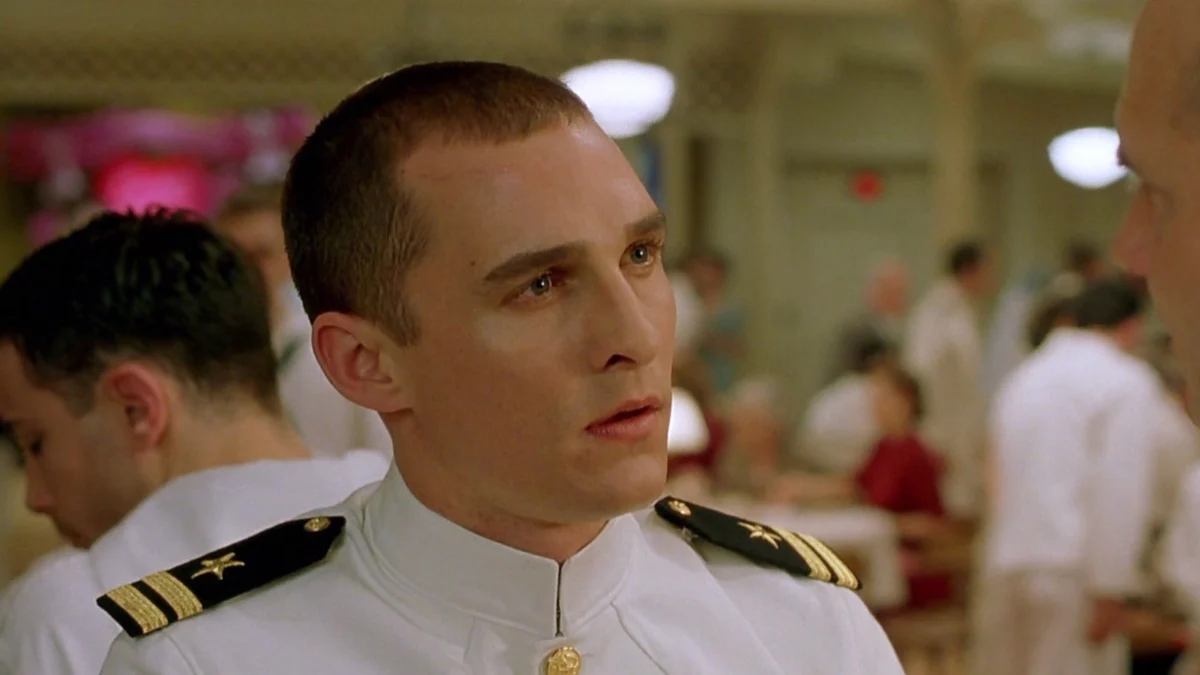
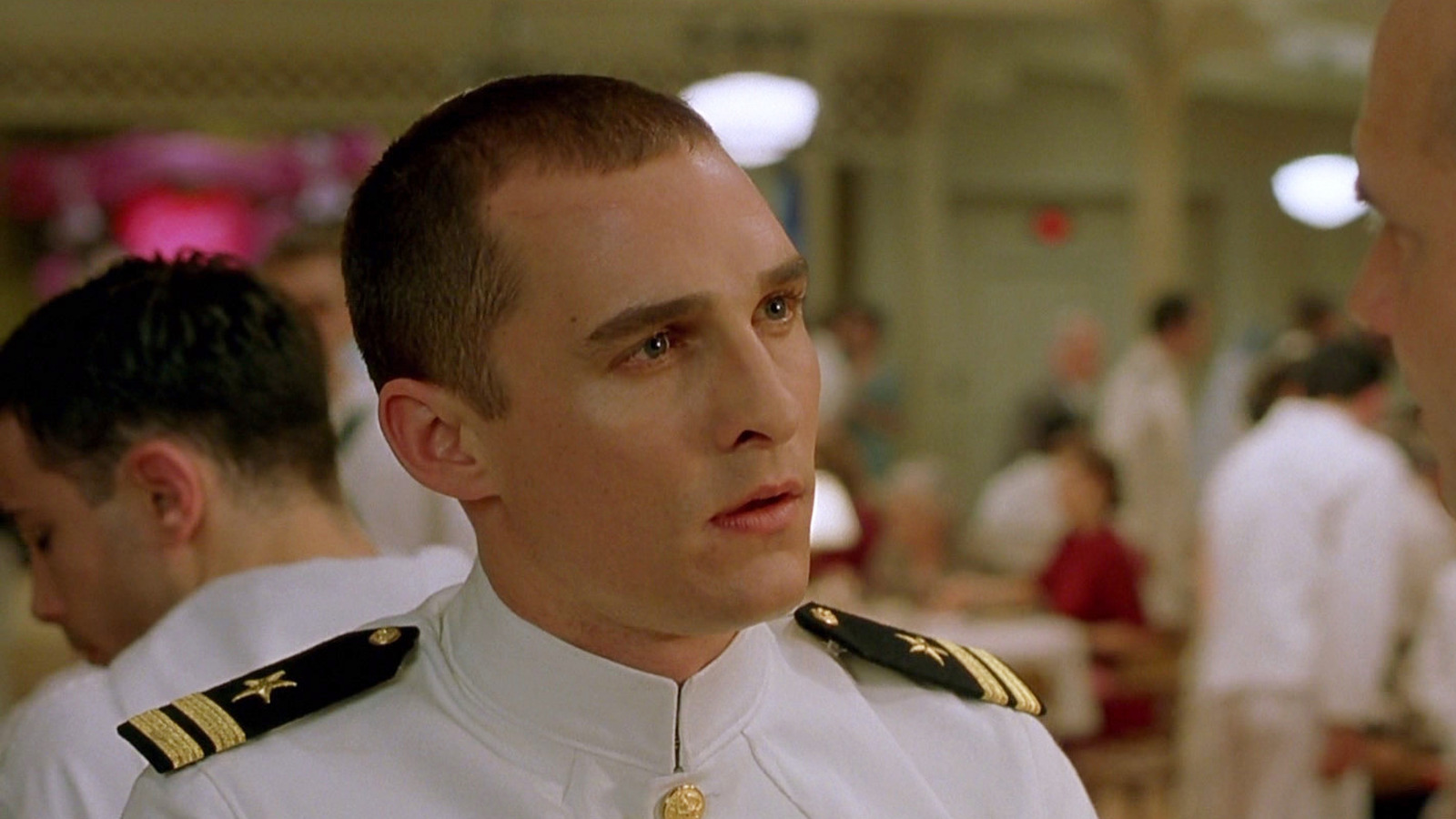
In U-571, McConaughey portrays Lieutenant Andrew Tyler, a character defined by ambition tempered by inexperience. His performance is essentially a cinematic "baptism by fire." Tasked with leading a mission to capture an Enigma coding machine from a disabled German U-boat, Tyler finds himself out of his depth—both literally and figuratively. The film serves as a character study of a man forced to mature rapidly under the tutelage of battle-hardened veterans, played by the late Bill Paxton and the legendary Harvey Keitel. This dynamic—the green officer mentored by the grizzled sergeant—is a staple of the war genre, but in U-571, it is elevated by the claustrophobic setting of the submarine, where every mistake is amplified by the proximity of certain death.
Chronology of a Mission: The Narrative Arc of U-571
The narrative of U-571 is structured as a high-stakes ticking clock. The film opens in 1942, a period when the Battle of the Atlantic was turning into a bloodbath for Allied shipping. The Germans, utilizing their sophisticated U-boat wolfpacks and the unbreakable Enigma encryption, held a stranglehold on transatlantic supply lines.
- The Mission Briefing: The U.S. Navy identifies a crippled German U-boat, the U-571, drifting in the North Atlantic. An American crew, disguised as Germans, is sent to infiltrate the vessel and seize the Enigma machine.
- The Infiltration: The team successfully boards the U-571, but the operation goes awry when their own transport vessel is destroyed. They are left stranded inside the enemy craft.
- The Crisis: The crew must repair the U-boat and navigate through a gauntlet of German destroyers while attempting to return to Allied territory.
- The Climax: The film culminates in a desperate game of cat-and-mouse, as the crew must utilize the U-boat’s own weaponry against the German fleet, culminating in a harrowing battle of attrition that tests Tyler’s resolve as a commander.
Throughout this arc, director Jonathan Mostow keeps the camera tight, focusing on the "clammy-faced" desperation of the crew. The inclusion of an ensemble cast—ranging from David Keith to the somewhat anomalous presence of rock star Jon Bon Jovi—adds a layer of star power that bolsters the film’s "Dad Movie" appeal, turning it into a staple of cable television and streaming platforms alike.
The Historical Disconnect: A "Terrible History Lesson"
While U-571 functions as a taut, visceral thriller, its historical accuracy is, to put it bluntly, entirely fictional. The central conceit of the film—that the U.S. Navy was the primary force behind capturing the Enigma machine—is a significant fabrication that caused a firestorm of controversy upon its release.
In reality, the capture of Enigma materials was a multinational effort, heavily spearheaded by British intelligence and the Royal Navy. The most famous capture occurred in May 1941, when the HMS Bulldog captured the U-110, securing a fully functional Enigma machine and codebooks. The United States did not even enter the European theater of war until months later. By attributing this monumental breakthrough solely to an American crew in 1942, the film effectively erased the contributions of the British sailors and codebreakers at Bletchley Park who had been working on the problem for years.
Official Responses and Public Outcry
The backlash in the United Kingdom was swift and severe. The film’s revisionist history was viewed not just as a creative liberty, but as an insult to the British war effort. The controversy reached such a height that it was raised in the British Parliament, where Prime Minister Tony Blair himself criticized the film for being "an affront to the memories of British sailors."
Screenwriter David Ayer, who would later become a celebrated director in his own right with films like Training Day and Fury, has since acknowledged the inaccuracies. In later interviews, Ayer expressed regret over the script’s handling of the facts, admitting that the decision to prioritize American heroism over historical truth was a mistake. However, the damage to the film’s reputation in the UK remained a permanent stain on its legacy, marking it as one of the most prominent examples of Hollywood "historical washing."
Implications for Modern Viewership
Despite its factual bankruptcy, U-571 remains a compelling piece of entertainment. Its success invites a broader discussion about the responsibility of historical fiction. Does a film have a moral obligation to be accurate, or is it merely a vessel for storytelling?
In the case of U-571, the implication for the modern viewer is clear: enjoy the craft, but consult the records. The film excels in technical production design, sound editing, and performance, providing a window into the sheer terror of submarine warfare. Yet, it serves as a cautionary tale about how easily popular media can distort public perception of history.
As audiences rediscover the film on platforms like Netflix, it is helpful to approach it with a critical lens. It is a work of fiction that uses the backdrop of WWII as a set piece for a personal journey of growth and survival. If the viewer understands that they are watching an action movie—rather than a documentary—the experience is significantly more satisfying. The film’s tension is real, its cinematography is masterful, and its place in the 2000s action canon is secure. Just don’t use it to pass a history exam.
Conclusion
U-571 is a paradox of a film. It is a taut, expertly paced submarine thriller that manages to keep the audience on the edge of their seats, yet it remains one of the most criticized films in the war genre due to its blatant disregard for history. Matthew McConaughey’s performance serves as the anchor for a story that, while emotionally resonant, is fundamentally untethered from the truth.
In an era where streaming services make films from all decades accessible at the touch of a button, U-571 serves as an excellent reminder of the power and the peril of Hollywood’s approach to history. It is a testament to the fact that while a film can successfully capture the feeling of a moment, it is often a poor substitute for the facts of it. For those looking for a high-stakes, adrenaline-fueled watch, it remains a must-see—provided you are willing to dive into the history books once the credits roll.










