Siti Muinah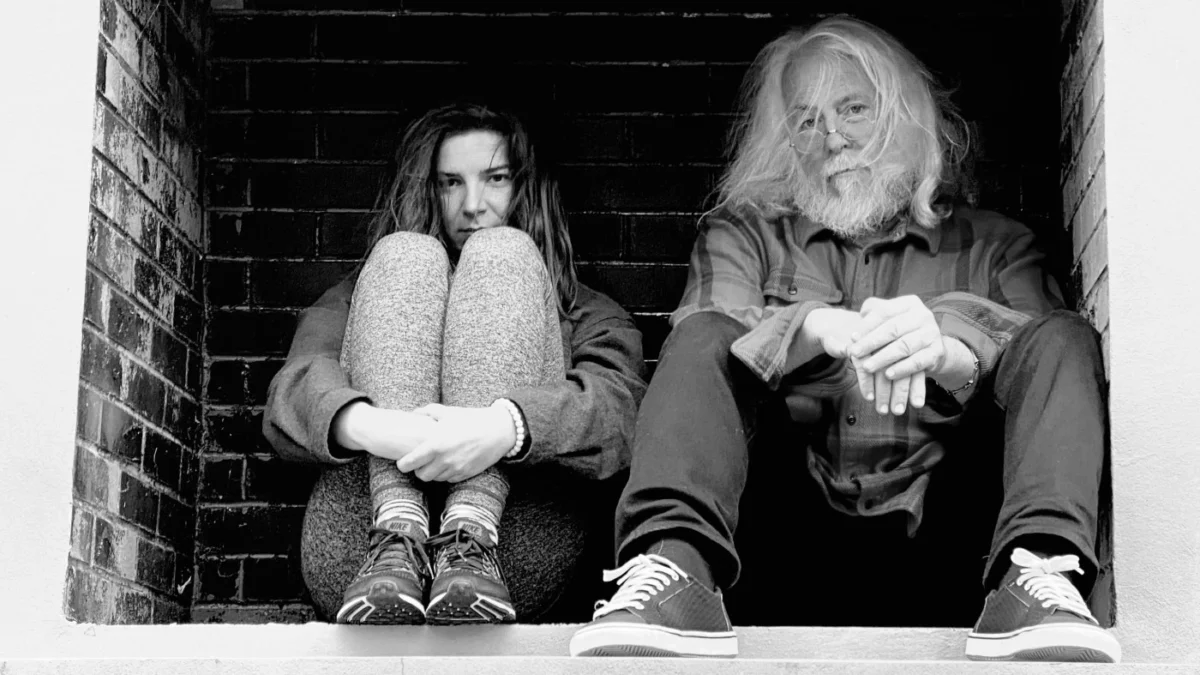
Robert Richardson, the legendary cinematographer affectionately dubbed "Big Bad Bob" by his frequent collaborator Brad Pitt, has spent nearly four decades shaping the visual language of modern cinema. With ten Academy Award nominations and three statues to his name—for JFK, The Aviator, and Hugo—Richardson is widely considered the preeminent eye of American auteur cinema. This summer, during a Fourth of July weekend in the Czech Republic, the spotlight shifted from the cameras he wields to the man himself, with the world premiere of Robert Richardson: The White Devil.
Directed by Czech filmmaker Jana Hojdová, the documentary offers an intimate, often unvarnished look at a man who has stood behind the lens for giants like Oliver Stone, Quentin Tarantino, and Martin Scorsese. The film, which originated as a humble student project in 2016, evolved into a profound exploration of Richardson’s legacy, largely due to the unexpected catalyst of the global pandemic.
From Student Speculation to Pandemic Partnership: A Chronology
The genesis of The White Devil is a testament to audacity. In 2016, Hojdová, then a film student, sent a letter to Richardson on spec, harboring little expectation of a response. To her surprise, not only did Richardson reply, but he also extended an invitation for her to visit him in the United States.
The plan was simple; the reality was complicated. When the COVID-19 pandemic descended in 2020, Hojdová found herself effectively trapped in the U.S. as a houseguest of the cinematographer. What began as a brief visit stretched into an extended, involuntary residency. This confinement forced an intense, daily interaction between subject and filmmaker, resulting in a project that is as much a portrait of a creative legend as it is a record of a bizarre, isolated moment in history.
"It wouldn’t have been the same if COVID hadn’t happened," Richardson reflects. "There’s no way. She wouldn’t have had the time to force me into what she did."
Throughout the lockdown, Hojdová became a fixture in Richardson’s life, scouring his home for archives, forgotten photo albums, and materials that had been boxed away for decades. Richardson, initially resistant to the constant, invasive presence of the camera, eventually found himself drawn into the process, even participating in the technical resurrection of his own history by acquiring 16mm and Super 8 projectors to review long-forgotten footage.
A Career Defined by Risk and Rebellion
To understand Richardson’s career is to understand a trajectory that oscillates between extreme technical precision and a "rock and roll" disregard for convention. His filmography reads like a syllabus for modern film history. He has worked consistently with directors who demand the impossible, pushing the boundaries of what the medium can convey.
However, his path has not been without turbulence. The documentary pulls no punches regarding the intensity of his sets, particularly his early years. His collaboration with Oliver Stone, while visually revolutionary, was marked by a volatility that became legendary. Richardson recounts the production of Natural Born Killers as a bridge too far—a project that, by his own admission, "went over the edge."
Reflecting on the infamous film, he notes, "Robert Downey [Jr.] says, ‘It’s like, what illicit substance was not [taken]?’ You just look at the film and you can feel it." Despite the chaos, Richardson maintained his commitment to the director’s vision, viewing the film’s genre-bending style as a necessary, if harrowing, artistic endeavor.
The Tarantino Bond: Collaboration as Currency
Perhaps the most significant professional relationship of Richardson’s life is his bond with Quentin Tarantino. The pair have developed a shorthand that transcends typical director-cinematographer dynamics.
"There’s Bob Richardson and there’s everybody else," Tarantino states in the documentary. This mutual respect was forged in the fires of Kill Bill. Richardson insists on operating the camera himself, a move that he argues is non-negotiable for their partnership. "I want to be next to him and I want to look at the actors with you. I want that because that’s going to be us and how we talk," Richardson explains.
Their relationship has matured over the years, moving from a tentative professional arrangement to a deep, collaborative friendship. While rumors of longer cuts of Once Upon a Time… in Hollywood persist, Richardson suggests that fans should anticipate more versions of the film as time goes on, noting Tarantino’s propensity for revisiting and refining his work.
As for the mystery surrounding Tarantino’s final film, Richardson remains in the dark, much like the rest of the industry. "Nobody knows what he’s going to do," he admits. The aborted The Movie Critic project serves as a reminder of the mercurial nature of high-stakes filmmaking, but Richardson remains ready for whatever the "last" project may eventually be.
Technical Evolution: Light, Shadows, and the Digital Shift
Throughout his career, Richardson has been a bridge between the analog past and the digital future. He is deeply physical with his craft, viewing the camera not just as a tool, but as a participant in the scene.
"I don’t see it as any reason not to think what the next step is going to be," he says regarding the rapid evolution of digital cinema. He remains critical, however, of the industry’s obsession with convenience. When producers suggest that high-ISO cameras eliminate the need for lighting, Richardson offers a veteran’s rebuttal: "Sometimes you need to subtract, to learn how to get rid of light, not add it."
His philosophy on lighting and composition remains rooted in the belief that technology should serve the emotional weight of the story, not replace the artistry of the cinematographer. Even as he embraces modern tools, his heart remains tethered to the tangible, physical reality of celluloid—the textures, the grain, and the limitations that once defined the medium.
Implications for Future Filmmakers
Robert Richardson: The White Devil serves as more than a biography; it is a masterclass in resilience and the evolution of a creative spirit. At 70, Richardson remains as active as ever, having recently worked on David O. Russell’s Madden and facing the professional heartbreak of the cancellation of the high-profile Hannibal project with Antoine Fuqua.
His career trajectory suggests that longevity in Hollywood is not merely a matter of talent, but of adaptability and the ability to maintain a "beginner’s mind" even after winning three Academy Awards. His willingness to allow a student filmmaker to document his "warts-and-all" reality speaks to a man who has moved beyond the ego of his early career to find peace in the work itself.
"I’m unsure what my work’s going to be like because I haven’t seen a cut," Richardson says of his latest project. "What I want to be is happy with his work. If his work’s good, mine’s good."
In this statement lies the essence of Richardson’s legacy: the understanding that the cinematographer is the ultimate collaborator, the silent partner whose vision allows the director’s voice to resonate. Whether he is "Big Bad Bob" the firebrand or the seasoned mentor reflecting on his life in a locked-down world, Robert Richardson continues to define the very nature of how we see the world on screen. As he looks toward the next chapter, one thing is certain: he will continue to light the path, whether he is adding to the frame or subtracting from the shadows.

 Dwi Wanna
 Nana
Nana