

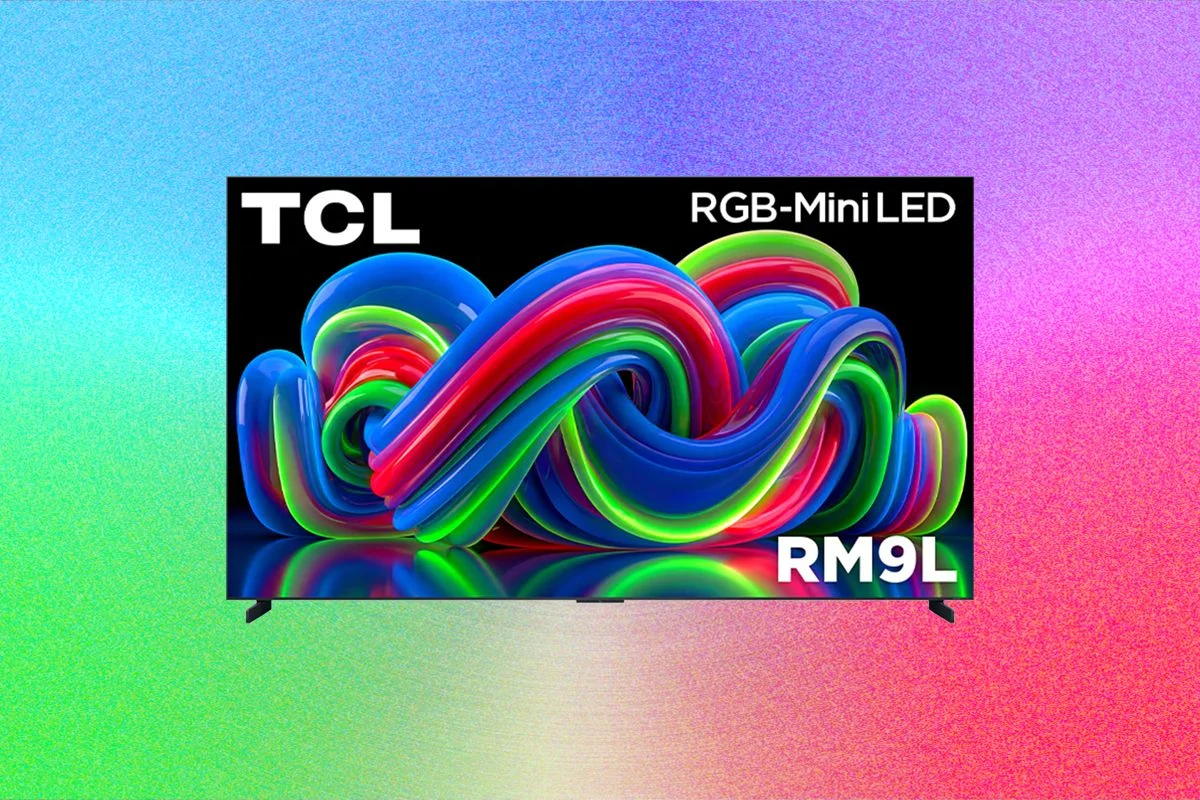
In the rapidly evolving landscape of home entertainment, TCL has consistently positioned itself as the disruptor of the premium television market. With the launch of the RM9L RGB-Mini, the company aims to bridge the gap between high-performance gaming hardware and cinematic visual fidelity. By integrating cutting-edge Mini-LED architecture with a robust suite of connectivity options, the RM9L enters a crowded arena dominated by established giants like LG and Sony. However, as our comprehensive testing reveals, the path from technical promise to visual perfection is fraught with calibration challenges.
Main Facts: Connectivity and Hardware Architecture
At the heart of the RM9L’s value proposition is its uncompromising approach to connectivity. TCL has opted to avoid the common cost-cutting measures seen in midrange displays, providing a full complement of four HDMI 2.1 ports. This is a significant inclusion, as it allows users to connect multiple high-bandwidth devices—such as a PlayStation 5, an Xbox Series X, and a high-end sound system—simultaneously without sacrificing performance.
Each of these ports is capable of handling a 144Hz refresh rate, a specification that caters directly to the PC gaming demographic. Whether utilizing the screen as a massive gaming monitor or a home theater hub, the RM9L ensures low-latency input that is increasingly essential for competitive gaming. One of these ports is dedicated to eARC (Enhanced Audio Return Channel) passthrough, allowing for seamless high-fidelity audio transmission to external receivers or powered sound systems.
Beyond the HDMI array, the RM9L offers a versatile I/O panel including two USB ports (one featuring coaxial support), an Ethernet port for stable wired networking, and a digital optical output. Wireless connectivity is handled by the Wi-Fi 6 standard, ensuring that streaming 4K HDR content remains buffer-free even in high-traffic network environments.
Chronology of Testing: A Deep Dive into Performance
To evaluate the RM9L, we subjected the unit to a rigorous testing protocol over several weeks. Our setup integrated an Xbox Series X for gaming benchmarks, a Google TV interface for streaming, and the Klipsch The Nines II speakers to test the integrity of the audio passthrough.
The Remote Control Experience
In the early days of testing, the remote control emerged as a point of both praise and frustration. The industrial design is undeniably sleek, prioritizing a clean aesthetic that avoids the "button bloat" common in legacy remotes. A standout feature is the placement of brightness controls on the right-hand side—a brilliant ergonomic decision that allows for instantaneous adjustments, whether one is battling sunlight glare during the day or dimming the screen for a late-night session.
However, the remote is not without its flaws. The lack of a centered Home button complicates navigation in the dark, and the inclusion of dedicated buttons for free streaming services feels like unnecessary clutter. While the unit is backlit—a critical feature for this price point—the overall UI layout could benefit from more intuitive placement of frequently used commands.
Cinematic Benchmarks
The real-world testing phase focused on high-contrast, low-light scenarios, specifically utilizing Netflix’s Awake and the film The Creator (via Fandango at Home). These titles were chosen specifically for their challenging shadow detail and predawn lighting conditions.
During the cycling scene in Awake, we noted that even some premium OLED models struggle to maintain visibility without losing black levels. The RM9L initially required manual intervention; in its standard picture mode, the scene appeared washed out. Only after switching to "Vivid" mode did the shadow detail become acceptable. This highlights a recurring theme with RGB-Mini technology: it is a "fussy" display engine that requires significant user calibration to achieve its full potential.
In The Creator, an early coastal scene provided a difficult test for color saturation. Even with Dolby Vision IQ engaged, the scene lacked the "pop" one expects from a premium display. The blacks felt slightly grayed out, and the blue hues of the ocean lacked the depth of competing panels in the same price tier.
Supporting Data: Comparative Analysis
To contextualize the RM9L’s performance, we conducted side-by-side comparisons with industry benchmarks, including the LG Micro RGB Evo, the Sony Bravia 7 Mark II, and the Hisense UR9.
Skin Tones and Color Accuracy
When assessing skin tones, the RM9L exhibited a discernible struggle with tonal variation. While the LG Micro RGB Evo delivered lifelike gradients, the RM9L leaned toward a more homogenized look. In head-to-head testing, the RM9L performed more similarly to the midrange Sony Bravia 7 Mark II and the Hisense UR9. While it holds its own against these mid-tier competitors, it falls short of the color volume offered by higher-end LG displays, particularly in challenging environments like nighttime forest scenes or complex color-saturated macros, such as a purple butterfly or a vibrant red cactus.
The "White Mist" Challenge
In a specialized demo reel testing white mist against a snowy mountain backdrop, the results were mixed. When compared to the Leica Cine Play 1 projector, the RM9L’s limitations became apparent. While the Leica’s optics rendered the mist with distinct layers and clarity, the RM9L struggled to differentiate the gradients of white and gray, causing the image to appear somewhat compressed. However, when compared to the Hisense UR9, the RM9L proved to be an equal competitor, particularly in rendering the complex brown shades of buffalo fur in field settings.
Official Responses and Engineering Context
TCL’s design philosophy for the RM9L has been to prioritize gaming-centric hardware specs—specifically the 144Hz refresh rate and the full-bandwidth HDMI 2.1 array—over the absolute software-driven color accuracy found in cinema-first displays. Industry engineers often note that Mini-LED technology is inherently more difficult to tune than OLED because it relies on backlighting zones rather than individual pixel illumination.
While TCL has not issued a formal statement regarding the "fussy" nature of their RGB-Mini calibration, firmware updates have historically been the company’s preferred method for addressing color-shifting issues. The company suggests that users utilize the advanced calibration menus to tailor the display to their specific lighting environments, emphasizing that the "Vivid" mode is not necessarily the intended default for all content types, but rather a tool for overcoming specific ambient light challenges.
Implications for the Consumer
The TCL RM9L RGB-Mini represents a significant milestone in the democratization of high-end TV features. By packing professional-grade connectivity into a consumer-accessible chassis, TCL has created an ideal display for the "power user" gamer. The ability to switch between high-intensity gaming and streaming, coupled with the convenient backlit remote and high-speed Wi-Fi 6, makes this a strong contender for those who prioritize utility over absolute visual perfection.
However, prospective buyers must temper their expectations regarding "out-of-the-box" cinematic performance. If you are a cinephile looking for a display that renders perfect skin tones and deep, nuanced shadows without requiring hours of menu-diving, you may find the RM9L’s requirement for calibration a point of friction.
Final Verdict
The RM9L is a "workhorse" television. It excels in the areas where it matters most for modern, multi-device homes—connectivity, input latency, and versatile brightness control. While it lacks the refined color processing of more expensive OLED alternatives, it provides a feature-rich experience that holds its own against other Mini-LED competitors in its bracket. For the gamer who wants to push 144Hz frames while maintaining a sleek, modern home theater setup, the RM9L is a compelling, if slightly demanding, investment.
As the market continues to shift, TCL’s commitment to hardware-heavy specs suggests that future iterations will likely focus on closing the software-calibration gap, potentially making the next generation of RM-series televisions the true standard-bearers for both gaming and cinema.











