Rifan Muazin
The landscape of software development and legacy software preservation has been irrevocably altered by the rapid evolution of large language models (LLMs). While public discourse often focuses on the regulatory or existential debates surrounding advanced artificial intelligence, a more practical, community-driven revolution is occurring in the quiet corners of GitHub.
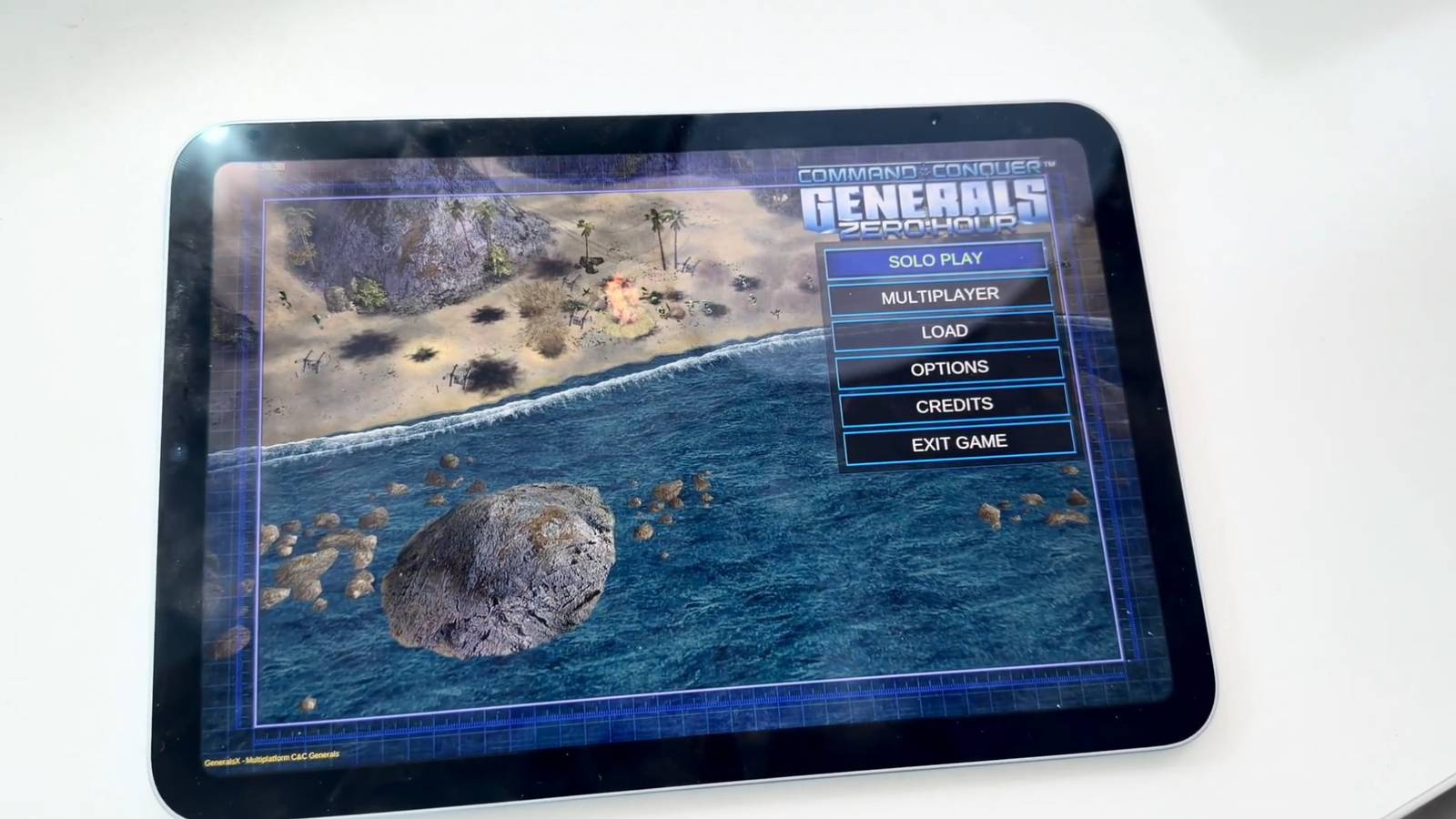
Most recently, Ammaar Reshi, a Product and Design Lead at Google DeepMind, demonstrated the staggering capability of the new Claude Fable 5 AI model by achieving what many deemed technically prohibitive: porting the classic real-time strategy (RTS) title Command & Conquer: Generals – Zero Hour to native Arm64 architecture for iPhones, iPads, and Macs. This project transcends simple emulation, representing a significant milestone in how AI can be leveraged to modernize aging software for contemporary hardware.
The Genesis of a Modern Port
Command & Conquer: Generals – Zero Hour, released by EA Pacific in 2003, remains a hallmark of the RTS genre. However, the title has long been trapped in the limitations of its era, relying on aging x86 architecture and legacy DirectX dependencies that make modern compatibility a challenge.
The project began when Ammaar Reshi, leveraging his access to the highly anticipated Claude Fable 5 model, sought to test the limits of AI-assisted code refactoring. Unlike previous AI models that might struggle with the complex, non-linear architecture of a two-decade-old game engine, Fable 5 demonstrated an unprecedented ability to parse legacy C++ codebases and translate them into modern, hardware-efficient instructions compatible with Apple’s M-series and A-series chips.
Chronology: From Legacy Code to Native Performance
The journey of this port is a testament to the synergy between human engineering oversight and machine-led automation:
- Phase 1: Analysis and Decompilation (Early June 2026): Reshi utilized Claude Fable 5 to analyze the source structure of the Generals engine. The AI was tasked with identifying platform-specific dependencies that prevented the game from running on non-x86 environments.
- Phase 2: Code Refactoring (Mid-June 2026): The model assisted in rewriting core graphics and input handling routines. By leveraging the model’s deep understanding of modern Metal API requirements, the code was adapted to handle touch inputs and high-DPI scaling—features entirely absent from the 2003 original.
- Phase 3: Compilation and Debugging (Late June 2026): The resulting codebase was compiled for native Arm64. During this phase, Fable 5 served as a real-time debugging partner, parsing error logs and suggesting optimized memory management patches that allowed the game to run at stable frame rates on mobile hardware.
- Announcement (July 6, 2026): Following successful stability tests, Reshi officially announced the project via social media, releasing the build and documentation to the public.
The Technical Edge: Why Fable 5 Matters
The success of the Generals port highlights the specific strengths of the Claude Fable 5 architecture. Unlike its predecessors, which often generated "hallucinated" or non-functional snippets when faced with massive, multi-file projects, Fable 5 maintains a robust context window capable of holding the entirety of a legacy engine’s architectural logic.
Native Execution vs. Emulation
Historically, running older PC games on mobile devices has required heavy virtualization or emulation layers like ExaGear or Box64. These methods are notoriously resource-intensive, often leading to overheating and significant battery drain. By using AI to compile the code natively, Reshi’s approach ensures the game engine interacts directly with the Apple Silicon processor. This results in:
- Reduced Overhead: No virtualization layer means 100% of the CPU’s cycles are dedicated to the game logic.
- Thermal Efficiency: Native execution keeps temperatures lower, allowing for longer gaming sessions on devices like the iPad Pro.
- Optimized Touch Controls: The AI assisted in remapping the traditional mouse-and-keyboard interface to a touch-first paradigm, effectively modernizing the user experience.
Community Implications and Open-Source Accessibility
Following the announcement, Reshi published the project files, source modifications, and comprehensive documentation on GitHub. This move has turned a niche experiment into a blueprint for the gaming preservation community.
For many enthusiasts, this represents a new era of "AI-assisted preservation." Titles that were once considered "lost" due to the degradation of source code or the complexity of legacy dependencies may now be recoverable. If an AI can successfully refactor a title as complex as Command & Conquer, the potential for revitalizing other abandoned classics—such as Rise of Nations or Age of Mythology—becomes a matter of hours or days, rather than years of manual labor.
Official Responses and Industry Outlook
The tech industry has reacted with a mixture of excitement and caution. While Google DeepMind has not issued an official statement regarding Reshi’s specific project, the internal development of Fable 5 has been widely praised within Silicon Valley for its advanced code synthesis capabilities.
Industry analysts suggest that this project serves as a "proof of concept" for the future of software maintenance. "We are looking at a paradigm shift," notes software architect Sarah Jenkins. "We spent the last decade building software. The next decade will be defined by using AI to rewrite the last thirty years of software to fit the mobile-first, heterogeneous computing landscape."
Broader Implications for Software Development
The implications of the Generals port extend far beyond gaming. The techniques used to port this engine are directly applicable to:

- Corporate Legacy Systems: Many enterprises rely on critical software written in the 1990s or early 2000s that no longer runs on modern secure operating systems. Using models like Claude Fable 5 to refactor these systems could save companies millions in infrastructure costs.
- Hardware Democratization: By lowering the barrier to entry for cross-platform porting, developers can reach broader audiences without needing massive teams to handle porting duties.
- The "AI-Developer" Workflow: This project highlights a shift in the role of the software engineer. The human is no longer just a coder, but an architect and curator—the one who identifies the problem, manages the AI’s output, and verifies the final implementation.
Future Challenges
Despite the excitement, several hurdles remain. Intellectual property law remains the primary obstacle for widespread adoption of AI-refactored legacy software. While the Generals port works for those who own the original game assets, distributing pre-compiled binaries remains a legal gray area. EA (Electronic Arts) retains the rights to the Command & Conquer IP, and while they have been generally permissive of fan projects, the commercial use of AI-refactored legacy code remains an untested legal territory.
Furthermore, there is the issue of "AI hallucinations" in complex logic. While Fable 5 was successful here, relying on AI to refactor security-critical or financial software carries risks that are not present in the relatively low-stakes environment of a real-time strategy game.
Conclusion
The porting of Command & Conquer: Generals – Zero Hour to Apple Silicon is more than just a nostalgic victory for 2000s-era gamers; it is a seminal moment in computer science history. By leveraging the advanced reasoning capabilities of Claude Fable 5, Ammaar Reshi has demonstrated that we have entered an age where software is no longer static.
As we look forward, the ability to breathe new life into legacy code through automated refactoring will likely become a standard tool in the software developer’s arsenal. Whether it is used to preserve the history of digital entertainment or to modernize the backbone of global enterprise infrastructure, the synergy between human intent and artificial intelligence is poised to redefine the limits of what is possible on our devices.
For now, fans of the Generals franchise can enjoy the fruits of this technological breakthrough, keeping a piece of gaming history alive and running smoother than ever on the palm of their hand. As the GitHub repository continues to evolve, it invites the community to contribute, optimize, and perhaps even apply these same techniques to other neglected titles, ushering in a renaissance of classic PC gaming on the Apple ecosystem.

 Neng Nana
 Sagoh
Sagoh