Iffa Jayyana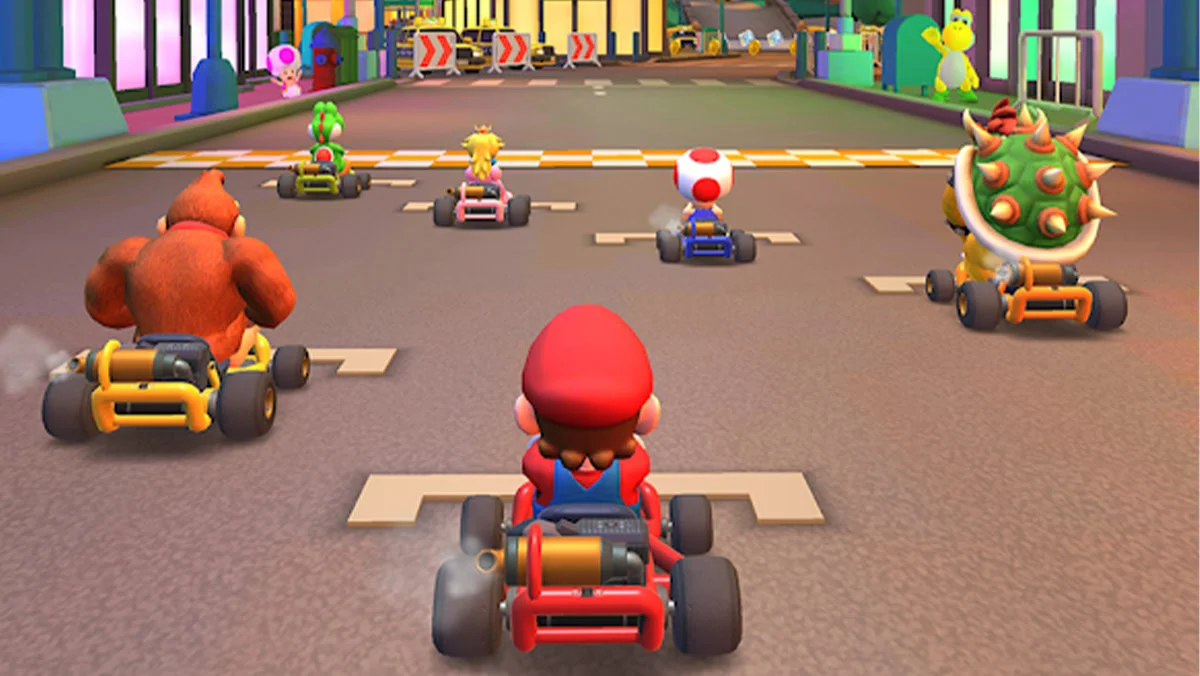
In the rapidly evolving landscape of digital media, the boundary between passive consumption and active participation has never been thinner. While Nintendo remains the gatekeeper of its intellectual property—tightly controlling the Mario Kart franchise on its proprietary hardware—two enterprising YouTube creators have successfully bypassed these traditional barriers. By leveraging the platform’s native 360-degree video infrastructure, Atlas Arcade and Animated Subtitles have created an unofficial, playable "Mario Kart" experience directly within a web browser, turning a standard streaming interface into an interactive arcade cabinet.
Main Facts: A Browser-Based Karting Innovation
The project, which has recently garnered significant attention from the gaming community, is a testament to the ingenuity of "platform hacking." By utilizing YouTube’s native 360-degree spherical video technology, the creators have effectively turned a static video file into a navigable environment.
Unlike traditional gaming, where a software engine renders graphics in real-time based on player input, this experience relies on pre-rendered footage that reacts to the viewer’s perspective. When a user navigates the video on a desktop computer, they are essentially controlling the "camera" of the 360-degree sphere. By tilting the view left or right, the player mimics the steering of a kart along the iconic Rainbow Road. The objective is simple: navigate the track, avoid hazards, and maintain a trajectory without crashing into the side barriers.
Perhaps the most ingenious aspect of this project is the use of the YouTube subtitle system. In a clever repurposing of accessibility features, the creators have mapped character selection to the subtitle menu. Players can select their avatar—Mario, Luigi, Princess Peach, Toad, Yoshi, Wario, or Bowser—by toggling the closed captioning options, which then updates the visual overlay to reflect their chosen driver.
While the experience is limited to a minute-long run and lacks the complex physics, item-pickup mechanics, or competitive AI of a true Mario Kart entry, it represents a remarkable creative achievement that challenges the conventional definitions of "browser gaming."
Chronology: From Concept to Viral Experiment
The journey of this project began with a desire to explore the untapped potential of YouTube’s technical architecture. For years, 360-degree video was primarily used for travel vlogs, concert footage, and immersive documentaries. Atlas Arcade and Animated Subtitles identified a niche: if the camera can rotate, why can’t that rotation be framed as "driving"?
- The Conceptual Phase: The creators spent weeks developing a 3D environment that mirrored the aesthetic of Nintendo’s Mario Kart series, specifically focusing on the high-contrast, neon-drenched visuals of Rainbow Road.
- The Rendering Phase: Because the experience had to be compatible with YouTube’s spherical video player, the footage was rendered in a specialized equirectangular projection format. This format ensures that when the user moves their mouse or trackpad, the video "wraps" around their field of vision appropriately.
- The Implementation Phase: The team integrated the subtitle-based character selection system. This required meticulous timing to ensure that the character overlays aligned perfectly with the video track.
- The Launch: Upon its release, the video quickly caught the attention of internet forums and tech-centric news outlets, serving as a case study for how creators can stretch the capabilities of existing streaming platforms.
- The Current State: As of now, the video continues to function as an interactive experiment, drawing in users who are curious about the technical feasibility of browser-based "pseudo-games."
Supporting Data and Technical Nuances
To understand the scale of this achievement, one must look at the underlying constraints of the YouTube player. YouTube’s video engine is designed for linear playback. It does not support frame-by-frame collision detection or real-time physics calculation.
- Platform Constraints: The experience is optimized for desktop browsers. On mobile devices, the 360-degree interface is often tied to the phone’s gyroscope, which makes the precision required for "driving" significantly more difficult.
- The Subtitle Hack: The subtitle system uses the WebVTT (Web Video Text Tracks) format. By hijacking the "on/off" and language selection triggers, the creators have effectively built a rudimentary menu system that does not require external JavaScript or custom API calls.
- Latency Considerations: Because the video is streamed from YouTube’s global Content Delivery Network (CDN), there is a minimal input delay. Unlike a locally installed game where input-to-display latency is measured in milliseconds, this interactive video is subject to buffering and network fluctuations, which the creators mitigated by using high-compression 1080p/4K encodes to ensure the "steering" feel remains relatively snappy.
Official Responses and Legal Implications
To date, Nintendo has not issued a formal statement regarding this specific fan project. However, the company is notoriously protective of its intellectual property. Nintendo’s history of issuing Cease and Desist (C&D) orders for fan-made projects—ranging from AM2R (Another Metroid 2 Remake) to various Pokémon fan games—is well-documented.
While the creators of this Mario Kart experiment have carefully framed their work as an "interactive video" rather than a "game," the use of Nintendo’s copyrighted characters and track designs places them in a legally precarious position. Legal analysts note that while the project is non-commercial and arguably falls under transformative content, Nintendo’s internal policies generally do not distinguish between profit-driven and creative-driven infringement. The project exists in a "grey zone," thriving only as long as it remains below the radar of Nintendo’s aggressive legal department.
Implications for the Future of Interactive Media
The success of the "Mario Kart YouTube Experience" has broader implications for how we perceive the future of browser-based entertainment.
The Democratization of Game Design
This experiment demonstrates that one does not need a massive budget or a proprietary game engine to build interactive experiences. By repurposing the tools already available on social platforms—360-degree video, subtitle menus, and end-screen annotations—creators can build "lite" gaming experiences that are accessible to millions of people without the need for downloads, installations, or expensive hardware.
The Evolution of YouTube as a Platform
Could YouTube eventually pivot to become a host for lightweight, browser-based gaming? While the platform has experimented with "Playables" (a feature currently being rolled out to Premium users), this project proves that the community is already ahead of the platform’s official offerings. By pushing the boundaries of what a video player can do, creators are signaling that the audience is hungry for more than just passive viewing.
The "Nintendo Switch 2" Context
The timing of this project is particularly poignant. With the industry currently anticipating the successor to the Nintendo Switch, discussions regarding "console-quality" gaming are at an all-time high. The fact that a YouTube video—a platform meant for passive consumption—can provide a "kind of" Mario Kart experience highlights both the immense popularity of the franchise and the persistent desire for fans to access Nintendo titles on hardware that isn’t made by the Japanese gaming giant.
Conclusion
The Mario Kart experiment on YouTube is, by all accounts, a charming novelty. It is not a replacement for a console game, nor does it attempt to offer the depth of a professional development project. However, its value lies in its sheer audacity. By using the architecture of a video streaming service to simulate the thrill of the track, Atlas Arcade and Animated Subtitles have provided a masterclass in creative engineering.
Whether this project survives a potential legal challenge from Nintendo or eventually fades into the annals of internet history, it serves as a reminder of the creative spirit of the gaming community. It asks a fundamental question: if the tools for creation are in our hands, why shouldn’t we build our own versions of the worlds we love? As long as creators continue to innovate within the constraints of modern technology, we can expect to see more "impossible" experiments that blur the lines between the content we watch and the games we play.


 Basiran
 Lina Irawan