

For nearly two decades, the legacy of The Elder Scrolls IV: Oblivion has been defined by two distinct, often frustrating, and undeniably iconic UI elements: the radial "Persuasion Wheel" and the tension-based lockpicking minigame. While players in 2006 largely viewed these systems as either charming quirks or barriers to progress, a modern cohort of indie developers has seen something else entirely: a blueprint for mechanical innovation.
Following the success of its inaugural event last year, the community-driven "Wheeljam 2" has concluded, showcasing a diverse collection of 40 unique titles that breathe new life into these aged interfaces. By mandating the inclusion of either the Persuasion Wheel or the lockpicking interface, organizers have turned the "jank" of a classic RPG into a creative crucible.
A Legacy of "Jank": The Origins of the Oblivion Interface
To understand why a game jam would dedicate itself to these specific mechanics, one must look back at the design philosophy of Bethesda Game Studios in the mid-2000s. Oblivion was an ambitious leap into next-generation hardware, and the development team sought to make social interactions and lockpicking feel like tactile, skill-based challenges rather than mere dice rolls.
The Persuasion Wheel—a four-part radial menu where players had to quickly rotate and click sections to "admire, boast, joke, or coerce" NPCs—was intended to simulate a conversation. In practice, it was a frantic, often humorous minigame where players desperately tried to balance the NPC’s mood before the timer ran out. Similarly, the lockpicking minigame, which required players to time the lifting of tumblers against a failing spring mechanism, became a rite of passage for every adventurer in Cyrodiil.
Whether these systems were "good" is a subject of endless debate. What is indisputable, however, is that they possess a distinct rhythm and visual language that developers are now stripping away from the high-fantasy setting to see how they function in entirely different genres.
Chronology: From Experimental Jam to Creative Phenomenon
The concept of the "Wheeljam" originated from a desire to celebrate the absurdity of these mechanics. Following the 2024 debut, which was co-hosted by developers with ties to the Don’t Nod studio, the organizers set an even higher bar for the second iteration.
- The Announcement: In early 2026, the call went out to the itch.io community: "YOUR GAME MUST HAVE EITHER THE LOCKPICKING MINIGAME OR PERSUASION WHEEL IN SOME CAPACITY."
- The Development Phase: Over the course of a single week, developers from around the globe scrambled to integrate these legacy interfaces into projects ranging from fast-paced action games to slow-burn simulations.
- The Submission Window: The jam officially closed with 40 entries, a significant increase from the previous year, signaling a growing interest in "mechanical remixing."
- The Post-Jam Showcase: As of mid-May 2026, the community is actively cataloging the entries, highlighting the most inventive uses of the mandatory UI elements.
Supporting Data: A Diversity of Design
The sheer variety of the 40 submissions is a testament to the versatility of the Oblivion UI. The entries prove that a mechanic originally designed for a medieval fantasy RPG can be transplanted into almost any context.
The "Wheel" in Practice
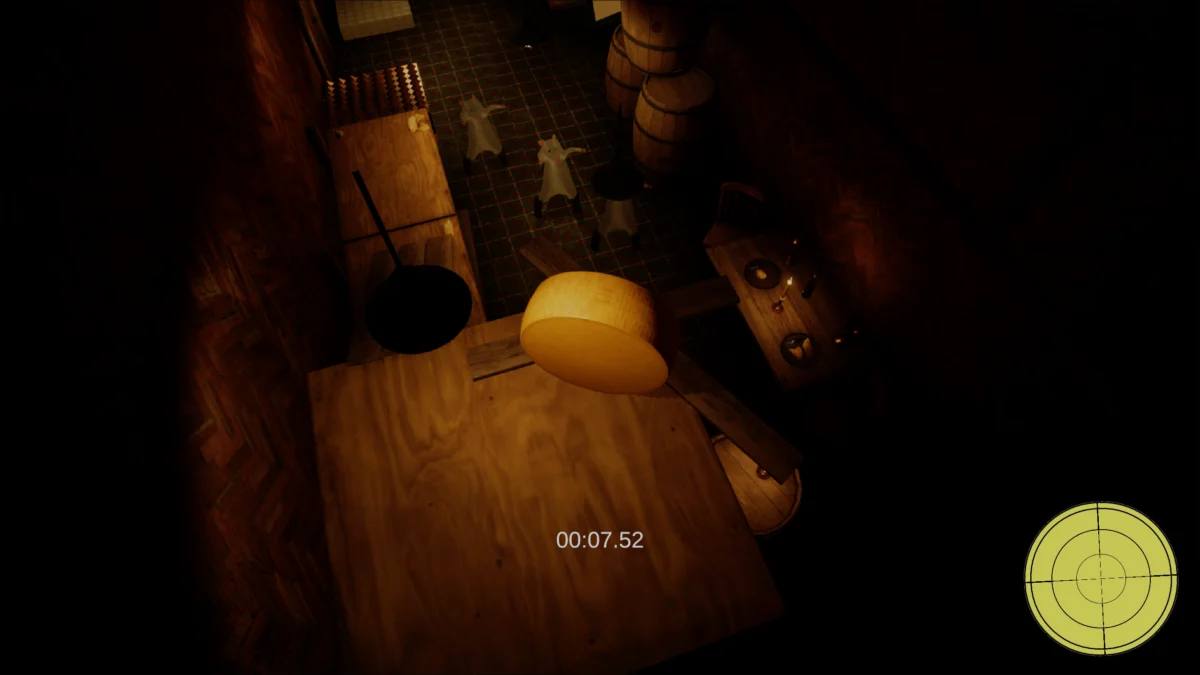
- The Big Cheese: Perhaps the standout entry of the jam, The Big Cheese by janus1001, uses the Persuasion Wheel not as a social tool, but as a health bar and navigation aid for a rolling wheel of cheese. The player must navigate a treacherous cellar filled with dancing, French-speaking rats. As the cheese hits obstacles or is "nibbled" by the rodents, the Persuasion Wheel visually represents the structural integrity of the cheese, providing a clever, if absurd, adaptation of the original UI.
- Bureaucracy Simulators: Other entries, such as Rollcall, use the wheel to simulate the stress of administrative tasks. In these games, the "persuasion" aspect is replaced by the need to navigate complex social hierarchies or office politics, with the wheel acting as a "stress meter" that must be managed to avoid failure.
Lockpicking as a Relaxing Pastime
- Meditations on Lockpicking: This project subverts the inherent tension of the Oblivion lockpicking minigame. While the original game made the failing of a pick a source of anxiety, Meditations turns the act of poking the nubs into a Zen-like, repetitive experience. It strips away the danger of breaking a tool and focuses entirely on the rhythmic, haptic satisfaction of the interface.
- Action and Rail Shooters: Titles like Wheelfox 64 and various zombie-survival entries utilize the lockpicking interface as a high-stakes "gatekeeper." In these games, the player is often forced to interact with the mechanism while under fire or in a time-sensitive environment, effectively turning the minigame into a test of nerves under pressure.
Official Responses and Developer Perspectives
The developers participating in Wheeljam 2 have largely expressed a mix of nostalgia and genuine admiration for the original code. One developer noted that "the Persuasion Wheel is a masterclass in ‘bad’ UI design that feels so human." Because the original wheel was essentially a rhythm game hidden inside an RPG, it translates surprisingly well to other genres.
The organizers of the jam have maintained that the goal is not to mock Oblivion, but to explore "mechanical archeology." By forcing themselves to use these outdated assets, developers are forced to solve problems in ways they wouldn’t if they were building a UI from scratch. The constraints of the jam—the requirement to use the specific, clunky feel of the 2006 mechanics—act as a creative forcing function, pushing indie creators to focus on tone, pacing, and visual style rather than just feature bloat.
Implications: The Future of "Legacy Mechanics"
The success of Wheeljam 2 suggests a broader trend in independent game development: the reclamation and repurposing of "failed" or "dated" mechanics. When a mechanic is removed from its original, high-budget context, its flaws often become its most interesting features.
The "Jank" Aesthetic
There is a growing sub-genre of games that intentionally lean into the "jank" of the early 2000s. By using systems that are slightly unresponsive or visually idiosyncratic, these games create a specific "feel" that modern, polished AAA games often lack. The Persuasion Wheel, with its ticking clock and weirdly expressive NPC faces, provides a sense of urgency and personality that standard dialogue trees cannot replicate.
Pedagogical Value
For younger developers who did not grow up with Oblivion, these jams serve as a crash course in UI/UX history. By dissecting the Persuasion Wheel, they learn why certain design choices were made in the early 3D era and how those choices impact player psychology. It is a form of digital preservation that keeps the "bones" of game history alive through active play rather than passive observation.
Where to Go From Here?
As the gaming industry continues to move toward hyper-realism and streamlined interfaces, there is an increasing appetite for the "rough edges" that define the mid-2000s. Wheeljam 2 is unlikely to be the last of its kind. Whether we see a "Fallout Lockpicking Jam" or an " Morrowind Movement System Jam" in the future remains to be seen, but the precedent is set.
For those curious to see how these legacy mechanics hold up, the Wheeljam 2 itch.io page remains the definitive hub for the project. For the true purists, the best follow-up remains a trip back to the Imperial City itself, perhaps with a fresh set of eyes—and a newfound appreciation for the wheel that started it all. As one participant put it, "The Persuasion Wheel isn’t just a UI element; it’s a personality. And it turns out, that personality fits perfectly on a giant block of cheese."











No comments yet. Be the first to join the conversation!