
 Iffa Jayyana
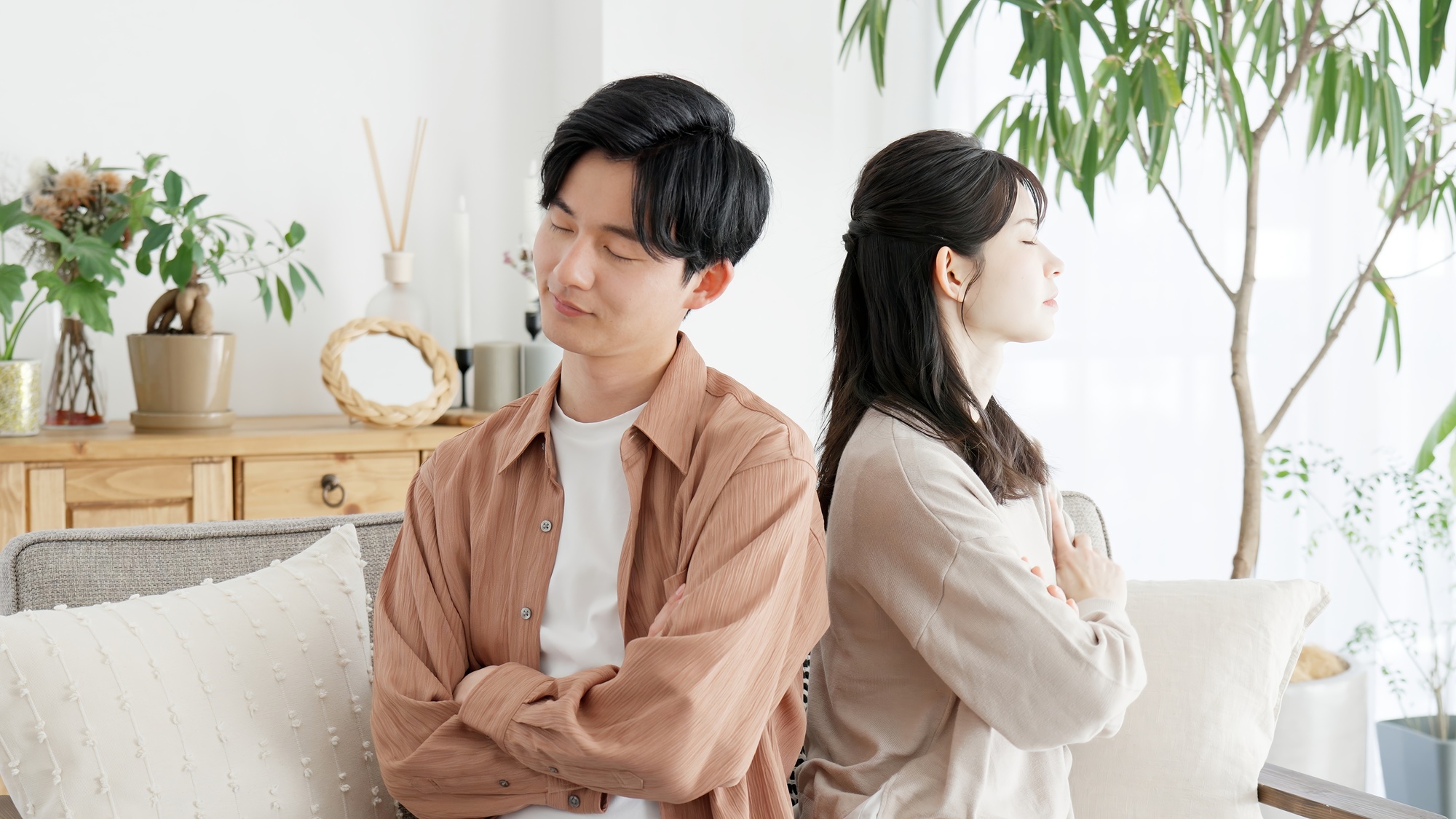
In the quiet suburbs of Tokyo and the bustling apartments of Osaka, a silent phenomenon is playing out behind closed doors. To the outside world, these are families—husbands who commute to the office, wives who manage the household, and children who attend school. But within the walls of their homes, the narrative shifts entirely. They are kamen fūfu (仮面夫婦)—literally "masquerade couples."
The term describes a marriage where the emotional and physical connection has long since evaporated, yet the legal union remains intact. These couples share a roof, a mortgage, and a surname, but they lead separate lives. While Western cultures often view a loveless marriage as a catalyst for separation, Japanese society frequently offers a different path: the path of endurance.
The Architecture of a Masquerade Marriage
The concept of the kamen fūfu is not a new sociological curiosity, but it has recently gained renewed attention. A July 4th segment on ABEMA Prime thrust the reality of these fractured homes into the national spotlight, featuring candid interviews with spouses who have effectively ended their relationships without ever stepping foot in a family court.
The stories are harrowing in their mundanity. One featured husband described a marriage that had essentially ceased to exist years prior. Following a volatile argument regarding the perceived inadequacy of his contributions to housework, the couple’s communication lines withered. Today, their interactions are mediated entirely through LINE, the ubiquitous Japanese messaging app. Even then, the exchanges are characterized by shio taiō—"salty responses"—a colloquialism for communication that is cold, minimal, and pointedly dismissive.
For this couple, the emotional chasm has radiated outward, poisoning the family dynamic. The wife, having retreated from her husband, has formed an exclusive alliance with their daughter, frequently venting her frustrations to the child. The result is a fractured home where the father is alienated not only from his partner but from his own child, creating a domestic environment that is, by all accounts, a hollow shell of a family.
Defining "In-House Separation"
Sociologists and marriage counselors often link kamen fūfu to a related concept: katei-nai bekkyo, or "in-house separation." This is the physical manifestation of the emotional decay. In these households, the couple maintains the facade of a joint life for the benefit of neighbors, coworkers, and relatives, but internally, they exist as roommates who avoid one another. They dine separately, sleep in different rooms, and interact only when the logistics of household management necessitate it. They are not merely unhappy; they are performing a script of normalcy.
Chronology of a Disappearing Union
The decline into a kamen fūfu rarely happens overnight. It is often a slow, cumulative erosion of intimacy.
- The Catalyst Phase: Most couples report that the distance begins with "small things"—mismatched lifestyle expectations, the persistent, uneven distribution of household labor, or a lack of meaningful communication.
- The Breaking Point: Often triggered by a specific event—the birth of a child, a period of financial stress, or an act of infidelity—the emotional bond snaps. However, unlike couples in many Western nations who might view this as the "end," these couples view it as a transition into a new, performative phase of marriage.
- The Maintenance Phase: The couple enters the kamen fūfu stage. They reach a tacit agreement to keep up appearances. This is often the longest stage, lasting years or even decades, as the couple navigates school events, family holidays, and the social pressures of their community.
- The Stagnation or Resolution Phase: The couple either remains in this state until the children are grown or until a major life event forces a final, legal dissolution of the marriage.
The Data: One in Five Couples are "Masquerading"
The prevalence of these arrangements suggests that the "masquerade" is a systemic feature of Japanese society rather than a fringe anomaly. A 2025 survey conducted by Links Inc., involving 3,000 married Japanese adults, revealed that one in five respondents—a staggering 20%—self-identify as being part of a kamen fūfu.
The data defies age-related expectations. While the phenomenon is most prevalent among couples in their 40s—a time often marked by career pressure and the peak of child-rearing demands—it is not limited to the middle-aged. Approximately 14% of respondents in their 20s identified with the label, suggesting that the erosion of marital satisfaction is occurring earlier in the relationship lifecycle than in previous generations.
Of those who identified as being in a masquerading marriage, a significant majority (86%) were parents. This statistic provides the most compelling evidence for why these couples endure: the perceived necessity of family stability for the sake of the children.
The "Seken-tei" and Legal Hurdles
Why do they stay? In the United States, where the divorce rate hovers around 2.4 per 1,000 people, societal norms and "no-fault" divorce laws make exiting an unhappy marriage a clear, albeit difficult, option. Japan’s divorce rate is lower (approximately 1.7 per 1,000), not necessarily because marriages are happier, but because the barriers to exit are substantially higher.
The Weight of Social Perception
Seken-tei—the Japanese concept of maintaining face and avoiding social embarrassment—is a powerful deterrent. In many Japanese communities, divorce is still viewed as a failure of character or a disruption to the social order. For many, the prospect of explaining a divorce to extended family, coworkers, and neighbors is more daunting than the prospect of living in a loveless home.
The Legal Quagmire
Beyond the social stigma lies a rigid legal framework. Unlike the "no-fault" systems prevalent in the U.S., Japanese law requires a substantive reason for divorce if one party refuses to consent. "Falling out of love" or "incompatibility" are not sufficient legal grounds for a court-granted divorce. A spouse must prove "marital breakdown" through evidence of infidelity, malicious abandonment, domestic abuse, or severe mental illness. If a husband or wife simply refuses to sign the divorce papers, the requesting spouse can be trapped in a legal limbo for years.
Expert Responses and the Backlash
The recent ABEMA Prime segment ignited a firestorm of public debate, largely centered on the advice given by the program’s expert, a counselor named Okano. During the broadcast, Okano suggested that the "fixing" of the marriage was primarily the responsibility of the wife, even in cases where the husband was emotionally absent or neglectful.
The response from the public was swift and biting. On platforms like Yahoo! News, thousands of commenters criticized the advice as archaic and misogynistic. One top-rated comment summarized the prevailing sentiment: "The advice basically amounts to ‘she’s the only one who can change.’ But keep piling up tiny gestures for a man too proud and petty to budge? What wife would do that?"
This backlash highlights a shifting consciousness in Japan. Younger generations, in particular, are increasingly questioning the "endure, don’t exit" model. The rise of female economic independence, though still facing systemic hurdles, is slowly altering the power dynamics within the home. Women are increasingly asking whether the social cost of "maintaining face" is worth the internal cost of a soul-crushing marriage.
Implications for the Future
The existence of kamen fūfu is a mirror reflecting the broader tensions in Japanese society: the conflict between individual fulfillment and collective duty. As Japan grapples with a declining birth rate and a shrinking population, the quality of domestic life has become a matter of national concern.
The survey respondents’ own suggestions for avoiding the "masquerade" trap—"be considerate of your partner," "increase communication," and "don’t forget physical intimacy"—are simple in theory but difficult to implement in a culture that often prizes stoicism and duty over emotional vulnerability.
While 80% of couples do not consider themselves to be in a masquerading marriage, the 20% who do represent a significant segment of the population living in a state of quiet, long-term desperation. For these individuals, the "mask" is a necessary survival strategy in a society that provides few safety nets for those who choose to break the mold.
As Japan continues to modernize its social structures, the kamen fūfu will likely remain a topic of intense scrutiny. The question for the future is not just how to fix these marriages, but whether the societal pressure to maintain them is a relic that is doing more harm than good to the very families it claims to protect. For now, thousands continue to wake up in the same house, share a polite "good morning," and wait for a change that may never come.


 Neng Nana
 Asro
Asro





