

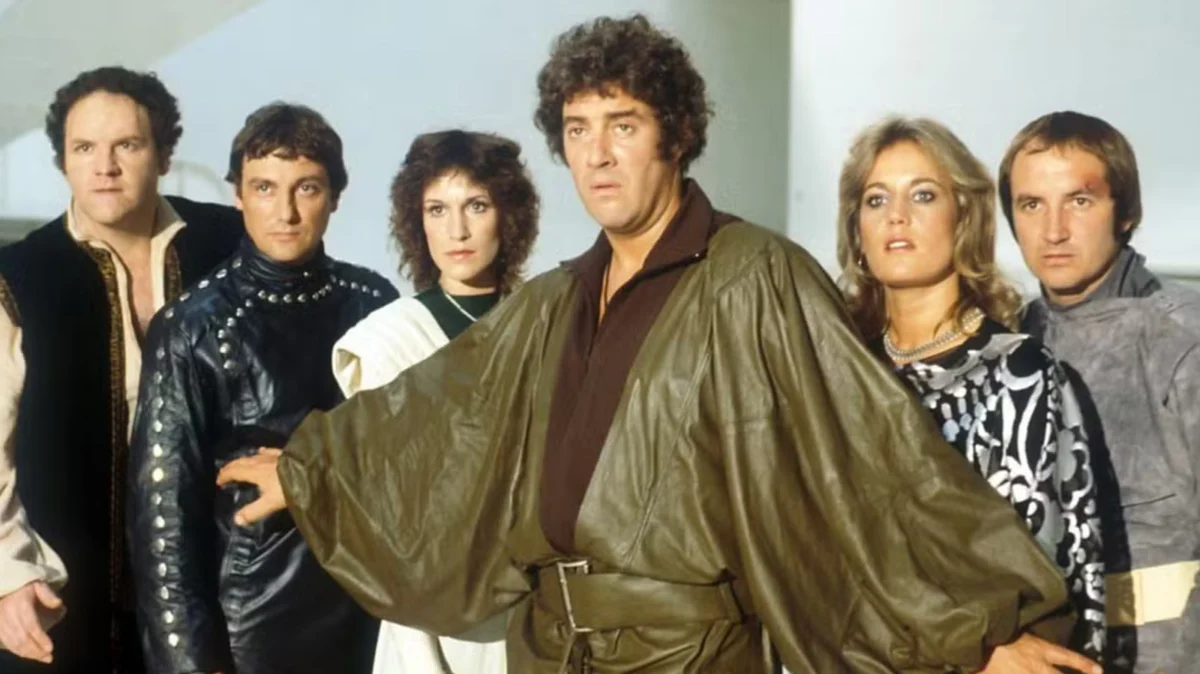
In the annals of television history, few shows occupy as singular a space as the British science fiction series Blake’s 7. Running for four seasons and 51 episodes between 1978 and 1981, the series was a paradox of its time: a low-budget production that punched well above its weight, blending the high-concept world-building of Star Trek with the gritty, revolutionary spirit of Star Wars. While it has faded from the mainstream consciousness of the general public, for dedicated science fiction enthusiasts, it remains a "must-watch" pinnacle of dystopian storytelling.
The Genesis of a Galactic Rebellion
To understand Blake’s 7, one must understand the vision of its creator, Terry Nation. Already a titan in British television, Nation is perhaps most famous for conceiving the Daleks for Doctor Who. By the late 1970s, Nation sought to create something distinct—a series that would strip away the optimism of space exploration and replace it with the harsh realities of a totalitarian regime.
He famously pitched the show as "The Dirty Dozen in space." The premise was deceptively simple: seven societal outcasts, led by the revolutionary Roj Blake (played with intensity by Gareth Thomas), escape from the oppressive grip of the Terran Federation. They seize control of the Liberator, an alien vessel of vastly superior technology, and wage a guerrilla war against the tyrannical Terran Empire.
Unlike the clean-cut heroes of contemporary American space operas, the crew of the Liberator were morally grey. They were thieves, murderers, and outcasts—men and women forced together not by destiny, but by the desperate need to survive.
Chronology of a Cult Phenomenon
1978: The Launch
The premiere of Blake’s 7 hit BBC screens in January 1978. While critics were initially lukewarm, comparing the production values unfavorably to high-budget Hollywood fare, the audience response was immediate. The show thrived on its central tension: the ideological conflict between the idealistic, often self-righteous Blake and the cynical, cold-blooded computer expert Kerr Avon (Paul Darrow).
1979–1980: Expanding the Lore
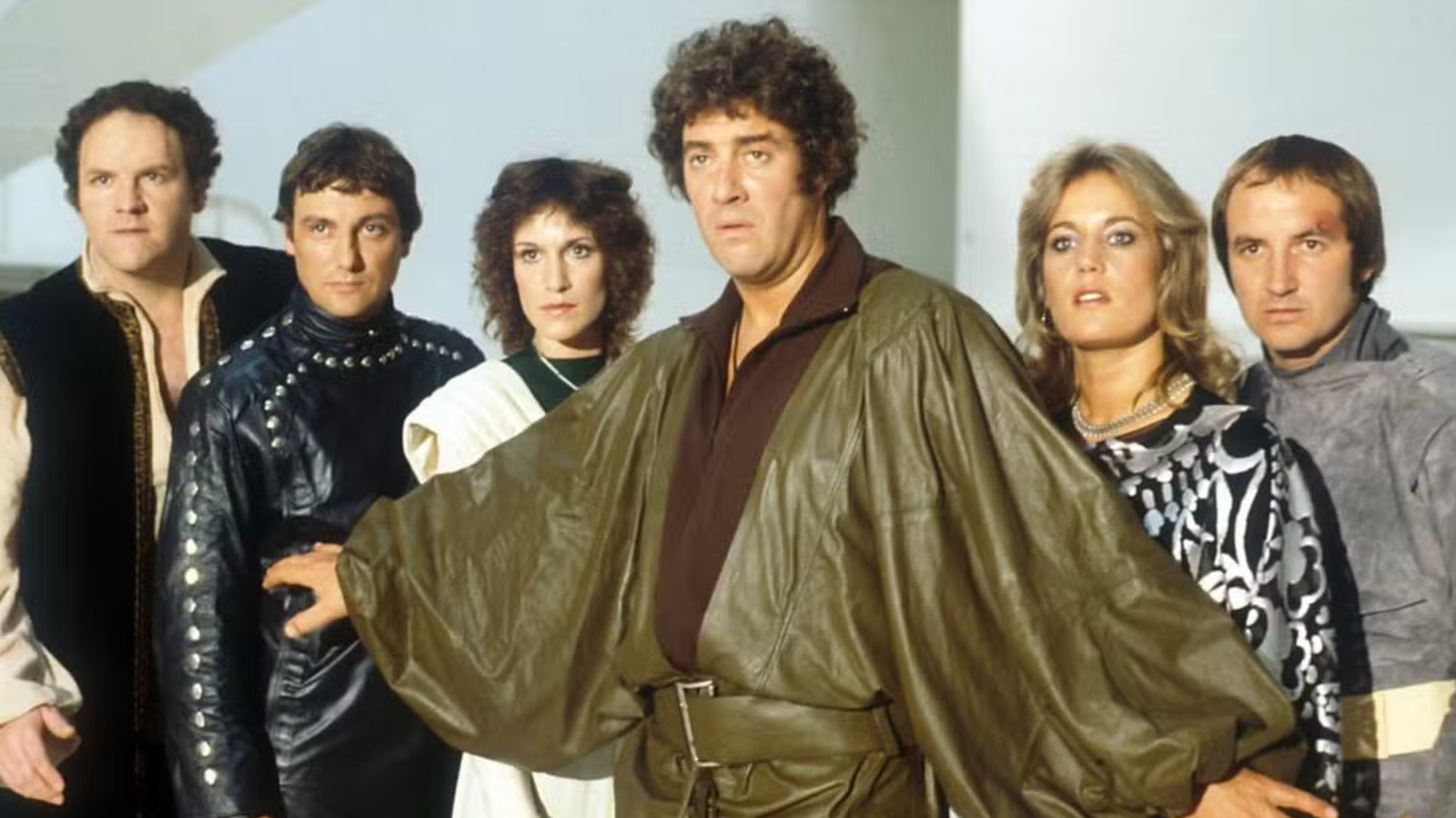
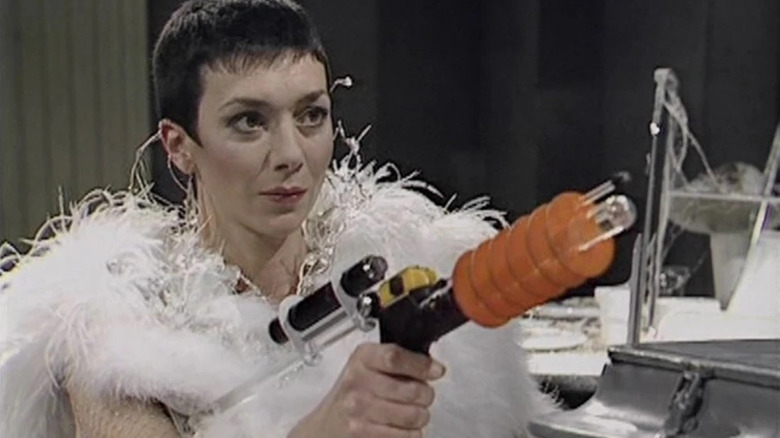
As the show progressed into its second and third seasons, it began to distinguish itself through narrative bravery. It was one of the first major series to embrace "cast impermanence." Characters were not safe; they were rotated out, killed off, or simply vanished, a stark contrast to the static ensembles of the era. The introduction of Supreme Commander Servalan (Jacqueline Pearce) provided an iconic foil—a ruthless, elegant, and chillingly ambitious villain who became as synonymous with the show as the heroes themselves.
1981: The Final Transmission
The series concluded with one of the most controversial and daring finales in television history. By the end of the fourth season, the show had evolved into something far darker than its initial premise, leaving an indelible mark on the genre by refusing to provide a tidy, "happy" conclusion.
Anatomy of the Crew: A Study in Friction
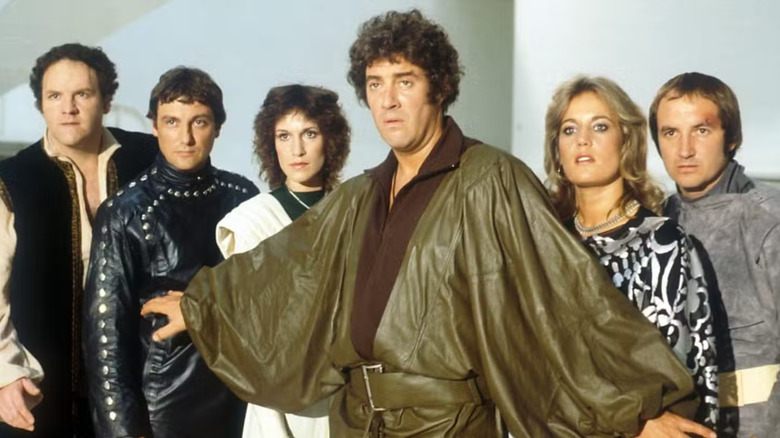
The magic of Blake’s 7 lay not in its special effects, but in its character dynamics. The original "Seven" were a diverse ensemble:
- Roj Blake (Gareth Thomas): The moral compass and the initial catalyst for the rebellion.
- Kerr Avon (Paul Darrow): A brilliant, cynical technocrat who provided the show’s sharpest wit and most complex moral dilemmas.
- Jenna Stannis (Sally Knyvette): The skilled pilot and the pragmatic realist of the group.
- Vila Restal (Michael Keating): The archetypal "everyman" thief whose cowardice provided the show with much-needed humor and vulnerability.
- Olag Gan (David Jackson): The gentle giant, providing physical strength and a sense of grounding.
- Cally (Jan Chappell): An alien telepath from the planet Auron, bridging the gap between the terrestrial and the metaphysical.
- Zen: The ship’s cold, analytical computer, voiced by Peter Tuddenham, which served as the constant, dispassionate voice of the Liberator.
The chemistry between these characters was fraught with tension. In many episodes, the greatest threat to the crew wasn’t the Federation, but their own mistrust of one another. It was this focus on human (and alien) fallibility that gave the show its gritty, grounded texture.
Supporting Data: Why It Still Matters
For modern viewers, Blake’s 7 serves as a missing link in science fiction history. While Star Trek offered a hopeful, utopian future, Blake’s 7 anticipated the cynical, darker tones of later series like Babylon 5 and The Expanse.
The production constraints—which forced the creative team to rely on dialogue, acting, and script-writing rather than CGI spectacle—actually worked in the show’s favor. The scripts were tight, the pacing was relentless, and the moral ambiguity allowed for character arcs that were years ahead of their time.
The inclusion of the Liberator—a ship that was essentially an "unnamed" character in its own right—brought a sense of wonder. With its advanced teleportation systems, medical bays, and mysterious alien origin, it was the perfect vehicle for a group of rebels who were constantly outmatched by the sheer industrial scale of the Federation.
The Legacy and Official Responses
Despite its relatively short four-season run, the cultural footprint of Blake’s 7 has been immense. It paved the way for more mature, adult-oriented science fiction. The show’s creator, Terry Nation, left an indelible mark on the BBC, with his work on Doctor Who and The Saint ensuring that Blake’s 7 was backed by some of the most experienced talent in the British industry at the time.
Rumors of a Reboot
The "remake pit" has claimed many victims, but Blake’s 7 remains a frequent target for revival. The most recent reports, including interest from high-profile directors such as Peter Hoar (The Last of Us), suggest that a modern iteration may finally be in the works. The potential for a modern reboot is significant; the themes of totalitarianism, government surveillance, and the ethics of rebellion are arguably more relevant today than they were in the late 1970s.
Implications for Today’s Viewer
Why should a 21st-century audience return to a show with 1970s-era "olde-worlde" special effects? The answer lies in the storytelling. Blake’s 7 doesn’t require high-budget pyrotechnics to generate tension. It relies on the age-old conflict of the individual versus the institution.
The show’s refusal to sanitize its characters is its greatest strength. When Kerr Avon contemplates leaving his crew to die, or when the Federation displays the casual cruelty of a bureaucracy unchecked by empathy, the viewer is forced to confront the harsh realities of power.
As streaming platforms like Prime Video make the series more accessible, a new generation is discovering that the "Forgotten ’70s Sci-Fi Show" isn’t just a relic of the past—it is a blueprint for the future of the genre. Whether you are a fan of space opera, political thrillers, or simply character-driven dramas, Blake’s 7 offers a viewing experience that is as provocative today as it was when the Liberator first warped into the public imagination.
In a world saturated with polished, predictable blockbusters, the jagged, rebellious heart of Blake’s 7 is a welcome reminder that sometimes the best stories are the ones that dare to be a little bit dangerous.










