

By Grace Schmidt
July 7, 2026
The film industry often treats the adaptation of a beloved novel as a victory lap for its author—a moment where literary success meets the massive scale of Hollywood. However, for Tomi Adeyemi, the journey from the page to the screen has become a public and painful rupture. With the highly anticipated adaptation of her #BookTok sensation, Children of Blood and Bone, set to premiere in theaters on January 15, 2027, the author has made a definitive, unprecedented stand: she is disowning the project, cutting off the cast, and refusing to watch the film.
This controversy, which has sent shockwaves through the publishing and film communities, highlights the volatile intersection of creative ownership, the pressures of the studio system, and the unique perils faced by Black women creators in a landscape that often prioritizes corporate bottom lines over original artistic intent.
The Catalyst: A Vision Transformed
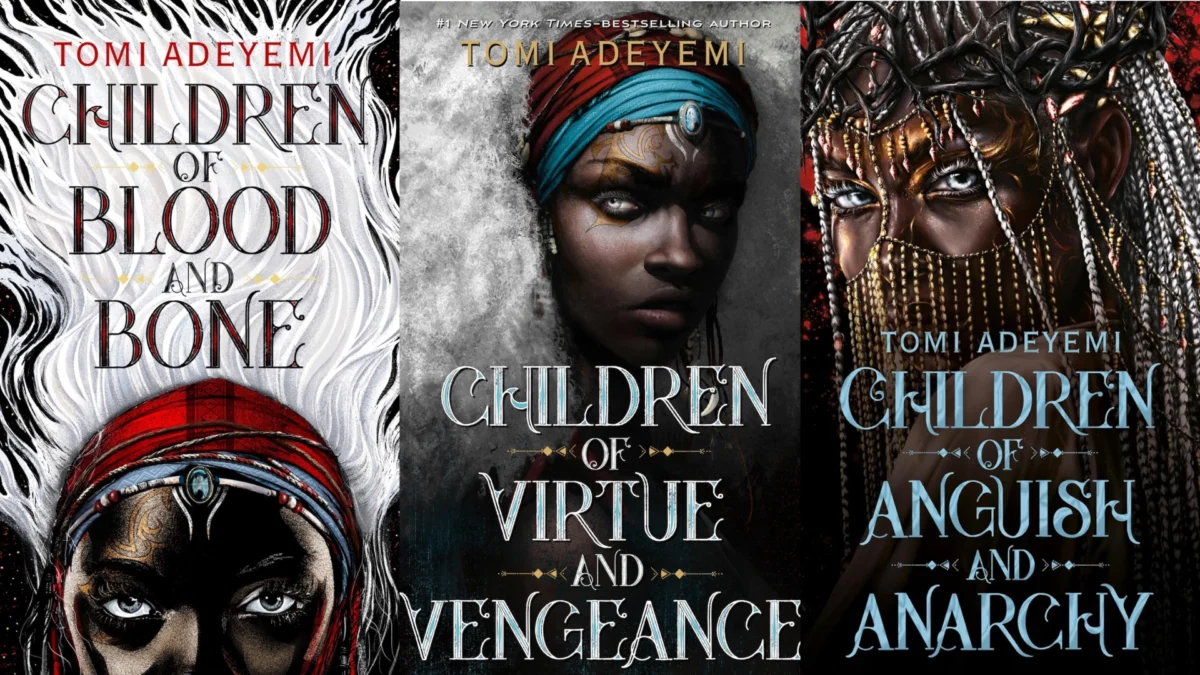
Published in March 2018, Children of Blood and Bone was an immediate cultural phenomenon. As the inaugural entry in the Legacy of Orïsha series, the novel followed Zélie Adebola, a young woman struggling against a corrupt, magic-hating monarchy. With its vibrant exploration of Black culture, a sophisticated magic system, and high-stakes YA fantasy tropes, it became a cornerstone of the modern fantasy canon.
The film adaptation boasted an enviable pedigree. Directed by the visionary Gina Prince-Bythewood—known for her work on The Woman King—the cast was a powerhouse of contemporary Black talent, including Thuso Mbedu, Amandla Stenberg, Cynthia Erivo, Viola Davis, Damson Idris, and Regina King. Yet, despite this star-studded lineup, the project has been marred by a behind-the-scenes collapse that culminated in Adeyemi’s public distancing from the work she created.
A Chronology of the Conflict
The descent into this public standoff was not instantaneous, but rather a slow erosion of professional and personal boundaries.
The Lucasfilm-to-Paramount Pivot
In 2022, Adeyemi made headlines for a hard-fought battle to retain control over her work. After years of frustration with Lucasfilm, which repeatedly denied her requests to pen the screenplay, she successfully negotiated a move to Paramount Pictures. Her condition for the deal was non-negotiable: she would write the screenplay herself. At the time, this was hailed as a win for authorial agency in Hollywood.
The Honeymoon Phase (2025)
As late as March and April of 2025, Adeyemi was active on social media, sharing behind-the-scenes glimpses into her "life as a writer whose books are being turned into movies." She appeared invested, optimistic, and deeply involved in the production process. Fans had every reason to believe that the film would be a faithful, author-led adaptation.
The Breaking Point (February 2025 – Present)
The cracks began to show in early 2025. In February, a private conflict reached a boiling point when Adeyemi sent a stark, final message to Amandla Stenberg, who plays Princess Amari in the film. The text read: "Do not ever use my name in an interview or a video ever again. Do not text me. Do not call me."

This message followed a TikTok video by Stenberg—later deleted—in which she addressed colorism allegations regarding her casting. In that video, Stenberg discussed a dinner with Adeyemi, claiming that the author had drawn inspiration for the book’s themes from the racist backlash Stenberg herself had endured during her casting as Rue in The Hunger Games. The unsolicited sharing of these creative origins, coupled with the ongoing, opaque tensions regarding the script, led Adeyemi to block the actress.
The Weight of "Behind-the-Scenes" Trauma
On July 4, 2026, Adeyemi broke her silence, providing screenshots of the aforementioned texts to clarify why she had been absent from the film’s CinemaCon presentation in April. Her statement was raw and damning, framing the situation as a systemic failure rather than a mere creative disagreement.
"Everything that has been occurring has been occurring behind the scenes since I was 24 years old," she wrote. "Young gifted child + Hollywood + massive capital interests = tragedy always. Add dark skin + natural hair and you have even more people who will do whatever they can to destroy you."
Adeyemi’s commentary speaks to a broader, uncomfortable truth in the entertainment industry: the marginalization of Black female creators even when their work is the intellectual engine driving a multimillion-dollar machine. Her decision to "lay down her sword" suggests that the compromises forced upon her regarding the screenplay and the film’s creative direction were not just frustrating—they were emotionally abusive.
The Perils of Adaptation: A Historical Context
Adeyemi’s experience, while unique in its intensity, sits within a long, troubled history of author-studio friction. The creative process of a novel is solitary, internal, and singular. In contrast, the process of filmmaking is inherently collaborative, chaotic, and driven by commercial imperatives.
- Madeleine L’Engle: When asked about the 2003 adaptation of A Wrinkle in Time, the author famously replied, "Oh, yes. I expected it to be bad, and it is."
- Stephen King: Perhaps the most famous antagonist of his own adaptations, King has spent decades distancing himself from Stanley Kubrick’s The Shining, noting that he doubted the director ever truly engaged with the source material.
The fundamental issue is one of authority. Once an author sells the rights to a property, they often lose their "veto power." Screenplays undergo dozens of revisions to satisfy financiers, test audiences, and directors. As Adeyemi’s case suggests, when an author is promised creative control—as she was when she moved to Paramount—the psychological impact of having that control eroded by the studio apparatus can be devastating.
Implications: What This Means for the Future
The Children of Blood and Bone controversy raises critical questions about the future of book-to-film deals.
- The Illusion of Creative Control: If an author as influential as Adeyemi, who successfully leveraged a studio switch to demand screenwriting rights, still found herself sidelined, it sends a chilling message to up-and-coming authors. It suggests that even the most robust contracts may not be enough to protect an author’s vision in the face of a studio’s "group-task" decision-making process.
- The "BookTok" Factor: The fandom for Children of Blood and Bone is deeply tied to the author’s voice and the community she fostered online. By separating herself from the film, Adeyemi has effectively asked her base to choose between their loyalty to her and their excitement for the movie. This could significantly impact the film’s box-office performance.
- The Need for Better Protection: Industry advocates are already calling for more rigorous safeguards for authors in production contracts. This includes mandatory mediation clauses, clearer definitions of "creative control," and better mental health support for authors transitioning into the high-stress environment of film production.
Conclusion: A Final Act of Agency
Despite the acrimony, Adeyemi’s stance remains one of radical self-preservation. In the comments section of her TikTok, she offered a nuanced clarification to her followers: "I do not mind anyone going to watch the film. I wrote this for us. I fought for us. I’m just laying down my sword and officially separating my name because I can’t keep being hurt and attacked behind the scenes."
As the release date of January 15, 2027, approaches, the film will inevitably face a shadow cast by its creator’s absence. While the Legacy of Orïsha may find success on the silver screen, the price of that success—the loss of the author’s blessing—serves as a stark reminder that in Hollywood, the story behind the story is often the most revealing one of all. For Tomi Adeyemi, the battle for her own work has reached its conclusion, and in walking away, she may have finally reclaimed the one thing the industry tried to take from her: her peace.










