Reynand Wu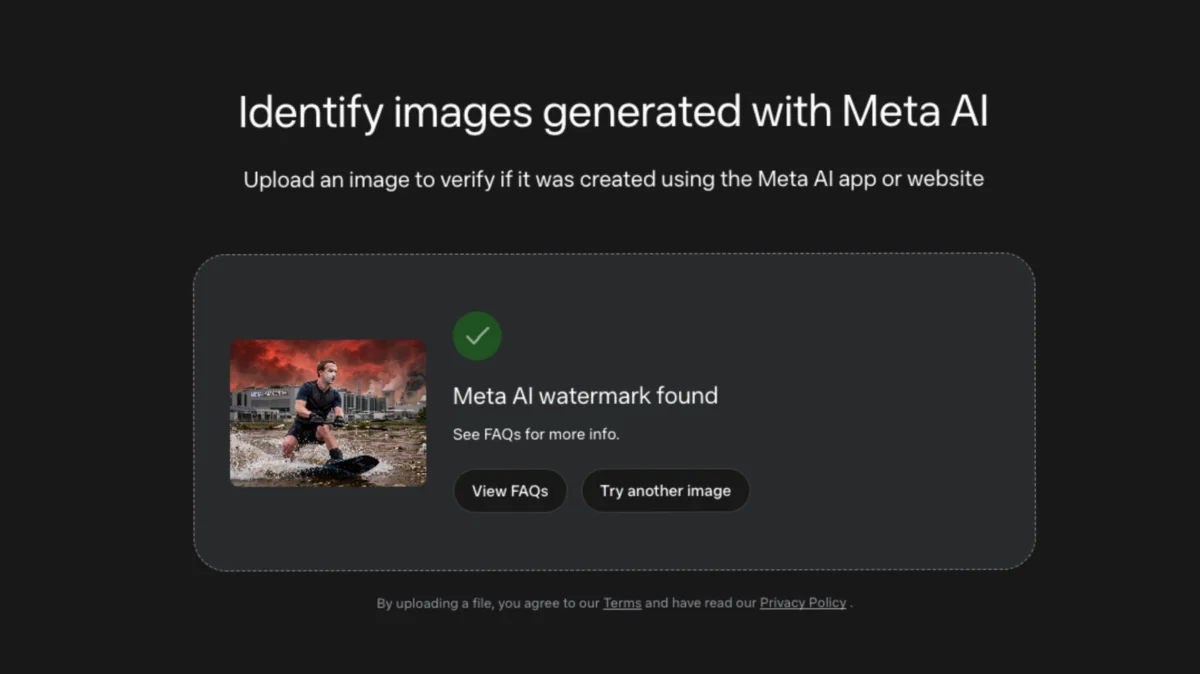
In an era where the boundary between human creativity and algorithmic generation is rapidly blurring, Meta has taken a significant, albeit measured, step toward establishing digital provenance. The company has officially debuted a new, web-based detection tool designed to identify images and videos generated or edited by its latest AI model, Muse Image. By leveraging a proprietary, invisible watermarking technology dubbed "Content Seal," Meta aims to provide users with a mechanism to verify the origins of visual content circulating on the internet.
However, as the tech giant rolls out this feature, the implementation reveals a complex intersection of engineering ambition, technical limitations, and the ongoing pressure from regulatory bodies to instill accountability in the generative AI landscape.
The Mechanics of Content Seal: Invisible but Persistent
At the core of Meta’s new initiative is the Content Seal watermarking system. Unlike earlier iterations of Meta AI, which occasionally applied visible, watermarked logos to the bottom-right corner of generated images, Content Seal operates entirely behind the scenes.
The technology embeds an imperceptible digital signature directly into the pixel data of an image. According to Meta’s technical documentation, this signature is designed to be highly resilient. The company claims that the watermark remains intact even when an image undergoes common transformations, such as cropping, heavy compression, resizing, or taking a screenshot.
For the end user, the process is straightforward: they upload a file to Meta’s dedicated identification portal. The system then returns a binary result—positive or negative. A positive result provides confirmation that the image or video was generated or edited using the Meta AI app or the meta.ai web platform. A negative result serves as a probabilistic statement, indicating that it is unlikely the content was processed through Meta’s proprietary ecosystem.
A Chronology of Meta’s AI Transparency Evolution
Meta’s journey toward robust AI labeling has been marked by a series of pivots and external pressures. To understand the significance of the Content Seal launch, one must look at the company’s recent trajectory:
- The Early Days of Labeling: Initially, Meta relied on simple, visible watermarks. These were easily circumvented by users who could simply crop out the bottom-right corner of an image.
- Pressure from the Oversight Board: Earlier this year, Meta’s independent Oversight Board issued a scathing critique, noting that the company’s implementation of digital watermarks was "inconsistent." The Board urged Meta to develop more reliable, standardized ways to label AI content to prevent misinformation.
- The Development of Muse: As Meta pivoted toward its newer generative models, including the Muse Image and the forthcoming Muse Video, the company moved away from visible branding in favor of the more sophisticated, invisible Content Seal technology.
- The Beta Launch: In recent weeks, Meta transitioned from internal testing to a public-facing preview, allowing a segment of users to interact with the detection tool for the first time.
The Disconnect: App Limitations and Technical Hurdles
Despite the promise of the new web tool, the integration of this technology into Meta’s broader ecosystem remains uneven. Current testing reveals a jarring disconnect: while the dedicated web portal can verify images, the Meta AI assistant residing within the social media apps (Facebook, Instagram, and WhatsApp) often remains blind to these markers.
When queried about the provenance of an image that the web tool successfully identified as "AI-made," the Meta AI app-based assistant frequently reports that it lacks the capability to verify the origin of the content. This inconsistency highlights a fragmented deployment strategy, where the "truth-telling" mechanism is siloed on a standalone website rather than integrated into the user experience where the content is actually consumed.
Furthermore, the tool faces significant compatibility hurdles. Content Seal is currently incompatible with existing industry standards like Google’s SynthID or the C2PA (Coalition for Content Provenance and Authenticity) credentials. This lack of interoperability means that if a user creates an image using a different model and brings it into Meta’s ecosystem, or vice versa, the verification chain is broken.
Official Responses and Strategic Rationale
Meta’s official stance, as articulated in recent blog posts and statements, frames the tool as an "initial way" to help users understand the provenance of digital media.
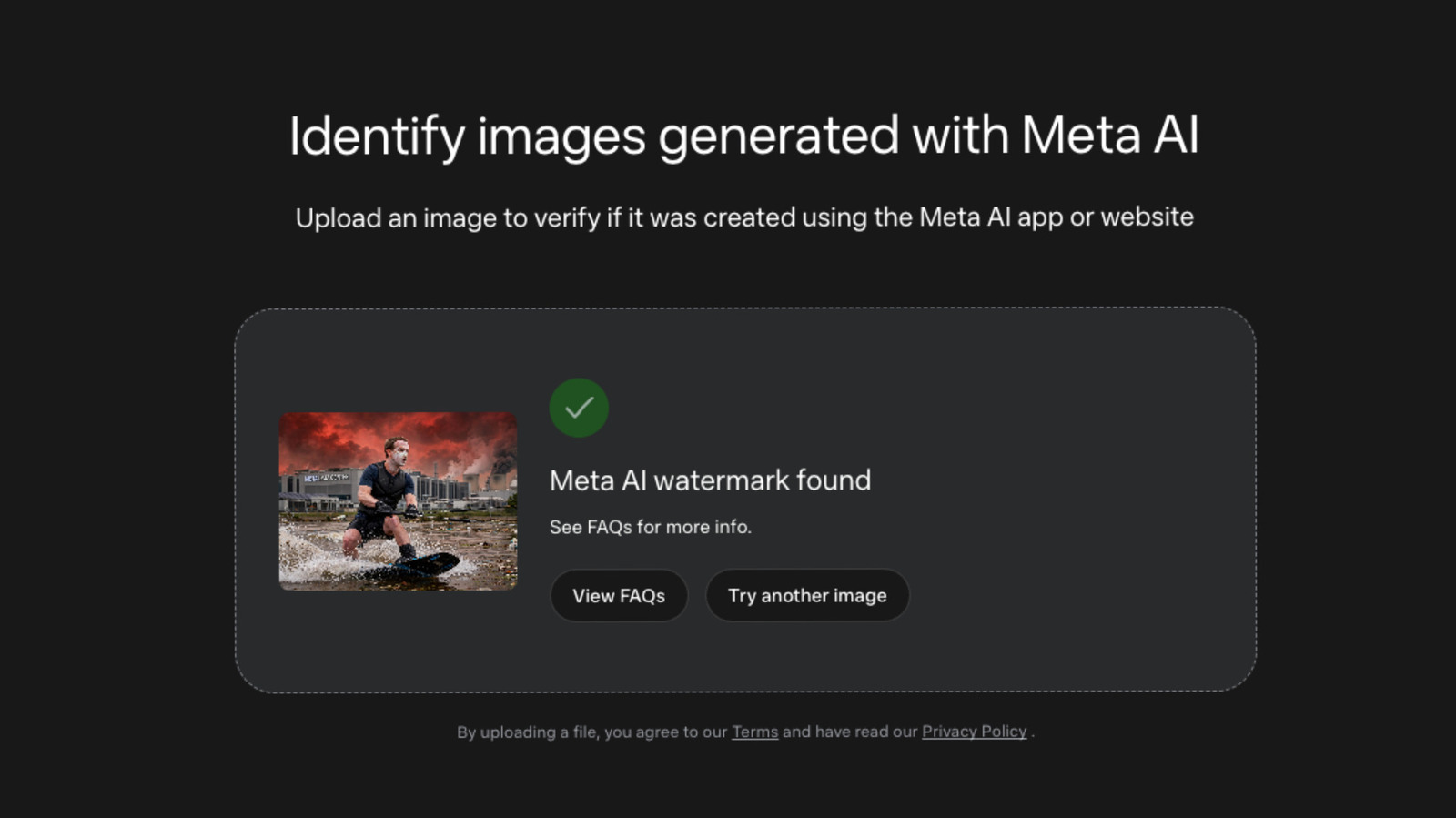
"We’re previewing a detection tool that lets you check whether an image carries a Content Seal watermark," the company stated. "A positive result means that the image was generated or edited using the Meta AI app or meta.ai."
Regarding the proprietary nature of the technology, Meta clarified that while Content Seal is a closed-source solution for the Muse model, the company remains committed to the long-term goal of fostering an open ecosystem. However, for now, the focus is on maintaining the integrity of its own model outputs. The decision to keep the tool proprietary is likely driven by the need to prevent malicious actors from reverse-engineering the watermark, which could theoretically allow them to forge "official" Meta watermarks on non-Meta content.
Implications for the Digital Ecosystem
The rollout of Content Seal carries profound implications for the future of digital media, social trust, and the legal landscape of AI.
1. The Fight Against Synthetic Misinformation
The primary implication is the potential reduction of deceptive AI-generated content. If platforms can consistently identify AI-generated media, they can more effectively apply labels, warn users, or restrict the spread of potentially harmful "deepfakes." However, this only works if the watermark is impossible to strip—a high bar that even the most sophisticated digital signatures struggle to clear permanently.
2. The Problem of Rate Limits
One of the most criticized aspects of the current tool is its restrictive usage policy. Users have reported encountering "daily limits on identification checks" after only a few uploads. From a journalistic and research perspective, this is a significant bottleneck. Transparency tools are only effective if they are accessible; by capping usage, Meta is effectively limiting the ability of third-party researchers and fact-checkers to verify the scale of AI usage across the platform.
3. The Lack of Cross-Platform Standardization
The failure of Content Seal to integrate with C2PA or SynthID underscores a larger problem in the AI industry: the "walled garden" approach to provenance. If every major AI company (OpenAI, Google, Midjourney, Meta) creates its own unique, incompatible watermarking technology, the burden of verification falls on the user, who must navigate a maze of different websites and tools to determine if a piece of content is authentic.
4. Legal and Ethical Accountability
The Oversight Board’s previous concerns remain relevant. By providing a tool that only works for its own models, Meta is arguably passing the buck. It allows the company to claim it is being "transparent" while simultaneously insulating itself from the responsibility of detecting and labeling AI content created by competitors or open-source models that are widely used to create content shared on Meta’s platforms.
Future Outlook: What Lies Ahead?
Meta has confirmed that it intends to expand the Content Seal system to its upcoming video generation model, Muse Video. This is a critical next step, as video is arguably the most dangerous vector for AI-driven misinformation.
However, for this technology to be truly transformative, several things must happen:
- Standardization: Meta must eventually move toward adopting industry-wide standards like C2PA to ensure that provenance data survives across different platforms.
- Ubiquity: The detection capability must be moved from a standalone web tool into the core infrastructure of the Meta AI assistant. Users shouldn’t have to jump through hoops to verify the legitimacy of a post.
- Openness: Removing, or at least significantly increasing, the rate limits is essential for public trust. Transparency should not be gated behind arbitrary consumption caps.
In conclusion, Meta’s Content Seal represents a sophisticated technical achievement in watermarking, but it remains a work in progress. It is a necessary component of the "AI-literate" internet, but it is currently hampered by the same fragmentation and lack of unified vision that plagues the broader generative AI industry. As we move deeper into an era of synthetic media, the industry will need to move past proprietary, limited-use tools toward a universal language of digital authenticity. Until then, Meta’s tool serves as a helpful, if limited, guide in a rapidly darkening forest of digital uncertainty.


 Muslim
 Siti Muinah