

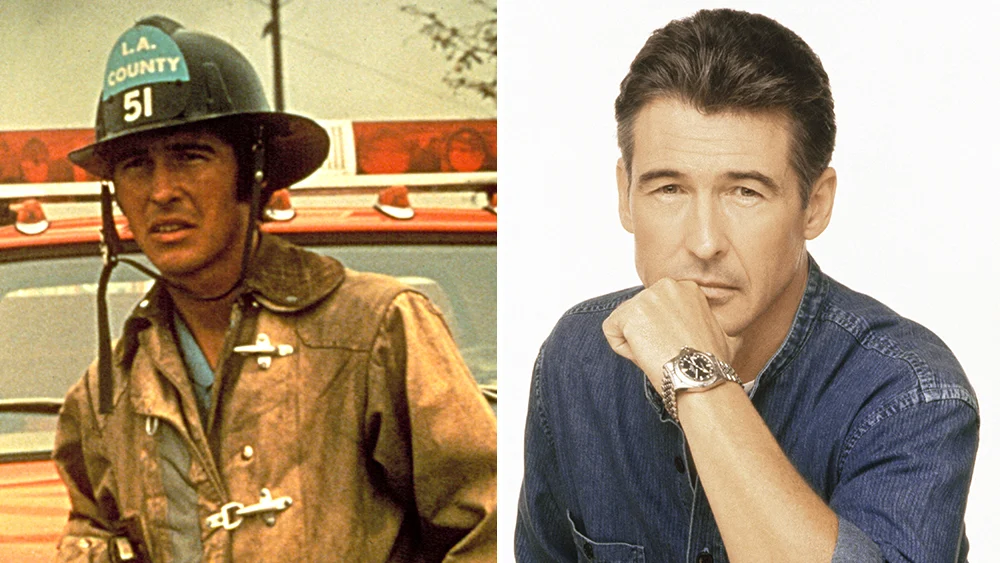
Randolph Mantooth, the charismatic actor who became a household name for his portrayal of the stoic, heroic paramedic John Gage on the groundbreaking NBC medical drama Emergency!, has passed away. He was 80 years old.
His family confirmed to The Hollywood Reporter that Mantooth died on July 9 while in hospice care in Ventura, California, following a long, private battle with illness. His death marks the end of an era for television viewers who grew up watching him navigate the high-stakes, real-world pressures of the Los Angeles County Fire Department.
A Career Defined by Authenticity
Born on September 19, 1945, in Sacramento, California, Mantooth’s path to television stardom was paved with the grit and determination of a working actor. Before his career-defining role, he cut his teeth in the competitive landscape of early 1970s television, appearing in guest spots on iconic series such as The Virginian, McCloud, Adam-12, Marcus Welby, M.D., and the legendary anthology series Night Gallery.
However, it was his casting as John Gage in the Jack Webb-produced Emergency! that transformed Mantooth from a working actor into a cultural touchstone. Produced with the same procedural rigor as Webb’s Dragnet, Emergency! sought to depict the then-nascent field of paramedicine with near-documentary accuracy.
The Emergency! Phenomenon
Debuting as a midseason replacement in January 1972, Emergency! was a radical departure from the medical soaps of its time. While other shows focused on hospital politics, Emergency! was the first to bring the camera to the street, following the specialized "Squad 51" team. The show explored the intense, often harrowing adventures of paramedics Gage and his partner, Roy De Soto—played by Kevin Tighe—as they navigated the chaos of urban Los Angeles.
The chemistry between Mantooth and Tighe became the heartbeat of the show. Their dynamic—a mix of high-intensity rescue missions and the dry, mundane camaraderie of firehouse banter—resonated deeply with audiences. The show featured a stellar ensemble cast, including Robert Fuller, Julie London, and Bobby Troup, who provided a sense of grounded stability to the fast-paced, high-alarm environment of the station.
Chronology: From Sacramento to Stardom
Mantooth’s life and career were marked by a consistent commitment to his craft, spanning five decades of television excellence.
- 1945: Born in Sacramento, California, on September 19.
- Early 1970s: Begins his screen career, booking guest roles on major network dramas, establishing himself as a reliable and versatile performer.
- 1972: Emergency! debuts on NBC. Mantooth’s portrayal of John Gage makes him an overnight icon of public service.
- 1972–1977: Emergency! runs for five seasons, defining the subgenre of "first responder" television and inspiring a generation to join the medical and fire services.
- 1975: The band The Tubes cements Mantooth’s status in pop culture, name-checking him in their debut single, "What Do You Want From Life?"
- Post-1977: Mantooth transitions into daytime television, finding sustained success in the world of soap operas, including As the World Turns, One Life to Live, and The City.
- July 9, 2024: Mantooth passes away in Ventura, California, leaving behind a legacy of service, both on and off the screen.
Supporting Data: The Cultural Impact of Squad 51
While Emergency! was rarely a massive ratings juggernaut—only breaking into the year-end primetime Top 30 once during its tenure—its cultural influence was disproportionate to its Nielsen numbers. In an era dominated by the three-network landscape, Emergency! stood as a unique piece of counterprogramming. It faced stiff competition on Saturday nights, including CBS powerhouse All in the Family and its eventual spin-off, The Jeffersons.
Yet, the show’s legacy is measured in something more significant than ratings: real-world impact. Emergency! is widely credited with helping to popularize the paramedic profession in the United States. Many fire departments across the country expanded their emergency medical capabilities after seeing the efficacy of the "Squad 51" model on television. Mantooth himself was a vocal advocate for paramedics throughout his life, frequently appearing at conventions and fire service events, serving as a de facto ambassador for the profession he helped popularize.
The Tubes’ 1975 shout-out in "What Do You Want From Life?" perfectly encapsulated his reach. In the song, singer Fee Waybill rattles off a list of items a typical American citizen is "entitled to," placing "a personally autographed picture of Randy Mantooth" alongside other icons of the era. It was a testament to his status as a symbol of the American hero.
Official Responses and Public Sentiment
News of Mantooth’s passing has triggered an outpouring of tributes from the entertainment industry and the emergency services community alike. Colleagues have described him as a consummate professional who treated his fictional role with the seriousness of a real-life mission.
"Randolph didn’t just play a paramedic; he respected the men and women who did the job for real," said a representative from a California firefighters’ association. "He understood that his character was a window into a life-saving profession, and he never took that responsibility lightly."
Social media platforms have been flooded with messages from fans who recall the "extended alarm" sound from the show—a sound that, for millions, signaled that help was on the way. The tone across these tributes is one of gratitude, with many noting that Mantooth’s portrayal of John Gage inspired them to pursue careers in medicine and public safety.
The Implications of a Lasting Legacy
The passing of Randolph Mantooth serves as a poignant reminder of the power of the "procedural" format to shape public perception. By humanizing the people behind the uniform, Emergency! humanized the job itself.
The Shift in Television Dramas
Following the conclusion of Emergency!, the television landscape shifted. The blueprint created by Mantooth and his colleagues—blending technical accuracy with character-driven drama—became the gold standard for subsequent shows like Chicago Fire, 9-1-1, and Grey’s Anatomy. Without the template of the "Squad 51" banter and the "near-documentary" style pioneered in the early 70s, the modern landscape of emergency-service television would likely look vastly different.
Mantooth’s Post-Emergency Life
For many actors, being typecast as an action hero can be a professional prison. Mantooth, however, proved his range by successfully transitioning into the demanding world of daytime soap operas. His stints on As the World Turns, One Life to Live, and The City allowed him to showcase his versatility as a dramatic actor, moving away from the high-octane rescue scenarios of his youth to the nuanced, long-form storytelling of daytime drama.
Conclusion
Randolph Mantooth’s career was a testament to the idea that entertainment can be both escapist and essential. He was more than just a face on a television screen; he was a bridge between the public and the brave, often-unseen professionals who run toward danger.
As we reflect on his life, it is clear that while the man has passed, the image of John Gage—cool, calm, and ready to answer the call—remains an indelible part of the American cultural tapestry. He leaves behind a legacy defined by courage, service, and an enduring connection to the audience he entertained for over half a century.
His family has requested privacy during this difficult time, and information regarding memorial services is expected to be announced in the coming weeks. For now, the legacy of the man who brought the life-saving work of the paramedic into the American living room remains secure, as vivid and vital as an alarm sounding at a firehouse on a Saturday night.










