

The 17th edition of the Bogotá Audiovisual Market (BAM), which concluded on July 10, served as more than just a networking hub; it acted as a high-stakes mirror reflecting the current maturity and growing pains of the Colombian film and television industry. With 2,336 accredited participants, 271 distinct industry activities, and a staggering 882 one-on-one business meetings, the event solidified its status as the heartbeat of the Latin American audiovisual sector.
Organized by Proimágenes Colombia and the Bogotá Chamber of Commerce, this year’s BAM arrived at a pivotal moment. As the industry grapples with the shift from being a burgeoning production hub to a mature, sustainable market, the discourse at the market moved beyond simple celebration toward the complex mechanics of long-term survival.
A Chronology of Collaboration and Resilience
The five-day marathon of panels, masterclasses, and project pitches was, as always, an intense display of creative ambition. However, the event’s pulse was briefly interrupted by the real world on July 8. As Colombia faced Switzerland in the FIFA World Cup quarterfinals, the normally bustling, traffic-choked streets of Bogotá went eerily silent. Even the most dedicated industry professionals paused their negotiations, reflecting the deep cultural integration of the event within the city’s social fabric.
Following the match, the market returned to its primary objective: the facilitation of high-level partnerships. This year, the event awarded 70 in-kind prizes to projects ranging from fiction and documentary features to animation and episodic series.
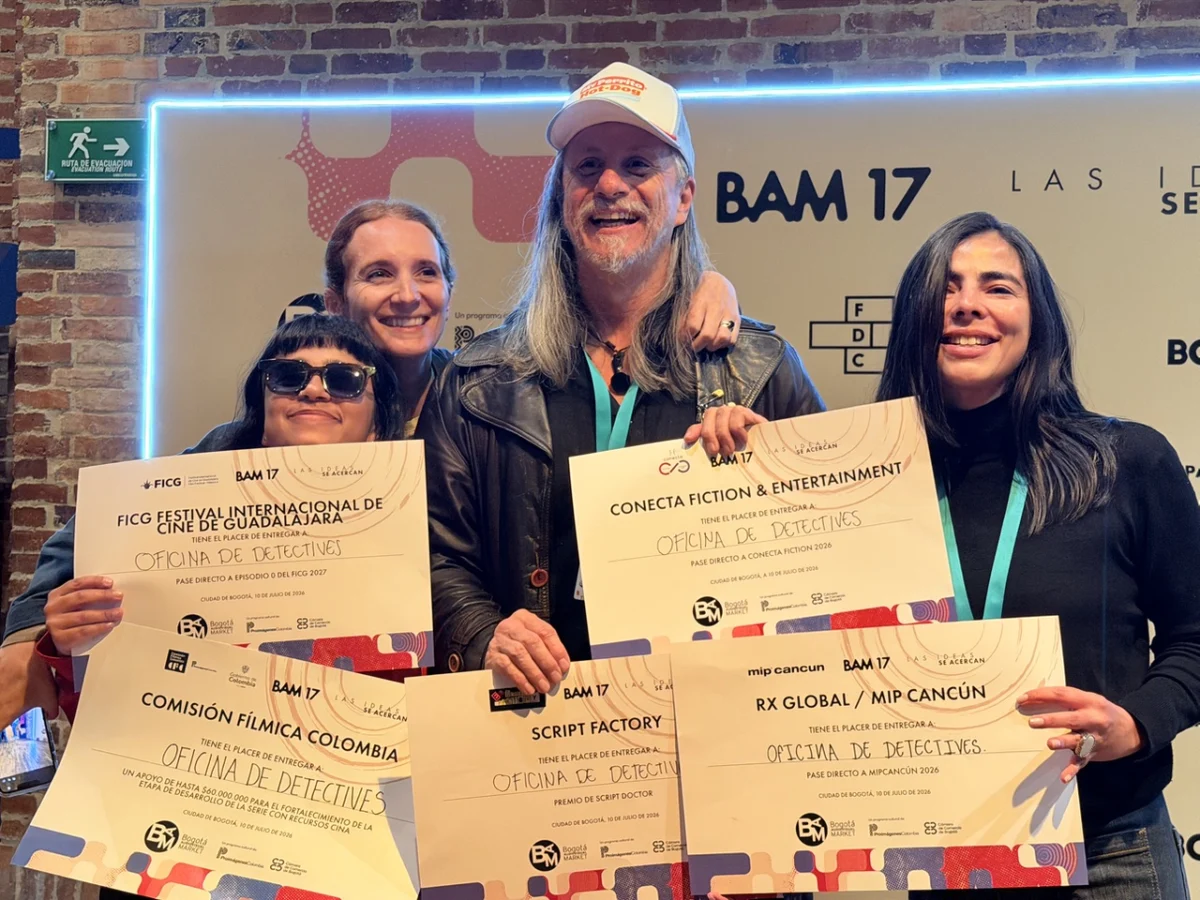
The standout of the awards ceremony was the TV series project Rookies (Oficina de Detectives), helmed by José Luis Rugeles and Ana María Tarazona of Rhayuela. The project dominated the field, securing five awards and signaling a strong appetite for local narrative-driven crime procedurals. In the documentary category, honors were split between Hanz Rippe Gabriel and Fernanda Pineda’s La Sombra de Yolúja and Mónica Taboada and Beto Rosero’s De la Villa. Meanwhile, in the fiction feature category, Agamenón Quintero’s De naranjas y otros demonios emerged as the most decorated project.

The Infrastructure Boom: Scaling for the Global Stage
A defining theme of this year’s BAM was the physical expansion of Colombia’s production capacity. The market coincided with the official unveiling of Stage 7 at TIS Studios, a monumental 18,300-square-foot soundstage that now ranks as the largest in Colombia and one of the most advanced in Latin America.
"TIS Studios brings highly trained crews, international production standards, and the protocols to manage large-scale projects, all backed by nearly three decades of delivering premium content," noted Samuel Duque, president of TIS Studios. "Stage 7 adds to that foundation. Combined with Colombia’s production incentives, it gives producers, showrunners, and production studios around the world one more reason to bring their most ambitious projects here."
This infrastructure is not being built in a vacuum. It is being fueled by a relentless stream of international demand. Companies like Folks Bogotá and the virtual production specialist Loma are increasingly handling the VFX and digital workflows for global powerhouses. Folks, which has serviced everything from Taylor Sheridan’s 1883 and Lioness to the Netflix epic One Hundred Years of Solitude, has successfully transitioned from a boutique support office into a primary hub for international visual effects.
Similarly, Loma’s move into virtual production—leveraging LED volumes and Unreal Engine—reflects a broader trend: the digitization of the Colombian set. By offering in-camera VFX and extended reality (xR) capabilities, companies like Loma are ensuring that Colombian production houses remain competitive against more expensive markets in North America and Europe.
The Human Element: Narrative and Identity
Amidst the technical discussions, the human element of filmmaking remained at the forefront. During her BAM Talk, celebrated Venezuelan filmmaker Mariana Rondón provided a poignant look at the intersection of displacement, identity, and art.

Reflecting on her latest feature, It Would Be Night in Caracas—produced by Edgar Ramírez—Rondón spoke of the logistical and emotional challenges of recreating a city that was physically inaccessible due to the current Venezuelan socio-political crisis. Working with a cast of displaced Venezuelans in Mexico, the boundary between the film’s narrative and the cast’s lived reality frequently dissolved.
"We would call ‘cut,’ but there was no way to stop," Rondón recalled, noting that the production had to provide on-set psychological support for participants who were reliving their own experiences of trauma. Her reflection highlighted a crucial aspect of the Colombian audiovisual sector: it is increasingly becoming a sanctuary for stories that define the Latin American experience, transforming the trauma of migration into a form of collective, cinematic reconstruction.
The Sustainability Crisis: The Industry’s "Great Paradox"
Perhaps the most significant takeaway from BAM 2026 was the presentation of a comprehensive industry study concerning the impact of Colombia’s Film Law 814. The data painted a picture of a "great paradox": while the country has been remarkably successful at financing individual films, it has struggled to build sustainable film companies.
Between 2015 and 2025, Colombia released 548 feature films, a staggering increase from the mere two films per year produced prior to 2003. Public support and tax incentives have been the engines of this growth, injecting approximately $160 million into the ecosystem. However, the study revealed that only 25% of production houses receiving this support have managed to return for a second project. The remaining 75% remain fragile, often operating with fewer than two employees, lacking the administrative and financial capacity to weather the gaps between productions.
Cristina Gallego, the acclaimed producer-director of Birds of Passage, addressed this during her panel, emphasizing that the era of simply "creating Colombian films" is over. "We have the films, but their market share is minimal, and they are not reaching audiences," she noted. "We are still not building sustainable businesses."

Strategic Implications: A Path Forward
The implications for the next decade are clear: the industry must shift its focus from production-first to business-first. The study presented at BAM offered 12 strategic pillars to guide this transition. Among the most critical are:
- Integrated Funding: Moving away from fragmented, project-based financing toward multi-year support for production companies to build institutional capacity.
- Market-Driven Distribution: Prioritizing the "last mile" of the film industry—distribution and promotion—to ensure that the 548 films produced reach, and resonate with, local and global audiences.
- Inter-Ministerial Collaboration: Aligning the ministries of culture, education, technology, and commerce to treat the audiovisual sector as a holistic economic engine rather than a purely artistic endeavor.
- Technological Integration: Formalizing the role of VFX and virtual production studios in the early stages of financing, ensuring that high-tech workflows are part of the budget rather than an outsourced expense.
Conclusion: The Road Ahead
As BAM 2026 closed its doors, the mood among delegates was one of cautious optimism. The infrastructure is in place, the talent is world-class, and the international appetite for Colombian content—as evidenced by Netflix’s decision to appoint a dedicated Head of Content in Bogotá—has never been higher.
However, the "sustainability problem" looms large. The success of the next 17 years will not be measured by the number of projects greenlit or the square footage of new soundstages, but by the ability of the Colombian industry to transform its creative fervor into durable, resilient, and profitable enterprises.
BAM director Carlos Eduardo Moreno captured the sentiment perfectly: "BAM once again showed that Colombia has world-class stories to tell and the talent to bring them to global audiences. We’re confident that many of the projects that came through the market leave stronger than they arrived—and one step closer to becoming the films, series, and audiovisual experiences audiences will see in the years ahead."
If the industry can bridge the gap between artistic output and business endurance, the next decade will likely see Colombia transition from an emerging regional player to a permanent fixture in the global media landscape. For now, the blueprint for that future is being drawn in the boardrooms and on the soundstages of Bogotá.










