Lina Hope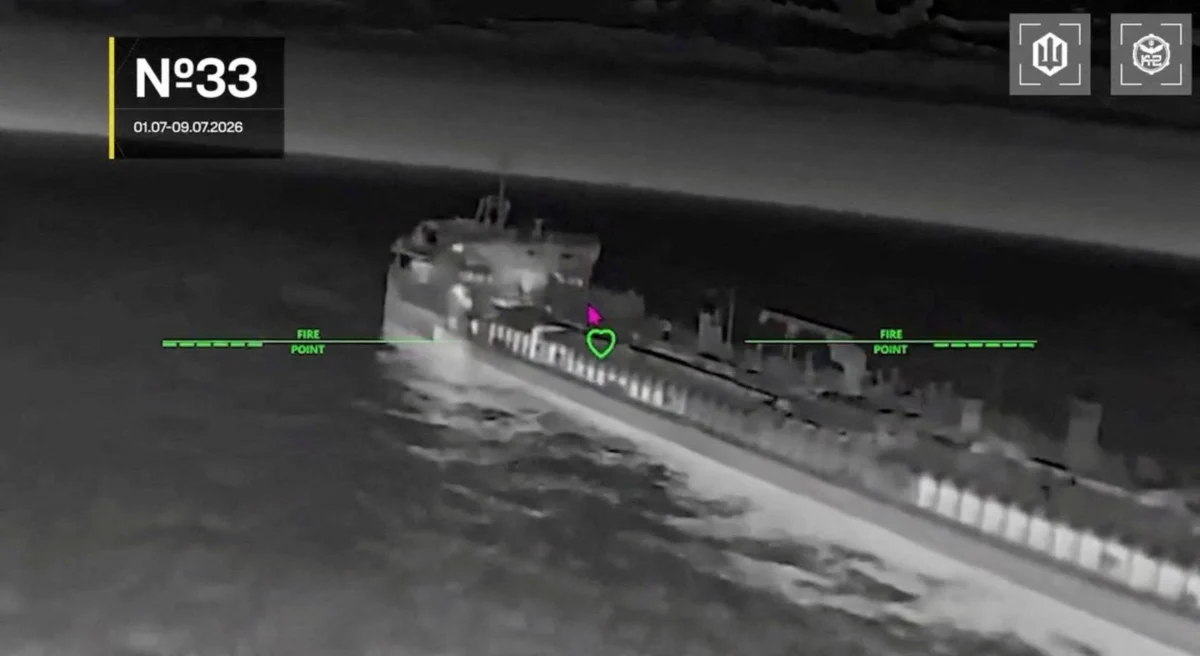
By International Affairs Desk
In a strategic pivot that signals a fundamental shift in the geometry of the ongoing conflict, Ukrainian President Volodymyr Zelenskyy has announced the creation of a specialized “long-range impact” command within the Armed Forces of Ukraine (AFU). The move formalizes Kyiv’s growing capability to project power thousands of kilometers into Russian territory, directly targeting the industrial arteries that fuel Moscow’s war machine.
The establishment of this command comes as Kyiv’s relentless drone campaign against Russian refineries, oil depots, and logistics hubs begins to yield tangible, macro-economic consequences for the Kremlin. By systematically dismantling the infrastructure that supports Russia’s state budget, Ukraine is attempting to force a strategic calculus shift in Moscow—one where the cost of sustaining the invasion begins to outweigh the perceived geopolitical gains.
The Strategic Shift: A New Command for Long-Range Warfare
During his nightly address to the nation, President Zelenskyy emphasized that the new military structure is not merely an auxiliary unit, but a primary force multiplier. "Today, I signed a decree establishing a special command within the Armed Forces—a command aimed at a long-range and, in effect, global impact on Russia in response to this war," Zelenskyy stated. "This command must focus 100% of available resources on further reducing Russia’s capacity to wage war."
For the Ukrainian military, this is the culmination of years of indigenous drone development. Moving away from the reliance on Western-supplied cruise missiles—which often come with restrictions on their use against Russian soil—Ukraine has cultivated a robust domestic fleet of long-range, autonomous strike vehicles. These systems are now capable of navigating complex Russian air defense grids to hit high-value targets with surgical precision.
Chronology of Escalation: From Defensive Stance to Deep Strike
The current campaign represents a maturation of tactics that have evolved significantly since the early, desperate days of the 2022 invasion.
- Initial Phase (2022–2023): Ukraine’s early strikes were largely defensive, focused on frontline logistics and command centers within occupied Ukrainian territory.
- The Transition (Late 2023): As Russia fortified its lines, Kyiv began experimenting with limited, long-range drone strikes on border-region oil storage facilities.
- The Campaign Intensifies (2024–2025): The strategy shifted toward the systematic degradation of Russia’s oil and gas sector. Strikes became more frequent, coordinated, and deep-seated, targeting refineries as far away as the Leningrad region.
- The Institutionalization (Present): The formalization of the "Long-Range Impact Command" indicates that these strikes are no longer opportunistic or ad-hoc, but are now the central pillar of Ukraine’s attrition strategy.
In just the past week, the efficacy of this new operational tempo was laid bare. On Friday, the Ukrainian General Staff reported successful strikes on the Ilsky oil refinery in the Krasnodar region—a critical facility for the Russian south—and the Ust-Luga complex near St. Petersburg. Simultaneously, oil terminals and depots in the Rostov region were set ablaze, forcing Moscow to scramble emergency response teams and, more importantly, to recalibrate its fuel distribution networks.
Economic Implications: The Cost of the "Shadow Fleet" and Fuel Scarcity
The economic shockwaves of these strikes are becoming impossible for the Kremlin to ignore. On Wednesday, Russia announced a blanket ban on diesel exports. While the Kremlin cited the need to prioritize domestic supply, industry analysts view the ban as a direct admission of a deepening fuel crisis.
The shortage is not merely an inconvenience; it is a systemic failure. The conflict has severely impacted the occupied Crimean peninsula, where fuel shortages have persisted for weeks. Furthermore, as refinery capacity drops to an estimated 65% of historical output, the ripple effects are being felt across the Russian agricultural and logistics sectors.
Robert Brovdi, a commander of Ukraine’s drone forces and a key architect of the deep-strike strategy, highlighted the impact on Russia’s maritime logistics. “Moscow’s shadow fleet is shrinking,” Brovdi claimed, noting that Ukraine had struck 10 tankers in the Sea of Azov on Friday alone. In the last five days, nearly 50 fuel-carrying vessels have been damaged or forced out of commission.
The closure of the shipping channel connecting the Don River to the Sea of Azov is perhaps the most significant logistical blow. Grain export industry sources suggest this could impact nearly 25% of Russian wheat exports from the region, creating a dual-front crisis: a domestic fuel shortage compounded by a disruption to a primary foreign currency earner.
Official Responses and the Standoff
The diplomatic discourse remains frozen. While Zelenskyy has urged President Vladimir Putin to recognize the inevitability of a negotiated settlement, the Kremlin’s position remains intransigent. Sources close to the Russian administration suggest that the strikes have not yet forced a pivot toward diplomacy; rather, they have, for the moment, hardened the resolve of the Russian security establishment to maintain the current trajectory.
Zelenskyy, however, maintains that the pressure is being felt where it counts—within the halls of the Kremlin. "They understand what is happening and that there is no alternative to peace," he said, hinting at internal dissent within Putin’s inner circle.
The strategy relies on a cold, calculated logic: if the war cannot be won on the front lines in the short term, it must be made unaffordable in the long term. By targeting the Russian state budget’s primary contributors—oil and gas—Kyiv is effectively attempting to "de-fund" the invasion.
The Path Ahead: Risks and Realities
Despite these successes, military analysts warn that the situation remains precarious. Ukraine continues to operate with a chronic shortage of high-end air defense systems. While Russia’s economy is reeling, its military retains a significant advantage in terms of ballistic missile stockpiles, which continue to inflict a heavy civilian toll on Ukrainian cities.
"It is too early to say Ukraine has turned the tide of the conflict," says one senior defense observer. "The deep-strike campaign is a brilliant tactical evolution, but it is taking place against the backdrop of an attritional war that still favors the side with the larger population and greater industrial depth."
For Ukraine, the new "Long-Range Impact" command is an admission that the war is no longer confined to the trenches of the Donbas. It is a total war, fought in the boardrooms of energy companies, the shipping lanes of the Sea of Azov, and the control rooms of drone operators. As the conflict drags into its next phase, the ability of both nations to withstand economic and infrastructural attrition will likely define the ultimate outcome of the war.
For now, the smoke rising from Russian refineries serves as a grim marker of a new era in the conflict—one where the battlefield is limited only by the reach of a drone, and the primary objective is the total erosion of the enemy’s will and capacity to continue the fight.
© Thomson Reuters 2026.


 Neng Nana
 Asro
Asro