

By Staff Report, REUTERS, and AFP-JIJI
ISHIGAKI, Okinawa Prefecture — Typhoon Bavi, a powerful and expansive storm system, churned through Japan’s southern island chain on Saturday, unleashing a torrent of heavy rainfall and violent, sustained winds that rattled the Sakishima Islands. As the storm barreled toward the coast of Taiwan, local authorities and meteorological agencies remained on high alert, warning residents of a significant, ongoing threat of flash flooding, landslides, and storm surges.
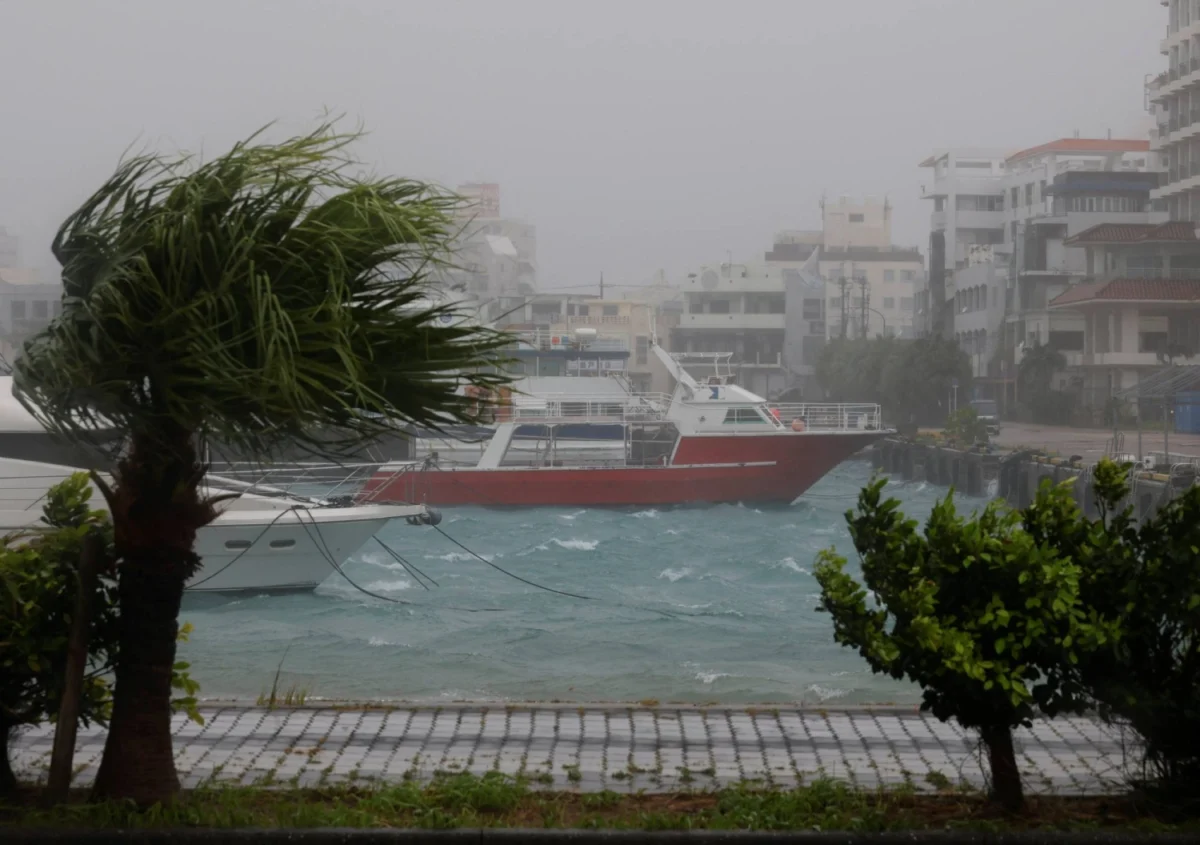
The storm, which meteorologists classified as both large and strong, brought the serenity of the remote archipelago to a standstill. In Ishigaki, the largest of the Yaeyama Islands, the visual evidence of the typhoon’s power was immediate: empty, debris-strewn streets and the rhythmic, violent thrashing of vessels secured in local harbors.
The Situation on the Ground: A Chronology of the Impact
As of Saturday morning, the Sakishima Islands—a region already accustomed to the volatile weather patterns of the Pacific typhoon season—found themselves in the direct crosshairs of Bavi’s outer bands.
Early Saturday: The Initial Onset
The first signs of the storm’s arrival were marked by a dramatic drop in barometric pressure and a shift in wind direction. By dawn, the Ishigaki port had already become a focal point of the tempest. Satellite imagery and local observations showed the storm’s eyewall approaching with alarming intensity.
Midday: The Peak of the Gale
Throughout the middle of the day, conditions deteriorated rapidly. Sustained winds near the storm’s center were measured at 144 kilometers per hour (89 mph). However, it was the potential for extreme gusts that caused the most significant concern for disaster management officials. Meteorologists warned that gusts could reach up to 198 kph (123 mph), a velocity capable of tearing roofs from buildings, uprooting mature trees, and rendering travel by road or sea impossible.
On the streets of Ishigaki, the landscape was eerie. Most residents had retreated to the safety of concrete shelters or their homes, adhering to urgent evacuation advisories. Those few who ventured out—mostly essential service workers or emergency responders—faced the harrowing sight of debris flying horizontally across darkened thoroughfares.
Afternoon: The Transition Toward Taiwan
As the afternoon progressed, the storm began its slow, steady crawl toward the northwest. While the intensity of the winds began to shift as the eye of the storm tracked away from the immediate vicinity of the Sakishima chain, the trailing bands of the typhoon ensured that heavy precipitation continued, keeping the threat of mudslides and river flooding at a critical level.
Meteorological Data and Storm Dynamics
To understand the severity of Typhoon Bavi, one must look at the data provided by regional weather services. The classification of "large and strong" is not merely a descriptive term; it carries specific implications for the radius of gale-force winds and the volume of water the system is capable of dropping over a concentrated area.
Wind Velocity and Pressure
The storm’s core was defined by an exceptionally tight pressure gradient. This low pressure acted as a vacuum, drawing in moist air from the surrounding Pacific and fueling the storm’s rapid intensification. The 144 kph sustained winds were the baseline, but the 198 kph gusts represented the erratic and unpredictable nature of the storm, which poses the greatest danger to infrastructure.
Precipitation Hazards
Beyond the winds, the moisture content of the typhoon was significant. Orographic lift—where air is forced upward by the mountainous terrain of the islands—caused rainfall to intensify as it hit the slopes of Ishigaki and its neighboring islands. For disaster planners, the primary concern was not just the immediate inundation, but the saturation of the soil. When soil becomes oversaturated, the structural integrity of hillsides is compromised, leading to the landslides that have historically caused the most fatalities in the Okinawa region.

Official Responses and Emergency Preparedness
In the hours leading up to the storm’s arrival, the response from local and prefectural governments was swift and decisive. The priority was the preservation of life through proactive communication.
Evacuation Advisories
Authorities in Okinawa Prefecture issued a series of "Level 3" and "Level 4" evacuation advisories. These orders were targeted specifically at elderly residents and those living in low-lying areas prone to flooding or areas near cliffs deemed at risk for landslides.
"We are urging citizens to prioritize their safety over their property," said a spokesperson for the local emergency management bureau. "The wind speeds we are recording are sufficient to cause structural failure in older buildings. Please move to designated shelters or reinforce your internal safety zones immediately."
Infrastructure Protection
At the Ishigaki port, harbor authorities worked under grueling conditions to ensure that vessels were double-moored. Despite these efforts, the sheer force of the currents meant that many boats were seen rocking violently, straining their lines. The port, a critical lifeline for the islands, was effectively shut down, with all ferry services suspended until the storm passes and safety inspections can be conducted.
Implications for the Region
The passage of Typhoon Bavi serves as a stark reminder of the increasing vulnerability of island communities to extreme weather events. As climate change continues to impact ocean temperatures, the frequency and intensity of these typhoons are under intense scrutiny by climatologists.
The Taiwan Outlook
As the storm tracks toward Taiwan, the implications for the island nation are significant. Taiwan’s Central Weather Bureau has been tracking Bavi with extreme precision, adjusting their forecast models to account for the storm’s slight fluctuations in speed and intensity. The lessons learned from the impact on Okinawa—specifically the danger of sudden gusts and the rapid onset of flooding—are being used to prepare the Taiwanese population for the storm’s landfall.
Economic and Social Disruption
The immediate economic cost of such a storm is high. The suspension of tourism, the disruption of supply chains for imported goods, and the potential for damage to agricultural sectors in Okinawa and Taiwan are all factors that will require significant post-storm recovery efforts. However, in the short term, the social focus remains entirely on the "wait and see" period, where the community must endure the physical battering of the storm before the arduous task of damage assessment can begin.
Conclusion: A Call for Vigilance
As the wind continues to howl across the East China Sea, the residents of the Sakishima Islands remain in a state of suspended animation. The storm is a testament to the raw, unbridled power of nature—a force that, despite modern advancements in satellite meteorology and early warning systems, continues to hold the power to dictate the rhythm of life in the Pacific.
In an era defined by an overflow of data and the constant noise of the digital age, the quiet, focused work of the emergency responders and the stoic endurance of the islanders stand as a vital reminder of human resilience. The data points on a map—the pressure readings, the wind speed vectors, the rainfall totals—are more than just statistics; they represent a collective challenge to the communities in the path of the storm.
As the region braces for the aftermath, the focus will undoubtedly shift from survival to recovery. But for now, the message from the authorities remains clear: stay indoors, stay updated, and do not underestimate the reach of a storm as large and as powerful as Typhoon Bavi.
Quality journalism is more critical than ever. In a time of misinformation and information overload, our mission is to provide accurate, verified, and timely reporting. By subscribing to our service, you support the essential work of our staff and ensure that the stories that shape our world are told with the integrity they deserve. Join us in our commitment to the truth—subscribe today.











