For those who came of age in the 1990s, the landscape of children’s television was dominated by a singular, persistent figure: a purple, anthropomorphic dinosaur who preached the gospel of unconditional friendship. For a generation, Barney was a fixture of domestic comfort, a symbol of safety, and a staple of the Saturday morning ritual. However, as that generation matured, the veneer of that colorful world began to fray. Looking back, the unblinking gaze, the lack of parental oversight, and the inexplicable nature of a giant creature wandering through suburbs took on a distinctly uncanny, if not outright sinister, quality.
It is this specific brand of nostalgic trauma that the upcoming horror film Buddy aims to weaponize. With the release of its debut teaser trailer, the project has signaled a radical departure from the saccharine tropes of the 90s, opting instead to plunge viewers into a surreal, blood-soaked nightmare. Starring the prolific Keegan-Michael Key as the titular Buddy—a bright, neon-orange unicorn—the film is already positioning itself as the most anticipated subversion of children’s entertainment in recent memory.
The Premise: When Joy Turns to Dread
The teaser trailer for Buddy opens with a deliberate, aggressive commitment to 1990s aesthetic sensibilities. We are transported to a dreamlike, technicolor utopia where a vibrant orange unicorn leads a gaggle of children in song, dance, and collective merriment. The production design captures the specific "fuzzy" warmth of the era’s educational programming, complete with soft-focus cinematography and high-saturation color palettes.
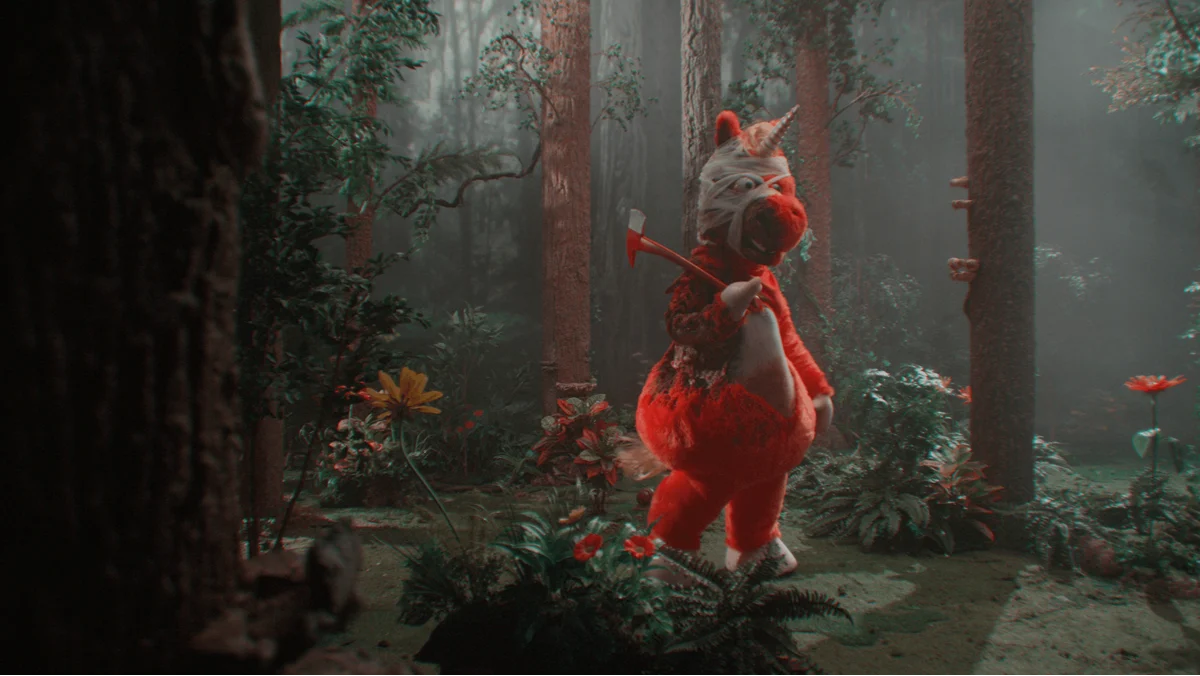
However, the narrative quickly pivots. The film establishes that Buddy is a source of pure, unadulterated joy—but only for those who fully participate in his program of happiness. The horror ignites when a single child refuses to engage, signaling a crack in the facade. What follows is a rapid, jarring descent into chaos. The idyllic landscape dissolves into a psychological prison; the children, previously radiating innocence, are shown terrified, stained with blood, and trapped within an environment that feels less like a playground and more like a cultist’s lair.
The imagery is designed to provoke visceral discomfort: a grotesque, disjointed doll, a singular, hyper-realistic eye peering through a crack in the set, and the subtle, terrifying implication of mind control. The film forces the audience to confront a chilling question: Does Buddy require the emotional energy of his young charges to sustain his own existence, and at what cost to their humanity?

A Chronology of Subversive Horror
The emergence of Buddy is not an isolated incident but rather the latest iteration of a burgeoning cinematic trend: the "Childhood Icon Horror" subgenre. This movement relies on the psychological phenomenon of the "Uncanny Valley"—where something human-like, but just slightly "off," triggers a deep-seated biological aversion.
- The Origins (2020–2022): The trend began in earnest with independent films that took public domain characters and twisted them into slasher villains. These early entries were often low-budget, fan-service-heavy experiments that proved the audience’s appetite for "dark nostalgia."
- The Mainstream Shift (2023–2024): As the box office returns for these subversive horror projects increased, major studios began to take notice. The transition from "cheap knock-offs" to high-production-value psychological thrillers began.
- The "Buddy" Era (2026): With the casting of an A-list comedic talent like Keegan-Michael Key, Buddy represents the maturation of the genre. By utilizing a performer known for his impeccable timing and expressive range, the film moves beyond the "slasher" label into the territory of high-concept psychological horror.
Supporting Data: Why We Fear the Familiar
Psychologists have long studied why adults find the corruption of childhood innocence so compelling. The "creepiness" associated with characters like Barney or the fictional Buddy stems from a cognitive dissonance. When we were children, we accepted the logic of a giant, singing creature without question. As adults, our logic centers demand an explanation—who is inside the suit? Why are they alone with children? How is this sustainable?
- The Uncanny Valley: As defined by roboticist Masahiro Mori, the closer a non-human entity gets to human perfection without reaching it, the more revulsion it causes. Buddy’s hyper-animated, fixed facial expressions are designed to maximize this effect.
- The Nostalgia Trap: Data suggests that films utilizing "90s aesthetics" perform significantly better with Gen Z and Millennial audiences. By tapping into the specific color schemes, fashion, and camera techniques of the 1990s, Buddy builds a bridge between the viewer’s childhood memories and their adult capacity for fear.
- Audience Demographics: Preliminary social media sentiment analysis shows that the primary demographic for the Buddy trailer is adults aged 25–40, confirming that the film’s marketing strategy is successfully targeting the "traumatized" former viewers of children’s variety shows.
The Keegan-Michael Key Factor
The most significant variable in the film’s potential success is the involvement of Keegan-Michael Key. Known for his work on Key & Peele and his versatile voice acting in major studio productions, Key brings a level of legitimacy that this genre rarely attracts.
In the teaser, Key’s performance as Buddy is unnervingly restrained. He avoids the temptation to go "over the top" with cartoonish madness, instead opting for a soft-spoken, sinister cheerfulness. This contrast—a gentle, high-pitched voice paired with the violent reality of the setting—creates a terrifying dissonance. Producers have hinted that Key spent weeks developing the character’s physical movements, studying the specific, heavy-footed gait of oversized mascot costumes to ensure that even the way Buddy walks feels threatening.
Implications: The Death of Innocence in Media
The production of Buddy carries broader implications for the entertainment industry. Firstly, it highlights the exhaustion of original intellectual property. When major studios can no longer rely on traditional sequels, they turn to "subversion"—recontextualizing beloved concepts into genres that feel fresh and dangerous.
Secondly, the film raises ethical questions about the appropriation of childhood nostalgia. While fans of the horror genre are celebrating the teaser, there remains a segment of the audience that views the "ruining" of childhood icons as a cynical cash grab. However, as the industry pushes toward more adult-oriented, genre-bending content, the success of Buddy will likely dictate whether we see a wave of "creepy mascot" films in the coming years.
If the film succeeds at the box office on August 28, it will effectively cement the "Childhood Icon Horror" genre as a permanent pillar of the horror landscape, likely leading to a saturation of similar projects. If it fails, it may signal that audiences have reached their limit with the "everything is secretly a horror movie" trend.
Conclusion: A Date with Destiny
The teaser trailer for Buddy is more than just a promotional tool; it is a declaration of intent. It promises to dismantle the comfort of our past and replace it with a high-stakes, psychological confrontation. For those who grew up in the shadow of the big, friendly dinosaur, Buddy serves as a reckoning—an opportunity to look back at the icons of our youth and realize that, perhaps, we were never as safe as we thought we were.
As the August 28 release date approaches, the anticipation is palpable. We have been invited to play with Buddy, and regardless of the risks, it seems clear that a generation is ready to see the facade finally shatter. Whether this film will be remembered as a masterpiece of subversion or a hollow exercise in nostalgia remains to be seen, but one thing is certain: our childhoods will never look the same again.