

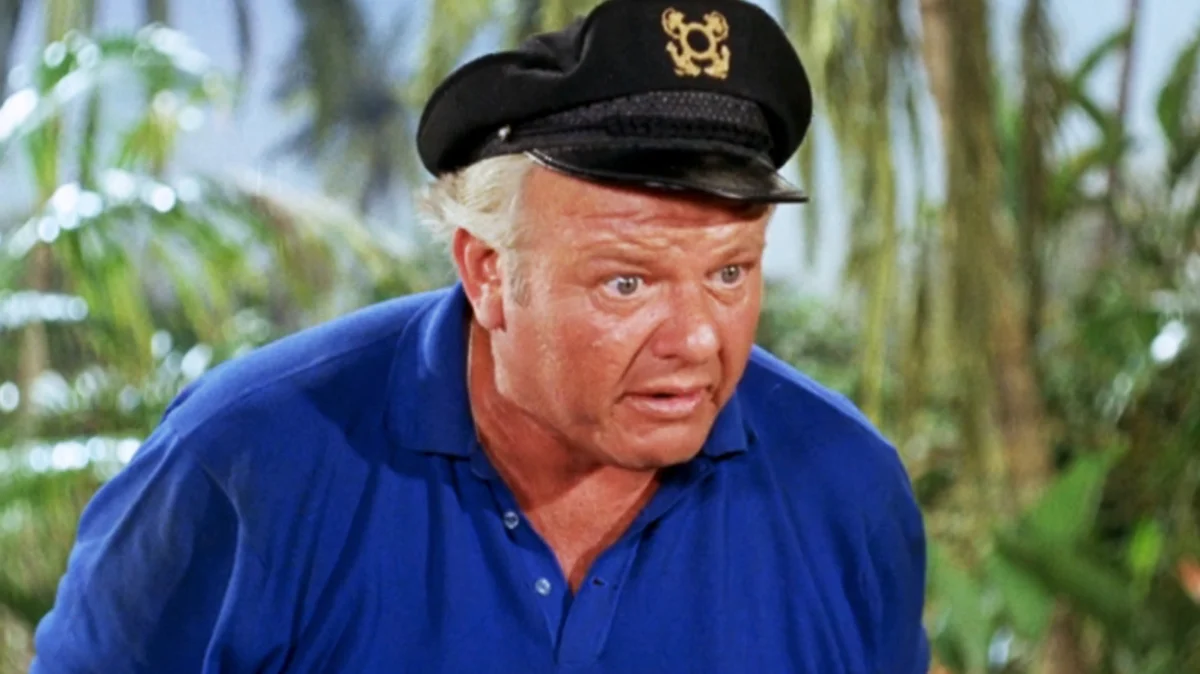
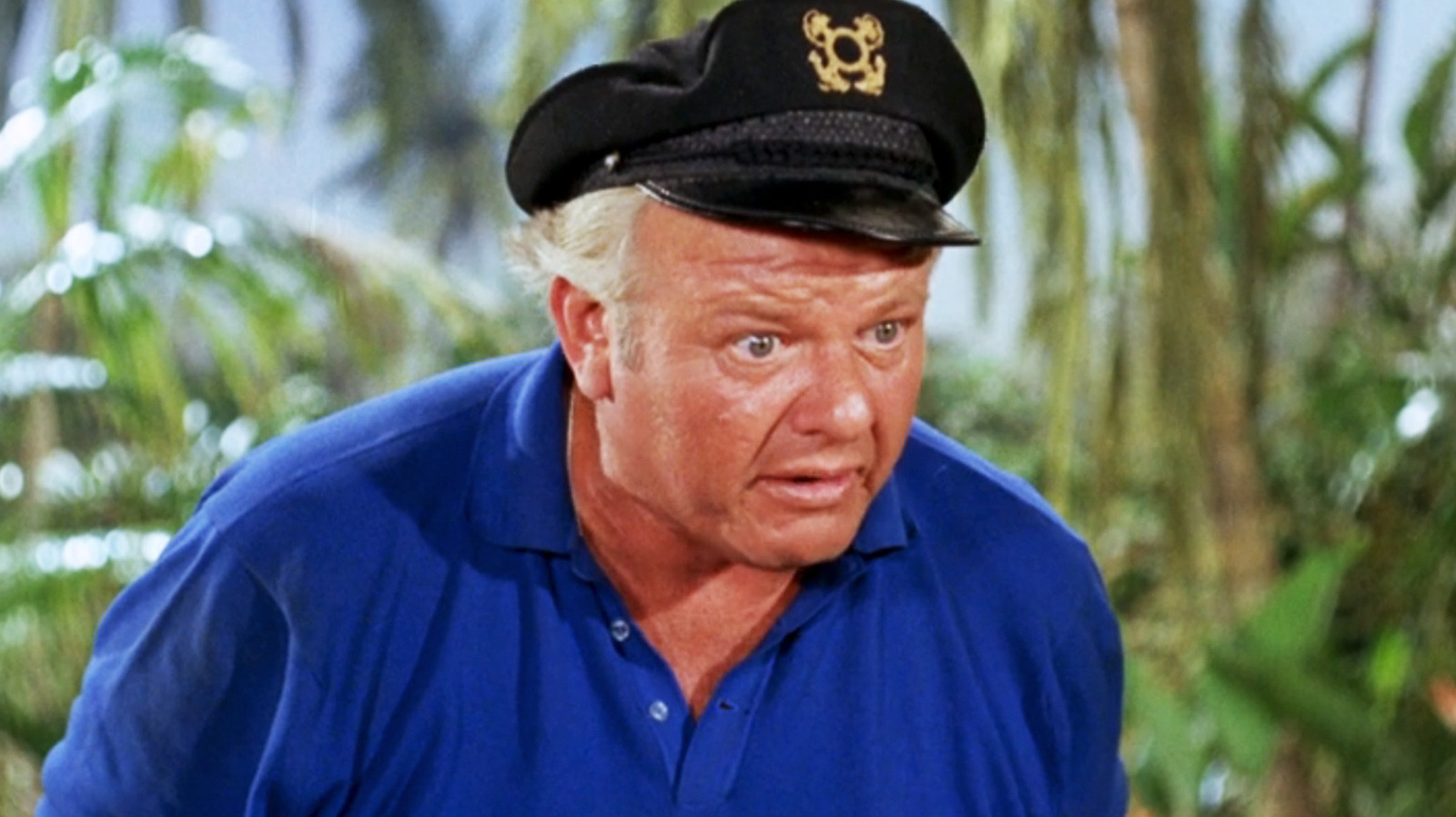
While modern television audiences instantly recognize Alan Hale Jr. as the jovial, beleaguered Captain Jonas Grumby—the "Skipper" of the iconic 1960s sitcom Gilligan’s Island—the actor’s career was far more diverse and storied than his time on the SS Minnow would suggest. Long before he was stranded on a desert island with a first mate named Gilligan, Hale Jr. was a working actor carving out a niche in Hollywood’s golden age. Among his various mid-century credits sits a peculiar, often overlooked footnote: a 1955 World War II maritime drama titled The Sea Chase, which cast him alongside the undisputed titan of American cinema, John Wayne.
Main Facts: A Collision of Icons
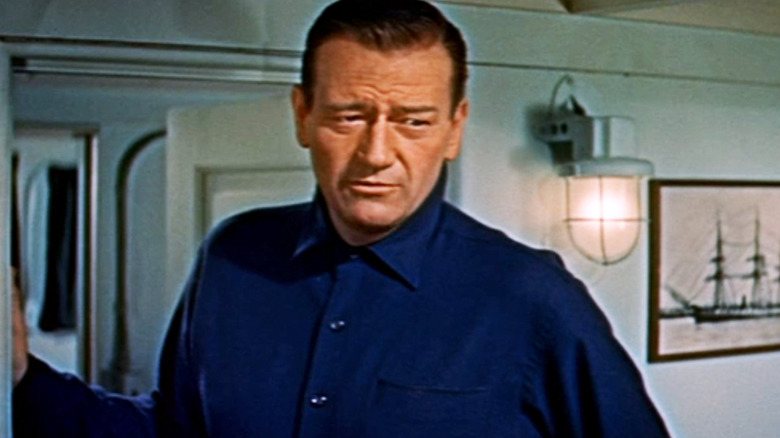
The 1955 film The Sea Chase, directed by John Farrow, serves as a fascinating, if somewhat dusty, relic of mid-20th-century studio filmmaking. At the center of the production was John Wayne, who, despite his reputation as the quintessential American cowboy, frequently explored the complexities of global conflict through war-themed features. In this instance, Wayne portrayed Karl Ehrlich, a German freighter captain attempting to navigate his ship, the Ergenstrasse, back to Hamburg from Australia at the outbreak of World War II.
While the film aimed to capitalize on the star power of "The Duke" and co-star Lana Turner, it also featured a supporting cast that would go on to define television history. Alongside a pre-Gunsmoke James Arness, the film featured Alan Hale Jr. in the role of a crewman named Wentz. At the time of production, Hale Jr. was a veteran of the industry, having already appeared in several high-profile projects, yet he was still nearly a decade away from the role that would cement his legacy in pop culture.
A Chronology of a Career in Motion
To understand the significance of Hale Jr.’s appearance in The Sea Chase, one must view it within the broader trajectory of his filmography. By 1955, Hale Jr. was far from a novice. He had been working steadily throughout the late 1940s and early 1950s, building a resume that proved his versatility.
- 1950: Hale appeared in The West Point Story, working alongside the legendary James Cagney. This early exposure to top-tier talent helped him refine his screen presence.
- 1952–1953: He took the lead in the CBS adventure series Biff Baker, U.S.A., demonstrating his ability to carry a narrative as a series lead.
- 1952: He shared the screen with Kirk Douglas in the acclaimed film The Big Trees, further solidifying his status as a reliable character actor.
- 1954: He appeared in Destry, working with Audie Murphy, which helped solidify his comfort within the Western genre—a genre that would eventually collide with his comedic timing in Gilligan’s Island.
- 1955: The Sea Chase marks the apex of his pre-stardom film work. Appearing in a major Warner Bros. production with John Wayne was, by any standard, a significant career milestone.
It is a striking historical irony that the same year The Sea Chase was released, John Wayne was instrumental in helping James Arness secure the role of Matt Dillon in Gunsmoke. While Arness was being launched into a new stratosphere of fame, Hale Jr. remained in the trenches of character acting, waiting for his own transformative role, which would not arrive until the debut of Gilligan’s Island in 1964.
The Production: Behind the Scenes of a "Flop"
The production of The Sea Chase was, by all accounts, a difficult affair. Adapted from Andrew Geer’s 1949 novel, the film faced immediate challenges, most notably the health of its leading man. According to accounts from colleagues like Paul Fix, John Wayne suffered from a severe ear infection during filming. The pain was so acute that the production had to resort to using strong painkillers, which reportedly left the actor appearing "glazed" in certain scenes. Director John Farrow was forced to frame shots meticulously to avoid showing the swollen side of Wayne’s face.
Furthermore, the film’s authenticity was a point of pride that turned into a logistical headache. Warner Bros. famously purchased a real freighter to serve as the Ergenstrasse and shot extensively on location in Hawaii. While this provided a grounded, gritty aesthetic, the production was plagued by the sense that the elements were working against them. The result was a film that, despite its high budget and star-studded cast, struggled to find its identity.
Critical Reception and Implications
The critical reception of The Sea Chase was notably lukewarm, if not outright hostile. Bosley Crowther, the influential critic for The New York Times, did not mince words. He characterized the film as a "conventionally heroic and ideologically silly sea romance." Crowther’s critique was particularly stinging regarding Wayne’s performance, suggesting that the actor approached the role of a German captain with the same mannerisms he used to drive cattle in his Westerns—an observation that highlights the difficulty audiences had in separating Wayne from his iconic cowboy persona.
Variety offered a similarly muted appraisal, noting that while the film possessed all the necessary components for a blockbuster—a compelling premise, a high-profile director, and immense star power—it ultimately failed to live up to its promise.
The financial legacy of The Sea Chase remains a subject of debate. While some sources, such as IMDb, categorize it among the highest-grossing films of 1955, others point to its poor critical standing as a sign of its commercial underperformance. Regardless of the box office numbers, the film’s "flop" status within the context of Wayne’s broader career is largely agreed upon by film historians. It is rarely mentioned in the same breath as his essential works like The Searchers (1956) or Red River (1948).
The Legacy of the Collaboration
What does this mean for the legacy of Alan Hale Jr.? For the actor, the experience was likely a formative one. Working under the pressures of a high-budget studio production, dealing with the temperaments of major stars like Wayne, and navigating the complexities of a director like Farrow provided Hale with a masterclass in the realities of the film industry.
While The Sea Chase did not propel Hale Jr. to immediate superstardom, it demonstrated his tenacity. He was an actor who could hold his own in a scene with John Wayne, even if the film itself was destined to be forgotten by the general public.
When Hale Jr. finally stepped into the shoes of the Skipper, he brought with him years of experience gained from these "forgotten" projects. His ability to anchor the chaotic, slapstick world of Gilligan’s Island with a sense of genuine, seasoned authority is a testament to the decades he spent working alongside the legends of the screen.
Conclusion: A Footnote in Hollywood History
In the grand tapestry of Hollywood history, The Sea Chase remains a fascinating "what-if." It is a film that sits at the intersection of several careers: the twilight of the classic studio era, the height of John Wayne’s dominance, and the apprenticeship of future TV stars like James Arness and Alan Hale Jr.
Though the film may have gone down like a "torpedoed freighter" in the eyes of critics, it remains an essential piece of the puzzle for those interested in the life of Alan Hale Jr. It reminds us that every icon—even the beloved Skipper—began their journey in the background of other people’s stories, gaining the skills, the resilience, and the screen presence that would eventually make them household names. The Sea Chase may have been a failure in its time, but it serves as a vital chapter in the history of a man who would eventually guide his castaways into the hearts of millions.










