

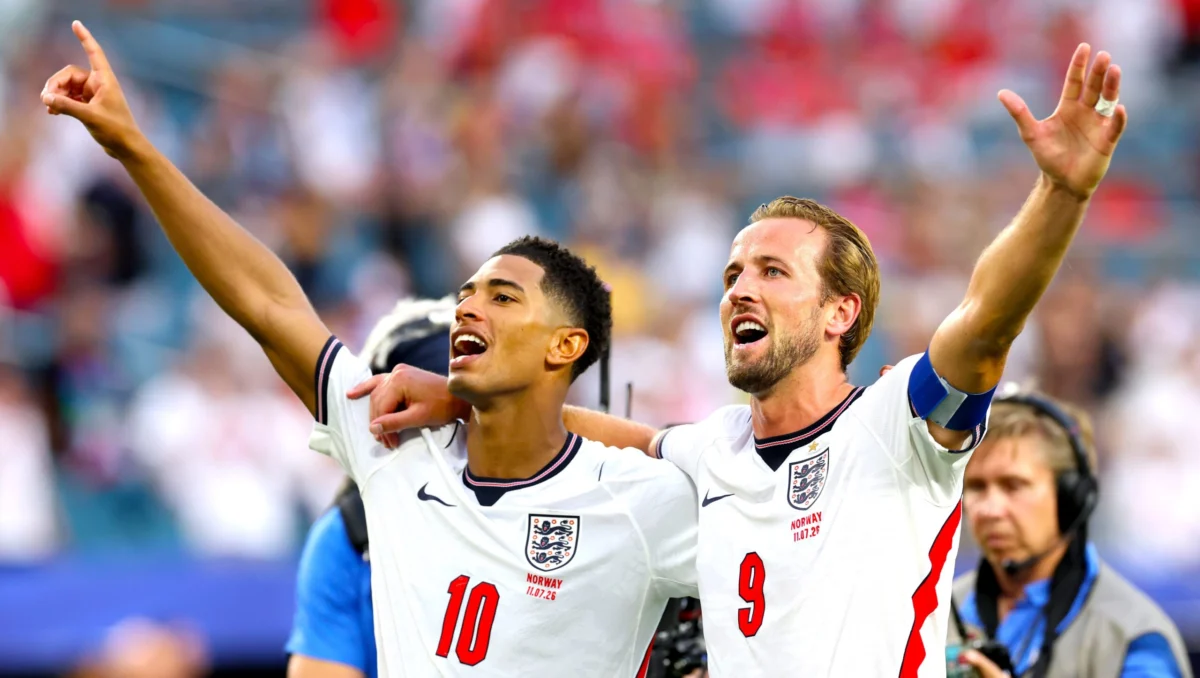
The Three Lions Advance: A Miami Masterclass
England has officially punched its ticket to the FIFA World Cup semi-finals, delivering a performance that has captivated the nation and set a new benchmark for television viewership in the United Kingdom. In a dramatic 2-1 victory over Norway at the Miami Stadium, Jude Bellingham cemented his status as the tournament’s standout performer, netting a clinical brace that propelled Gareth Southgate’s side one step closer to global glory.
The match, which took place in the sweltering heat of Florida, was more than just a tactical triumph; it was a broadcast phenomenon. According to overnight figures provided by BARB (Broadcasters’ Audience Research Board) via overnights.tv, the encounter drew a peak audience of 16.8 million viewers on ITV1. This figure marks the largest UK television audience for the 2026 World Cup to date, underscoring the enduring power of the England national team to unify a viewing public across the British Isles.
Chronology of a High-Stakes Encounter
The match, which kicked off at 10 p.m. local time, presented a unique challenge for the domestic audience in the UK, yet the late-night slot did little to deter supporters.
The First Half: Tactical Standoff
The opening exchanges were defined by caution, as both England and Norway sought to neutralize each other’s threats. With the Miami Stadium atmosphere crackling, the tactical battle was fought primarily in the midfield. England maintained a disciplined structure, looking to exploit the gaps left by a high-pressing Norwegian side.
The Second Half: The Bellingham Breakthrough
The second half saw the game explode into life. Jude Bellingham, operating with a level of composure that belies his age, broke the deadlock shortly after the hour mark. Norway fought back with a resilient equalizer, threatening to push the game into extra time. However, it was Bellingham again in the 84th minute who found the decisive finish, curling a strike into the bottom corner that sent the traveling English support—and millions of viewers back home—into raptures.
The Final Whistle
The closing stages were a test of nerves for England’s defense, as Norway threw everything forward in a desperate search for parity. England’s defensive line, however, held firm under immense pressure. When the referee signaled the end of the match, it confirmed not just a victory on the pitch, but a significant cultural moment for the UK broadcast landscape.
Supporting Data: By the Numbers
The 16.8 million peak figure represents an average viewership of 12.7 million throughout the broadcast. To put these numbers into context, it is essential to look at the historical trajectory of World Cup viewership in the UK.
Breaking Previous Records
Before this quarter-final clash, the high-water mark for the 2026 tournament was England’s opening group-stage match against Croatia, which reached a peak of 15 million viewers. The Norway game has effectively eclipsed that, proving that as the tournament progresses, the "England Effect" on public interest continues to grow exponentially.
The Comparison to Historic Quarters
Despite the impressive 16.8 million peak, media analysts are quick to point out that this does not quite reach the dizzying heights of previous World Cup quarter-finals.
- 2022 (Qatar): England’s heartbreaking loss to France reached a peak of 21.3 million viewers.
- 2018 (Russia): The 2-0 quarter-final victory over Sweden peaked at 20 million viewers.
These comparisons are nuanced by the time zone differences. The 2026 World Cup, hosted in North America, has required UK audiences to adapt to non-traditional viewing hours. This was most evident during the Round of 16 match against Mexico, where a frenetic 3-2 victory was broadcast in the early hours of the morning. That game drew 9 million viewers between 2 a.m. and 4 a.m., setting an all-time record for UK television in that specific time slot.
The Broadcast Implications: The "Miami Factor"
The decision by ITV1 to broadcast the game in the 10 p.m. Miami slot—which translated to a 3 a.m. start in the UK—was a significant gamble that paid off. The media landscape has shifted dramatically; viewers are now increasingly willing to disrupt their sleep schedules for high-stakes international football.
Industry experts suggest that the "second-screen" experience—where fans engage with social media platforms like X (formerly Twitter) and WhatsApp groups—has turned these matches into "communal digital events." Even at 3 a.m., the sense of shared experience is palpable, preventing the isolation that such late-night viewing might have caused in the pre-internet era.
Official Responses and Tactical Analysis
Following the game, Gareth Southgate spoke to the media about the resilience of his squad. "To play in these conditions, against a side as physical as Norway, shows the growth of this group," Southgate noted during the post-match press conference. "We knew the country was watching, and we felt that energy."
From a tactical perspective, pundits have praised the manager for his trust in Bellingham. The Real Madrid star’s ability to transition from a defensive pivot to an attacking threat in the dying moments of the match was cited as the "difference-maker" in what was otherwise a tightly contested encounter.
ITV, meanwhile, has been lauded for its production quality. The broadcaster’s decision to integrate comprehensive pre-match analysis and post-game highlights has helped maintain audience retention despite the inconvenient timing of the matches.
Implications for the Semi-Finals and Beyond
As England prepares for the semi-final, the pressure on the national broadcaster and the squad will only intensify. The viewership data suggests that England remains the most potent draw for UK advertisers and broadcasters alike.
The Economic and Cultural Impact
The economic implications of these viewership figures are vast. With millions of households tuning in, the ad revenue generated by ITV1 during these peak slots is substantial. Beyond the financial, there is a cultural phenomenon at play. The "World Cup Fever" that grips the UK every four years is being tested by the North American time zones, yet the data confirms that the passion remains undimmed.
Looking Ahead
The challenge for the semi-final will be to maintain this momentum. If England progresses to the final, analysts predict that the viewership could shatter the 2022 record, potentially reaching the 25 million mark—a figure that would rival the most watched television events in British history, such as the funeral of Queen Elizabeth II or the 1966 World Cup Final.
Conclusion: A Nation United
England’s progress in the 2026 World Cup is a testament to the talent of the current squad and the enduring love for the game in the UK. Whether it is a 3 a.m. thrill-ride against Mexico or a primetime-late-night victory over Norway, the "Three Lions" continue to command the attention of the nation. As the team heads toward the semi-final, one thing is certain: the country will be watching.
The shift in viewing habits, the late-night dedication of millions, and the high-performance standards of the players are all converging to create a tournament that will be remembered for its resilience. For now, England can celebrate a hard-fought victory in Miami, knowing that their performance has not only kept their trophy dreams alive but has once again brought the nation to a standstill.
Data Summary Table: England 2026 World Cup Viewership
| Match | Round | Peak Viewers | Kick-off (UK Time) |
|---|---|---|---|
| vs. Croatia | Group Stage | 15.0M | Evening |
| vs. Mexico | Round of 16 | 9.0M | 2:00 AM |
| vs. Norway | Quarter-Final | 16.8M | 3:00 AM |
Note: Figures are based on overnight data provided by BARB/overnights.tv.










