

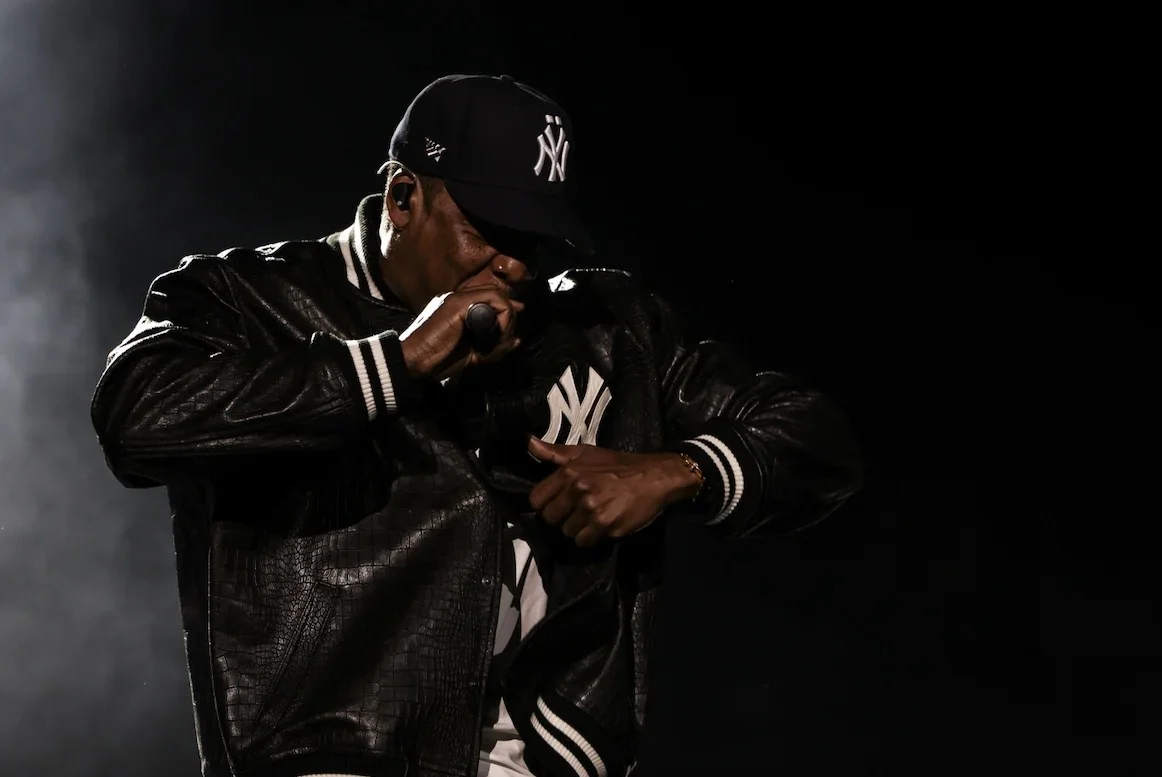
In the annals of hip-hop, few venues carry the mythological weight of Yankee Stadium. On this past weekend, the hallowed grounds of the Bronx hosted a triumvirate of performances by Brooklyn’s own Shawn “Jay-Z” Carter, serving as both a victory lap for a legendary career and a scholarly examination of his most transformative work. Spanning the 30th anniversary of his debut, Reasonable Doubt, and the 25th anniversary of his critical masterpiece, The Blueprint, the residency proved that even three decades in, Jay-Z remains the undisputed architect of modern rap ambition.
The Foundations of a Dynasty: Friday’s Celebration of ‘Reasonable Doubt’
The festivities began on Friday night, a high-octane affair that served as a direct tribute to the 1996 release of Reasonable Doubt. If The Blueprint was the stadium-filling coronation, Reasonable Doubt was the street-level thesis statement. The show was an exercise in nostalgia and triumph, featuring a star-studded parade of collaborators including Nas, Jaz-O, and Alicia Keys.
The evening opened with an iconic, if startling, visual: a video segment featuring Beyoncé shaving Jay-Z’s head. The imagery—raw, intimate, and startlingly direct—sent the audience into a frenzy, sparking immediate industry speculation regarding the potential arrival of a new studio album. As the stage lights hit, Beyoncé emerged to join her husband for a rendition of “Can’t Knock the Hustle,” a moment that underscored the power couple’s unique position in the cultural zeitgeist. The setlist was a rigorous trek through the grit of 90s Brooklyn, reminding fans that before the luxury lifestyle branding, there was a lyricist whose technical precision and storytelling mastery were unmatched.
‘The Blueprint’ Reimagined: Saturday’s Stadium Spectacle
If Friday was the glitzy premiere, Saturday was the refined, focused core of the residency. Dedicated to the 25th anniversary of The Blueprint, the show was characterized by a reverent commitment to the source material. Where Friday had been a festival of surprises, Saturday was a masterclass in production.
Jay-Z meticulously traversed the tracklist of the 2001 classic—an album that, alongside producers Kanye West, Bink!, and Just Blaze, fundamentally shifted the sonic landscape of hip-hop by favoring soulful, sample-heavy production over the polished, synthetic sounds of the era.
The Notable Absence: A Calculated Omission
One of the most discussed aspects of the Saturday performance was the absence of “Takeover,” the legendary diss track that originally took aim at Nas and Prodigy. In an era of heightened sensitivity regarding rap beefs, the choice to omit such a volatile piece of history was notable. While some fans speculated that the song could have been repurposed as a commentary on contemporary rivalries—much like his recent freestyle at the Roots Picnic—Jay-Z chose a path of artistic integrity. He opted to keep the focus on the cohesive narrative of the album rather than dredging up historical grievances, suggesting that the maturity of the artist has, in many ways, superseded the combative nature of his younger self.
A Chronology of Influence: From Slick Rick to Pharrell
The Saturday set was a rhythmic journey through the milestones of Jay-Z’s discography. The show opened with a heavy-hitter: the legendary Slick Rick joined the stage for “The Ruler’s Back,” instantly establishing the lineage of New York storytelling rap.
The energy remained constant as Jay-Z cycled through the stadium-sized anthems of the early 2000s. “U Don’t Know” provided the explosive highs, while the somber, reflective tones of “Song Cry” allowed for a more intimate connection with the crowd. The performance reached a crescendo when Eminem took the stage. The pairing was a reminder of the sheer lyrical density of the era; watching the two titans trade verses on “Renegade” was a visceral experience that highlighted the high-wire act of rap as a competitive sport. Eminem stayed on to deliver his own signature hit, “Lose Yourself,” creating a moment of synergy that felt less like a guest appearance and more like a passing of the baton between generations of rap royalty.
The Weight of History: September 11 and the Resilience of New York
Perhaps the most poignant moment of the weekend occurred as Jay-Z transitioned into the album’s closer, “Blueprint (Momma Loves Me).” Standing center stage, the rapper paused to contextualize the release of The Blueprint on September 11, 2001.
“This album dropped on a real tragic time for New York City, and I was prepared to walk away from this album, obviously, given everything that was going on,” he told the crowd, his voice carrying over the silence of the massive stadium. “And the way it resonated with the world, it was like part of a healing process for New York City. When the numbers came back for the first week, I was blown away by the support and the love, and I was happy to hopefully provide some relief for such a tough time.”
This reflection served as a bridge between the artist and the city he represents. It reminded the audience that Jay-Z’s music is not merely a collection of hits, but a historical document of the resilience of New York.
Supporting Data: The Evolution of a Setlist
The Saturday performance was a testament to the sheer volume of hits in the Carter catalogue. Following the Blueprint retrospective, Jay-Z treated the audience to a secondary, high-energy block. He reprised the city’s anthem, “Empire State of Mind,” before bringing out Pharrell Williams. The chemistry between the two was electric, moving seamlessly through collaborative staples like “I Just Wanna Love U (Give It 2 Me)” and “Frontin’.”
The show concluded with a barrage of modern classics, including “N—as in Paris,” “Public Service Announcement,” and the climactic “Encore.” The setlist functioned as a roadmap of influence, showcasing how the sound of 2001 evolved into the global dominance of the 2010s.
The Future: ‘Extra Innings’ and Ongoing Ambiguity
As the city turns its attention to the final show on Sunday night, billed as “Extra Innings,” the industry remains in a state of anticipatory tension. The term suggests a deeper dive into the vast, remaining reservoir of his discography. However, the true mystery lies in the creative signal sent during Friday’s performance.
Does the head-shaving video signify a return to his roots? Is a new project imminent? Despite the transparency of the retrospective, Jay-Z remains a master of controlled narrative. He has successfully honored the past while keeping the future shrouded in enough mystery to keep the entire music industry watching.
Saturday Setlist Breakdown:
- The Ruler’s Back (feat. Slick Rick)
- Takeover (Omitted from live performance)
- Izzo (H.O.V.A.)
- Girls, Girls, Girls b/w ’03 Bonnie and Clyde
- Jigga That N—a
- U Don’t Know
- Hola’ Hovito
- Heart of the City (Ain’t No Love)
- Never Change
- Song Cry
- All I Need
- Renegade (feat. Eminem)
- Lose Yourself (feat. Eminem)
- Blueprint (Momma Loves Me)
- Empire State of Mind
- Excuse Me Miss (feat. Pharrell Williams)
- La-La-La (Excuse Me Again) (feat. Pharrell Williams)
- I Just Wanna Love U (Give It 2 Me) (feat. Pharrell Williams)
- Frontin’ (feat. Pharrell Williams)
- Allure (feat. Pharrell Williams)
- N—as in Paris b/w Big Pimpin’
- Public Service Announcement
- Encore
Implications: The Legacy of the Stadium Residency
The Yankee Stadium residency serves as more than just a celebratory event; it acts as a validation of the hip-hop genre’s ability to sustain long-form, stadium-level cultural relevance. By deconstructing his own albums in a live setting, Jay-Z has elevated the hip-hop performance to the level of a retrospective museum exhibit, proving that the genre has the depth and the history to be analyzed, performed, and celebrated with the same reverence afforded to rock or pop legends.
As the residency draws to a close, the implications are clear: Jay-Z is not just a performer; he is a custodian of New York’s cultural identity. Whether or not he releases new music in the coming months, this weekend has cemented his place as the architect of a legacy that refuses to fade, instead finding new ways to resonate with each successive generation.










