The latest television adaptation of Cape Fear, currently streaming on Apple TV+, has quickly garnered acclaim not just for its taut, psychological suspense, but for an atmospheric intensity that feels almost tactile. By breathing new life into a narrative previously defined by the 1962 J. Lee Thompson classic and Martin Scorsese’s visceral 1991 reimagining, showrunner Nick Antosca has crafted a series that feels like a fever dream. Central to this achievement is a visual language defined by suffocating, humid, and deeply unsettling Southern landscapes.
According to cinematographers Eben Bolter and Celiana Cárdenas, the directive was clear from the outset: the show needed to feel "sweaty." The result is a masterclass in mood-setting, evoking the sweltering, claustrophobic tension found in 1980s classics like Body Heat and Spike Lee’s Do the Right Thing. However, achieving this "nightmare drenched in Southern heat" required an extraordinary feat of production design, as the team navigated the logistical impossibility of shooting the series in the city that defines its soul: Savannah, Georgia.
The Illusion of Savannah: A Production Design Odyssey
While the script explicitly places the characters within the storied, moss-draped squares of Savannah, the reality of the production schedule dictated otherwise. The show spent only one day of filming in the actual "Hostess City of the South." The remainder of the production took place in Atlanta, where production designer Jamie Walker McCall was tasked with the Herculean effort of transforming the urban sprawl of Georgia’s capital into the haunting, historic, and claustrophobic world of Cape Fear.
"Savannah is very lush, and has a lot of live oaks with Spanish moss," McCall explained in an interview with IndieWire. Recognizing that the physical topography of Atlanta—a bustling, vertical, and modern metropolitan hub—clashed with the slow-drip, gothic, and flat aesthetic of Savannah, McCall’s first move was to secure a reliable supply chain of atmosphere. Her first call was to a veteran greensman in South Carolina, initiating a massive logistical operation to truck in the signature Spanish moss that would eventually drape the sets, providing the visual shorthand for Savannah’s haunted identity.

Chronology of the Transformation
The process of recreating a city within another began long before the cameras rolled. The production team faced two primary obstacles: the sheer scale of Atlanta versus the intimate, contained geography of Savannah, and the radical difference in terrain.
- Pre-Production (Sourcing and Logistics): McCall prioritized the "greening" of the sets. Because the production could not afford to constantly reset the vegetation, she worked to identify a specific neighborhood in Atlanta that could serve as the primary residence for the Bowden family. This allowed the team to keep the Spanish moss and other specific flora in place throughout the shoot, ensuring consistency in the show’s visual continuity.
- Set Construction: While the exterior of the Bowden home was found on location in Atlanta, the interiors were entirely constructed on a soundstage. McCall’s goal was to ensure the house felt like a living character. She leaned into the history of Italian Renaissance revival architecture to create a space where the characters would feel small, exposed, and vulnerable.
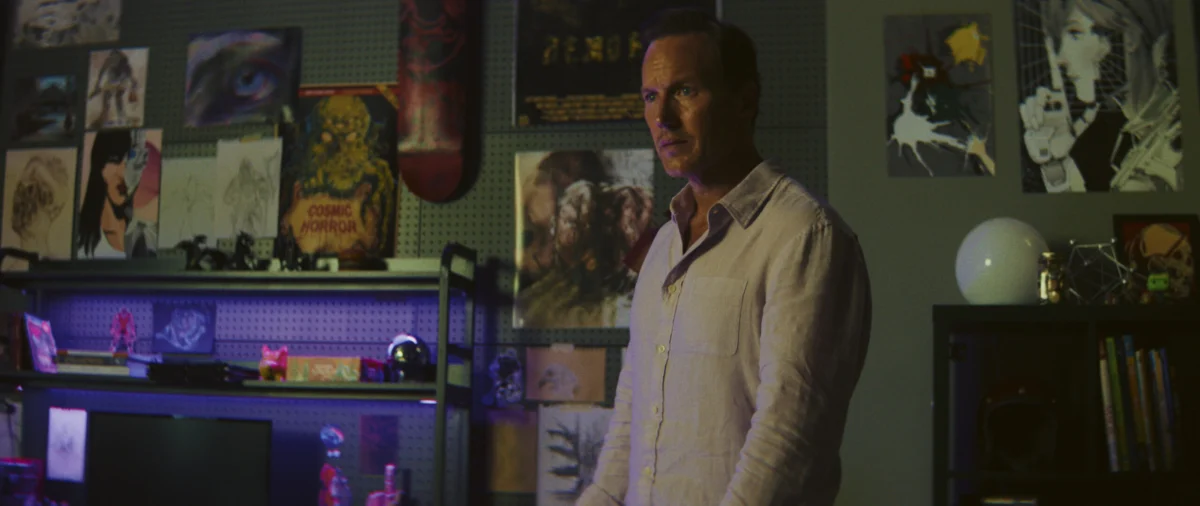
- Character Integration: During the filming phase, McCall worked closely with the cast to populate the set with personal ephemera. By incorporating real-life items—such as Patrick Wilson’s actual marathon medals—into the set dressing, she aimed to create an environment that felt like an organic extension of the actors’ internal states.
- Post-Production/Finishing: Through color grading and careful framing, the team bridged the gap between the actual Savannah footage and the Atlanta-based sets, maintaining the "feverish" look the cinematographers desired.
Supporting Data: The Architecture of Unease
The production design of Cape Fear is not merely about aesthetic beauty; it is about psychological manipulation. McCall noted that her work required tapping into a "darker side" to ensure the Bowden home felt simultaneously welcoming and sinister.
The Bowden Household
The house was designed as a space that had been "remodeled for years," a narrative choice intended to mirror the fractures within the family unit. By placing the children’s artwork alongside professional, cold decor, McCall created a contrast that highlighted the family’s attempt to maintain normalcy while under the shadow of Max Cady’s looming presence. The use of Patrick Wilson’s real-world items served as a "doorway" for the actor, allowing him to ground his performance in a space that felt genuinely lived-in and personally significant.
The Cady Contrast
The series also introduces the home of the antagonist, Max Cady (Javier Bardem). Unlike the structured, albeit tense, environment of the Bowdens, Cady’s father’s home in North Carolina is designed to reflect "uncontrollable insanity." McCall utilized overgrown foliage, abandoned dog kennels, and a distressed porch to evoke a sense of rot and unchecked growth. The contrast between the two locations—the manicured anxiety of the Bowdens versus the wild, untamed decay of the Cady lineage—serves as a visual metaphor for the impending collision between the two families.

Official Perspectives: The Synergy of Vision
The success of the production design, according to McCall, rests largely on the strength of Nick Antosca’s writing. In professional film production, the bridge between a showrunner’s words and a designer’s physical manifestation is often where the most significant creative breakthroughs occur.
"When something is that beautifully written, it really paints a picture for me," McCall remarked. She noted that Antosca’s descriptions of the environments were so vivid that they eliminated much of the guesswork, allowing her to focus on the textures and sensory details that define the show’s "heat."
Furthermore, the design team was not afraid to acknowledge the legacy of the source material. In a poignant homage to the 1991 Scorsese film, McCall recreated the bedroom of Natalie Bowden (Lily Collias) to mirror the iconic teenage room occupied by Juliette Lewis in the original. While the show largely seeks to forge its own path, this specific nod to Scorsese’s Cape Fear serves as a grounding point for fans of the franchise, acknowledging the cinematic history that the new series builds upon.
Implications: The Future of "Location Doubling"
The production of Cape Fear serves as a compelling case study in the modern era of television production. As regional tax incentives and logistical constraints drive more productions away from their "actual" settings, the role of the production designer has evolved from mere set builder to "geographical illusionist."

The series proves that "sense of place" is not necessarily derived from geographic coordinates, but from the deliberate curation of detail. By trucking in moss, meticulously sourcing props that hold personal meaning for the actors, and leaning into the specific, claustrophobic textures of an Italian Renaissance home, the team behind Cape Fear has successfully transplanted the spirit of Savannah to the heart of Atlanta.
This approach has wider implications for the industry. As audiences become increasingly sophisticated in their visual literacy, they demand a level of authenticity that was once thought possible only through location shooting. Cape Fear demonstrates that through rigorous research, artistic collaboration, and a willingness to embrace the "darker side" of design, filmmakers can create a reality that is more evocative, more haunting, and ultimately more "true" than the physical geography itself.
In the final assessment, the heat of Cape Fear is not just a weather condition or a visual filter—it is the result of a deliberate, calculated effort to manufacture a nightmare. The show’s ability to sustain this intensity across its season, even while masking the reality of its production, cements it as a significant achievement in contemporary television design. For viewers, the result is an immersive experience where every wall, every medal, and every hanging strand of moss tells a story of a family caught in a tightening vice, proving that the most terrifying places are often the ones we build ourselves.