

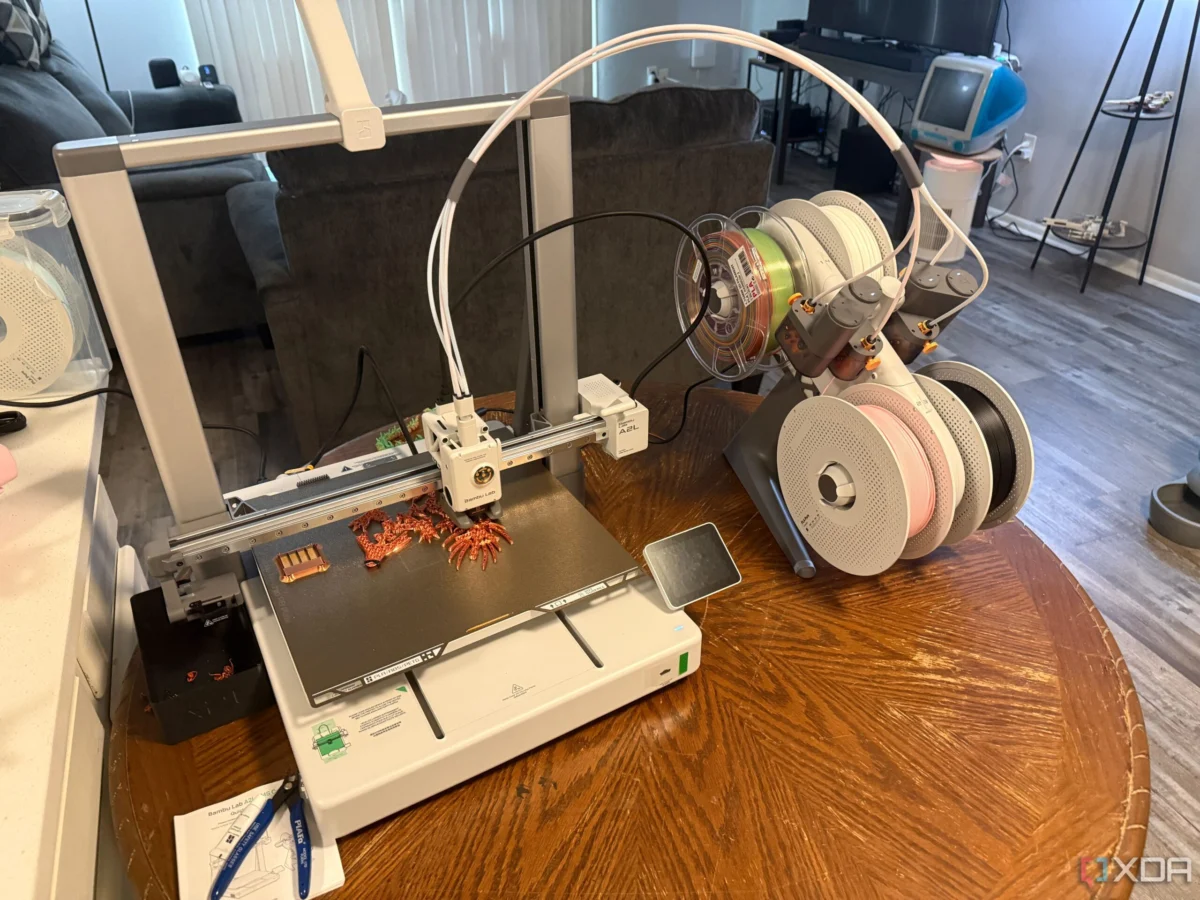
For the uninitiated, 3D printing is often sold as a seamless blend of art and engineering—a "print-and-forget" experience that transforms digital files into physical reality. For those who actually own a 3D printer, the reality is frequently more chaotic. It is a hobby defined by partial spools, mysterious rolls of PETG whose provenance has been lost to time, and the looming anxiety of a 24-hour print failing because you underestimated the amount of filament left on a bobbin.
I, like many others in the additive manufacturing community, reached a breaking point. My workspace was not merely cluttered; it was a graveyard of "maybe useful" materials. I had spools in dry boxes, spools in vacuum-sealed bags, spools on shelves, and, most hauntingly, spools I knew I had purchased but couldn’t physically locate. My filament problem wasn’t just a lack of space—it was a crisis of information. I didn’t know what I had, what condition it was in, or whether a partially used spool was still worth trusting for a critical project.
In an era of hyper-automation, I turned to the cutting edge of AI development to solve this analog headache. By leveraging Claude Code, I aimed to build a bespoke inventory system—not just to catalog my stash, but to restore discipline to a chaotic hobby.
The Chronology of a Data-Driven Overhaul
The path to organizing a filament collection is rarely linear. It begins with the realization that consumer-grade storage solutions—dry boxes and silica gel packs—are only half the battle. Without a data-backed understanding of one’s inventory, storage is merely a way to keep dust off the clutter.
Phase 1: Identifying the Friction
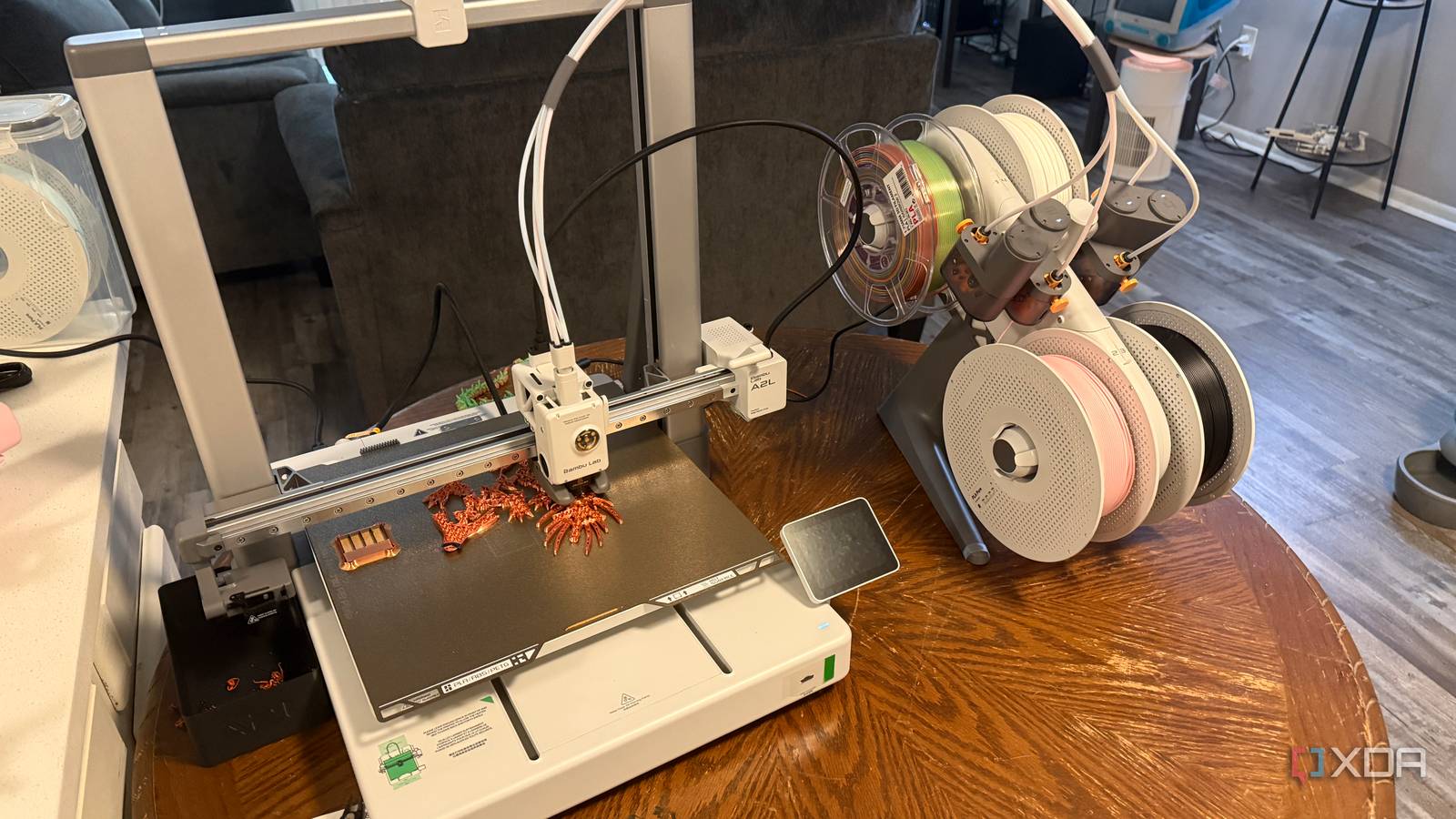
The project began in early 2025. My initial attempt to track inventory involved a standard spreadsheet, but it quickly became an abandoned relic. The barrier to entry was too high; manual data entry for every spool change felt like a chore rather than a utility. I needed a tool that felt like part of the workflow, not an administrative burden.
Phase 2: Building with Claude Code
In mid-2025, I pivoted to using Claude Code, an AI-powered development tool, to craft a custom, local-first inventory solution. The objective was specific: I wanted a lightweight, robust database that could track brand, material, weight, storage location, and—crucially—performance notes.
Unlike off-the-shelf asset trackers that demand complex configurations or cloud subscriptions, the tool I built with Claude focused on "minimal viable friction." By defining the schema around my actual habits—such as recording how much a specific PLA prints at cooler temperatures or which PETG stringing issues required higher retraction settings—the inventory became a functional partner rather than a spreadsheet of numbers.
Phase 3: Implementation and Reality Testing
Once the local inventory was functional, the shift in my printing habits was palpable. I stopped the "guess-and-pray" method of spool selection. By referencing the database before starting a print, I could verify not just the material quantity, but the "trustworthiness" of the spool. This was the moment the project transitioned from a coding exercise to a genuine quality-of-life improvement.

Supporting Data: Why Filament Management Matters
The economic and psychological impact of poor filament management is often overlooked by newcomers to the hobby. Data from community forums and user surveys suggests that filament-related print failure is the second most common cause of wasted material, trailing only hardware calibration errors.
The Cost of Inefficiency
A 2024 analysis of hobbyist 3D printing costs highlighted that the average user loses roughly 15–20% of their filament stock to "environmental degradation" (moisture absorption) and "loss of identification." When you can no longer identify the material or the print settings, that spool effectively becomes waste.
The "Behavioral" Variable
My inventory system introduced a qualitative layer to the quantitative data. By adding fields for "behavioral notes," I was able to log specific quirks. For instance, documenting that a certain brand of silk-PLA is exceptionally brittle or that a specific TPU requires a specific drying protocol creates a "knowledge base" for the user. This data reduces the "trial-and-error" cycle that usually consumes 5–10% of a spool during initial testing.
Storage Optimization
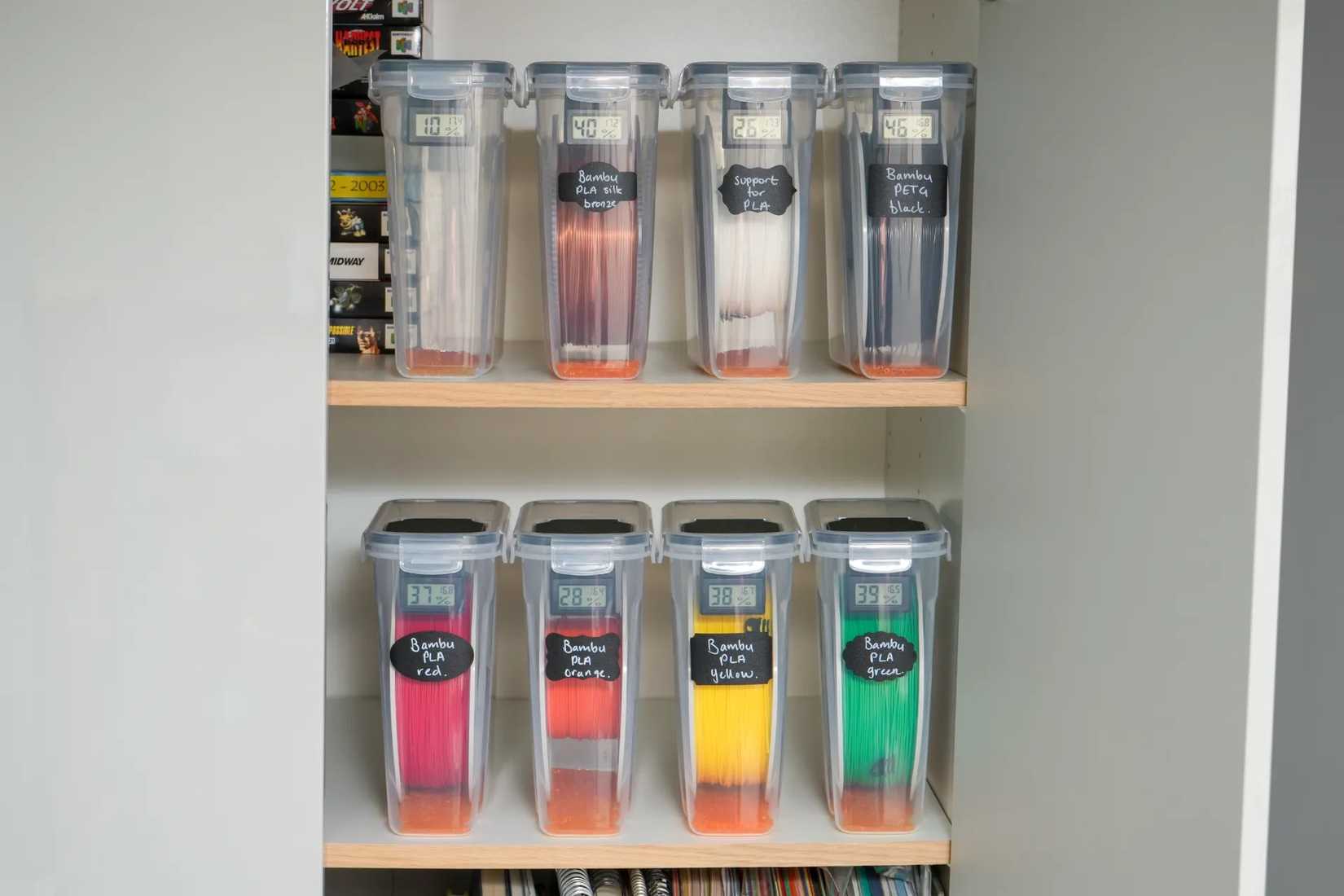
The integration of specialized storage, such as the widely popular food-grade airtight containers (often repurposed for filament), works in tandem with the inventory. A container is useless if you have to open it to see what’s inside. By tagging my containers with simple identifiers linked to the database, I eliminated the "archaeological dig" phase of my print preparation.
Implications: The Intersection of AI and Personal Organization
The use of AI in this project highlights a critical lesson about automation: Tools do not create discipline; they merely expose the lack of it.
Automation vs. Human Input
Claude Code was instrumental in building the architecture of my database, providing the validation rules and the UI to make it user-friendly. However, the system is fundamentally dependent on my willingness to update the weight of a spool after a print. If I fail to log the usage, the "truth" within the database diverges from the reality of the shelf.
This is the "honest" aspect of the project. The system creates a feedback loop. When I notice the database is out of sync, it isn’t a failure of the code—it’s a reflection of my own lapse in routine. This realization transformed the inventory from a "magic cleanup button" into a scaffold for better habits.
The "ADHD-Friendly" Workflow
For those who, like myself, struggle with maintaining long-term records, the goal must be speed. If updating the inventory takes more than 15 seconds, the system will eventually be abandoned. By focusing on rapid data entry and clear, actionable warnings—such as alerts to dry a spool that has been sitting for over 30 days—I moved the focus from "data collection" to "decision support."
Conclusion: The Smarter Shelf
The journey of organizing my filament collection has taught me that the smartest tools in the world cannot compensate for sloppy habits, but they can make the consequences of those habits impossible to ignore. My filament inventory is not a panacea for 3D printing failure, but it has drastically reduced the friction of the pre-print process.
A smarter inventory is useful precisely because it stays honest. It forces the user to confront the reality of their inventory, preventing the accumulation of "mystery plastic" and ensuring that the materials being fed into the printer are appropriate for the task at hand. While some may view this level of organization as overkill, the reduction in failed prints and the elimination of wasted, forgotten materials make the effort—and the AI-assisted development—well worth it.
For anyone looking to take control of their workshop, the advice remains the same: stop guessing, start tracking, and build a system that respects your time enough to keep the information simple, accessible, and, most importantly, accurate. The machine is only as good as the input, and in the world of 3D printing, the input starts with the filament.











