For anyone who has ever spent a sweltering afternoon in a city like Houston, the swimming pool is more than just a backyard amenity—it is a vital survival mechanism. However, the dream of backyard leisure is often shadowed by the grueling reality of maintenance. As the old adage among pool owners goes: "Swimming pools are fun; cleaning them is not."
After four years of professional testing and hundreds of hours spent observing the evolution of aquatic robotics, it is clear that we are in the midst of a technological revolution. The days of wrestling with heavy, suction-side hoses or scrubbing algae by hand under a triple-digit sun are rapidly coming to an end. The modern pool owner is increasingly turning to autonomous, battery-powered robots to reclaim their summer.
The Evolution of Pool Cleaning: From Hoses to AI
To understand the current market, one must look at the chronology of pool technology. In the 1980s, the industry was dominated by "pressure-side" cleaners. These mechanical beasts were tethered to the pool’s main pump system via long, cumbersome hoses. They relied on water pressure rather than electricity to propel themselves, often creating a tangled mess of tubing that made the pool unusable while the cleaner was active.
By the 2000s, corded electronic cleaners began to appear, offering better suction and independent filtration. While effective, they still required an unsightly power cord snaking across the deck to a wall outlet. Today, the industry has pivoted toward the gold standard: high-capacity, cordless, battery-powered robotic cleaners. These units offer true freedom—no hoses, no cables, and, most importantly, no obstructions when you want to take a midnight swim.
The Gold Standard: The Beatbot AquaSense 2 Ultra
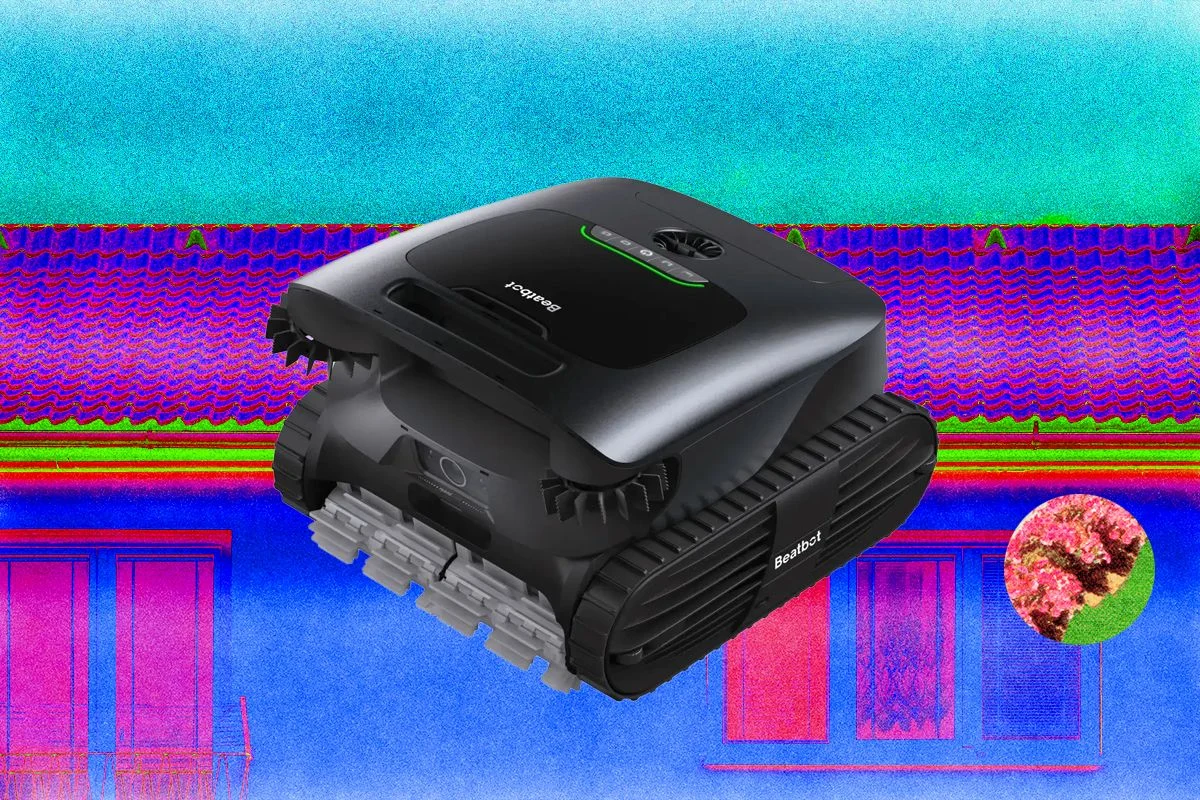
After rigorous testing, the Beatbot AquaSense 2 Ultra stands out as the premier all-around performer. It is the device I find myself returning to repeatedly.

The 2 Ultra features a sophisticated suite of capabilities: it scrubs floors, walls, and the waterline with near-perfect precision. Its AI-powered debris detection is a game-changer, allowing it to identify and focus on areas with higher concentrations of grime. With a massive battery providing six hours of underwater runtime and a intuitive mobile app, it handles the bulk of the heavy lifting.
However, power comes at a cost—literally and physically. At approximately $3,000, it is a significant investment. Furthermore, the 29-pound chassis is admittedly heavy. Prospective buyers should be prepared for a bit of a workout when pulling the device out of the water. For those seeking the same technological pedigree at a lower price point, the Beatbot Sora 70 ($1,499) offers much of the same coverage and intelligence without the top-tier price tag.
The "Set It and Forget It" Powerhouse: iGarden M1-AI 90
One of the most persistent complaints from pool owners is the tedious nature of constant retrieval. The iGarden M1-AI 90 addresses this with a massive 12,500 mAh battery.
This robot allows for a "lazy" maintenance cycle: you can effectively leave it in the pool for a week or more on a repeating schedule. Its onboard camera system uses AI to actively scan for debris, utilizing an S-shaped pathing algorithm to ensure no corner of the pool is left unscrubbed. With its striking, racecar-inspired aesthetic, the M1-AI 90 is a rare example of a utility device that actually enhances the visual appeal of your pool deck.
High-Performance Budget Solutions: Dreame Z1 Pro
For many, the $3,000 price point for a pool robot is prohibitive. Enter the Dreame Z1 Pro, which has seen its price drop to the $499 range in recent months.

Despite being an entry-level contender, the Z1 Pro is surprisingly intelligent. It maps your pool graphically within its app, allowing you to track its progress. While it lacks the high-speed, aggressive scrubbing power of luxury units, it is perfectly suited for casual, routine cleanups in small-to-medium-sized pools. It features magnetic charging—a thoughtful design choice that prevents water from ever touching electrical contacts—and includes a remote control to call the robot to the surface when it is time for a filter cleaning.
Why Specialized Skimmers Matter
While most robots focus on the pool floor, debris that floats on the surface can be just as problematic, often leading to unsightly "scum lines" and clogged filters. Robotic skimmers like the Beatbot iSkim Ultra ($699) fill this gap.
Most surface skimmers on the market are "dumb" devices that wander aimlessly. The iSkim Ultra is the exception; its front-mounted sensors detect pool walls, allowing it to slow down and pivot rather than slamming into tile. While it has a slight design quirk—the debris basket release button can occasionally be pressed if the unit clips a corner of an L-shaped pool—it remains the most effective skimmer tested to date.
Supporting Data and Comparative Analysis
| Model | Battery Capacity | Primary Strength | Price |
|---|---|---|---|
| Beatbot AquaSense 2 Ultra | High (6hr) | Comprehensive Cleaning | ~$3,000 |
| iGarden M1-AI 90 | Ultra-High (9hr) | Longevity / AI Mapping | ~$1,399 |
| Beatbot AquaSense 2 | Mid (4hr) | Simplicity / Value | ~$799 |
| Dreame Z1 Pro | Standard | Budget Value | ~$499 |
| Beatbot iSkim Ultra | Solar/Batt | Surface Cleaning | ~$699 |
Implications for the Homeowner
The transition to robotic pool cleaners has profound implications for the domestic landscape. First, it fundamentally changes the relationship between the owner and the pool. Instead of viewing the pool as a chore to be managed, it becomes a service to be enjoyed.
Second, the cost-benefit analysis is shifting. While a $2,000 or $3,000 robot seems expensive, it represents the cost of roughly one to two years of professional pool maintenance services. For the average homeowner, these units can pay for themselves in reduced labor costs within 24 months.

However, safety remains a topic of industry discussion. Critics often point to the lithium-ion batteries found in these devices, noting that if handled improperly, they present the same fire risks as any other high-capacity battery, such as those in laptops or electric vehicles. While there have been isolated reports of malfunctions, the industry is moving toward standardized safety protocols. It is vital to purchase from reputable brands that utilize high-quality cells and robust internal management systems.
Frequently Asked Questions (FAQ)
Who actually needs a robotic pool cleaner?
If your pool is more than a tiny wading pool, it needs constant filtration. Debris left to rot in the water promotes algae and bacteria, which in turn shortens the lifespan of your pump and filtration equipment. A robot allows you to maintain water clarity and surface hygiene without the need for daily manual intervention.
Are battery-powered robots truly better than corded ones?
In the vast majority of cases, yes. While corded robots offer the advantage of "infinite" runtime, the hassle of managing a 70-foot cable across a pool deck is a significant deterrent. Battery technology has advanced to the point where even the most demanding pools can be handled by a single charge cycle, making the convenience of a cordless unit far superior for the average user.
How should I test a new robot?
When testing, I rely on a controlled experiment involving 100 synthetic silk leaves. By scattering these across the floor of my 468-square-foot L-shaped pool, I can calculate a precise capture percentage. However, the most important metric is how the robot handles the "real world"—fine silt, dead bugs, and organic matter that settles over a week of normal use.
What is the most important feature to look for?
Ease of retrieval. Many older robots require you to dive in or use a long, awkward pole to snag them. Modern units that can park themselves at the waterline when the battery hits a certain threshold are significantly more user-friendly. If you value your time, prioritize a model that makes the end-of-run cleanup as effortless as possible.

Conclusion
The era of the "pool guy" isn’t dead, but it is certainly evolving. While professional services will always be needed for chemical balancing and complex pump repairs, the day-to-day drudgery of vacuuming and scrubbing is being automated away. Whether you opt for a premium, AI-driven model like the Beatbot AquaSense 2 Ultra or a budget-conscious workhorse like the Dreame Z1 Pro, the technology is now at a point where a pristine pool is no longer a luxury of time, but a feature of modern home automation.