

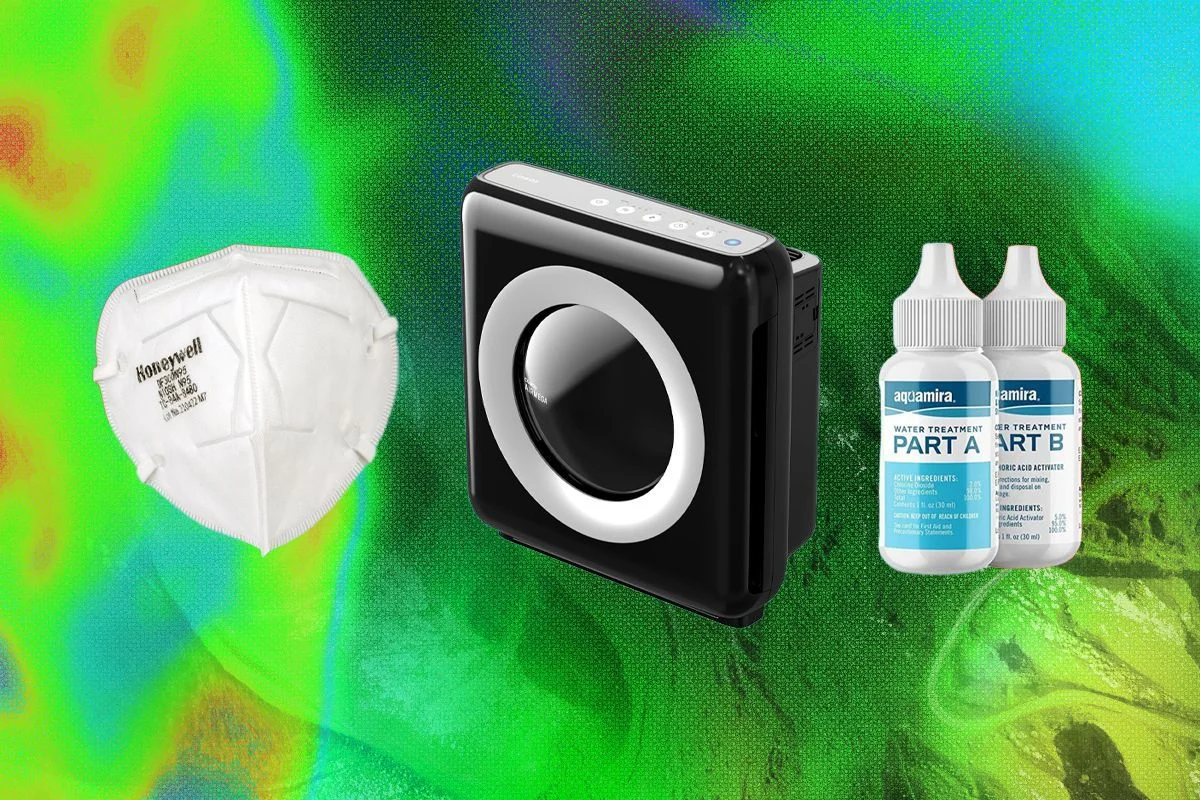
In an era of increasing environmental volatility and unpredictable political landscapes, the traditional notion of "being prepared" has shifted from a fringe hobby to a baseline requirement for modern living. With the 2026 wildfire season already demonstrating record-breaking intensity—blistering the Western US and blanketing the Midwest and Northeast in hazardous smoke—the reality is clear: disasters rarely adhere to a schedule. When local supply chains buckle or municipal services falter, the burden of resilience falls squarely on the individual.
The Two Scenarios: Evacuation vs. Sheltering
According to Jonathan Sury, a senior staff associate at Columbia University’s National Center for Disaster Preparedness, effective planning begins by distinguishing between two primary modes of crisis: the "Bug-Out" and the "Shelter-in-Place."
"Not every disaster is the same," Sury explains. "You must prepare for the scenario where you have mere minutes to load a vehicle and flee, and the separate, equally critical scenario where you are trapped in your home for a week or more without access to the power grid or municipal water."

The "Bug-Out" scenario, often triggered by fast-moving wildfires, requires extreme mobility. The "Shelter-in-Place" scenario, necessitated by severe blizzards, earthquakes, or systemic grid failures, requires depth of inventory. Preparing for both requires a mental shift: assuming that for at least seven days, you are entirely on your own.
Chronology of Crisis: Why Preparation Must Be Proactive
The timeline of a disaster is rarely linear. It typically follows a predictable decay of services:
- T-Minus 48 Hours: The threat is identified. Essential resources like water, batteries, and non-perishable foods vanish from local supermarket shelves.
- The Event (T-0): Infrastructure begins to fail. Power grids may experience rolling blackouts; water pressure drops; cellular networks become congested or non-functional.
- The Immediate Aftermath: Supply chains are severed. Access to medication, fuel, and clean water becomes restricted to what you have already stockpiled.
- The Long Tail: Recovery begins. This is where personal resilience—the ability to maintain health and mental clarity—determines the long-term impact of the disaster on your family.
The Essential Kit: What You Actually Need
Disaster kits are not "apocalypse" gear; they are safety nets. FEMA maintains a rigorous checklist, but experts suggest building a kit that is modular—capable of being moved in a single go-bag or distributed across a household.

Water and Purification
Water is the single most critical element. The rule of thumb is one gallon per person, per day. However, since storing a week’s worth of water for a family of four is physically prohibitive, you must prioritize purification.
- Treatment Drops: Products like Aquamira chlorine dioxide drops offer a lightweight, highly effective way to treat large quantities of water.
- Personal Filters: A filtered water bottle, such as the Clearly Filtered stainless-steel model, provides a durable solution that removes microplastics and heavy metals.
- The "Bathtub Hack": National Weather Service preparedness lead Charlie Woodrum notes that filling a bathtub before an approaching storm can provide a massive reservoir for sanitation—though he warns: "Never consume standing water without rigorous purification, such as boiling or chemical treatment."
Power and Communication
When the grid goes dark, portable power becomes the lifeblood of communication. Lithium-ion power stations, such as the Jackery Explorer 2000 Plus, offer enough capacity to run essential home appliances or keep communication devices charged for days. However, users must be wary of fuel-based generators.
"Gas-powered generators are not toys," Woodrum warns. "They produce carbon monoxide, which is odorless and lethal. Never operate them within 20 feet of an enclosed space."
For vehicle emergencies, the Wolfbox 4000A jump starter serves as a dual-purpose tool—a high-capacity battery pack and a reliable jump-starter that can revive a dead battery even under extreme conditions.

Air Quality: The Silent Threat
The 2026 wildfire season has highlighted that wildfire smoke is a nationwide health crisis, not a regional one. Prolonged exposure to PM 2.5 particulates is linked to cardiovascular distress and respiratory failure.
- Clean Air Rooms: Experts like Heidi Huber-Stearns of the University of Oregon recommend designating one "clean room" in your home. By sealing windows and using a high-quality HEPA air purifier (like the Coway Airmega Mighty2), you can significantly reduce indoor pollutants.
- The DIY Alternative: For those on a budget, a box-fan filter—created by taping a MERV 13-rated filter to a standard Lasko 20-inch box fan—can be surprisingly effective. However, these filters sell out during emergencies, so stockpile them during the off-season.
Official Responses and Federal Resources
The role of federal agencies has changed, with many experts noting a reduction in the scope of rapid federal intervention. Consequently, reliance on local information is paramount.
- Watch Duty: This independent wildfire awareness app has become a critical tool, often providing evacuation warnings faster than municipal channels.
- Digital Backups: Sury emphasizes the "intangibles." Ensure you have high-value documents—insurance, medical records, and ID—stored on a ruggedized, waterproof SSD like the OWC Envoy Pro Elektron.
Psychological Resilience: The Human Element
Perhaps the most overlooked aspect of disaster preparedness is the emotional toll. Amanda Stasiewicz, a wildfire researcher at the University of Oregon, notes that survivors often express the deepest regret over losing items of sentimental value.
"We focus on survival, but we rarely discuss the process of rebuilding," Stasiewicz says. "The recipe books, the photo albums, the stuffed animal for the child—these are the things that provide a sense of continuity after a catastrophe."

Building a Defensible Space
For homeowners, prevention is the ultimate form of preparedness. Creating a defensible zone—clearing vegetation within five feet of your home—can be the difference between a house standing or burning. The McLeod fire tool, a classic wildland firefighting instrument, is highly effective for clearing grass, weeds, and debris around a property. It is a humble tool, but one that professional firefighters have relied upon for decades to create firebreaks.
Implications for the Future
The goal of these preparations is not to live in a state of constant fear, but to foster a state of readiness that reduces anxiety. When you have a plan—a meeting spot for your family, a stash of water, and a way to monitor the air quality—you regain agency over a situation that might otherwise feel chaotic.
Ultimately, the best form of emergency preparedness is community. As WIRED has previously reported, the best emergency gear is other people. Knowing your neighbors, sharing resources, and establishing a neighborhood communication plan are more effective than any single product you can buy online.

As we move deeper into 2026, the intersection of climate change and infrastructure fragility is likely to test our resolve. By taking these small, deliberate steps now, you are not just preparing for a disaster; you are investing in the safety and sanity of those you hold most dear.
Stay informed, stay stocked, and stay connected. For more in-depth guides on surviving extreme weather, visit our dedicated Disaster Preparedness hub.











