

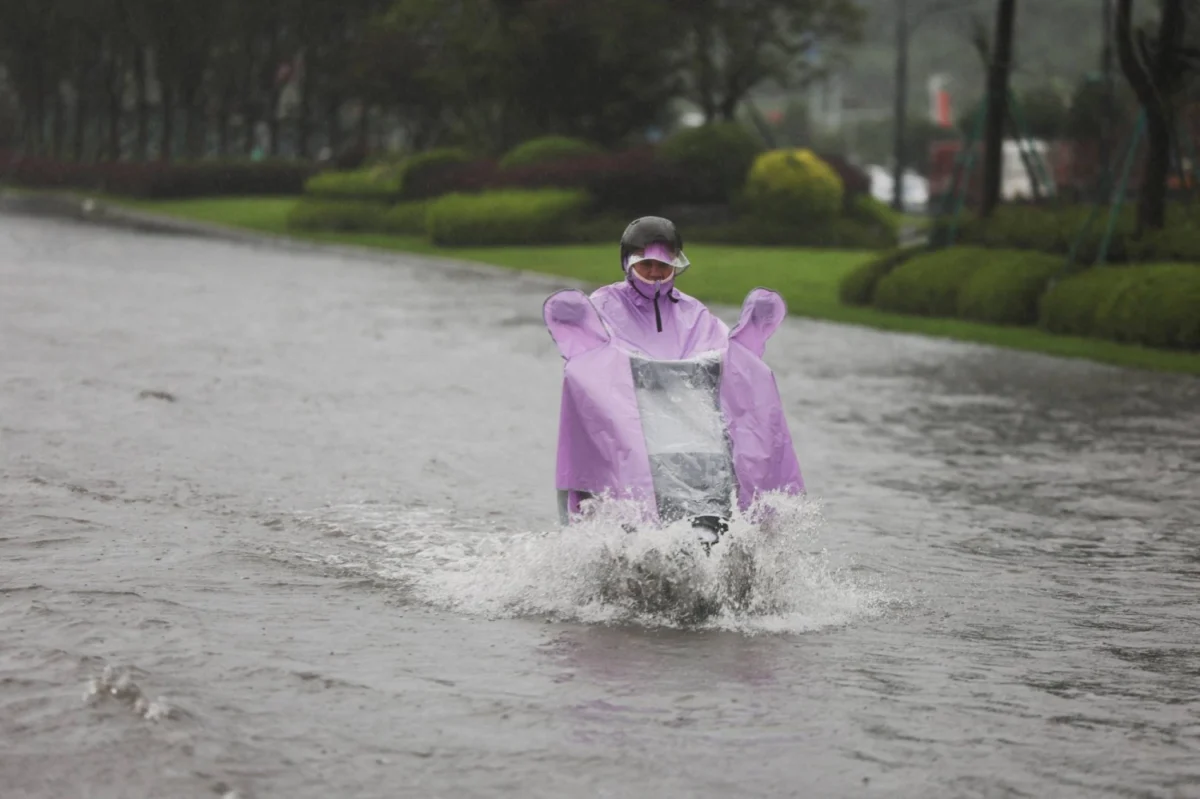
WENZHOU, China — The eastern coastline of China is currently grappling with the aftermath of Typhoon Bavi, a meteorological phenomenon that officials have described as the most formidable storm to strike the mainland thus far this year. As the massive, France-sized weather system pushed inland over the weekend, it transformed bustling urban centers into scenes of inundated streets and structural chaos, putting the nation’s infrastructure and disaster-preparedness protocols to a grueling test.
While the storm began to lose its cyclonic intensity by Sunday morning, transitioning into a tropical storm, the humanitarian and economic toll continues to mount. With nearly two million residents evacuated from high-risk zones, authorities are now pivoting from emergency rescue operations to long-term damage assessment and the mitigation of secondary risks, including flash flooding and infrastructure failure.
The Chronology of a Super-Storm
The trajectory of Typhoon Bavi was characterized by rapid intensification as it moved across the East China Sea. Meteorological services monitored the storm closely as it gathered moisture and kinetic energy, creating a sprawling cloud shield that encompassed a vast portion of China’s eastern seaboard.
Saturday: The Initial Onslaught
The primary brunt of the storm hit late Saturday night. At approximately 11:20 p.m. local time, Bavi made its first major landfall in the coastal city of Yuhuan. The impact was immediate, with wind sensors recording gusts that threatened to uproot trees and compromise power lines.
The Midnight Pivot
As the storm maintained its momentum, it pushed further into the mainland, making a second, catastrophic landfall in Yueqing—a district under the administration of the industrial hub of Wenzhou—at approximately midnight. The timing proved particularly hazardous, as the darkness obscured the severity of the rising floodwaters, hampering the efforts of early responders. By Sunday morning, images emerging from the region showed residents attempting to navigate submerged thoroughfares on electric scooters, their path illuminated by the murky, stagnant water brought on by the deluge.
Meteorological Data and the Scale of the Threat
Meteorologists have noted that Bavi’s size—roughly equivalent to the surface area of France—is an anomaly for this time of year. This sheer scale meant that even as the storm’s peak wind speeds decreased, the volume of rainfall remained dangerously high.
A Geographic Overview
The storm’s impact was concentrated in Zhejiang province, an area that serves as a vital artery for the Chinese economy. Zhejiang is not merely a residential hub; it is a technological and manufacturing powerhouse, housing massive logistics networks and production facilities that serve both domestic and international markets. The storm’s path through this region has effectively paralyzed supply chains, halted maritime logistics, and disrupted the operations of thousands of small and medium-sized enterprises.
Projections for the Coming Days
Despite the de-escalation of wind speeds, the threat is far from over. Weather forecasters have issued urgent warnings that the system’s lingering moisture is expected to cause prolonged and widespread rainfall across both eastern and northern China. This suggests that the regions currently struggling with immediate flood damage may soon face secondary crises, including landslides in mountainous areas and overwhelmed drainage systems in densely populated urban centers.
Official Responses and Emergency Mobilization
The Chinese government’s response to Bavi has been massive in scale, reflecting the state’s prioritized approach to disaster risk reduction. The evacuation of nearly two million people stands as a testament to the urgency with which officials treated the incoming system.
Evacuation and Resource Allocation
Emergency management departments in Zhejiang and neighboring provinces initiated "Level 1" response protocols days before the storm’s landfall. These measures included:

- The Relocation of Vulnerable Populations: Fishing fleets were ordered back to port, and residents in low-lying coastal areas were moved to designated emergency shelters, including schools and government facilities.
- Grid Stability: Power companies pre-positioned crews to restore electricity as soon as it was safe, though significant outages were reported in the immediate wake of the storm’s landfall in Wenzhou.
- Public Safety Campaigns: Using a combination of SMS alerts, social media, and community loudspeakers, local governments ensured that citizens were aware of the danger, which likely mitigated the number of casualties.
The Role of the PLA
As is standard in extreme weather events in China, the People’s Liberation Army (PLA) and the People’s Armed Police were mobilized to assist in rescue operations. These units have been instrumental in clearing debris, reinforcing dikes, and delivering essential supplies to isolated communities that were cut off by road closures.
Economic and Societal Implications
The passage of Typhoon Bavi has raised significant questions regarding the resilience of China’s coastal development. As the world’s second-largest economy continues to expand its footprint in the East China Sea, the vulnerability of its infrastructure to extreme weather events becomes an increasingly pressing issue.
Supply Chain Fragility
Wenzhou and the surrounding Zhejiang province are critical nodes in the global supply chain. The sudden shutdown of these areas serves as a reminder of the fragility of "just-in-time" manufacturing processes. Businesses that rely on components sourced from the region are already bracing for delays in production, which could have a cascading effect on global market prices for electronics and consumer goods.
The Challenge of Rapid Urbanization
The rapid expansion of China’s cities has often outpaced the development of robust drainage and storm-water management systems. The images of flooded streets in Wenzhou highlight the limitations of urban planning in the face of climate-induced extreme weather. As storms like Bavi become more frequent and more intense, urban planners will likely face mounting pressure to rethink city design—moving toward "sponge cities" that can better absorb and redirect excess water.
Quality Journalism in the Age of Uncertainty
In an era defined by a dual crisis of misinformation and information overload, the task of reporting on natural disasters has become increasingly complex. The ability to distinguish between verified data and speculative rumors is essential for maintaining public trust and ensuring that citizens have the information they need to stay safe.
The coverage of Typhoon Bavi by professional news organizations highlights the necessity of on-the-ground reporting. While satellite imagery and meteorological models provide a "bird’s-eye view" of the storm’s path, they cannot replace the nuance of observing the human cost—the individuals navigating flooded streets, the families displaced from their homes, and the local officials working around the clock to manage the crisis.
The Path Forward
As the cleanup efforts begin and the waters slowly recede, the focus will shift to the long-term recovery of the affected provinces. For the government, this will involve assessing the efficacy of its early-warning systems and determining where additional investment in infrastructure is required. For the people of Wenzhou and the broader Zhejiang region, the recovery will be a testament to their resilience in the face of an increasingly volatile climate.
The story of Typhoon Bavi is far from over. As the remnants of the storm continue to track across the continent, the nation remains on high alert. The lessons learned from this event will undoubtedly shape the future of disaster response strategies not only in China but across East Asia, where the increasing frequency of extreme weather events is forcing a fundamental rethink of how societies live, work, and thrive in the shadow of the elements.
For ongoing updates on the recovery efforts in Wenzhou and the impact of the storm in Northern China, subscribe to our daily news briefing. Your support enables our team to continue providing rigorous, fact-based journalism during times of crisis.











