

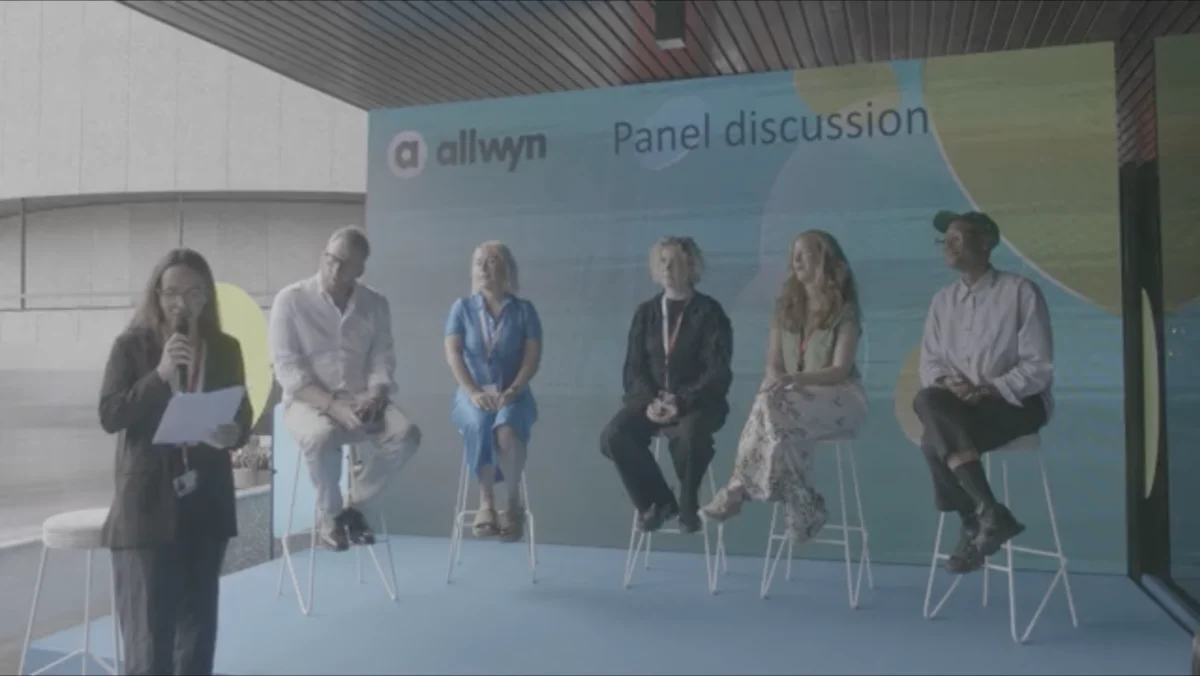
The 60th anniversary of the Karlovy Vary International Film Festival (KVIFF) served as more than just a celebration of cinematic history; it acted as a launchpad for the future of the industry. Amid the historic, bustling backdrop of the Hotel Thermal, Variety hosted a high-level panel in collaboration with international entertainment giant Allwyn to dissect the enduring success of the European Film Promotion’s (EFP) "Future Frames" program.
For over a decade, Future Frames has functioned as a vital springboard for emerging European directors, providing them with the visibility and networking infrastructure necessary to transition from indie festival darlings to global industry fixtures. By bridging the gap between local European talent and the high-stakes environment of North American filmmaking, the program is effectively reshaping how the next generation of storytellers enters the global market.
The Evolution of a Strategic Partnership
The partnership between Allwyn and the EFP, which solidified in 2023, represents a modern shift in how corporate entities engage with the arts. Rather than traditional, passive sponsorship, this collaboration focuses on tangible professional development.
The centerpiece of this alliance is a month-long scholarship that sends one hand-picked director to Los Angeles each year. This is not a mere vacation; it is a rigorous, immersive residency. Participants engage in a curated program of mentoring, shadowing, and industry training, designed to demystify the inner workings of the American studio system.
By providing this bridge, Allwyn and the EFP are addressing a perennial issue in European cinema: the difficulty of scaling local success into international recognition. As Irina Ignatiew-Lemke, the recently appointed managing director of EFP, noted, the goal is not merely to promote film, but to "foster the diverse voices of Europe" and ensure those voices can be heard in the competitive, often opaque, North American market.
Defining Success: A Multi-Generational Perspective
Defining "success" in a creative industry is notoriously difficult, yet the panelists at the 60th Karlovy Vary festival converged on a singular theme: long-term impact over short-term visibility.
Kryštof Mucha, Executive Director of the Karlovy Vary International Film Festival, pointed to the energy of the festival itself as a primary metric. "Success is what you can see right now behind us," he said, gesturing to the throngs of cinephiles filling the hotel corridors and screening rooms, despite the rainy weather. For Mucha, success is found in the creation of a "talent-led ecosystem"—a space where young filmmakers feel secure enough to take creative risks, knowing that the festival, its distribution arms, and its network of international contacts will support their trajectory.
Tatiana Jouanneau, Group Chief Brand Officer at Allwyn, emphasized that for a corporate partner, true success lies in legacy. "Success is not about one-time visibility," she explained. "It’s about creating long-lasting impact. We want to contribute to helping today’s emerging directors become the festival winners of the future."
The Currency of Access: Beyond Financial Support
A recurring theme throughout the discussion was the realization that while capital is the lifeblood of film production, access is the gatekeeper of career advancement.
"What really makes a difference is access," Jouanneau asserted. "Early access to the right mentors, to thought leadership, and to the connections in the industry that create international exposure is even more important than just plain financial support."
This sentiment was echoed by Ignatiew-Lemke, who argued that the era of "logo-slapping" corporate sponsorships is over. In a period of significant transformation for the film industry, the EFP prioritizes partnerships that provide cultural amplification. "Having a partner like Allwyn to help us amplify that message in the wider cultural context is super important for us," she noted.
The infrastructure provided by the festival, according to Mucha, is designed to ensure that when a filmmaker is ready, they are placed in front of the right people. "Karlovy Vary is a small festival, but one of our goals is to give them the chance to be with the right people," Mucha said. "These guys will be the winners of Cannes and Venice, and in their acceptance speech, they will always mention Karlovy Vary."
The Reality of the "Room": Insights from the Agency World
If the program provides the door, it is up to the filmmaker to walk through it with confidence. Ugo Obioha, a talent agent at United Talent Agency (UTA), provided a sobering, professional assessment of what is required to survive in the high-pressure environment of Los Angeles.
"I work in one of the three biggest agencies in the world," Obioha said. "If I am calling a producer, a distributor, or an executive, they will take my call. And if I am pitching an exciting new emerging talent, they are equally excited to meet this person."
However, Obioha offered a vital caveat: "Access isn’t necessarily entering the room, but what impression you are making in that room."
According to Obioha, the "soft skills" of filmmaking—the ability to articulate a vision, to sell oneself, and to maintain a commanding presence—are just as critical as technical proficiency. "I am not going to be in that meeting with you," she told the audience of filmmakers. "You have to be able to articulate not only who you are, but whatever you are pitching. If you are not able to make a strong impression, then this entire thing is almost useless."
Firsthand Experience: The Scholar’s Journey
Amalie Marie Nelson, the 2023 recipient of the Future Frames scholarship, provided a grounded perspective on the transition from European film student to international professional. For Nelson, the scholarship was a series of "small wins" that eventually coalesced into a meaningful career advantage.
"I learned so many things about how the industry works in L.A.," Nelson shared. "I learned about the possibilities for collaborating with Europe. I am still writing in Danish and want to make my first feature in Denmark, but the most important thing has been that there are open doors now. I can always contact the people I met over there."
Nelson’s experience highlights the core goal of the Future Frames initiative: to give directors the agency to maintain their cultural identity while utilizing the global connections necessary to fund and distribute their work.
Navigating the Future: A Manifesto for Emerging Talent
As the panel concluded, the speakers were asked to distill the requirements for navigating the modern film industry into a single keyword. The result was a roadmap for the next generation:
- Kryštof Mucha (Bravery): The courage to tell stories that deviate from the mainstream.
- Tatiana Jouanneau (Curiosity): The willingness to learn, adapt, and look beyond one’s immediate borders.
- Amalie Marie Nelson (Persistence/Pushiness): The refusal to be a passive observer of one’s own career.
- Irina Ignatiew-Lemke (Uniqueness): The importance of protecting one’s individual, authentic voice in a market that favors homogenization.
- Ugo Obioha (Fearlessness): The necessity of "not asking for permission."
Obioha closed the session with a powerful anecdote about filmmaker Curry Barker, whose micro-budget project Obsession managed to mimic the scope and polish of a studio production. "An element of fearlessness means you’re not asking people for permission," Obioha said. "You’re going for what you want. Now, all the studios want to do is make a movie with him."
Conclusion: The Road Ahead
The collaboration between Allwyn, the EFP, and the Karlovy Vary International Film Festival proves that the future of cinema depends on a delicate balance: the protection of local, authentic voices and the strategic provision of global, high-level access. As the film industry continues to grapple with technological and structural shifts, programs like Future Frames are ensuring that the next generation of directors is not just entering the industry—they are equipped to lead it.










