Nana Muazin
In an era defined by hyper-connectivity, the persistent glow of the smartphone screen has become the modern world’s default state. Yet, one of the most influential filmmakers of the 21st century remains a conspicuous holdout. Christopher Nolan, the visionary director behind Oppenheimer, Inception, and the highly anticipated The Odyssey, has maintained a long-standing refusal to carry a smartphone.
While the tech-literate public might view this as a Luddite’s protest, Nolan is quick to clarify that his stance is not a rejection of technology itself. Instead, it is a calculated defense of the most vital asset in his creative arsenal: the ability to exist in a state of undistracted thought.
Main Facts: The Choice of Disconnection
Nolan’s decision to eschew the smartphone is rooted in a pragmatic philosophy regarding human attention. In a recent interview with The Telegraph ahead of the premiere of The Odyssey, the director explained that he does not avoid mobile devices out of fear of the hardware, but rather out of a self-aware acknowledgment of his own psychology.
"I’m not anti-technology," Nolan noted. "I am, however, anti-interruption."
For Nolan, the moments of downtime—waiting for a train, sitting in an airport lounge, or arriving early for a dinner reservation—are not gaps to be filled with news feeds or social media notifications. They are, in his view, the "laboratories of the mind." By refusing to carry a device that offers the world in his pocket, he forces himself to remain present in his own thoughts, a practice he credits for the development of his most complex narrative structures.
Chronology of a Digital Holdout
The timeline of Nolan’s digital minimalism spans his entire meteoric rise in Hollywood.
- The Early 2000s: As Nolan ascended to prominence with Memento and The Dark Knight trilogy, the mobile revolution began. While his peers and collaborators integrated BlackBerrys and, eventually, iPhones into their workflows, Nolan maintained a reliance on traditional methods of communication.
- The Post-Pandemic Shift: The return of the QR code as a standard for menus, tickets, and identity verification in 2020–2021 presented the first major logistical challenge to Nolan’s lifestyle. He has openly admitted that this period marked the most significant test of his resolve, noting that modern society has been engineered to make life without a smartphone profoundly inconvenient.
- The 2026 Press Cycle: Ahead of the launch of The Odyssey, Nolan’s comments on his digital abstinence have garnered renewed attention. As AI-generated content becomes a central theme of industry discourse, Nolan’s deliberate "offline" status serves as a counter-narrative to the prevailing trend of total digital integration.
Supporting Data: The Cost of Constant Connection
Nolan’s anecdotal experience aligns with a growing body of research regarding the "attention economy." The premise is simple: our brains were not evolved to process the constant, low-stakes stimulation provided by smartphones.
The Science of Cognitive Residue
Studies from the University of California, Irvine, and the University of Texas at Austin have repeatedly shown that the mere presence of a smartphone reduces available cognitive capacity. This phenomenon, often called "brain drain," suggests that when a phone is nearby, even if it is turned off or face-down, a portion of the user’s cognitive resources are occupied by the effort to ignore the device.
The "Idle Time" Hypothesis
Nolan’s insistence on protecting his "idle time" is supported by neuroscientific research on the "Default Mode Network" (DMN). The DMN is the brain system that activates when we are not focused on an external task. It is during these periods of "mind-wandering" that the brain consolidates memories, plans for the future, and—crucially—solves complex creative problems. By filling every moment of transition with digital consumption, the modern individual is effectively shutting down the very neural architecture required for original thought.
Official Responses and Industry Perspectives
Nolan’s rejection of the smartphone has sparked a wider conversation within the film industry regarding the intersection of technology and the theatrical experience.
Technology as a Tool, Not a Master
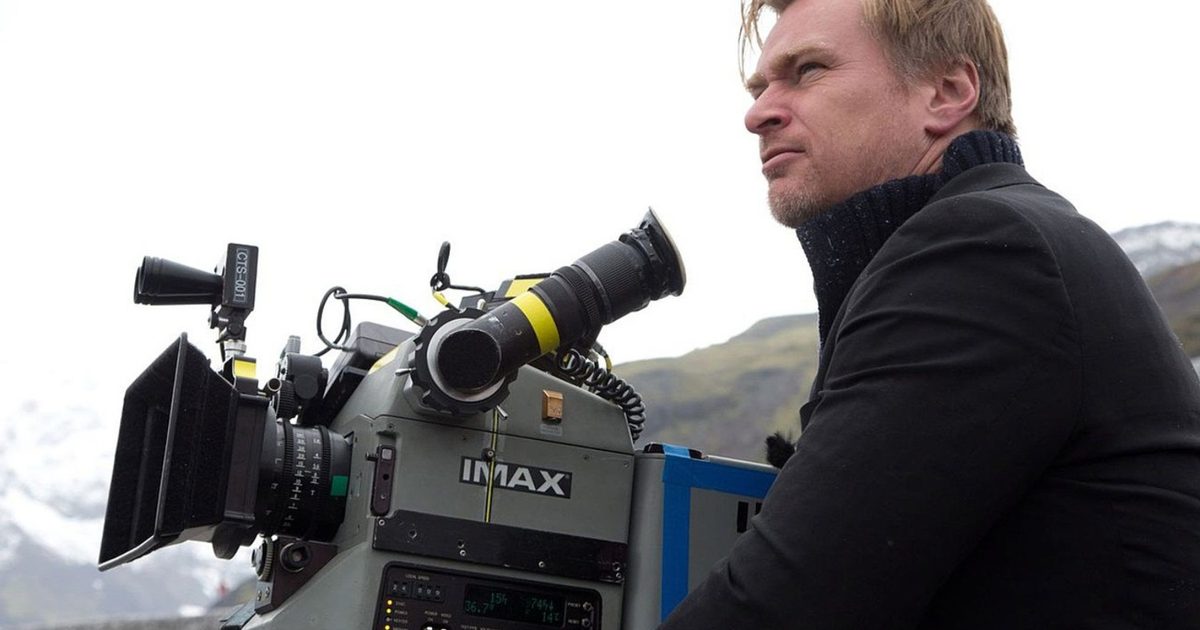
Nolan’s filmography is a testament to his love for high-end technology. The Odyssey employs state-of-the-art animatronics, groundbreaking in-camera visual effects, and complex large-format cinematography. His argument is that technology should be a servant to the story, not a parasite on the audience’s attention.
Regarding the rise of Generative AI, Nolan has been vocal about his skepticism. He suggests that the "AI slop" currently flooding the digital space is being rejected by a younger generation—his own children included—who have grown up with a keen, almost intuitive ability to distinguish between human-crafted soul and synthetic mimicry. To Nolan, true creativity requires the friction of human experience, which cannot be simulated by a Large Language Model trained on the past.
The "Quiet Cinema" Movement
Nolan has found an ally in fellow director Quentin Tarantino. By supporting the policies at Tarantino’s Vista Theatre in Los Angeles, which mandates an environment free from digital distraction, Nolan is advocating for a return to the sanctity of the movie-going experience. "It’s a wonderful rule," Nolan remarked. "The fact that they go as far as piping the audio into the restrooms is a profound acknowledgment that the film is a continuous, immersive event."
Implications for the Future of Creativity
The implications of Nolan’s stance extend far beyond his own personal productivity. He represents a growing demographic—often referred to as "digital minimalists"—who are choosing to reclaim their attention from algorithms designed to capture it.
The Competitive Edge of Disconnection
In an industry that rewards the rapid-fire response, Nolan’s refusal to engage in social media or "online discourse" provides him with a unique, if unintended, competitive edge. While others are reacting to the daily churn of trending topics, Nolan is quietly incubating concepts that take years to fully mature. His lack of a smartphone acts as a filter; the "noise" of the world cannot reach him unless it is significant enough to be brought to his attention by his team, effectively insulating his creative process from the ephemeral.
A New Status Symbol: Attention
We are moving toward a future where, as Nolan suggests, the ability to focus may become the ultimate luxury. In the early 21st century, access to information was the goal. In the late 2020s, the goal has shifted to the curation and protection of attention. By choosing not to own a smartphone, Nolan is not just rejecting a device; he is making a statement about what he values most: the sanctity of his own interior world.
Conclusion: The Empty Moment as a Masterpiece
For a filmmaker who has built his entire career on the manipulation of time—the subjective experience of it, the curvature of it, and the loss of it—Christopher Nolan’s "productivity hack" is remarkably simple: he refuses to participate in the theft of his own idle moments.
As the world continues to move toward a more integrated, AI-driven, and hyper-connected reality, Nolan’s approach stands as a stark, provocative alternative. He reminds us that the most sophisticated piece of technology ever created is the human mind, and that its most powerful setting is, quite simply, to be left alone.
As we look toward the premiere of The Odyssey, it is worth considering that the film’s depth likely owes as much to the hours Nolan spent staring out of train windows as it does to his command of IMAX cameras. In a world of infinite connectivity, Christopher Nolan has discovered that the most profound insights are often found in the quiet, analog spaces we have collectively forgotten to inhabit.

 Laily UPN
 Azzam Bilal Chamdy