

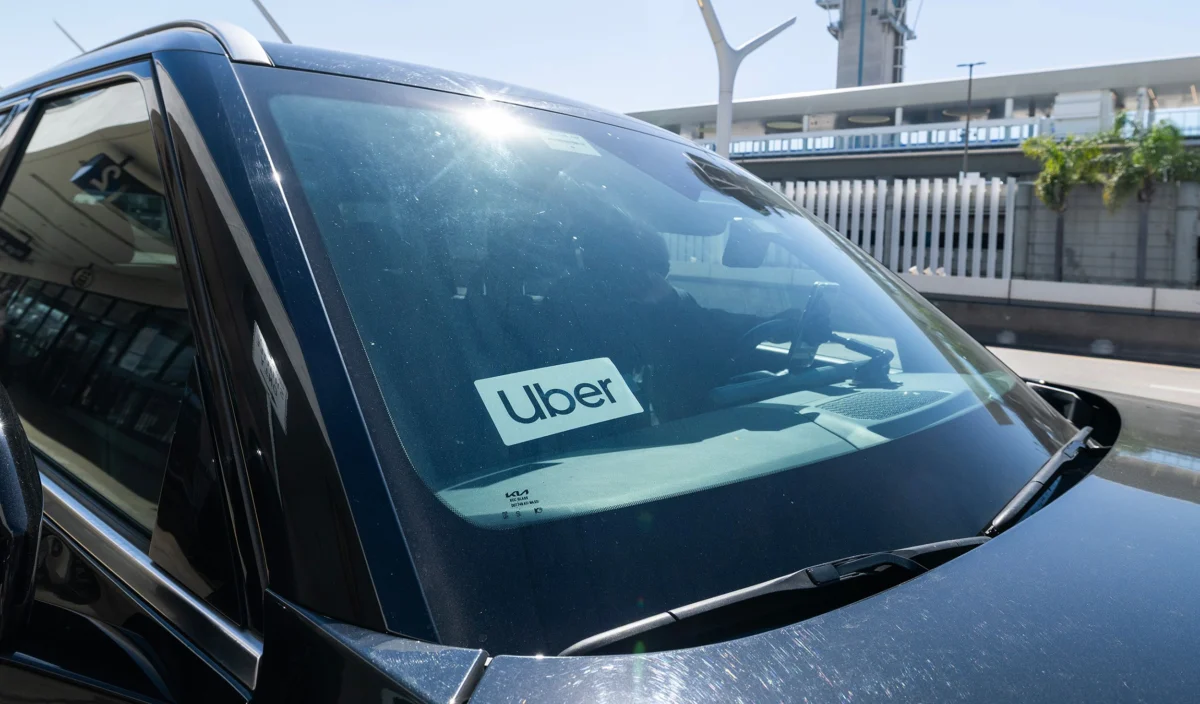
A decade ago, the corridors of Uber’s headquarters were defined by a singular, existential anxiety. Then-CEO Travis Kalanick, famously aggressive in his approach to disruption, viewed the rise of autonomous vehicles (AVs) not as a collaborative opportunity, but as a potential executioner. "What would happen if we weren’t a part of that future?" Kalanick mused in a 2016 interview with Business Insider. "If we weren’t part of the autonomy thing? Then the future passes us by."
Today, that future has arrived, but the strategy for navigating it has undergone a total transformation. Having abandoned its own in-house self-driving program following a series of technical, legal, and ethical disasters, Uber has reinvented itself as the "Kleenex of robotaxis." Rather than building the cars, it is building the infrastructure of the marketplace. However, as the company pivots from a disruptor of regulation to a architect of it, it faces a new, complex battle: how to maintain its dominance in a world where the driver is increasingly optional.
The Strategy: Building the "Hybrid Network"
Uber’s current roadmap, championed by CEO Dara Khosrowshahi, is to become the indispensable commercial layer for every AV developer on the planet. The company has already inked deals with over 25 major players, including industry titans like Waymo, Nuro, and Volkswagen’s MOIA. The goal is simple: ensure that whether a ride is powered by a human or an algorithm, it starts and ends on the Uber app.
To secure this position, Uber is currently engaged in a high-stakes lobbying campaign across the United States. The company is actively pressuring state and local lawmakers to mandate "hybrid networks"—regulatory environments where human drivers and autonomous fleets are forced to coexist and compete on a single platform.
Internal documents and public records obtained by WIRED reveal that this lobbying effort is far more aggressive than the company’s public-facing PR suggests. In New Jersey, for instance, an Uber lobbyist circulated draft legislative language that would have effectively throttled the competition. The proposal sought to mandate that for a three-year period, any platform offering driverless ride-hailing services must ensure that 85 percent of its total rides are still serviced by human drivers.
For developers like Waymo, Zoox, and Tesla, such a mandate would be crippling. By forcing these companies to funnel their vehicles through a broader, human-centric ride-hail platform, the legislation would prevent them from operating their own standalone apps, thereby cementing Uber’s position as the mandatory gatekeeper of the industry.
A Chronology of Conflict: From Outlaw to Lobbyist
The trajectory of Uber’s relationship with regulation has been nothing short of a 180-degree turn. In its early years, the company was defined by "Greyball"—a software tool used to identify and evade regulators—and a strategy of launching in cities without permission, then asking for forgiveness later.
- 2016: Under Kalanick, Uber launches an aggressive, and ultimately ill-fated, in-house AV program. When California regulators demand the company obtain permits for its self-driving tests in San Francisco, Uber chooses to ship its fleet to Arizona instead, bypassing local oversight.
- 2018: The hubris of the early AV era culminates in tragedy when an Uber test vehicle in Arizona strikes and kills a pedestrian. The company suspends testing, and its reputation for safety is irreparably damaged.
- 2020: Following a federal investigation and a high-profile legal battle over stolen trade secrets from Google’s self-driving division (Waymo), Uber officially shuts down its internal AV program. The lead developer of that program, Anthony Levandowski, is sentenced to prison for the theft of those secrets, though he is later pardoned.
- 2024–2025: Having realized that building cars is not its core competency, Uber pivots to its "platform-first" model. It begins signing partnerships with existing AV leaders.
- 2026: As states like New Jersey and cities like Washington, DC, move to codify AV laws, Uber shifts from ignoring regulation to writing it, aiming to carve out its place as the sole intermediary for autonomous transit.
The New Jersey and DC Fronts
The legislative maneuvering in New Jersey is perhaps the most audacious example of this new strategy. State Senator Andrew Zwicker, who is sponsoring a bill to establish the state’s first regulatory framework for AVs, has been the recipient of Uber’s intense lobbying. While the specific "85 percent" clause currently remains outside the final bill, the attempt signals a clear intent to constrain the market.
Furthermore, the New Jersey bill includes provisions that appear to target specific competitors. It mandates the use of multiple sensor suites—effectively banning Tesla’s camera-only "Vision" approach—and requires vehicles to maintain manual steering wheels and brakes, a feature that eliminates "purpose-built" robotaxis like those developed by Zoox.
In Washington, DC, the tactics are similarly focused on market control. As the city council deliberates on a bill to allow driverless cars, internal emails reveal Uber lobbyists pushing for language that guarantees "hybrid networks." As lobbyist LaVita Gardner wrote to a staffer for council member Charles Allen: "Allowing for hybrid networks will be critical for a smooth transition that supports both technology and human drivers."
The Counter-Arguments: Innovation vs. Monopoly
Uber’s defense of these measures is framed as a matter of social responsibility. Spokesperson Noah Edwardsen argues that the company is merely trying to prevent the AV industry from creating a "monopoly" that ignores the needs of human workers. According to Edwardsen, the failure to pass AV legislation in states like New York and Maryland this year is proof that the industry’s current, unchecked approach is "largely unworkable."
However, industry peers are pushing back. A spokesperson for Waymo, the current leader in the driverless space with over 500,000 rides provided per week across eleven cities, stated clearly that they do not support efforts to force AVs into specific, constrained networks. "We would welcome changes clarifying that different types of networks can operate," they noted.
The irony is not lost on Uber’s own leadership. Andrew Macdonald, the company’s president and COO, acknowledged in a recent LinkedIn post that the company’s pivot to "regulatory caution" might strike observers as ironic. "We didn’t engage enough with the societal implications or consider how the world outside the walls of Uber HQ felt about how we were going about building," he wrote. "The consequences were well documented: regulatory battles and a corporate crisis that damaged trust for years."
Implications for the Future of Urban Mobility
The stakes for the future of transportation are massive. Uber’s testimony in DC, delivered by Harry Hartfield, paints a stark picture: "One AV in California now performs roughly the work of four drivers." With the average earnings of human drivers declining in markets where AVs have successfully launched, the transition to automation is already causing economic friction.
If Uber succeeds in codifying "hybrid networks" into law, it will secure a future where the company is not just a participant in the ride-hailing economy, but the mandatory plumbing through which all traffic must flow. By tethering the growth of robotaxis to the survival of human-driven fleets, Uber is attempting to slow the pace of disruption just enough to ensure it remains the indispensable middleman.
The tension, however, is palpable. The partnership between Uber and Waymo—once touted as the future of the industry—has shown signs of cracking. Following a series of public disputes and the quiet dissolution of a pilot program in Phoenix, it is clear that the AV developers themselves are wary of Uber’s influence.
As the battle shifts to the halls of state legislatures this autumn, the outcome will decide more than just the fate of an app. It will determine whether the era of autonomous transportation will be an open, competitive market driven by innovation, or a managed, closed ecosystem controlled by the incumbent king of the ride-hail world. For now, the "hybrid" future looks less like a smooth transition and more like a high-stakes chess game where the human driver is being used as a pawn in a much larger, corporate power struggle.











