

The modern marketing landscape is currently defined by a persistent, often demoralizing mantra: "Do more with less." As economic headwinds tighten budgets and leadership mandates higher pipeline targets, the average marketing department is trapped in a cycle of diminishing returns. The prevailing industry response has been to ramp up activity—more webinars, more whitepapers, more social media posts, and more frantic lead generation.
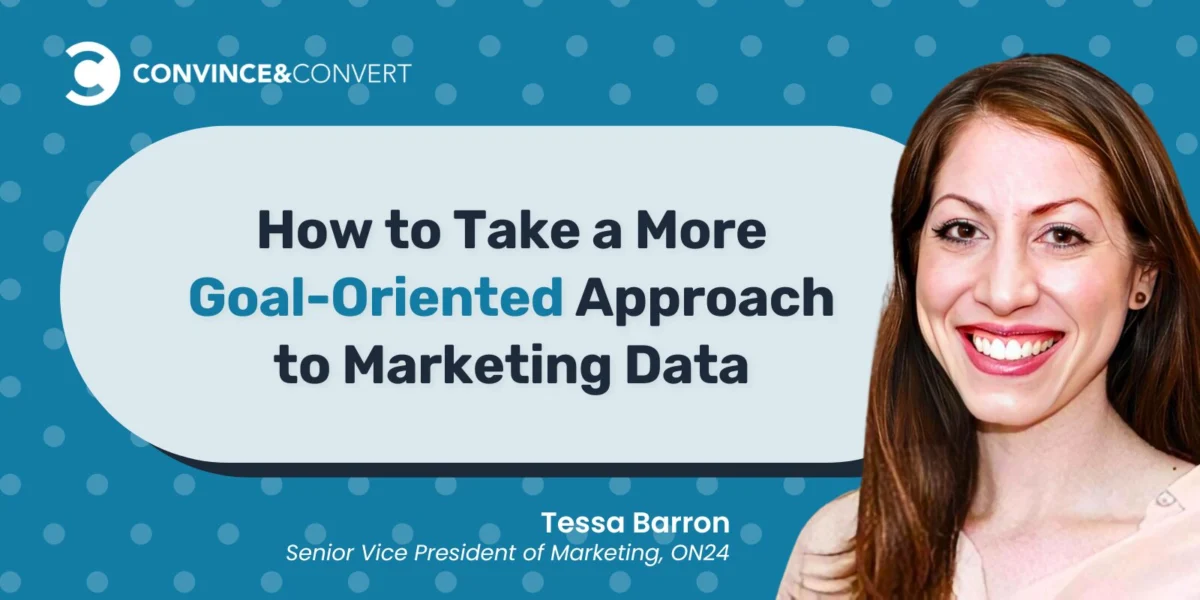
However, according to Tessa Barron, former Senior Vice President of Marketing at ON24 and a featured expert on the Data-Driven Decisions podcast, this "tactic-first" approach is fundamentally flawed. In an era where consumer behavior has shifted dramatically, executing the same playbook from three or four years ago is a recipe for stagnation. To succeed in the current climate, marketers must pivot from a culture of constant production to one of strategic, goal-oriented precision.
The Evolution of the Marketing Mandate
The professional shift in marketing expectations did not happen overnight; it was accelerated by the global pandemic, which permanently altered how buyers consume information and interact with brands. Despite this seismic shift in the customer journey, many organizations remain anchored to legacy tactics.
"We as marketers have to check in with ourselves and ask: ‘Are we still doing what we were doing three years ago?’" Barron notes. "If the answer is yes, that is the first sign that we need to stop expecting that if we execute the same way, we’re going to get more in return."
The core issue, Barron argues, is the disconnect between activity and outcome. When a marketing team sets a goal to "run four webinars in Q1," they have focused on the output rather than the outcome. This is a tactic-oriented mindset. A goal-oriented mindset, by contrast, begins with a business objective—such as achieving a 10% uplift in pipeline or penetrating a specific segment of new accounts—and works backward to identify the tactics that will mathematically bridge the gap.
The Shift: From Tactic-Oriented to Goal-Oriented
The transition from a "more is better" philosophy to a strategic framework requires a fundamental rethinking of the marketing funnel.
Defining the Objective
Instead of starting with a calendar of events, marketing leaders must start with a revenue-based KPI. If the goal is a 10% increase in the conversion rate of first meetings, the team must analyze the current blockers. Are leads unqualified? Is the content not resonating? Is the timing off? Once the gap is identified, the marketing tactics become the tools used to solve that specific problem, rather than the goal itself.
The Power of Signal Over Noise
Data is often cited as a marketer’s greatest asset, but in practice, it frequently acts as a source of "noise." Modern analytics platforms provide an overwhelming amount of information—clicks, page views, and download counts—that rarely correlate directly to revenue.
Barron advocates for a focus on "signals." A signal is not merely a data point; it is a behavioral indicator that reveals a prospect’s intent to purchase. By prioritizing these signals, marketers can transform their engagement strategy from a broadcast model into a diagnostic one.
Chronology of the Strategic Pivot
For organizations looking to implement this shift, the process generally follows a defined, iterative cycle:
- Alignment Phase: Marketing leadership must meet with sales to define what a "qualified" lead actually looks like in the current market.
- Hypothesis Generation: Teams identify the specific gaps preventing conversion (e.g., "Our prospects don’t understand the integration with their existing cloud provider").
- Signal Capture: The team designs "traps"—interactive elements like polls, surveys, or specific Q&A prompts—embedded within high-value content to capture the missing data.
- Data Analysis: The team reviews the captured signals to segment the audience by intent.
- Sales Handoff: Marketing provides Sales with the context of the prospect’s journey, allowing for hyper-personalized outreach.
Real-World Applications: Turning Signals into Sales
The effectiveness of this strategy is best illustrated through practical application. Barron points to two distinct industry examples where strategic data capture replaced "vanity metrics."
Case Study 1: The Technology Sector
A tech company struggling to regain market share identified that their most successful customers were those already using a specific cloud infrastructure. Rather than launching a generic brand awareness campaign, they utilized their webinar platform to insert a poll question: "Which cloud provider are you currently using?" By identifying prospects using that specific provider in real-time, the company could immediately route those high-intent leads to a specialized sales team, resulting in a significantly higher conversion rate than a broad-spectrum approach.
Case Study 2: The Pharmaceutical Industry
In the pharmaceutical space, the objective was to connect with doctors managing patients with complex, high-risk needs. Instead of generic product marketing, the company hosted an educational seminar on the latest medical breakthroughs. They asked a diagnostic question: "How would you rate the risk of your patient base?" Doctors who answered "high" were flagged as high-intent, allowing the company to tailor follow-up communications that were immediately relevant to the physician’s current caseload.
Bridging the Gap Between Sales and Marketing
One of the most persistent issues in B2B marketing is the friction between the marketing department, which creates the "net" to catch prospects, and the sales department, which is responsible for pulling those prospects into the pipeline.
Barron emphasizes that marketers often make the mistake of asking questions that validate their own content (e.g., "Did you like this presentation?") rather than asking questions that help Sales qualify the lead. To bridge this, marketers must become students of the sales process. By listening in on discovery calls and identifying the common hesitations, objections, and pain points, marketers can craft content that addresses those specific hurdles before the prospect ever speaks to a salesperson.
"It’s the salespeople, those on the front lines, who create the pipeline," says Barron. "The role of the marketer is to provide the clearest, most accurate picture of who that person is before the salesperson even picks up the phone."
Implications for Organizational Structure
The implications of this shift extend beyond simple campaign management; they affect how departments are measured and how they communicate with stakeholders.
Visualizing Success for Stakeholders
When a marketing team stops reporting on "leads generated" and starts reporting on "pipeline velocity" or "conversion uplift," the conversation with the C-suite changes. Stakeholders often struggle to understand the complexity of marketing data. Therefore, the onus is on the marketing leader to simplify the narrative. Presenting data in clean, visual formats that show the direct correlation between a strategic action and a pipeline movement ensures that marketing is viewed as a revenue driver rather than a cost center.
The "Little Steps" Philosophy
Often, the biggest wins are found in the overlooked "in-between" stages of the funnel. These include:
- Form Optimization: Identifying if long lead forms are causing drop-offs.
- Contextual Messaging: Ensuring that the language used on a website matches the pain points identified by the sales team.
- Interaction Opportunities: Providing ways for prospects to engage with content (like Q&As or polls) rather than just passively consuming it.
By optimizing these small steps, marketers can gain control over the conversion rate without needing to spend more on top-of-funnel traffic.
Conclusion: A Future of Intentionality
The "do more with less" era is not necessarily a period of scarcity, but rather an invitation to stop wasting energy on high-volume, low-impact activity. By adopting a framework that prioritizes strategic alignment, signal-based data collection, and deep collaboration with sales, marketers can achieve more while doing significantly less.
As Barron concludes, the goal is to become more intentional. When every piece of content, every event, and every data request is tied to a specific, measurable step toward a pipeline goal, the pressure to produce "more" dissipates, replaced by the satisfaction of producing "better."
For organizations struggling with the transition, the first step is simple: stop the activity, audit the pipeline, and start asking the questions that actually matter to your bottom line.











