

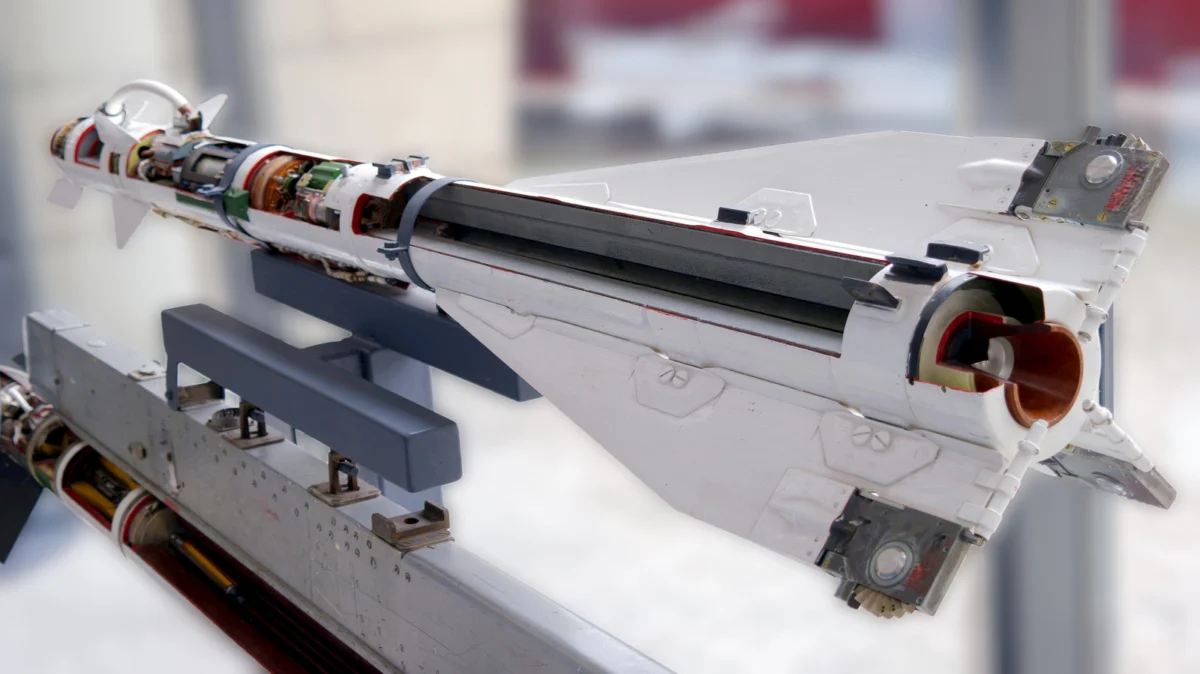
For decades, the global defense industry operated under a singular, uncompromising mandate: performance at any cost. Whether it was the range of a cruise missile, the stealth capabilities of a fighter jet, or the precision of a guidance system, the priority was always the pinnacle of technological sophistication. Manufacturing timelines were long, supply chains were hyper-specialized, and the assumption was that a small number of "silver bullet" weapons would decide the outcome of any future conflict.
Recent geopolitical tremors—most notably the grinding, high-intensity attrition seen in Ukraine and the escalating tensions in the Middle East—have shattered that paradigm. Modern conflicts are proving that the rate at which munitions are consumed far outstrips the pace at which the industrial base can replenish them. As defense ministries scramble to restock, they have hit a hard wall: the world knows how to build exquisite weapons, but it has forgotten how to build them in the quantities required for sustained industrial warfare.
This crisis has propelled additive manufacturing, or 3D printing, from the realm of rapid prototyping into the center of the defense production line. By shifting the focus from artisanal, slow-build processes to scalable, streamlined additive workflows, the defense sector is attempting to solve a fundamental equation: how to achieve "affordable mass" without sacrificing the mission-critical reliability that military operations demand.
Chronology: From Lab Bench to Missile Silo
The integration of 3D printing into the defense sector has followed a steady, if deliberate, trajectory:
- The Prototyping Era (1990s–2010s): For years, 3D printing was relegated to R&D departments. Engineers used the technology to create complex geometric models for wind-tunnel testing, allowing for rapid iterations of aerodynamic shapes that would be impossible to mill traditionally.
- The Component Qualification Phase (2015–2020): As industrial metal printing matured, contractors began testing non-critical parts—brackets, housings, and mounting hardware—on aircraft and naval vessels. The focus here was proving that printed alloys could survive the rigors of military service.
- The Scaling Pivot (2021–Present): Triggered by the supply chain shocks of the pandemic and the subsequent ammunition shortages in Eastern Europe, the Department of Defense (DoD) and major prime contractors (such as Raytheon, Lockheed Martin, and Northrop Grumman) began integrating additive manufacturing into structural airframe components.
The current phase marks a departure from "testing" to "integration." We are seeing the first instances of 3D-printed primary airframe components for systems as sophisticated as the Tomahawk cruise missile, signaling that the technology has finally crossed the threshold of military-grade reliability.
The Engineering Bottleneck: Why "Printing a Missile" is a Myth
Despite the hype surrounding "3D-printed weapons," there is a vital distinction between reality and science fiction. Manufacturers are not "printing" a functional missile from a single digital file. The obstacle is not just the printing process itself; it is the extreme environment of modern warfare.
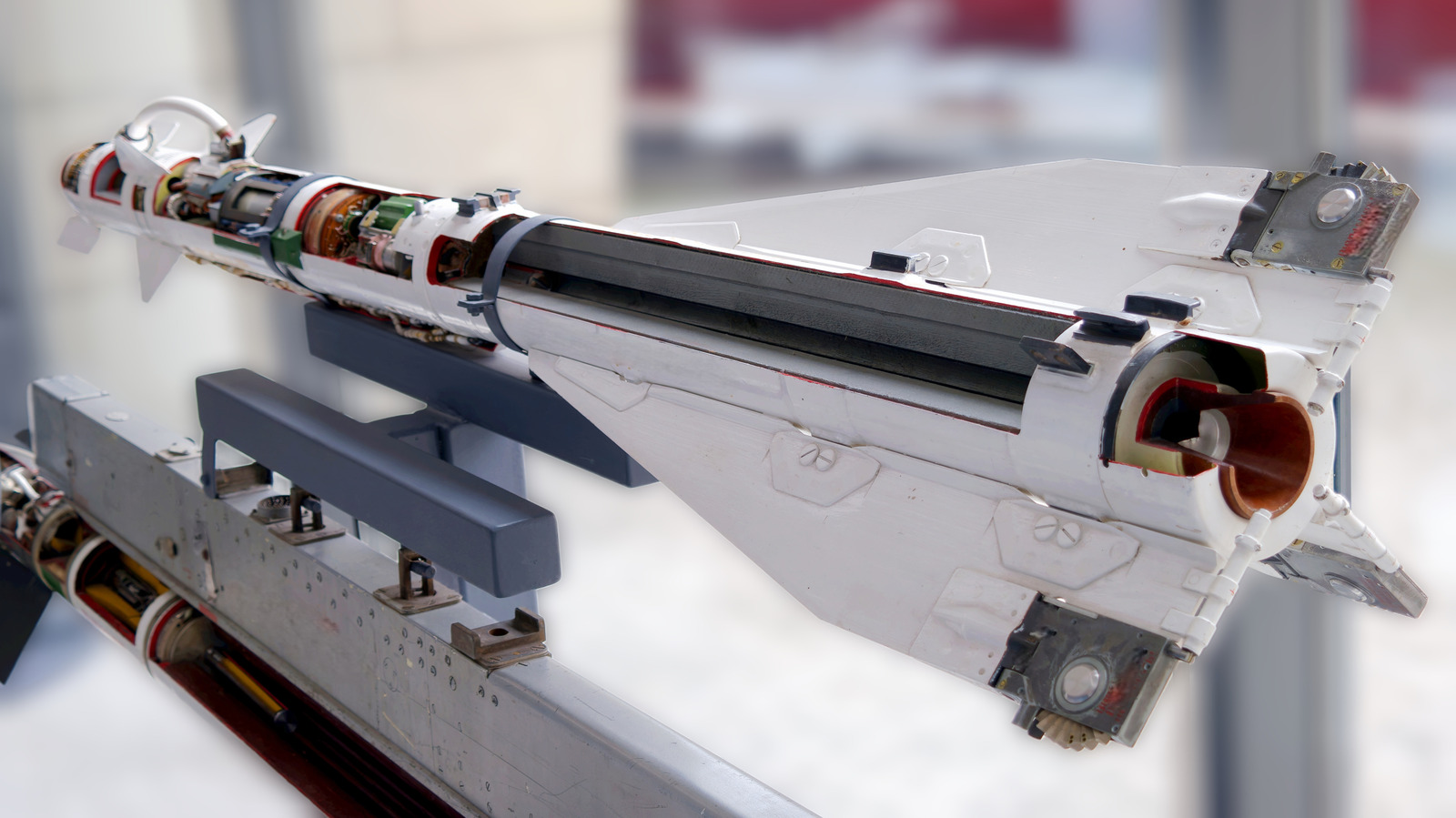
A cruise missile spends years sitting in a cold, damp storage container or a ship’s magazine, only to be launched into a flight profile that subjects the structure to violent acceleration, extreme vibration, aerodynamic thermal loading, and rapid altitude-induced pressure changes. A microscopic flaw in a printed metal lattice—a tiny pore or a structural void—can trigger a catastrophic failure mid-flight.
Consequently, aerospace remains one of the most risk-averse industries on Earth. Every part, whether printed or cast, must undergo rigorous inspection. For critical electronics, guidance systems, and propulsion magnets, traditional manufacturing remains the gold standard. While it is technically possible to print rare-earth magnets or tantalum-doped electronic components, the maturity of these processes has not yet reached the level of confidence required for live munitions. We cannot "print a Tomahawk" in its entirety, and for the foreseeable future, we likely never will.
Supporting Data: The Efficiency of Consolidation
The strategic value of additive manufacturing lies in part consolidation. In traditional aerospace design, a complex component is often an assembly of dozens of individual parts—castings, forgings, fasteners, and welds—each requiring its own supply chain, quality control, and inventory management.
Through additive manufacturing, these assemblies can be printed as a single, unified structure. The benefits are threefold:
- Supply Chain Resiliency: By consolidating 50 parts into one, the manufacturer reduces the number of specialized suppliers they must rely on. In a globalized economy where rare-earth minerals and specialty alloys are often bottlenecks, reducing the number of sub-components is a direct hedge against geopolitical disruption.
- Weight Reduction: Printed structures can be optimized with internal geometries—such as organic, lattice-filled walls—that are impossible to achieve with traditional CNC milling. This creates lighter, stronger components that allow for greater fuel efficiency or increased warhead capacity.
- Lead Time Compression: Traditional casting and forging require expensive, custom-made molds that can take months to produce. A 3D printer can shift from one design iteration to the next with nothing more than a software update, slashing the "time to production" from months to weeks.
Official Responses and Strategic Shifts
The U.S. Department of Defense has recognized that the current industrial base is optimized for a "peace-time" rhythm of low-volume, high-complexity production. To pivot, the Pentagon has launched several initiatives aimed at industrial expansion.
Undersecretary of Defense for Acquisition and Sustainment, Dr. William LaPlante, has frequently noted that "quantity has a quality all its own." The Pentagon’s shift toward multi-year procurement contracts is specifically designed to provide the financial certainty that contractors need to invest in large-scale additive manufacturing facilities.
"We are moving toward a hybrid model," says a senior logistics analyst at a major defense firm. "The future is not purely additive, nor is it purely traditional. It is a strategic blend. We use additive for the complex, low-volume structural elements that cause the most bottlenecks, and we rely on traditional methods for the high-volume, commodity-grade hardware. The goal is to maximize the throughput of the entire production line."
The Strategic Implication: The Era of Affordable Mass
Perhaps the most significant impact of 3D printing will be the emergence of a new class of weapons. By leveraging additive manufacturing, engineers can design munitions that are "built to be built."
Future conflicts will likely favor "affordable mass"—larger numbers of weapons that are perhaps slightly less sophisticated than a $2 million Tomahawk, but capable of being produced in the thousands rather than the hundreds. If an adversary can fire a swarm of low-cost, 3D-printed loitering munitions to overwhelm a multi-million-dollar air defense system, the economic calculus of war shifts decisively.
This trend toward high-volume production mirrors the strategic necessities of the Second World War, where the ability to produce more tanks, planes, and ships than the opponent was the ultimate deciding factor. Today, the "factory floor" is once again becoming a primary theater of conflict.
Conclusion: A New Industrial Revolution
The transition of 3D printing into the defense sector is not merely a technical upgrade; it is a strategic necessity. As the world enters a period of increased volatility, the ability to rapidly manufacture and replenish precision-guided munitions will be a defining factor in national security.
While 3D printing will not replace the foundational expertise of aerospace engineering, it provides the agility required to survive in an era of attrition. By simplifying supply chains, enabling part consolidation, and facilitating the production of "affordable mass," additive manufacturing is re-arming the modern military for the realities of 21st-century warfare. The missile of the future will be a product of both human ingenuity and the silent, precise work of the industrial printer—a synthesis of high technology and industrial scale that will define the strategic balance for decades to come.











