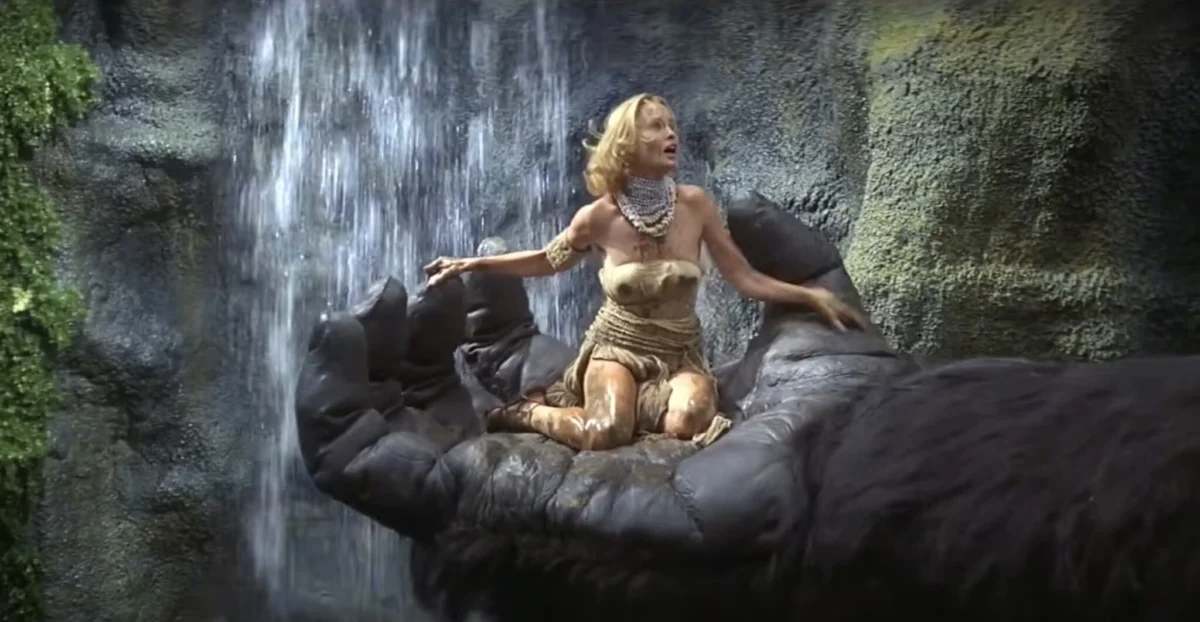
When the name King Kong is invoked in the halls of cinema history, the mind immediately drifts toward two poles: the 1933 black-and-white marvel that birthed a legend, and Peter Jackson’s 2005 gargantuan spectacle. Caught in the middle of this cinematic sandwich is John Guillermin’s 1976 iteration, a film that has spent five decades as the "ugly duckling" of the franchise. Often dismissed as a bloated, campy curiosity, the 1976 King Kong—produced by the larger-than-life Italian mogul Dino De Laurentiis—is a film that deserves a more nuanced autopsy. Fifty years after its release, it is time to peel back the layers of its troubled production and reconsider its unique, if flawed, place in the pantheon of giant monster cinema.
The Genesis of a Modern Myth
The 1933 original, directed by Merian C. Cooper and Ernest B. Schoedsack, remains a foundational pillar of fantasy filmmaking. Despite the limitations of its era, its pioneering use of stop-motion animation by Willis O’Brien imbued the giant ape with a tragic, primal soul. By the mid-1970s, the notion of a remake seemed like an exercise in futility. The original was considered untouchable, a sacred text of visual effects.
Yet, in the shark-tank atmosphere of 1970s Hollywood, the project gained momentum through a combination of corporate opportunism and creative ego. The catalyst was Michael Eisner, then an executive at ABC-TV, who pitched the concept of a modern-day Kong to both Universal Studios and Paramount Pictures.
The race was on. Paramount, under the banner of Dino De Laurentiis, moved with breakneck speed. De Laurentiis, a producer whose resume spanned the high-art neorealism of Fellini’s La Strada to the psychedelic excess of Barbarella, viewed the property not as a sacred relic, but as a blockbuster opportunity. He secured the rights from RKO-General, the holding company for the original studio, while Universal simultaneously staked a claim based on the public domain status of the original film’s novelization. This legal friction necessitated a rush-to-production schedule that would define the film’s chaotic legacy.
A Chronology of Ambition and Hubris
To steer this massive ship, De Laurentiis tapped John Guillermin, known for his work on disaster epics like The Towering Inferno. For the script, he hired Lorenzo Semple Jr., a writer who had successfully navigated the tonal tightrope of the 1960s Batman television series and the gritty political realism of The Parallax View.
Semple’s mandate was clear: steer away from the "mythic" weight of the 1933 film and deliver something contemporary and, in his words, "light and amusing." This decision dictated the shift from the Great Depression era to the 1970s, complete with an oil company (Petrox) as the antagonist.
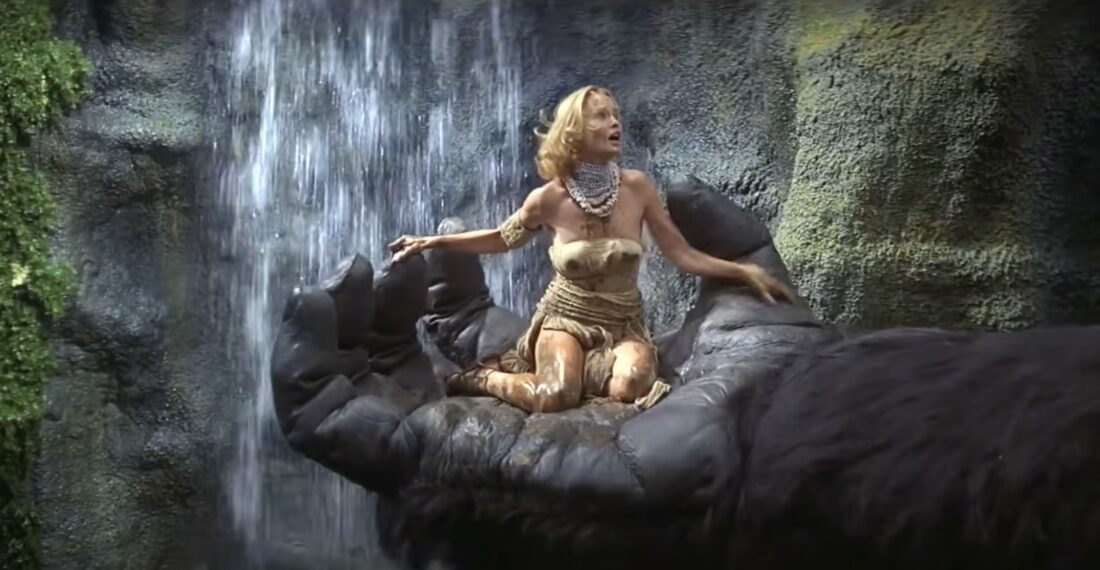
The production was a logistical nightmare. De Laurentiis was adamant about avoiding stop-motion, opting instead for a full-scale, 40-foot animatronic ape. The plan was to create a tactile, interactive giant that could roam sets and hold actors. It was, perhaps, the most ambitious and disastrous gamble in the film’s history. When the mechanical monstrosity was finally unveiled at Shea Stadium, it was largely static, a lumbering puppet that failed to live up to the hype. It appeared for less than 30 seconds, leaving the production to rely on a mix of makeup effects by the legendary Rick Baker and clever, albeit limited, practical solutions.
Behind the Scenes: The Art of the Performance
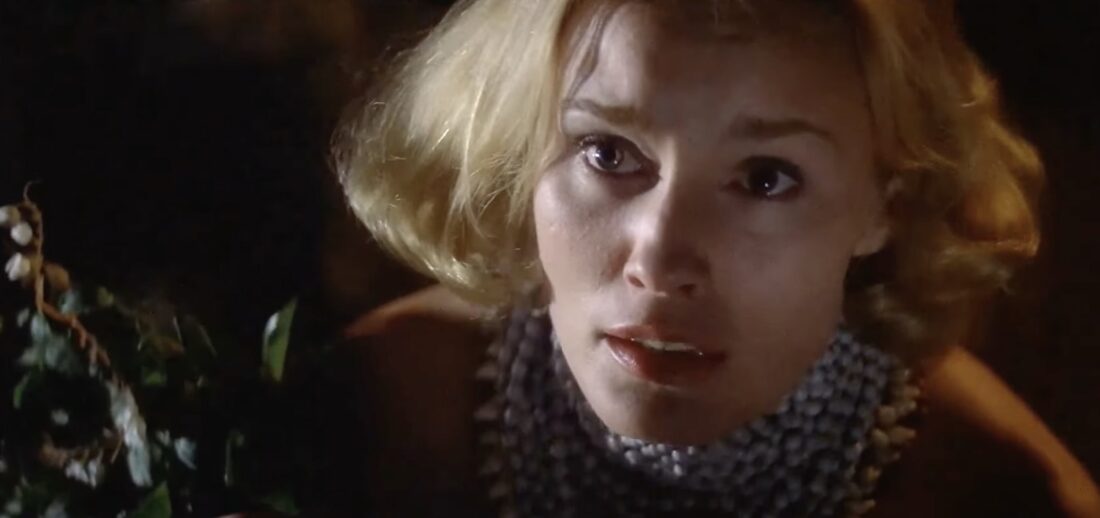
The 1976 film is frequently scrutinized for its human element, particularly the performance of Jessica Lange in her debut role as Dwan. While critics at the time pilloried her as "naive" and "inexperienced," film historian Ray Morton has since argued that this was a deliberate character choice. Lange played Dwan as a wide-eyed, slightly dazed aspiring starlet who finds herself caught in the gears of a corporate machine.
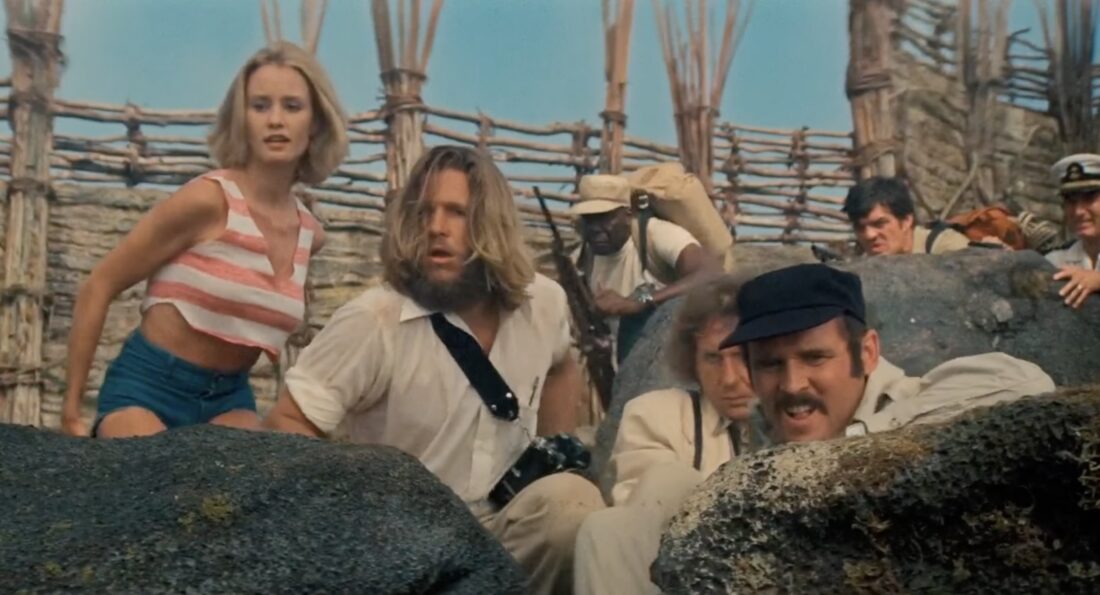
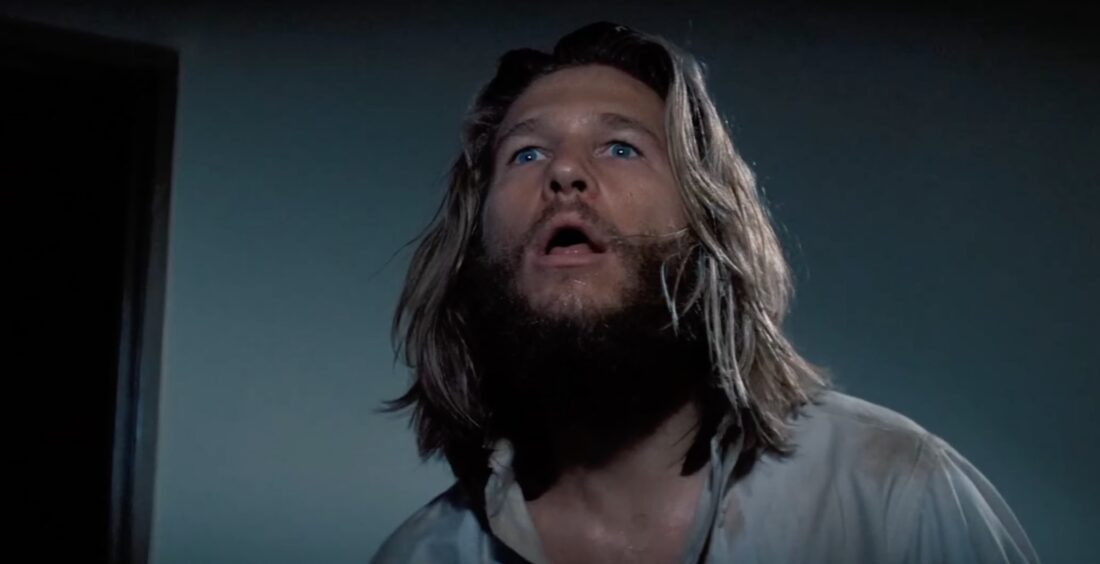
Opposite her, Jeff Bridges delivered a performance as Jack Prescott, a paleontologist-activist who served as a modern, moralistic counterbalance to Charles Grodin’s Fred Wilson. Grodin, playing the embodiment of corporate greed, provided a scathing critique of the era’s environmental negligence. The dynamic between Bridges’ earnest, rugged activist and Grodin’s smarmy, suit-wearing oil executive remains one of the film’s most enduring strengths.
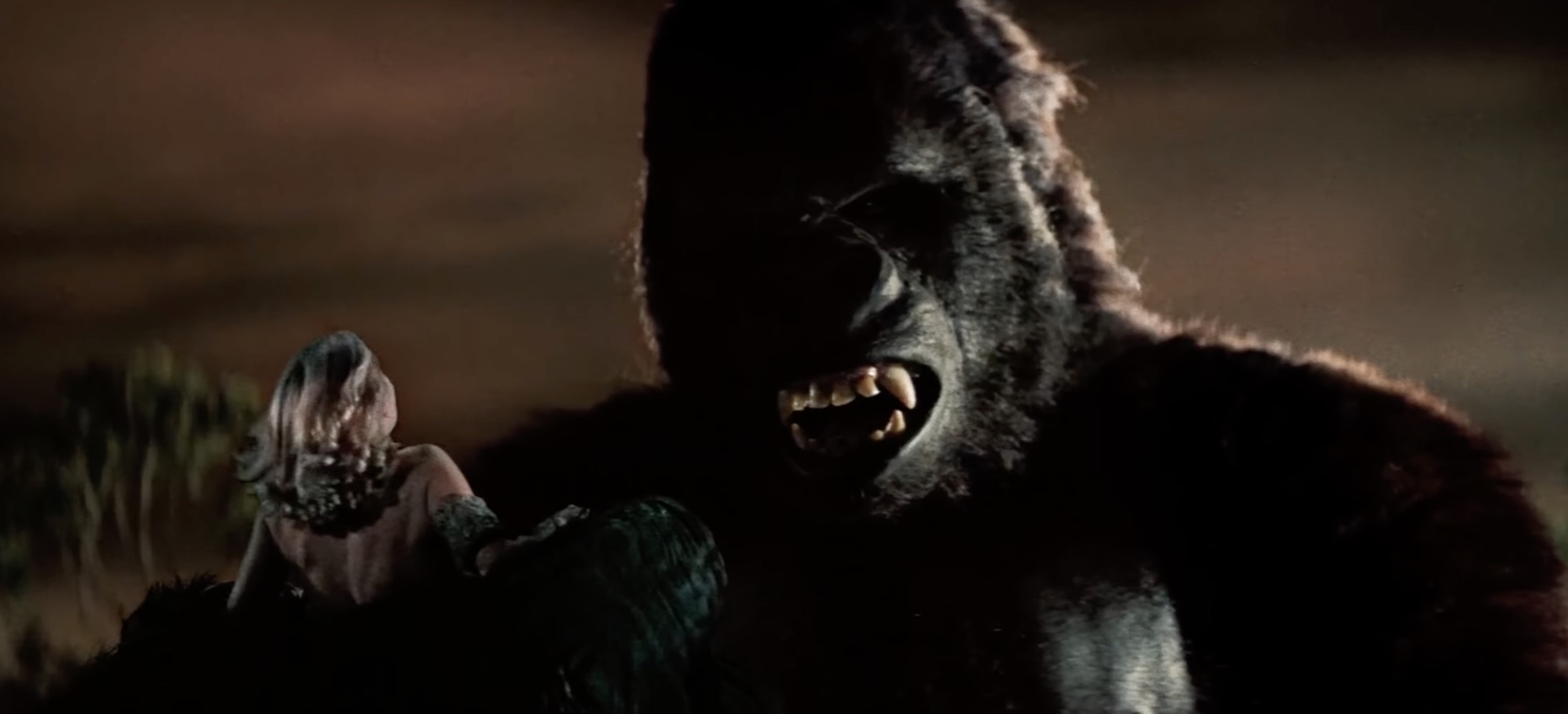
The visual effects, while lacking the fluidity of the original’s stop-motion or the digital precision of modern motion capture, relied on a series of hydraulically-controlled masks worn by Rick Baker. These masks, while occasionally clunky, managed to convey a range of emotion that gave Kong a surprisingly human-like vulnerability. When paired with John Barry’s haunting, atmospheric score, the film achieves moments of genuine emotional resonance that often go unacknowledged by its detractors.
Official Responses and Box Office Reality
The 1976 King Kong was, by any commercial metric, a success. It grossed over $557 million worldwide (adjusted for inflation) and proved that the appetite for monster cinema was still ravenous. However, the critical reception was icy. The "man-in-a-suit" aesthetic felt regressive in a decade that had just seen the technical marvels of Jaws.
De Laurentiis remained unapologetic. His famous retort to critics—"No one cries when Jaws dies, but when the monkey dies, people gonna cry"—speaks to the core intent of his production. He wasn’t aiming for the technical perfection of O’Brien; he was aiming for the audience’s heartstrings.
The Broader Implications: A Sympathetic Monster
The most significant departure of the 1976 version—and perhaps its most enduring legacy—is its pro-nature, anti-industrial stance. By casting the Petrox Oil Company as the villains who exploit the island’s resources, the film tapped into the growing environmental consciousness of the 1970s. Kong is not merely a rampaging beast; he is a displaced victim of human greed.
When the final act unfolds atop the World Trade Center (a choice that anchored the film in its specific, modern moment), the tragedy is palpable. Kong’s decision to place Dwan gently on the roof, knowing it will leave him vulnerable to the military’s crosshairs, provides a level of pathos that the 1933 original, with its more "monstrous" portrayal of the ape, did not emphasize.
Conclusion: A Legacy Reassessed
Fifty years later, the 1976 King Kong is no longer just a "remake." It is a time capsule of a decade that was simultaneously cynical about corporate power and deeply sentimental about the natural world. While it lacks the stop-motion magic of the original and the technical polish of the 2005 version, it possesses a unique, human-centric heart.
The film serves as a bridge between the classic monster movies of the golden age and the blockbuster spectacles of the modern era. It is a messy, flawed, and deeply human work. For those willing to look past the stiff animatronics and the 1970s fashion, there is a story here that is not just about a giant ape, but about the way we, as a civilization, treat the "other." In its own, imperfect way, the 1976 King Kong stands tall, a reminder that even the most reviled cinematic experiments can hold a mirror to the society that created them.