

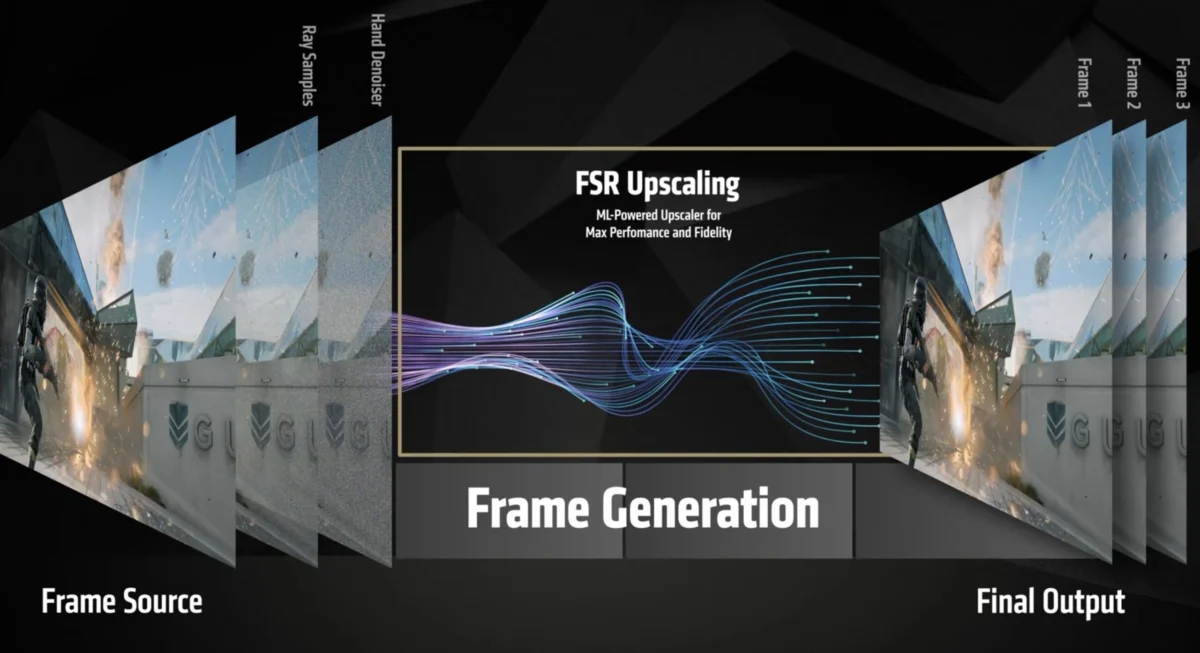
In the high-stakes theater of PC gaming hardware, the battle for visual supremacy and fluid frame rates is moving beyond simple raw power. As developers lean further into AI-driven upscaling and frame interpolation, AMD is signaling a major shift in its software strategy. Recent discoveries within the latest Radeon driver suites suggest that AMD is quietly developing a "Multi-Frame Generation" (MFG) technology capable of pushing performance boundaries well beyond what the industry currently deems the standard.
For users of Radeon RX 9000-series hardware and beyond, this isn’t just a minor patch; it represents a fundamental change in how frames are rendered, processed, and displayed. By potentially allowing for an 8x frame generation ratio, AMD is effectively challenging Nvidia’s dominance in the AI-interpolation space, promising to turn stuttering performance into butter-smooth visuals at the click of a button.
The Genesis of Multi-Frame Generation
The narrative of AMD’s evolution in frame generation has been a long, deliberate climb. Since the inception of FidelityFX Super Resolution (FSR), the company has prioritized open-source accessibility, ensuring that their upscaling technology works across a vast spectrum of hardware—not just their own.

However, the "Redstone" update, released in April, served as the turning point. When preliminary support for Multi-Frame Generation surfaced in the ADLX (AMD Device Library) SDK, eagle-eyed developers and enthusiasts began to realize that AMD’s engineers were working on something far more robust than standard frame interpolation. The "Redstone" architecture was designed to handle complex motion vectors and temporal data more efficiently, providing the foundational logic for what we now identify as the next iteration of FSR.
This trajectory confirms that AMD has been playing the long game. While the public focus remained on incremental driver updates and FSR 4.1.1, the internal architecture was already being primed for a leap that would prioritize high-ratio generation without sacrificing the fidelity of the final image.
Unmasking the Driver: The RadeonTuner Discovery
The curtain was pulled back on these developments by a user on the Chiphell forums, who utilized an unofficial tool known as RadeonTuner. While AMD’s official Adrenalin software provides a user-friendly interface for managing graphics settings, it often hides "advanced" or "experimental" toggles that are not yet ready for the general public.
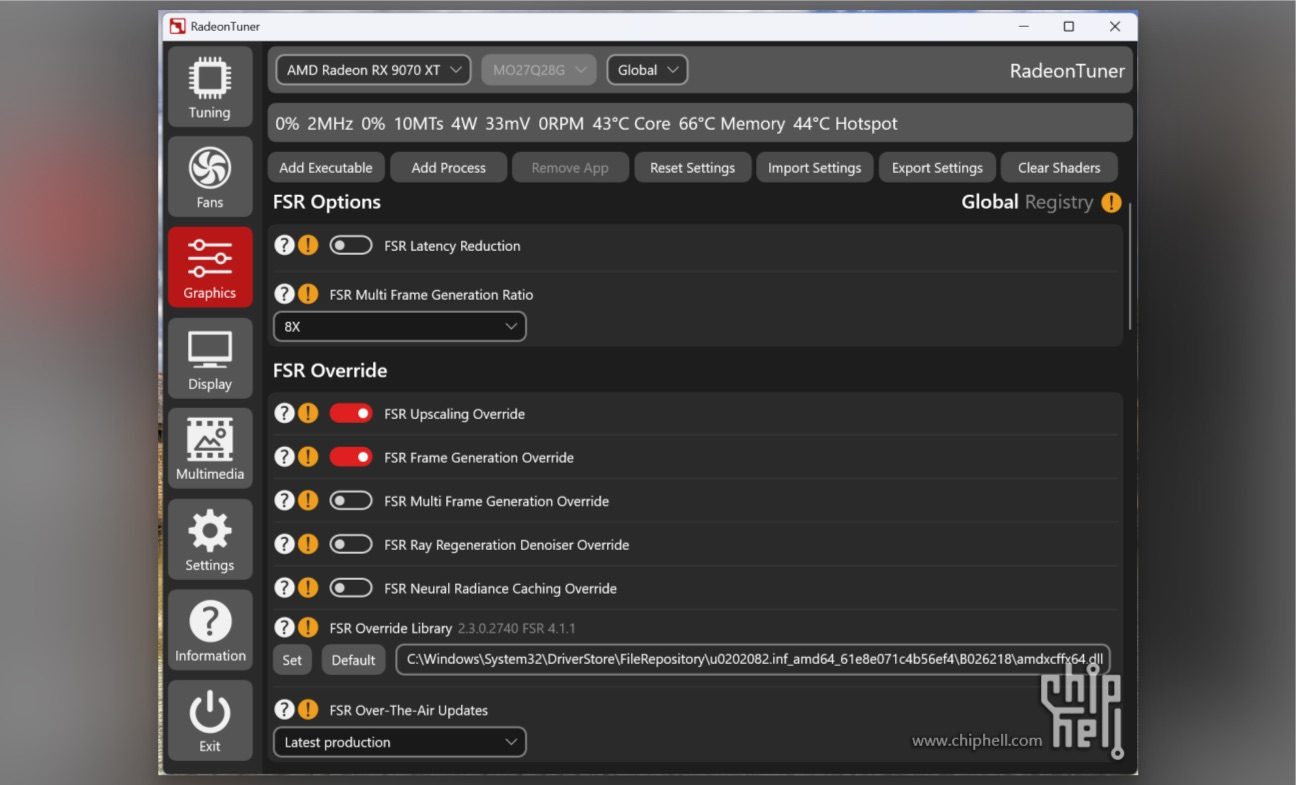
RadeonTuner serves as a gateway to these hidden driver parameters. Upon testing the tool on a high-end Radeon RX 9070 XT, the user uncovered a suite of toggles that point toward a massive overhaul of the FSR panel. Among the most significant findings were:
- FSR Multi-Frame Generation Override: A dedicated control for managing the intensity and logic of multi-frame insertion.
- Frame Generation Ratio up to 8x: The most startling discovery, which implies that for every single "real" frame rendered by the GPU, the software can synthesize seven additional frames.
- FSR Ray Regeneration Denoiser: An override that allows users to force advanced denoising techniques in titles where they might not be natively implemented.
- FSR Neural Radiance Caching: A sophisticated feature designed to optimize lighting and reflection data, typically reserved for high-end titles, now potentially accessible through a universal override.
The jump to an 8x ratio is the industry’s new "holy grail." To put this into perspective, current standards—most notably Nvidia’s industry-leading frame generation—typically cap out at a 6x ratio (inserting five generated frames for every one real frame). By pushing this threshold to 8x, AMD is aiming to provide a level of motion smoothness that was previously considered computationally impossible for consumer-grade silicon.
The Engineering Challenge: Latency and Pacing
While the prospect of "eight times the frames" sounds like a dream for high-refresh-rate monitor owners, the technical reality is significantly more complex. The primary hurdle for any frame generation technology is latency.
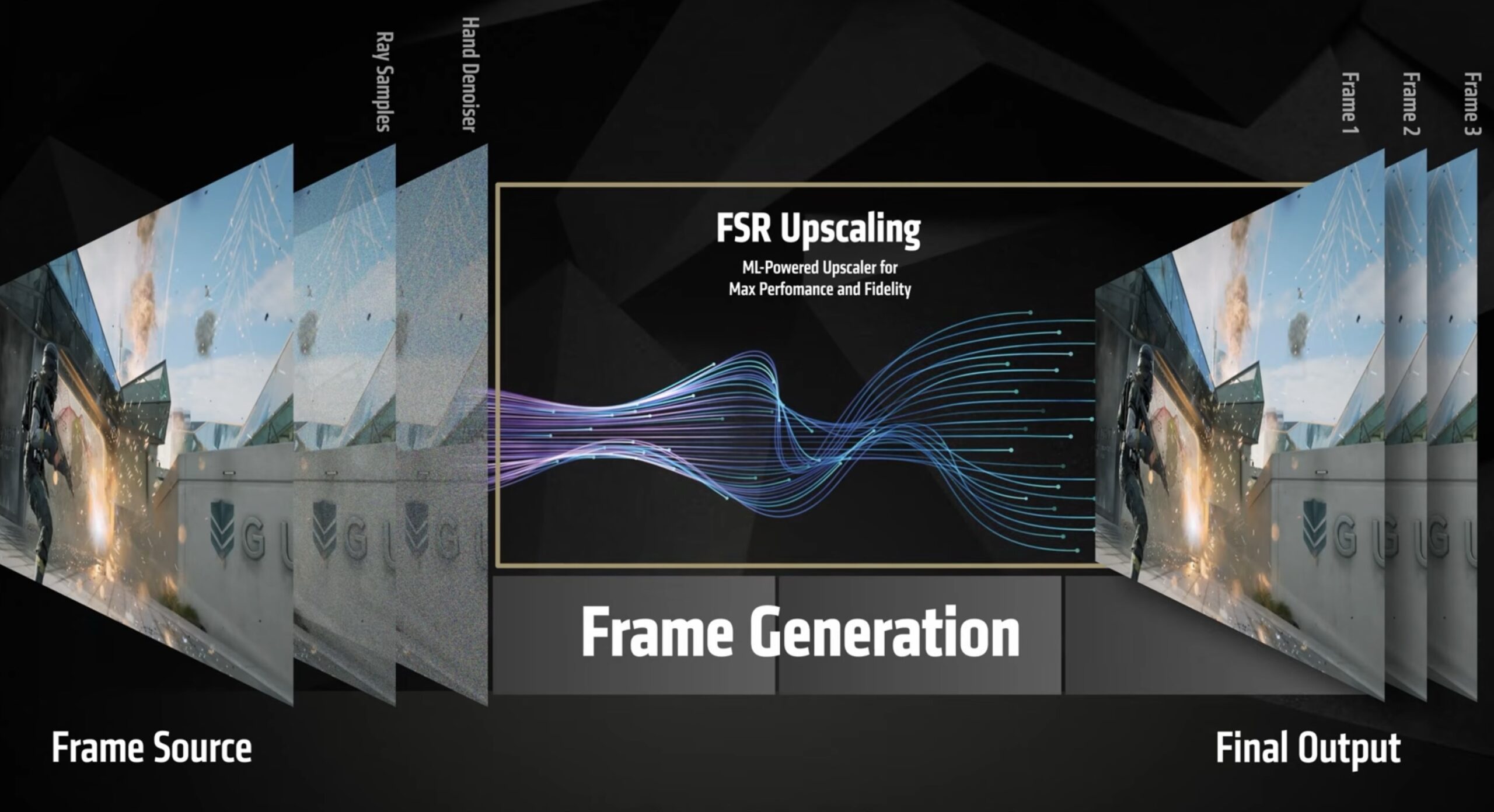
When you synthesize frames, you are essentially "guessing" what the motion looks like based on previous data. If the engine cannot process this fast enough, the user experiences input lag—the gap between moving your mouse and seeing the action on screen. Furthermore, "frame pacing" is critical. If the gap between a real frame and a generated frame is uneven, the game will suffer from micro-stuttering, which can be even more jarring than a lower, consistent frame rate.
AMD’s challenge will be to ensure that their 8x mode doesn’t turn a fast-paced shooter into a sluggish experience. The inclusion of "Neural Radiance Caching" suggests that AMD is betting on AI-driven hardware acceleration to bridge this gap. By using neural networks to predict motion more accurately than traditional motion vectors, AMD hopes to maintain responsiveness even at extremely high generation ratios.
Expanding the Horizon: Forcing Features
Perhaps more exciting than the frame count itself is the ability to "override" features in games that do not support them. Historically, advanced rendering techniques like Ray Regeneration—which improves the visual quality of ray-traced lighting—were locked to specific, high-budget titles like Call of Duty: Black Ops 7 or Crimson Desert.

If AMD’s driver-level overrides allow users to force these features across a broader library of games, it effectively grants an "upcycling" service for older or less-optimized titles. Imagine playing a two-year-old game and suddenly being able to enable neural lighting and high-ratio frame generation; it would make an existing graphics card feel like a next-generation upgrade without a single cent spent on new hardware.
The Strategic Implication: AMD vs. Nvidia
This development positions AMD in a direct, aggressive posture against Nvidia. While Nvidia has dominated the conversation regarding AI-driven gaming through its DLSS (Deep Learning Super Sampling) suite, AMD’s strategy has always been to democratize technology. By burying these features in the driver and allowing for high-ratio generation, AMD is signaling that they do not need proprietary "Tensor Cores" to achieve comparable—or even superior—results in frame synthesis.
This is a critical moment for the GPU market. If AMD can successfully launch these features in a stable, user-friendly format, they effectively neutralize one of Nvidia’s strongest selling points: the "exclusive" nature of their AI features. For the consumer, this competition is the ultimate win, as it forces both companies to innovate faster and provide more utility for the hardware users have already purchased.

Looking Ahead: What’s Next?
As of late 2026, these features remain "hidden" for a reason. They are likely in the final stages of validation, where AMD’s software teams are stress-testing the latency and visual artifacts that come with such high-level interpolation.
We expect to see these toggles appear in a future public version of the Adrenalin software, likely under a new "Advanced Performance" sub-menu. Until then, users who are tech-savvy enough to use tools like RadeonTuner are providing the real-world testing that AMD needs to finalize its code.
Ultimately, the goal of these technologies is to provide a "free" performance boost. Whether through the efficiency of the 8x generation ratio or the visual clarity provided by neural radiance caching, AMD is betting that the future of gaming performance isn’t just about faster clocks or more VRAM—it’s about how intelligently the software can manipulate the pixels we see. As we look toward the next cycle of hardware releases, one thing is clear: the war for the best frame rate is being fought in the software layer, and AMD has just significantly raised the stakes.











